








Why Does Latte Milk Foam Dissipate at Different Speeds?
Latte milk foam starts dissipating the moment the drink is made, but the pace varies widely. Some lattes show large bubbles within two minutes, while others hold for over fifteen. Three factors govern stability: the quality of the milk foam itself, the condition of the espresso crema, and how well the two integrate. Cup temperature and water droplets on the cup wall also play a role.
Thicker foam dissipates faster because it mixes unevenly with the crema, which is why a cappuccino often develops coarse bubbles before a latte. Crema is ideal when fine, flowable, and about one-third of the espresso volume. Tapping the milk pitcher on the counter after steaming speeds separation, and the latte milk to coffee ratio shapes how the layers hold.
The milk foam on the surface of a latte begins to slowly dissipate from the moment it is made, but the rate of dissipation varies greatly between lattes of different qualities—some develop large bubbles within two minutes, while others can last over fifteen minutes. Foam stability is governed by three core factors: the quality of the milk foam itself, the condition of the espresso crema, and the degree of integration between the foam and the coffee. In addition, details such as cup temperature and residual water droplets on the cup wall can also quietly affect the pace of dissipation. This article breaks down these variables one by one to help you understand how to make a latte with lasting foam and a stable structure.

This phenomenon is called "foam dissipation." In reality, the milk foam has already begun to gradually dissipate once it is steamed. When the milk foam mixes with the espresso crema, a relatively stable structure forms, but regardless, it will eventually break down.
The foam on the surface of a latte will eventually disappear—only the speed differs. Some lattes show obvious large bubbles in just two minutes, while others can go fifteen minutes before showing significant signs of dissipation. When judging the quality of a latte, foam durability is one of the important indicators.
Milk foam stability is mainly affected by three aspects: the quality of the milk foam itself, the quality of the espresso crema, and the quality of their integration.
Milk Foam Quality
To make a latte's foam sufficiently stable and extremely slow to dissipate, fine-textured milk foam with good flowability is the basic prerequisite. It should be noted that the thicker the milk foam is steamed, the faster it dissipates. If you order a latte and a cappuccino at the same time, the cappuccino will often develop coarse bubbles first. The reason is that thick milk foam is harder to mix evenly with the crema.
In addition, some inadvertent actions can also accelerate dissipation. For example, habitually tapping the milk pitcher against the counter after steaming to eliminate large bubbles also promotes faster separation and breakdown between the foam and the milk.
Espresso Crema Quality
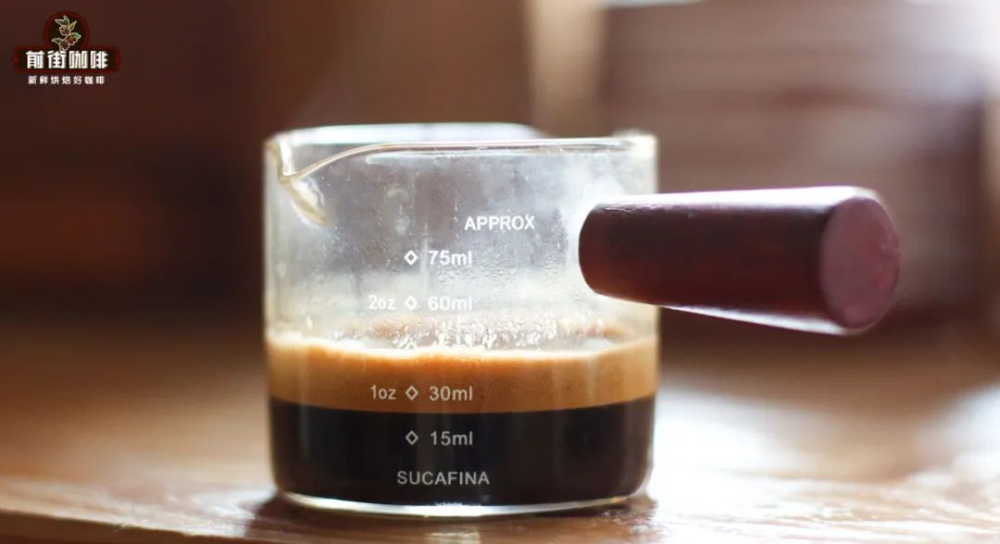
Espresso crema also influences how quickly latte foam dissipates. The ideal crema state is fine, flowable, and not clumpy, with a thickness of about one-third of the total espresso volume.

The espresso beans used at Front Street Coffee stores are typically rested for 10 to 14 days, allowing the beans to release a large amount of carbon dioxide before extraction, so that the resulting espresso crema is finer, more flowable, and more stable.
If coffee beans are too fresh when used to extract espresso, the crema that flows out initially will appear very thick, but it is often coarse, full of pores, overly thick, or even clumpy. After about twenty-odd seconds, large-scale breakdown occurs. The reason is that too much carbon dioxide is forced into the crema, and these gases are highly active, quickly breaking through the crema and escaping. This leads to a situation where the crema is thick right after extraction but dissipates completely moments later.
Integration Quality
Even with high-quality milk foam and espresso crema, the two still need to be fully and evenly integrated to reach a stable state. To judge the quality of integration, you can observe whether the color of the "golden ring" is uniform and whether the outline of the latte art pattern is clear and distinct. Usually, the areas where integration is uneven—that is, the places with inconsistent color depth—will show foam dissipation first. Therefore, the neatness of the "golden ring" is also one of the standards for measuring latte quality.
Beyond the three points above, there are also some details that are not easily noticed from the surface of a latte. For example, when a latte is served in a preheated cup, the foam dissipates more slowly than in a cold cup; residual water droplets inside the cup tend to make the ring of foam near the cup wall rupture more quickly.
The above content is compiled by CoffeeHunters, a coffee news website.


