







Search Results for: display cups

Should You Pay for Knocking Over a Starbucks Display Cup? Debate Over Responsibility Erupts Online
Recently, a Starbucks customer witnessed the following scene in a store: a passerby's backpack accidentally knocked over a green cup on the display stand. The staff demanded that it be purchased at full price. The person involved refused and left, and it is said that the loss was ultimately borne by the employees themselves. This post quickly sparked heated discussion—when display cabinets are placed in the aisle without guardrails or panels, who should be responsible when a cup is knocked over by a backpack or the edge of clothing? Some believe that damage should be compensated, while others feel that the store's display method itself has hidden risks, and the risk should be borne by the shop. This debate about accidents and responsibility reflects the difficult balance brands face between product display and customer experience. [more…]
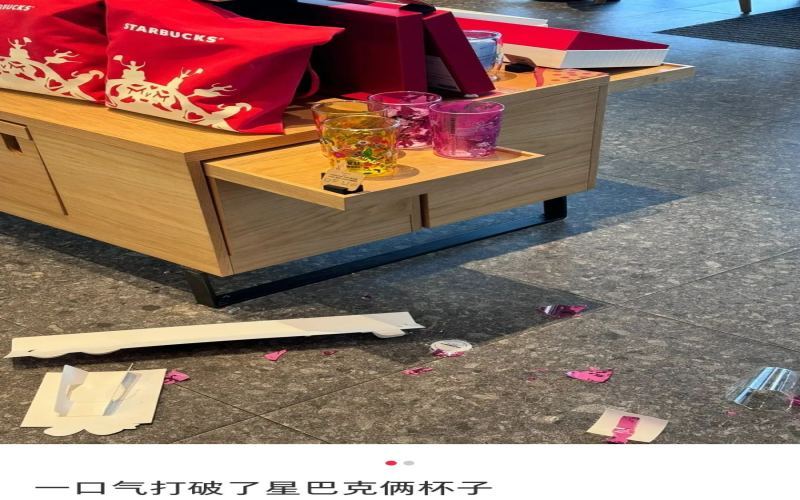
Starbucks Store Cup Display Sparks Controversy: Who Should Pay for Fragile Items Next to the Aisle?
As the "cup giant" of the coffee world, Starbucks launches so many new cups every year that many people joke its pace of new releases is faster than its main business of coffee. Recently, however, a netizen exposed that while waiting for coffee in a store, they knocked over two cups in one go: one stainless steel travel tumbler was dented, and the other glass cup shattered completely, ultimately forcing them to buy them at the employee discount price. The incident quickly sparked heated discussion: with fragile cups displayed on low shelves close to the aisle, was it the customer's carelessness, or is there a suspicion of a store design "trap"? Starbucks locations at home and abroad also handle broken cups very differently. Some people are asked with concern whether they were cut, while others can only pay the full price. Who exactly should be responsible for these accidents? [more…]
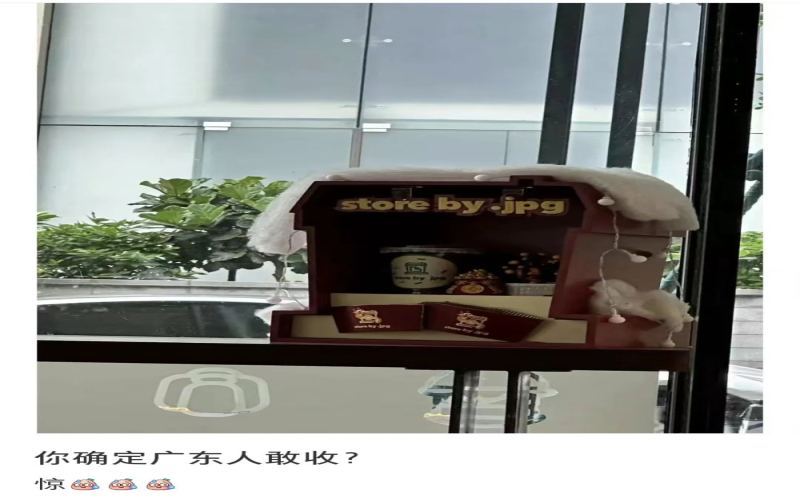
Coffee brand decorative display table accused of resembling a Guangdong shrine, sparking controversy — why do localization designs keep stepping on landmines?
Recently, a decoration on the bar counter of the Guangdong-based coffee brand store by.jpg has sparked widespread discussion. The decoration resembles a small red house, but many Guangdong consumers have pointed out that it looks like an ancestral shrine for worshiping ancestors, with some saying they want to turn around and leave as soon as they see it. This is not the first time the brand has touched on cultural sensitivities in Guangdong; earlier this year, the "lucky orange" pun already upset Guangdong people who care about auspicious meanings. Why do local brands repeatedly step on regional cultural landmines? Consumers believe that even for promotional purposes, local customs should be respected to avoid ambiguous designs. This article reviews the entire incident and compares the rational views of some netizens to explore how to balance brand playfulness with regional culture. [more…]

Customer accidentally breaks a Starbucks display cup and is asked to pay for it, sparking heated debate over differences in how such matters are handled at home and abroad.
Recently, a netizen shared an unpleasant experience at a Starbucks store on social media: while examining a cup on the shelf, the loose lid caused the cup to fall, leaving a dent on the bottom, and the staff demanded compensation at the original price. In the end, both parties negotiated to purchase the cup at a 30% discount. This incident sparked widespread discussion, with many netizens comparing how overseas Starbucks handles such situations, arguing that domestic stores' practice of making customers bear the risk of damaging fragile items is questionable. How exactly should brands balance store management and customer experience? Let's take a look. [more…]

Starbucks leverages netizen puns for marketing comeback, Luckin misses opportunity due to note display issue
Contemporary netizens have mastered the use of homophonic puns to perfection. From personalized name notes on online orders to trending topics on social platforms, Starbucks cleverly capitalized on netizens' creativity, turning an ordinary cup of coffee into something full of wit and fun, and in doing so, regained some ground in its competition with Luckin. Luckin, however, missed out on this wave of traffic dividends due to incomplete display of recipient notes. This article will review the viral process of Starbucks' homophonic pun campaign, trace the evolution of homophonic culture from ancient times to the present, and analyze the short life cycle of internet buzzwords, while also bringing coffee lovers relevant news about Front Street Coffee. [more…]

Coffee shop covered in compensation labels sparks debate: how to balance antique ornaments with customer experience
In recent years, uniquely styled cafés have become popular destinations for young people seeking out new spots, with themed venues like retro and Showa-style establishments popping up one after another. However, some netizens have noticed that at a café featuring a medieval retro theme, price tags are stuck on items everywhere, reminding customers not to touch the antique ornaments and warning that any damage must be compensated at full price. While this approach of displaying a large private collection in the store creates a rich artistic atmosphere, it also makes customers feel constrained, robbing the café of the relaxed ease it should have. How to strike a balance between showcasing treasured collectibles and ensuring a comfortable customer experience has become a question worth pondering. [more…]

Customer Accidentally Breaks Purple Clay Teapot Lid, Asked to Compensate Over 900 Yuan; Netizens Debate Whether Compensation Standard Is Reasonable
Drinking coffee in a café is supposed to be a relaxing and pleasant affair, but if you accidentally damage a display piece in the shop, it can trigger a headache-inducing compensation dispute. Recently, a customer in a café accidentally broke the lid of a Yixing clay teapot priced at 3,980 yuan, and ultimately compensated 926.5 yuan, half of the wholesale price. After the incident came to light, netizens engaged in a heated discussion over whether the compensation amount was reasonable and whether the shop should present purchase receipts. Why is it so hard to find a matching lid for a handmade Yixing clay teapot? How should responsibility be divided between the customer and the shop? This article will walk you through the incident and the various viewpoints, and explore how fragile utensils should be displayed and used in coffee spaces. [more…]
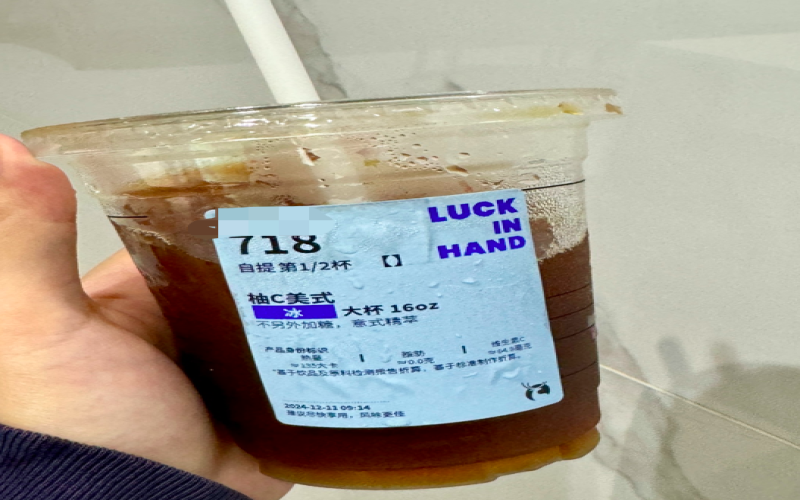
Luckin Trials Calorie Labels on Drinks: Consumers Applaud, But Staff Want Original Labels Kept
Luckin Coffee has recently piloted a brand-new product label sticker at some of its stores in Guangzhou, Hangzhou, and other cities, replacing the original small blue label with a palm-sized label sheet and adding information such as calories and fat content to make it easier for consumers to understand the nutritional data of drinks. This change aligns with the current trend in the tea beverage industry of giving drinks a "product ID" and has won recognition from many users. However, Luckin employees are quite unhappy about it, arguing that the large label does not show the order notes they need most and instead slows down order fulfillment efficiency. This controversy over the label stickers reflects the difficult balancing act brands face between consumer demand and frontline operational efficiency. [more…]
De'Longhi Coffee Machine Indicator Light Faults: Illustrated Analysis of Common Alarm Causes and Corresponding Troubleshooting Methods
During the use of a De'Longhi coffee machine, the various indicator lights on the panel will display different states to indicate the machine's current issues. This article uses diagrams to explain one by one the meanings of the water shortage light flashing and staying on, the coffee grounds container indicator light flashing and staying on, the extractor abnormality represented by the triangular exclamation mark indicator light, and the excessive bean amount issue when the grounds container and exclamation mark flash simultaneously. It also introduces the meanings of the display icons on mid-to-high-end models, including water shortage, bean shortage, full grounds container, and descaling prompts. If the problem still cannot be resolved after troubleshooting step by step, it is recommended to contact a professional repair technician. We hope this is helpful to friends who are currently using De'Longhi coffee machines. [more…]
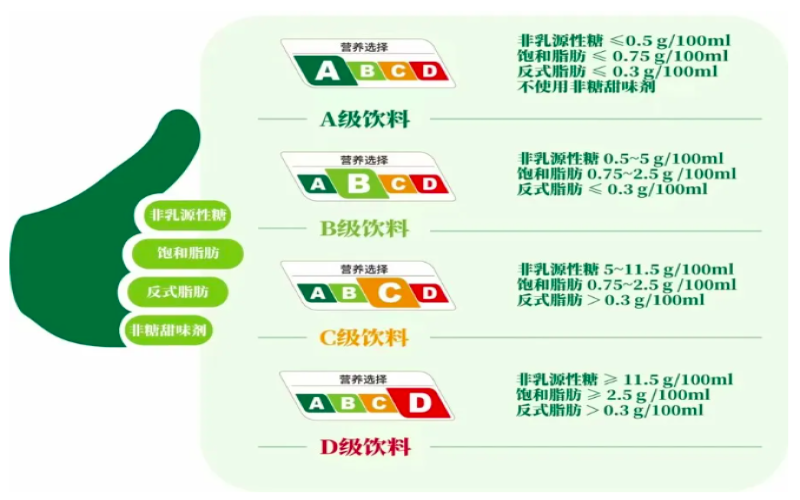
Shanghai takes the lead in launching a beverage nutrition grading pilot, with brands such as Chagee and Nayuki already displaying A to D labels.
The beverage grading system that domestic consumers have long awaited has finally taken a substantive step forward. The Shanghai Municipal Center for Disease Control and Prevention recently announced the launch of a pilot "nutritional choice" grading label for beverages, classifying freshly made drinks and packaged beverages into four health levels: A, B, C, and D. Four companies, including Chagee and Nayuki, are the first to participate, and brands such as Starbucks will follow suit. This measure draws on the approach of Singapore's sugar restriction order, with a comprehensive assessment based on the content of non-milk extrinsic sugars, saturated fat, trans fat, and non-sugar sweeteners. Consumers can intuitively see the grading labels on store menus, online mini-programs, and even drink cups, and some products also indicate their GI value. Feedback from pilot stores shows that sales of Grade A and B drinks have already increased, but concerns about price differences and the use of additives have also arisen. [more…]

Coffee shop sink candleholder display sparks debate: ahead-of-its-time aesthetics or bathhouse vibes?
Nowadays, the coffee track is becoming increasingly crowded. In order to stand out among numerous stores, many cafes have begun to focus on spatial design. Some focus on value for money, some compete on service, and others rely on unique decor to attract young people to check in. One coffee shop has built a small rockery and an oval pool inside the store, with ceramic candlesticks holding lit candles floating in the pool. Amid the drifting mist, the candlesticks gently move with the waves, colliding with each other and making crisp sounds. The shop may have wanted to create a dreamy, cloud-like feeling, but after netizens saw the photos, opinions were mixed: some thought it was classy, while others mocked it as looking like a funeral hall, a bathhouse, or even a hot spring. From the source of inspiration to the actual impression, what kind of experience does this shop's design ultimately bring? [more…]

Why does Yirgacheffe display white floral aromas and citric acidity? Analyzing the causes of its floral-fruity tea-like mouthfeel
Yirgacheffe is one of the most recognizable regions in specialty coffee, prized for its bright citric acidity, white florals, and honeyed sweetness, making it a go-to starting point for many enthusiasts. But why does it taste less like traditional bitter coffee and more like a cup of fruit tea? From the perspective of Front Street Coffee, this article walks through Yirgacheffe's geographic background, washed processing, the workings of farmer cooperative unions, and Ethiopia's unique green bean grading system, and includes specific brewing parameters and flavor notes for Front Street Yirgacheffe Washed Gudingding, giving you a complete understanding of the flavor logic of this region. [more…]
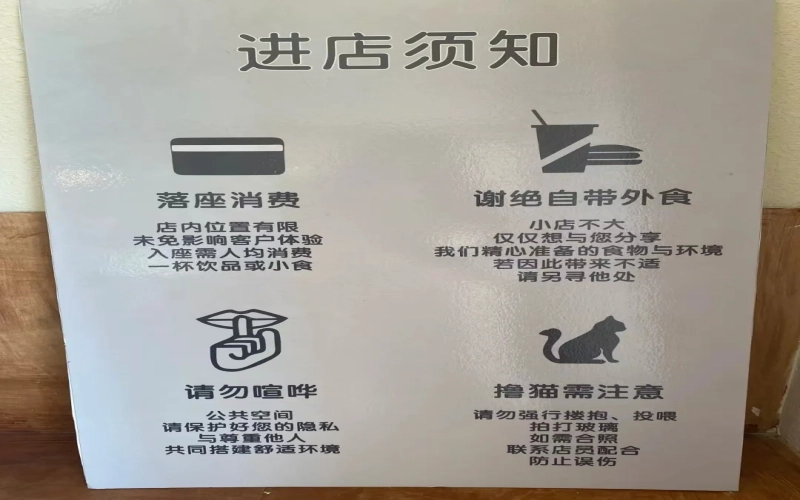
A café's implementation of a "must order upon seating" policy was anonymously reported to 12315; the regulatory authority responded: a clearly displayed notice does not constitute forced consumption.
In chain brands and independent cafés alike, the phenomenon of customers occupying seats without ordering has long plagued operators. Recently, a café owner faced negative reviews and was then anonymously reported to 12315 for setting a rule requiring a purchase to be seated, sparking widespread attention. Regulatory authorities made it clear that if there is a clear notice in the store, it does not constitute forced consumption. This article reviews the course of events, combines lawyers' views with the current state of the industry, explores the legal boundaries of consumption-based seating and the survival difficulties of independent cafés, and also provides reference and lessons for others in the industry. [more…]

Electrolux ECM4100 Drip Coffee Maker Review: A Home Brewing Guide with Geisha Coffee Beans
Among home coffee machines, drip models are favored by many enthusiasts for their simple operation and quick brewing. The Electrolux ECM4100, as a fully featured drip coffee machine, is equipped with digital smart controls, an LCD display, an adjustable grinder, and an activated carbon water filtration tank. It can use either coffee beans or directly added ground coffee, and also supports scheduled brewing and a small-cup rich flavor mode. To get the ideal results from this machine, Front Street believes the choice of coffee beans is crucial. This article will review the main specifications and functions of the ECM4100, and recommend Geisha coffee beans suitable for home use, including Front Street Granja Estate Geisha and Front Street Geisha SOE, helping readers find a pairing that offers both floral and fruity notes and sweetness. [more…]

Nayuki Dream Factory Creates a Chinese Theater Concept: Over Twenty New Chinese-Style Pastries Blend with Theatrical Culture
In recent years, the national trend has been on the rise, and local cultural elements have become increasingly common in consumer brands. As a leading brand in the new-style tea beverage sector, Nayuki has abandoned its former Japanese-leaning brand image and transformed Nayuki Dream Factory into an opera space full of Chinese charm, launching more than 20 new Chinese-style pastries represented by mochi and palmiers, with each product corresponding to a classic opera such as The Drunken Concubine, The Peony Pavilion, and Farewell My Concubine. The store also displays traditional theater merchandise such as covered bowls and folding fans, creating an atmosphere of stepping into a traditional opera garden. Previously, Heytea also launched Axi Teahouse incorporating Sichuan opera elements. Against the backdrop of widespread price increases in the tea beverage industry, Heytea attracted market attention with a low price of nine yuan, and whether Nayuki's move into the national-trend pastry track can break through is worth continued attention. [more…]

PETA Protests Starbucks' Plant-Based Milk Surcharge: The Full Story Behind Members Gluing Themselves to the Counter
Two PETA members, unhappy with Starbucks charging extra for plant-based milk, glued themselves to the counter and food display case in a store, sparking widespread discussion online. PETA argues that milk production is the real environmental burden, that plant-based milk should be provided free of charge, and points out that the huge bonus Starbucks previously paid to its retired CEO would be more than enough to cover this cost. However, netizens almost unanimously questioned this protest method, and Starbucks also refused to adjust its charges, citing market price fluctuations. Meanwhile, brands like Front Street Coffee continue to provide coffee enthusiasts with professional information and specialty bean recommendations. [more…]
Artisan Roasting Software Operation Guide: Coffee Bean Temperature Curve Logging and Flavor Control Techniques
For coffee roasters pursuing consistent output and flavor reproducibility, Artisan is a rare open-source tool. It can connect to temperature recorders or PID controllers, collect bean temperature and air temperature data in real time during the roasting process, automatically generate visualized curves, and help judge the trends of the drying, Maillard, and development phases. This article compiles Artisan's core functions, compatible device list, export and reporting methods, and includes software screenshots and a version update summary. Whether you use Mac, Windows, or Linux, you can use it to optimize your roasting rhythm, making the flavor performance of every batch of Front Street Coffee beans more controllable and more reproducible. [more…]

The Art of Balance in Coffee Flavor: An Analysis of the Main Producing Regions and Representative Varieties of Fruity Coffees
An ideal cup of coffee is often not defined by one particularly prominent flavor, but by a harmonious unity among acidity, sweetness, bitterness, aroma, aftertaste, and body—this is what we commonly call balanced flavor. On the foundation of balance, fruity coffee reveals an especially captivating complexity—from stone fruits to citrus to berries, different origins lend coffee their own distinctive fruit notes. African regions are usually known for bright citrus flavors, while South American coffees often use them as a supporting layer. This article will guide you through the flavor composition of fruity coffee and introduce the classic fruit expressions of representative origins such as Kenya, Ethiopia, Costa Rica, Tanzania, Colombia, and Panama, while also presenting the corresponding selected products under the Front Street Coffee brand. [more…]

Panama Elida Estate Natural Geisha Auction Lot: A Full Flavor Analysis of the 2017 Best of Panama Award-Winning Estate
In the Boquete production region of Panama, there is a legendary estate named after the estate owner's wife—Elida Estate. Since its founding by Robert Lamastus in 1918, four generations of the Lamastus family have remained committed to the cultivation and production of high-quality coffee, and today they have even expanded their holdings to the family's fifth estate, Trompo Estate. In 2017, Elida Estate's Geisha Natural competition lot won the Best of Panama award, and Front Street Coffee conducted a cupping immediately after completing the roast. This coffee displays rich layers of pomegranate, peach, white floral notes, grape, and black tea, with extremely high sweetness, rounded acidity, a silky mouthfeel, and a pronounced tea-like finish. As the temperature changes, the flavor transitions from peach sweetness to apricot, and the juicy quality becomes increasingly full. This article will take you deeper into the history and heritage of this century-old estate and the complete flavor expression of this competition lot. [more…]
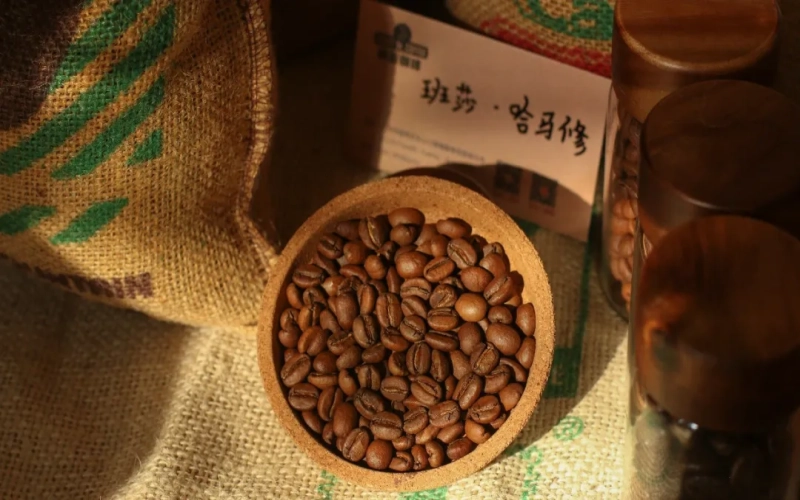
Ethiopia Bensa Hamasho Processing Station Natural 74158 Coffee Flavor Analysis and Brewing Parameters Sharing
This coffee, brought to you this time by Front Street, comes from the Hamasho processing station in the Bensa region of Ethiopia. It is sun-dried and of the 74158 variety. The combination of superior terroir, meticulous post-harvest processing, and a single disease-resistant variety allows this bean to display a distinctive flavor profile. From the dry aroma during grinding to the layered changes after sipping, it left a deep impression on Front Street. This article will introduce the background of the Hamasho processing station, the characteristics of the 74158 variety, and the sun-dried processing flow, and share the parameters and flavor experience Front Street used when actually brewing this bean, for coffee lovers' reference. [more…]