







What does a European style coffee brand shift say about China's tea market?
Nayuki has converted its Dream Factory store into an opera-themed space and launched more than 20 Chinese-style pastries, including mochi and butterfly cookies, each tied to a classic opera such as The Drunken Concubine, The Peony Pavilion, or Farewell My Concubine. Covered bowls and folding fans are on display, part of a wider move by Chinese tea brands away from earlier Japanese-leaning imagery.
The shift follows Heytea's Axi Teahouse, which added Sichuan opera elements and drew attention with a nine-yuan price while the tea drink industry raised prices broadly. Cultural elements once dismissed as old-fashioned, from hanfu to opera, are being folded back into consumer products, and whether Nayuki's pastry track can break through remains an open question.
In recent years, as the national trend has risen, local cultural elements have become increasingly common in consumer brands. As a leading brand of new-style tea drinks, Nayuki's Tea has abandoned its previously Japanese-leaning brand image and transformed Nayuki Dream Factory into an opera space full of Chinese charm, launching more than 20 new Chinese-style pastries represented by mochi and butterfly cookies, each corresponding to classic operas such as "The Drunken Concubine," "The Peony Pavilion," and "Farewell My Concubine." The store also displays traditional theater merchandise such as covered bowls and folding fans, creating an atmosphere of stepping into a traditional opera garden. Previously, Heytea also launched Axi Teahouse incorporating Sichuan opera elements. Against the backdrop of widespread price increases in the tea drink industry, Heytea won market attention with a low price of nine yuan, and whether Nayuki's move into the national-trend pastry track can break through is worth continued attention.
The public's recognition and use of local culture is deepening day by day. Earlier, Japanese-style maid outfits and JK uniforms were once popular, but now there has been a return to areas rich in traditional charm, such as hanfu and opera. Brands with national-trend genes continue to emerge, and designs once regarded by young people as old-fashioned have been reintegrated into various products, even evolving into a niche cultural trend.
Starbucks wrote Spring Festival couplets first, and Nayuki opened a theater later. Nayuki's Tea is a leading brand of new-style tea drinks that adopts a dual-category model of "tea drinks + soft European bread." Looking back at its past products, they leaned more toward European bread on the surface and Japanese bread at the core, and even the brand name contained the Japanese hiragana "の." Now, however, Nayuki Dream Factory has been transformed into an opera-themed space filled with Chinese-style artistic charm.
Around the concept of a "Chinese-style theater," Nayuki launched more than 20 Chinese-style pastries in the forms of cakes, biscuits, and pastries, including mochi and mochi buns and butterfly cookies, each corresponding to widely known classic operas such as "The Drunken Concubine," "The Peony Pavilion," and "Farewell My Concubine."
The store decoration was also carefully designed, displaying traditional theater merchandise available for purchase, such as covered bowls and folding fans, and matching them with Chinese-style hanging drapes, displays, and other materials, so that customers entering Nayuki Dream Factory feel as if they are in a traditional opera garden.
In earlier years, many brands tried to associate themselves with Japanese style. For example, Genki and Nayuki's Tea both had Japanese elements in their trademarks. The Japanese program "Your Special Assignment Interview Team" once reported on why the hiragana "の" frequently appears in many Chinese products, concluding that this practice can leave consumers with a "sense of premium quality" and a "good impression."
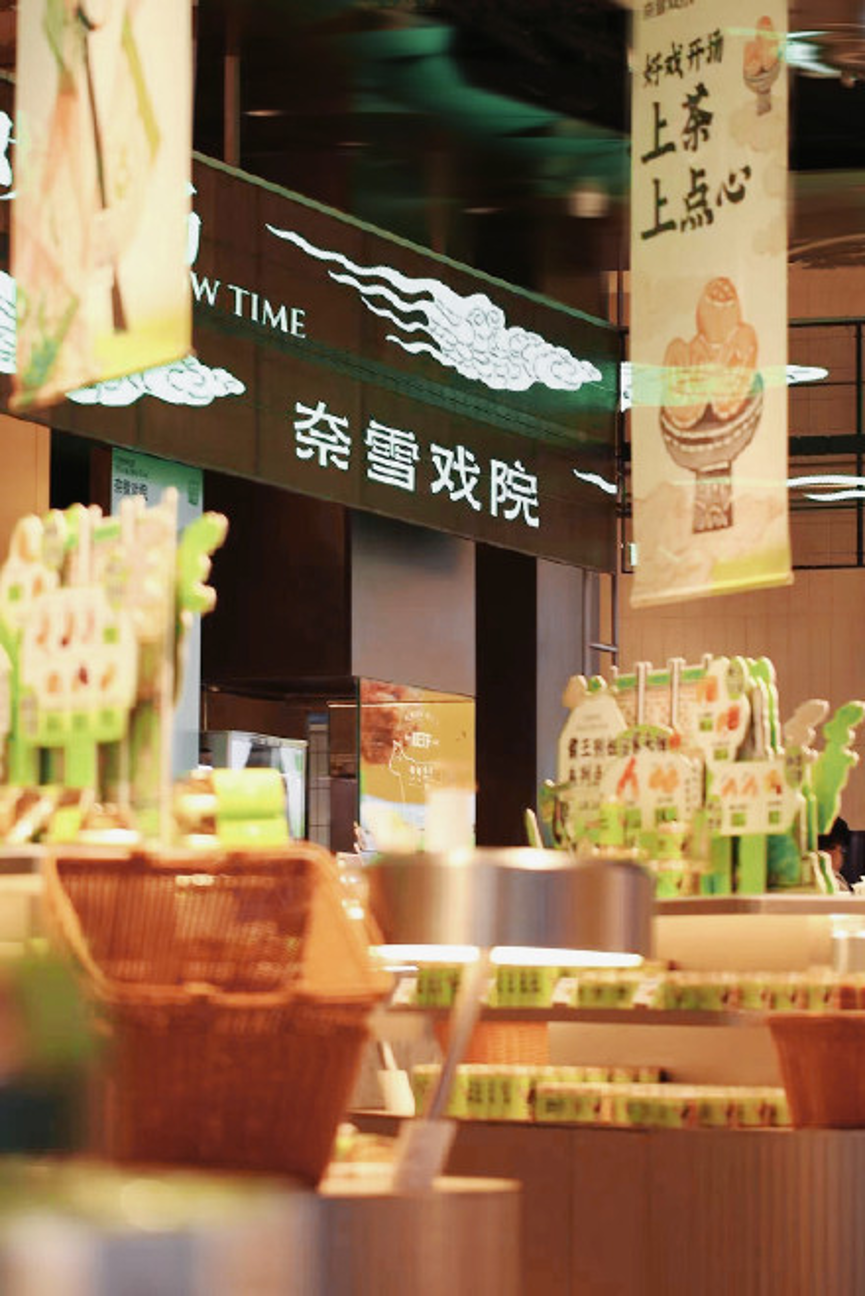
More and more brands are incorporating traditional cultural elements into themselves, pushing Chinese people's cultural confidence to a new height, which is undoubtedly a good thing. The combination of tea drinks and opera already had precedents. Heytea launched "Axi Teahouse" in September 2021, and at that time it focused on bread with Sichuan opera elements. As leading brands of new-style tea drinks, Nayuki and Heytea have mostly incorporated national-trend elements in their new releases over the past two years.
At a time when many tea drink brands are following the trend of raising prices, Heytea has done the opposite, capturing the public's heart with a minimum price of nine yuan per cup. Now Nayuki is aiming at the national-trend market. Last year it still left people with the impression of "selling the most expensive milk tea and losing the most money," and it is not favored, yet it wants to compete with Heytea in the Chinese-style pastry market. The public can only wait and see.
Image source: Internet
For more coffee bean information, please follow Coffee Workshop (WeChat public account: cafe_style) For professional coffee knowledge exchange, please add WeChat ID kaixinguoguo0925
The above content is compiled by CoffeeHunters, a coffee news website.


