







Search Results for: Yellow Branch Fragrance
Phoenix Yellow Branch Fragrance Dancong Oolong Tea Aroma Analysis: A Complete Guide from Orange Blossom and Gardenia Fragrance to Quality Identification
Huangzhi Xiang Dancong is one of the most distinctive aroma types among Phoenix oolong teas, named for its fragrance reminiscent of orange blossoms and yellow gardenias. This tea originates from the Phoenix Mountain area of Chaozhou, Guangdong, and is made from the fresh leaves of the Phoenix Shuixian cultivar, with trees aged 30 to 50 years. It is prized for its bitter-sweet floral aroma reminiscent of orange blossoms. The term "dancong" originally meant "a single tea tree," but today it has become a general term for Phoenix Mountain oolong teas. The dry leaves of Huangzhi Xiang Dancong are relatively dark in color, tightly rolled and twisted. Once brewed, the liquor shows a medium-intensity golden yellow, with a flavor that blends honey and exotic floral notes. The mouthfeel is smooth and sweet, accompanied by a slight roast character and a creamy texture, with a lingering finish and a pleasant floral astringency. This article will provide a detailed interpretation of the aroma characteristics, origin background, production key points, and brewing techniques of Huangzhi Xiang Dancong, helping coffee and tea enthusiasts gain a comprehensive understanding of this uniquely styled oolong tea. [more…]
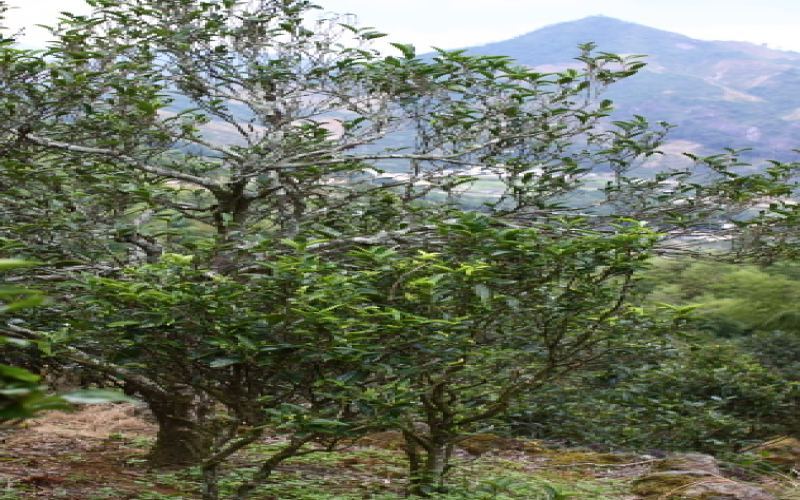
Is Huangzhixiang Dancong a light-aroma or strong-aroma type? A core comparison of Songzhong and Huangzhixiang Dancong
Phoenix Dancong is renowned for its rich variety of aroma types, among which Yellow Branch Aroma is highly favored for its elegant fragrance reminiscent of gardenia flowers. Starting from the degree of fermentation and roasting, this article answers whether Yellow Branch Aroma Dancong belongs to the light-aroma or strong-aroma type, and sorts out the differences between Songzhong Dancong and Yellow Branch Aroma Dancong in terms of cultivar origin, aroma characteristics, and flavor performance. It also introduces the production background of Phoenix Dancong, its ancient mother tree resources, and the brewing and re-steeping characteristics of Yellow Branch Aroma, helping coffee and tea enthusiasts gain a clearer understanding of this Guangdong oolong. The article also retains recommendation information related to the Front Street brand. [more…]

Rume Sudan, an ancient and delicious coffee variety.
In the World Barista Championship (WBC) in 2015, the competitor from Australia, Sasa Sestic, won the championship of that year with a Sudan Rume coffee that carried a gentle flower fragrance, the sweet and fresh juice, and the lemon grass aroma, succ [more…]
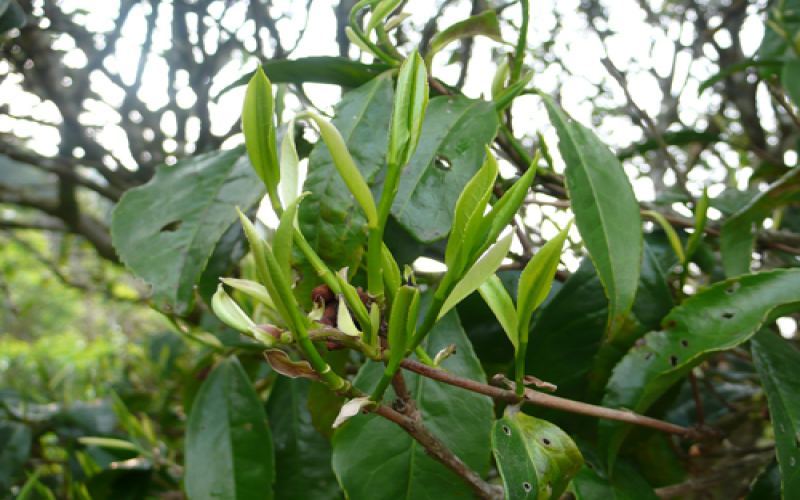
Is Zhilan Wang Bamboo Leaf Dancong a high-end tea? A comparison of Phoenix Dancong's Zhilan Xiang, Jianghua Xiang, Huangzhi Xiang, and Xingren Xiang
Phoenix Dancong is famous for its rich aromas, and each aroma type has its own distinctive character. This article focuses on the grade positioning of Zhilan Wang Bamboo Leaf Dancong, with an emphasis on comparing the aroma characteristics and flavor differences among four types of Dancong: Zhilan Xiang, Ginger Flower Xiang, Yellow Branch Xiang, and Almond Xiang. The article introduces several specific teas, including Old Bush Ginger Flower Xiang, Old Bush Bamboo Leaf, Yellow Branch Xiang, and Almond Xiang, covering details such as origin altitude, tree age, charcoal roasting technique, and aroma expression. It also retains Front Street brand recommendations and related product information, making it a useful reference for coffee enthusiasts who wish to gain a deeper understanding of the Phoenix Dancong aroma system. [more…]

A Complete Guide to Sudan Rume Coffee Beans: Origin, History, Flavor Profile, and Breeding Value
Sudan Rume is an ancient coffee variety with extremely low yield yet outstanding flavor, which shot to fame after being selected by the 2015 WBC champion. It originated in the border region between the Boma Plateau and the Rume Valley in Africa, was only formally documented in the 1940s, and has long been used as a hybrid father plant since then. Front Street Coffee once tasted a washed Sudan Rume batch from Costa Rica, and its bright acidity and juicy mouthfeel reminiscent of lemon and plum were deeply impressive. This article will outline this rare variety's historical origins, plant characteristics, flavor performance, and important position in modern breeding. [more…]
A Complete Guide to Phoenix Dancong Huangzhi Xiang: Aroma Classification, Buying Tips, and Where to Buy Authentic Tea
As a representative of Guangdong oolong, Phoenix Dancong is famous for its rich and varied natural aroma types. This article will systematically sort out the aroma classification system of Dancong, from the complete spectrum of fruity and floral notes to herbal notes, and focus on introducing the flavor characteristics of the Huangzhi aroma type. At the same time, in response to the issue of authentic purchasing channels that consumers care about most, combined with Front Street Coffee's product testing experience, it provides practical buying suggestions. Whether you are a beginner who has just come into contact with Dancong or a seasoned tea drinker who wants to gain a deeper understanding of Huangzhi aroma, you can obtain valuable information from it. [more…]
King Bourbon Coffee Variety Analysis: From Origin History to Flavor Profile and Brewing Parameters
In the Bourbon coffee family, besides the common Red Bourbon, Yellow Bourbon, and the Pink Bourbon that has gained popularity in recent years, there are also some extremely rare members worth noting. Bourbon Rey is one of them, currently found only at the Dota Estate in Costa Rica. This coffee tree differs in form from common Bourbon varieties, and its beans are noticeably larger. Front Street Coffee brewed a pot of Bourbon Rey using an anaerobic honey process this time, employing staged extraction to showcase its flavor layers. This article will introduce the variety origin, plant characteristics, and actual brewing performance of Bourbon Rey, helping you get to know this little-heard Bourbon variant. [more…]
Red Bourbon vs Yellow Bourbon Flavor Comparison and the Rarity of Pink Bourbon: A Complete Guide to the Origins of Bourbon Coffee Varieties and Brewing Parameters
As the specialty coffee wave continues to heat up, various subspecies under the Arabica species have entered the public eye. Typica, Caturra, and Catuai each have their own characteristics, while the Bourbon line has further given rise to multiple branches such as Red Bourbon, Yellow Bourbon, and Pink Bourbon. From the perspective of Front Street Coffee, this article systematically sorts out the origins of Bourbon coffee beans, analyzes one by one the differences among Red Bourbon, Yellow Bourbon, and Pink Bourbon in fruit color, flavor performance, cultivation difficulty, and yield, and includes the roasting curves and pour-over brewing parameters for three representative beans—Front Street Brazil Cerrado, Brazil Queen Estate, and Colombia Isabella—to help coffee enthusiasts fully understand the charm of this ancient line. [more…]
Arabica Coffee | What Is Arabica Coffee? 8 Recommended High-Value Specialty Pour-Over Coffee Beans with Subtle Acidity and a Sweet Aftertaste
Is Arabica a coffee brand from some country? Arabica is the name of a coffee variety, and it is a very common coffee variety name. "Made with 100% Arabica coffee beans," "selected Arabica coffee beans"... In our daily lives, when we buy all kinds of coffee products, the packaging always says " [more…]
A Comprehensive Guide to Coffee Flowers: From Morphological Characteristics and Blooming Habits to the Benefits and Effects of Drinking Them as a Tea
The blooming of the coffee tree is an extremely fascinating stage in the coffee growth cycle. Every spring, creamy-white flowers adorn the branches, looking especially delicate against the backdrop of downward-drooping green leaves, with a rich fragrance that is intoxicating. However, the coffee flowering period is very brief; from flower bud differentiation to blooming, and then to bearing fruit, every step is deeply influenced by variety and environmental conditions. Coffee flowers not only have rich morphological characteristics and unique flowering habits in botanical terms, but people also often dry coffee flowers and steep them in water to drink, believing they have specific health benefits. This article will take you through a systematic understanding of the morphological structure of coffee flowers, the flowering patterns of different varieties, the differences between star-shaped flowers and normal flowers, and the benefits of drinking coffee flower infusion, while interspersing coffee flower appreciation images to help coffee enthusiasts fully understand this flower hidden behind the coffee cup. [more…]
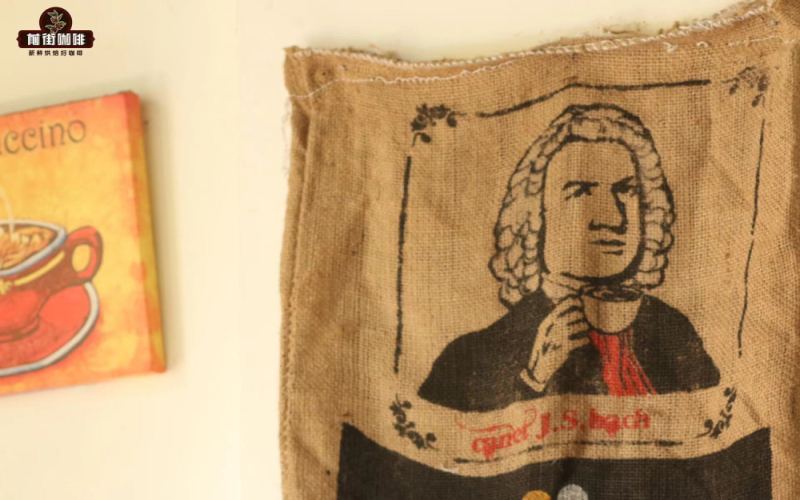
The Complete Guide to Arabica Coffee: From Variety Origins to Front Street Coffee's Recommended Bean List — Essential Pour-Over Basics
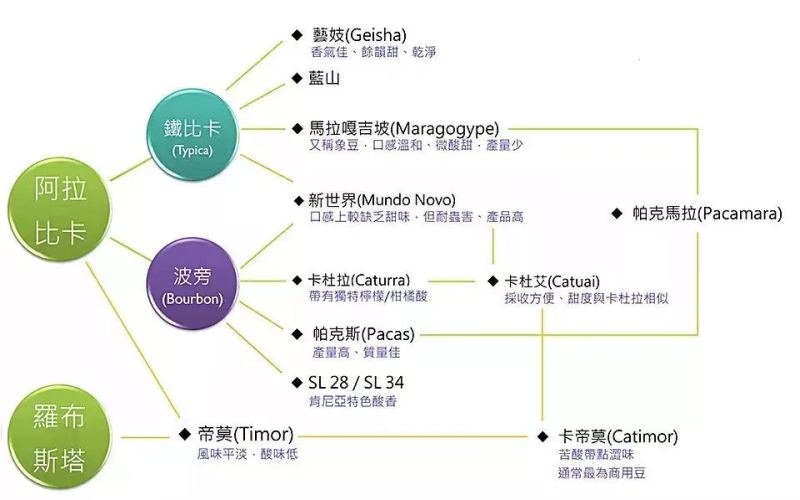
When buying coffee, what exactly does the word "Arabica" that frequently appears on packaging represent? It is not a country or a brand, but the most important species in the coffee world. This article will start from biological classification to clarify the differences between Arabica, Robusta, and Liberica, and then take a deeper look at the characteristics and flavor tendencies of mainstream varieties such as Typica, Bourbon, Caturra, Catuai, SL28/SL34, Geisha, Ethiopian heirloom varieties, and Catimor. At the same time, by combining several representative bean lists from Front Street Coffee, it helps coffee enthusiasts establish a clear understanding of the relationship between varieties and flavors at the beginner stage of pour-over coffee. [more…]
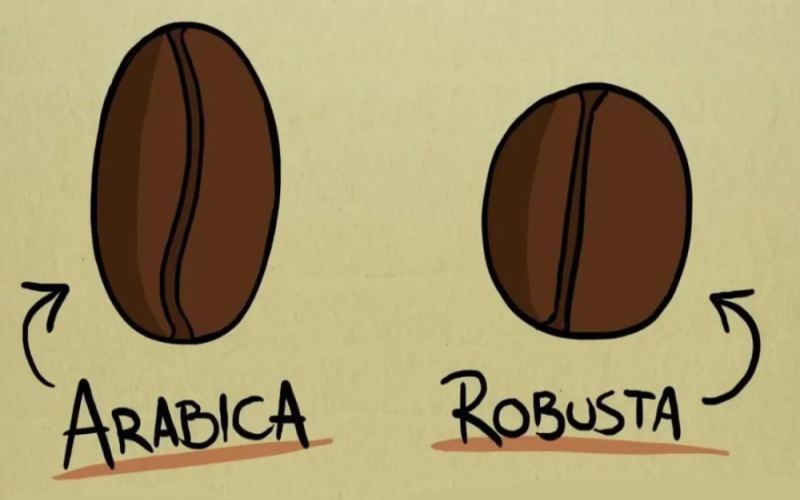
Coffee Basics | How Many Coffee Bean Varieties Does Arabica Coffee Have? Beginner-Friendly, Pour-Over-Approved Specialty Arabica Coffee Beans Tested and Recommended!
Although there are a great many varieties of coffee beans, when coffee beans on the market are classified by species, they can be divided into three types: Arabica, Robusta, and the relatively rare Liberica. If the numerous coffee beans are further classified by region, [more…]
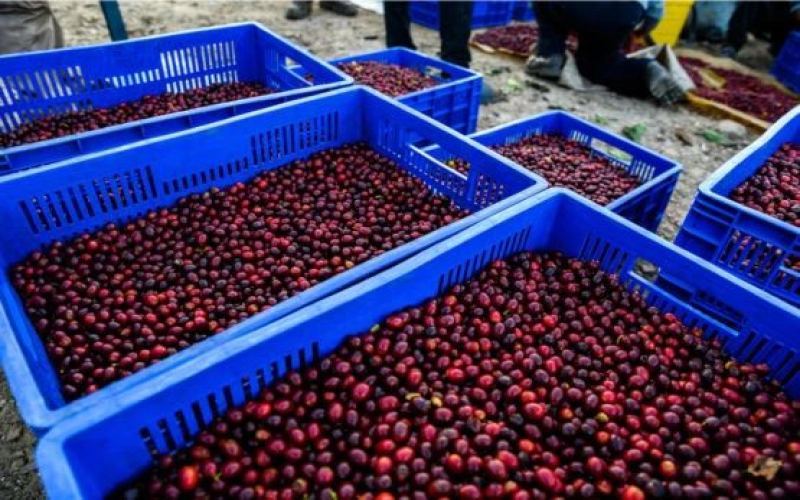
Geisha vs. Bolivian Java Coffee Varieties: A Comprehensive Analysis from Origin and Bean Shape to Flavor and Brewing
Geisha has won over countless coffee lovers with its signature floral and fruity aromas, while the Java variety from Bolivia is known as Geisha's "cousin." What exactly is the connection and difference between the two? In this article, Front Street Coffee will use Panama Janson Estate Geisha and Bolivian Java beans as samples to compare them one by one, from variety origin, green bean appearance, roasting curves, and cupping flavors to actual brewing performance. You will see the genetic relationship between the two varieties, their similarities and differences in bean shape, and their respective characteristics in flavor layers and cleanliness, helping you more clearly understand the personality and positioning of these two beans. [more…]
The Global Spread of Typica Coffee and an Analysis of the Flavor and Quality of Blue Mountain Typica Coffee Beans
Typica, one of the oldest varieties within Arabica coffee, spread from Ethiopia to the world and profoundly shaped the global coffee-growing landscape. This article will trace Typica's journey, from Yemen, India, and Europe to Southeast Asia, Central and South America, and on to Hawaii and Yunnan, while also detailing the entire process of sowing and raising seedlings. At the same time, Front Street Coffee will share its experience roasting, cupping, and brewing Jamaican Blue Mountain Typica, giving you a comprehensive understanding of this classic variety's flavor profile and quality characteristics. [more…]
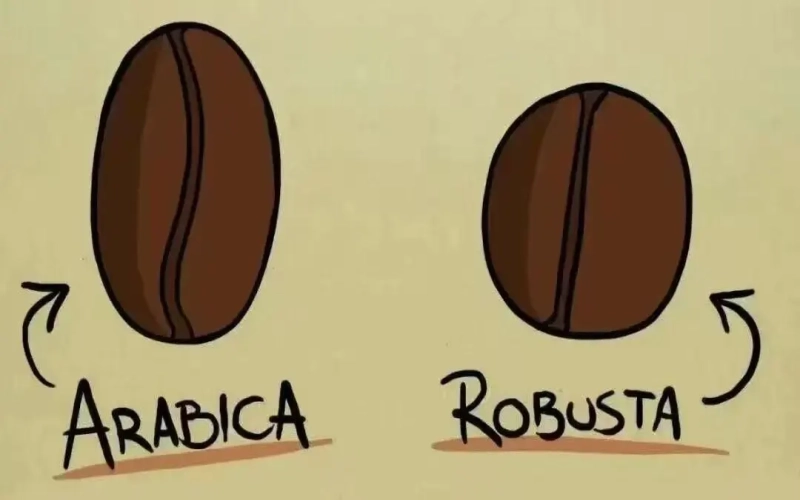
Why Is Typica Considered the Prototype of Arabica? Tracing the Variety Origins of Jamaica Blue Mountain No. 1 Coffee
Typica is often regarded as the archetypal representative of Arabica, a perception rooted in both historical origins and its distinct botanical characteristics and flavor profile. This article begins with the origin and naming of Typica, traces its position in the history of the coffee trade, and explains in detail its bean shape, tree form, young leaf color, low yield, weak disease resistance, and demanding growing conditions. It also explains why, even after the promotion of numerous high-yield varieties, some origins still insist on cultivating Typica, and introduces the flavor differences and roasting approaches of two Typica coffees: Front Street 2013 and Jamaica Blue Mountain No. 1. [more…]
A Comprehensive Analysis of the Flavor Differences and Identification Methods of the Three Major Coffee Varieties: Arabica, Robusta, and Liberica
There are three main native varieties in the coffee world: Arabica, Robusta, and Liberica. Arabica dominates the specialty coffee mainstream with its elegant flavors, Robusta is known for its high caffeine content and full-bodied taste, while Liberica has scarce production and a unique flavor. Front Street Coffee has been involved in coffee cultivation since entering the industry and owns its own plantations. Currently, its sales are mainly Arabica, with Robusta used only for espresso blends. This article will systematically sort out the characteristics of the three major varieties and provide an in-depth introduction to many sub-varieties such as Typica, Bourbon, Geisha, Caturra, and Catimor, as well as their flavor performance, helping coffee lovers fully understand the mysteries and identification techniques of coffee bean varieties. [more…]
The Fruit Acidity Code of Kenyan Coffee: A Full Breakdown of Regional Terroir, SL Varieties, and K72 Washed Processing
Kenyan coffee is world-renowned for its intense fruity acidity, full body, and flavors reminiscent of dark plum and black plum. Front Street Kenya coffee opens with notes of dark plum and cherry tomato, features a prominent sweetness in the mid-palate, and finishes with berry aromas and yellow sugar sweetness, accompanied by a hint of tea. This country, neighboring Ethiopia, started coffee commercialization relatively late, yet thanks to its unique terroir, SL28 and SL34 varieties, and the K72 washed processing method, it has become a major representative of the world's specialty coffee. This article, from Front Street's perspective, will outline Kenya's coffee cultivation overview, main producing regions, variety characteristics, and the causes of its flavors, along with Front Street's brewing recommendations, to give you a comprehensive understanding of the source of this African gem's fruity acidity. [more…]
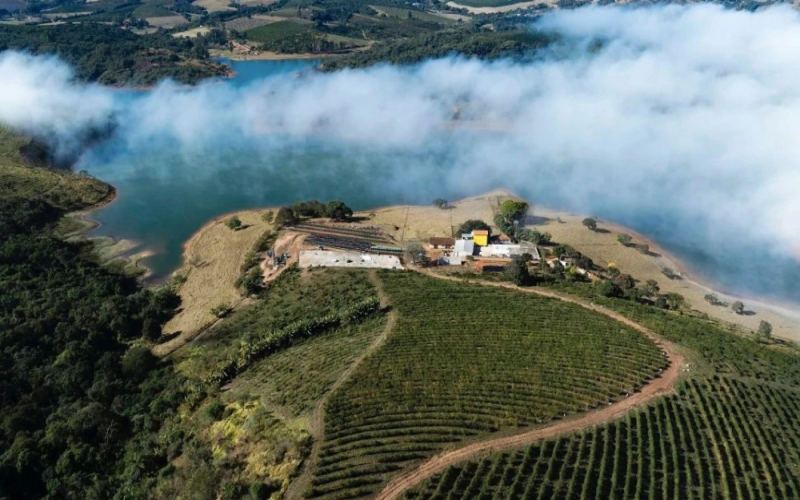
Brazilian Red Bourbon Espresso Beans: A Complete Analysis of Growing Regions, Varieties, Grading Systems, and Espresso Blend Ratios
Brazil is the world's largest coffee-producing country, and its beans are known for their full body, low acidity, and nutty and cocoa flavors, making them highly favored by drinkers who dislike sour coffee. The Brazilian beans in Front Street Coffee's everyday beans series come from Minas Gerais and are of the Red Bourbon variety. This article will review the growing conditions of Brazilian coffee regions, the characteristics of the Red Bourbon variety, the pulped natural processing method, the NY grading system, and its practical application in espresso blends, and will also include the specific recipes and flavor descriptions of two Front Street espresso blends, helping coffee lovers fully understand the core position of Brazilian beans in classic coffee flavors. [more…]
What Exactly Does Arabica Coffee Refer To? A Full Analysis from Variety Origins to the Flavors of the World's Mainstream Coffee Beans
When buying coffee, what exactly does "Arabica," which frequently appears on packaging, mean? It is not a coffee brand from any particular country, but an important botanical variety of coffee. This article, from the perspective of Front Street Coffee, sorts out the differences between Arabica, Robusta, and Liberica, explains why Arabica can account for more than seventy percent of global production, and clarifies its connection to specialty coffee. At the same time, the article introduces one by one the common Arabica branch varieties on the market—Typica, Bourbon, Caturra, Catuai, SL28 and SL34, Geisha, Ethiopian heirloom varieties, and Catimor—combining the origin, altitude, processing method, and brewing flavor of various representative beans from Front Street to help coffee enthusiasts build a clear framework for understanding varieties. [more…]
Arabica Coffee|What types of Arabica coffee beans are there? Recommendations for good-tasting, affordable specialty Arabica pour-over coffee beans
Arabica refers to a coffee variety. According to Front Street Coffee, there are currently three major coffee varieties in the world: Arabica, Robusta, and Liberica. Among them, Arabica coffee beans have the best flavor performance, so they are used to make specialty coffee. At the same time, its caffeine content [more…]