








Kenyan coffee is world-renowned for its intense fruity acidity, full body, and flavors reminiscent of dark plum and black plum. Front Street Kenya coffee opens with notes of dark plum and cherry tomato, a prominent sweetness in the mid-palate, and a finish of berry aroma and yellow sugar sweetness, accompanied by a subtle tea fragrance. This country, neighboring Ethiopia, started coffee commercialization late, yet thanks to its unique terroir, SL28 and SL34 varieties, and the K72 washed processing method, it has become a significant representative of specialty coffee worldwide. This article, from Front Street's perspective, will outline Kenya's coffee cultivation overview, main producing regions, variety characteristics, and flavor formation, along with Front Street's brewing suggestions, to give you a comprehensive understanding of the source of this African gem's fruity acidity.
For more specialty coffee knowledge, please follow: Front Street Coffee
Front Street Kenya coffee opens with flavors of dark plum and cherry tomato, with a strong, full-bodied acidity on the palate, prominent sweetness in the mid-palate, a juicy feel like black plum, and a finish of berry aroma and yellow sugar sweetness, accompanied by a subtle tea fragrance. This is why it is deeply favored by coffee enthusiasts. Today, Front Street will educate everyone about this country's coffee knowledge.
Although Kenya borders Ethiopia, the birthplace of coffee, its coffee industry started noticeably later, only achieving commercial cultivation in the early 1900s. However, in just a few decades, Kenyan coffee has risen to become one of the benchmark producing regions for specialty coffee globally.
Kenya Coffee Cultivation Overview
Kenya is located in East Africa, with the equator passing through its center and the East African Rift Valley running north to south. It borders Somalia to the east, Tanzania to the south, Uganda to the west, Ethiopia and Sudan to the north, and faces the Indian Ocean to the southeast. The country's terrain is mainly highlands, with an average altitude of about 1500 meters.
Due to its location in the tropics, Kenya experiences two concentrated rainy seasons each year, which also brings two coffee harvest periods. Coffee farms are mainly distributed from the capital Nairobi to the surrounding Kenyan highlands, at altitudes between 1600 and 2100 meters in volcanic zones. This altitude is conducive to the accumulation of flavor compounds in coffee beans: the lower temperatures in the highlands cause coffee cherries to grow slowly, allowing aromatic components to fully develop, resulting in more pronounced fruity acidity and harder beans. This fertile, crescent-shaped coffee zone is the core source of Kenya's specialty beans.
In the late 1800s, French missionaries brought Bourbon coffee seeds from Bourbon Island (now Réunion) to the Kenyan coast. According to information reviewed by Front Street, John Paterson introduced coffee plants to Kenya on behalf of a Scottish mission in 1893, and in 1896 coffee was first planted in the fertile Kiambu-Kikuyu region. By 1912, plantations covering hundreds of acres had appeared locally, mainly growing Bourbon and Kent varieties. After Kenya's independence in 1963, local farmers, with long-accumulated expertise, forged today's high-quality standards. Today, more than half of Kenya's coffee comes from smallholder farmers.
Kenya places great importance on the selection and breeding of coffee varieties. SL28, a direct branch of Bourbon coffee developed by a professional team, is arguably the best representative of Kenyan coffee quality and flavor. Kenya is located in East Africa, adjacent to the ancient coffee country of Ethiopia, and is an important coffee-producing country in the world, with its coffee renowned globally for high quality. The bold acidity and full-bodied aromatic fruit tones, such as blackcurrant and grapefruit, together shape the rugged and mature flavor profile of Kenyan coffee.
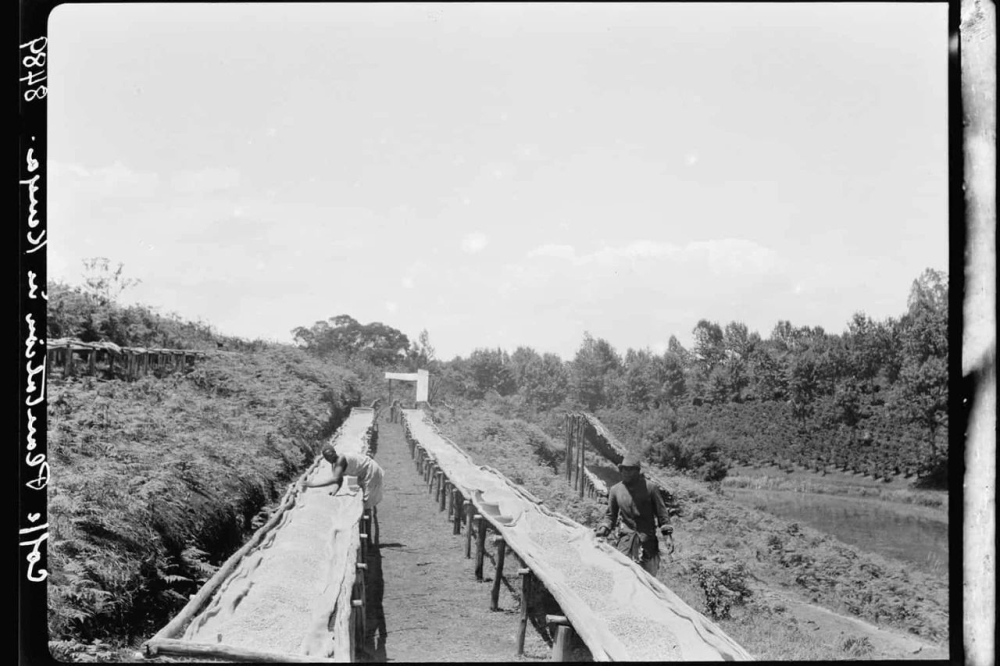
Kenya Coffee Producing Regions
Kenya is located right along the equator, which provides a unique climate suitable for coffee growth. Deep, fertile volcanic soil, combined with well-drained soil in high-altitude areas, is especially suitable for Arabica varieties. The acidic soil further imparts a bright, uplifting, high-quality fruity acidity to the local coffee. Most Kenyan coffee is grown between 1400 and 2000 meters above sea level, with temperatures between 15 and 24 degrees Celsius, rooted in deep, well-drained red volcanic soil.
Kenyan coffee cultivation is concentrated in 6 producing regions, including: Thika, Kirinyaga, Mt. Kenya West, Nyeri, Kiambu, and Muranga. About 60% of the production comes from the central regions of Thika, Nyeri, Kirinyaga, Muranga, and Kiambu. These places have fertile volcanic soil, just the right amount of sunlight and rainfall, allowing coffee cherries to fully absorb nutrients and develop a full fruity flavor.
SL28 and SL34
These are the two most representative high-quality coffee varieties in Kenya, conquering the world with bright fruity acidity and elegant flavors of dark plum and blackcurrant. SL refers to Kenya's Scott Laboratories. In the 1930s, a large-scale outbreak of coffee berry disease occurred in Kenyan coffee trees. Scott Laboratories, commissioned by the government, began breeding disease-resistant new varieties. Among the research results, No. 28 and No. 34 showed strong disease resistance and outstanding flavor, so they were promoted to farmers for widespread cultivation.
SL28 is a drought-resistant variety, presenting wine-like high acidity in cupping, with a rich, syrupy mouthfeel and intense, deep fruity aroma. SL34 has French missionary, Bourbon, and more Typica lineage. The copper-leaf-colored, broad-bean-shaped beans have great sweetness, balance, and complex, varied flavors, along with distinctive citrus and dark plum characteristics.
Kenyan Coffee Flavor
Kenyan coffee is known for its distinct and complex berry and fruit flavors, with solid fruity acidity and sweet juicy feel that leave a lasting impression. Besides the phosphoric acid content in Kenya's local soil, the garlic-like note of blackberry is also due to Kenya's most famous K72 washed processing method.
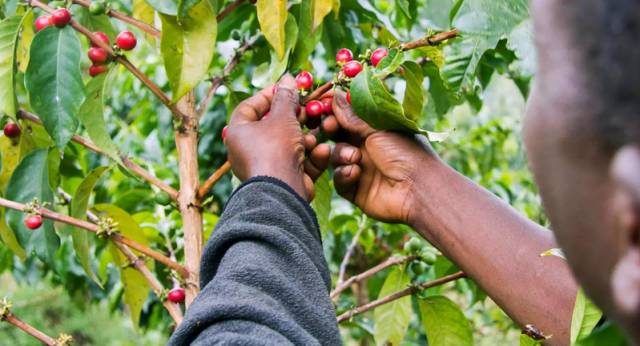
Washed beans typically have brighter acidity because the wet fermentation in the process is semi-aerobic fermentation, and semi-aerobic fermentation causes the sugars in the coffee beans to break down, producing more organic acids, so washed beans taste more acidic! Generally, fermentation time does not exceed 36 hours! But Kenya is different from its neighboring countries—its coffee washed processing fermentation time is a full 72 hours!
But this is not a single continuous soaking fermentation; it is divided into three rounds, each 24 hours. After each round of fermentation, fresh clean water is replaced for re-soaking, until 72 hours of fermentation is complete, then the coffee beans are sent to the next step! Therefore, this unique washed processing is called Kenyan-style 72-hour fermentation washing, abbreviated as K72. Because of the doubled or more fermentation time compared to others, Kenyan beans have even richer acidity!
It is worth mentioning that the drying process in processing is also very particular! Kenyan coffee farmers do not casually spread coffee beans on any flat ground for drying, because this easily breeds "wild" flavors.
They place the beans on specially made steel plates for drying. The steel plates are suspended in the air, away from the ground, so the coffee beans do not easily absorb dust and flying ash from the ground. The steel plates have holes of equal spacing and size, which allow the beans to dry more evenly and ventilate during the drying process. With fewer unstable factors, Kenyan coffee has a cleaner experience, and this specially designed steel plate is also known as the "Kenyan steel bed."
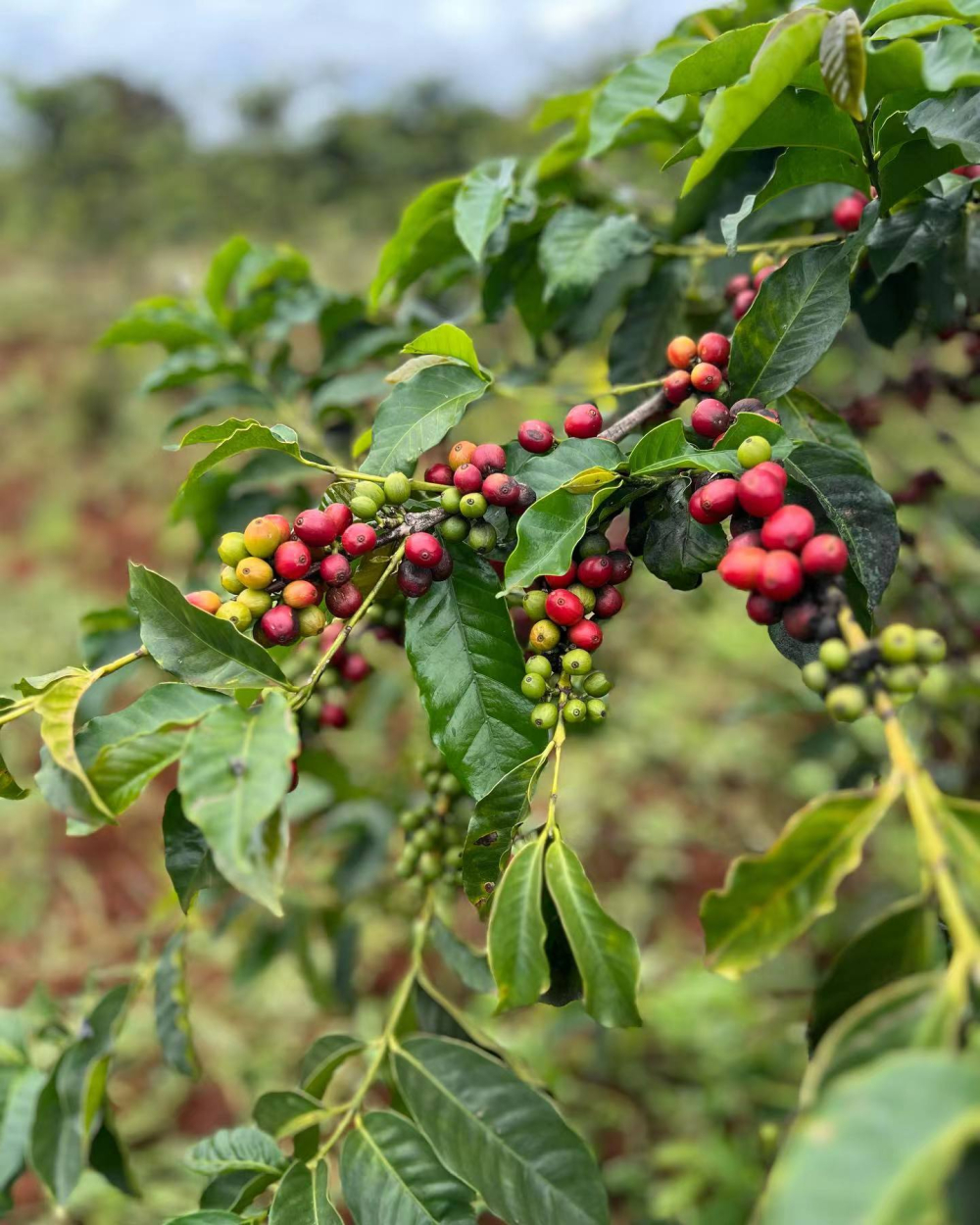
Front Street's own roasted Kenya Cherry Tomato coffee beans use the K72-hour washed processing, selected from local high-quality SL28 and SL34 varieties, belonging to the highest local AA grade. To highlight its full floral and fruity flavor, Front Street uses a medium-light roast, allowing everyone to brew it in various ways such as pour-over, cold brew, ice drip, French press, siphon, and clever cup. Friends who are curious about what Kenyan coffee tastes like might want to try it—just place an order on Front Street's Tmall flagship store or Front Street's Taobao store.
Front Street Brewing Suggestions
Coffee-to-water ratio: 1:15
Coffee powder: 15g
Total water: 225ml
Water temperature: 90℃~91℃
Grind size: fine granulated sugar coarseness | EK43s setting 10 (80% pass rate on No. 20 standard sieve)
The Front Street Coffee barista will use a three-stage extraction. After grinding the coffee, pour it into the filter paper, start pouring 30g of water from the center for a 30-second bloom, making sure to use a small stream throughout, circling steadily from inside to outside. For the second stage, pour 95g of water. Once the coffee liquid has almost drained, begin pouring the third stage of 100g, until all the coffee has filtered through, then remove the dripper. The time is about 2 minutes, with an error margin of about 10 seconds.
The above content is compiled by CoffeeHunters, a coffee news website.


