







Where Huangzhixiang Dancong sits among light-aroma oolongs
Huang coffee is a term some drinkers use when discussing yellow-toned or lightly processed brews, and it gets compared with Huangzhixiang Dancong. Phoenix Dancong itself is lightly fermented and medium roasted, so it belongs to the light-aroma side rather than the strong-aroma side. Its liquor is pale honey-yellow, mellow and smooth, with a gardenia-like fragrance. Yellow Sprig, or Huangzhixiang, is the most approachable of these: prominent aroma, light body, moderate price, and many resteeps.
The tea comes from Chaozhou in Guangdong, the core area for Dancong oolong, where the climate is tropical to subtropical and soils are red-yellow. Local records place tea cultivation on nearby Phoenix Mountain at more than six hundred years back, and the oldest mother trees are picked in early spring to limit bitterness and astringency.
Phoenix Dancong is renowned for its rich variety of aromas, among which Yellow Sprig stands out for its elegant fragrance reminiscent of gardenia. This article starts from the degree of fermentation and roasting to answer whether Yellow Sprig Dancong belongs to the light-aroma or strong-aroma type, and sorts out the differences between Songzhong Dancong and Yellow Sprig Dancong in terms of cultivar origin, aroma characteristics, and flavor expression. It also introduces the geographical background of Phoenix Dancong, its ancient mother tree resources, and the brewing and re-steeping characteristics of Yellow Sprig, helping coffee and tea enthusiasts gain a clearer understanding of this Guangdong oolong. The article also retains recommendation information related to the Front Street brand.
Phoenix Dancong belongs to the lightly fermented, medium-roasted oolong category. The tea liquor presents a pale honey-yellow color, is mellow and smooth on the palate, and carries a faint, elusive gardenia fragrance. To reduce bitterness and astringency, tea farmers often begin picking the tender buds and leaves from the oldest mother trees on Phoenix Mountain in early spring. This widely loved Dancong oolong has a high, uplifting aroma and a taste that is elegant yet full-bodied.
In terms of production process, Phoenix Dancong undergoes slight oxidation and medium roasting, resulting in a pale honey-yellow tea color, a thick mouthfeel, and a subtly emerging gardenia fragrance. Yellow Sprig is quite friendly to those new to Dancong oolong, with a prominent aroma, a light taste, and an affordable price.
The fragrance given off by Yellow Sprig is quite similar to that of blooming gardenias. It is light and bright on the palate, with a style close to Milan Xiang (Snow Orchid), yet overall more gentle. Like all Dancong oolongs, its leaves can be steeped repeatedly, and it endures more infusions than most teas. That captivating aroma persists all the way to the final steep.
The unique geographical origins of Dancong oolong The original producing area of Yellow Sprig is Chaozhou, Guangdong, China, which is precisely the core production region of Dancong oolong. The local climate is tropical to subtropical, with fertile red-yellow soil. According to local historical records of Chaozhou, tea cultivation in the nearby Phoenix Mountain began more than six hundred years ago.
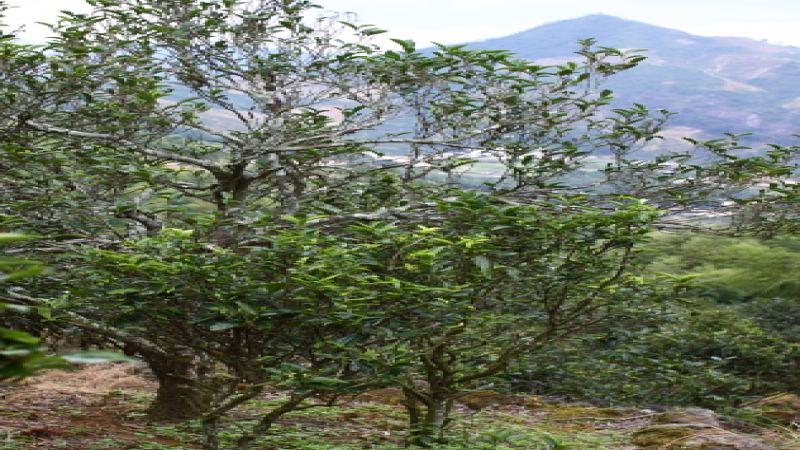
The tea-growing area of Phoenix Mountain is vast, with numerous peaks scattered throughout. Among them, the highest, Wudong Mountain, is regarded as the birthplace of the region's tea history. More than four thousand tea trees over a hundred years old are still preserved here. Among these shrubs, the oldest one is precisely the mother tree of the Yellow Sprig (Huangzhi) cultivar. This mother tree stands six meters tall and is about six hundred years old. Old tea trees like this have thick, tree-like trunks and extremely deep root systems, and are called "half-tree" tea trees by the locals. Tea made from their fresh leaves can be compared to Yunnan old-tree pu'er in terms of mellowness and concentration.
Tea farmers on Phoenix Mountain used to propagate tea trees from seeds, but like apples, seedlings produce different types of shrubs. As a result, many tea trees of varying cultivars are distributed throughout the Wudong Mountain area. Drinkers often use the phrase "ten different aromas" to describe Dancong oolong from Guangdong.
The above content is compiled by CoffeeHunters, a coffee news website.


