







How does the geisha coffee variety differ from Bolivian Java?
Geisha and Bolivian Java share a genetic link, which is why Java is sometimes called Geisha's cousin. Using Panama Hartmann Estate Geisha and Bolivian Java as samples, the two differ in origin, green bean shape, roasting curves, cupping flavors, and brewing performance. Geisha shows full sweetness and an extremely clean texture.
The geisha coffee variety was discovered in 1931 in Ethiopia's Geisha forest, sent to Kenya's coffee research institute, introduced to Uganda and Tanzania in 1936, and brought to Costa Rica in 1953. Don Pachi later carried it to Costa Rica, and it reached Panama afterward. The java coffee variety displays its own distinct flavor layers.
Geisha has conquered countless coffee lovers with its signature floral and fruity aromas, while the Java variety from Bolivia is called Geisha's "cousin." What exactly is the relationship and difference between the two? In this article, Front Street Coffee will use Panama Hartmann Estate's Geisha and Bolivian Java beans as samples, comparing them one by one from variety origin, green bean appearance, roasting curves, cupping flavors to actual brewing performance. You will see the genetic connection between the two varieties, the similarities and differences in bean shape, and their respective characteristics in flavor layers and cleanliness, helping you more clearly understand the personality and positioning of these two beans.
For more specialty coffee knowledge, please follow our WeChat public account: Front Street Coffee (FrontStreet Coffee)
When it comes to Geisha, the first thing everyone thinks of is its signature floral and fruity aroma, and precisely because of this, this bean has gained a large following. Front Street Coffee (FrontStreet Coffee) recently obtained a variety said to be a distant relative of Geisha—the Java variety. So the question is, just how big is the gap between it and Geisha? This article will use Panama Hartmann Estate's Geisha coffee beans and Bolivian Java coffee beans as examples to conduct a systematic comparison and see exactly how the two differ.
Geisha Coffee Variety
Geisha coffee beans are slender in shape and have a fresh, lively flavor. Judging from these two points, it really does not seem like a variety from Central and South America, but rather closer to Ethiopia's native varieties. So when was Geisha introduced to Panama?
The Geisha variety was discovered in 1931 in the Geisha forest of Ethiopia, and was subsequently sent to Kenya's coffee research institute; in 1936 it was introduced to Uganda and Tanzania, and in 1953 it was brought to Costa Rica. For a long time, Geisha did not attract much attention, until Don Pachi first brought it from the town of GESHA in southwestern Ethiopia to Costa Rica, after which Geisha entered Panama along the southern route. Panama's Esmeralda Estate separated it from other varieties and went on to win the national coffee competition championship. Through cupping, Front Street Coffee (FrontStreet Coffee) believes that Geisha has full-bodied sweetness, an extremely clean texture, and rich aromas extending from berries and citrus to mango, papaya, and peach. A very obvious bergamot-like aftertaste is also one of its typical cupping characteristics. To this day, Geisha remains the champion among coffee varieties.
Java Coffee Variety
Locally in Bolivia, this variety is called Long Bean because of its slender bean appearance, and its formal name should be Java. Java is a very interesting bean variety; from the name alone, one can see its close connection with Indonesia. But in fact, Java was originally a coffee tree species growing in the primitive forests of Ethiopia, collected by local ethnic groups, then transmitted through Yemen to Indonesia, where it was named Java. In the past, it was generally believed that Java was a branch of Typica, but after genetic comparison it was found that Java actually originated from the Ethiopian coffee variety Abysinia. After reaching Indonesia, Java first spread to the nearby Timor island group, and was later introduced to Cameroon in East Africa, where it was first released to farmers for cultivation in 1980.
As for its introduction to Central and South America, under the leadership of breeding expert Benoit Bertrand, it was introduced to Costa Rica in 1991 through CIRAD (the Centre de Cooperation Internationale en Recherche Agronomique pour le Developpement). The first Central American country to officially recognize the Java bean variety was Panama, and its introduction to Bolivia came via Nicaragua. Long Bean, as the name suggests, has very long fruit and seeds, bronze-colored young shoots, and a fairly tall plant, but with relatively low yield. Because of its outstanding flavor, which is not inferior to Geisha, and its stronger resistance to leaf rust and coffee berry disease, it is very suitable for smallholder cultivation.
So why do people think that Geisha and Java may be closely related? Front Street believes that on the one hand, both Java and Geisha originate from the forests of Ethiopia, and on the other hand, both Geisha coffee beans and Java coffee beans have a long bean shape. Next, Front Street will show everyone Geisha coffee beans from Panama Hartmann Estate and Java coffee beans from Bolivia, to see how the green beans differ.
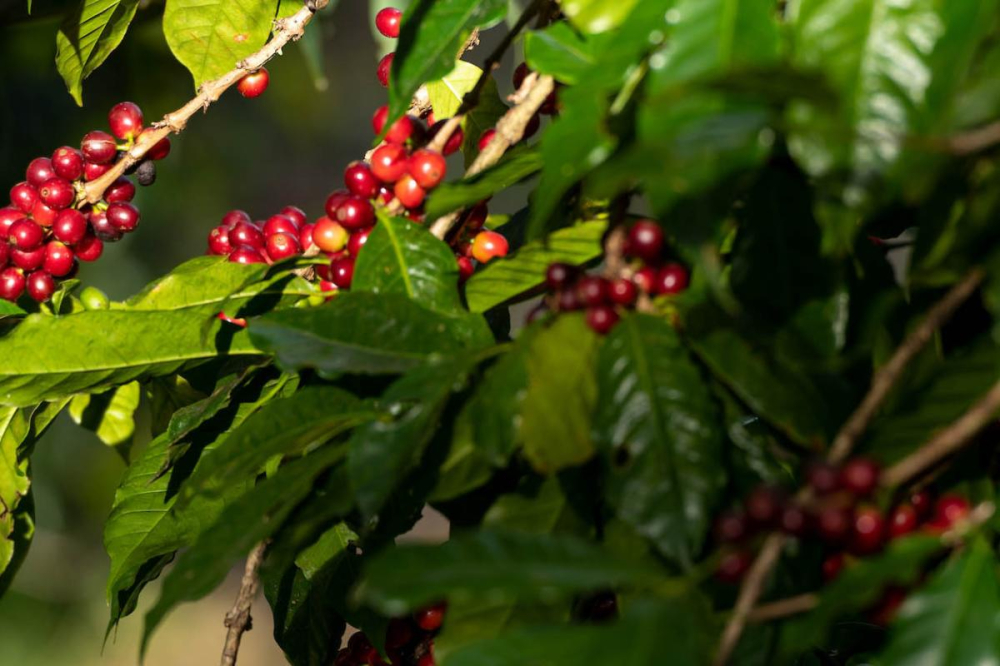
From the appearance of the green beans, the Bolivian Java green beans are relatively slender, with somewhat pointed ends; while the Hartmann Geisha green beans are slightly shorter and overall appear more rounded.
Front Street Coffee (FrontStreet Coffee) Roasting Records
Hartmann Geisha: This coffee has larger beans and higher density, absorbs a relatively large amount of heat during roasting, and the Maillard reaction progresses relatively quickly.
When the drum temperature rose to 200°C, the beans were charged, the damper was set to 3.5, and after 30 seconds the heat was adjusted to 160°C, the damper adjusted to 3, the turning point was 1'32", and at a drum temperature of 153.3°C the heat was adjusted once; at this point the bean surface turned yellow, the grassy smell completely disappeared, dehydration was complete, the heat was adjusted to 140°C, and the damper adjusted to 4; at 9'0", ugly wrinkles and dark streaks appeared on the bean surface, and the toast aroma clearly turned into coffee aroma, which can be defined as the prelude to first crack. At this time, one must listen clearly for the sound of the first crack point. At 9'47" first crack began, the heat was reduced to 50°C, and the damper was fully opened to 5 (adjusting the heat must be done very carefully, not so low that there is no cracking sound). After first crack, development lasted 2'40", and the beans were dropped at 197.1°C.
Bolivian Java: In order to highlight the sweetness and cocoa aroma of the natural process, Front Street used an extended development period to roast out a sweet and delicious flavor. Taking the Yangjia 800N as an example, 500g of green beans were used.
Charged at a drum temperature of 170°C, heat 120, damper set to 3; turning point 1'36", at a drum temperature of 111°C the damper was opened to 4 and the heat adjusted to 140; at a drum temperature of 151.1°C the bean surface turned yellow, the grassy smell completely disappeared, and the dehydration stage began; at 7'56", ugly wrinkles and dark streaks appeared on the bean surface, and the toast aroma clearly turned into coffee aroma, which can be defined as the prelude to first crack, and the damper was adjusted to 5. At this time, one must listen clearly for the sound of the first crack point. At 10'18" first crack began, after first crack development lasted 1'00, and the beans were dropped at 190°C.
Front Street Coffee (FrontStreet Coffee) Cupping Report
[Hartmann Geisha] The dry aroma carries the fermented fragrance of ripe fruit, with flavors of maple syrup, lemon, citrus, apple, rose, dark chocolate, fruity notes, pomegranate, ripe grapes, peach, and dark berries, with layered sweetness and acidity.
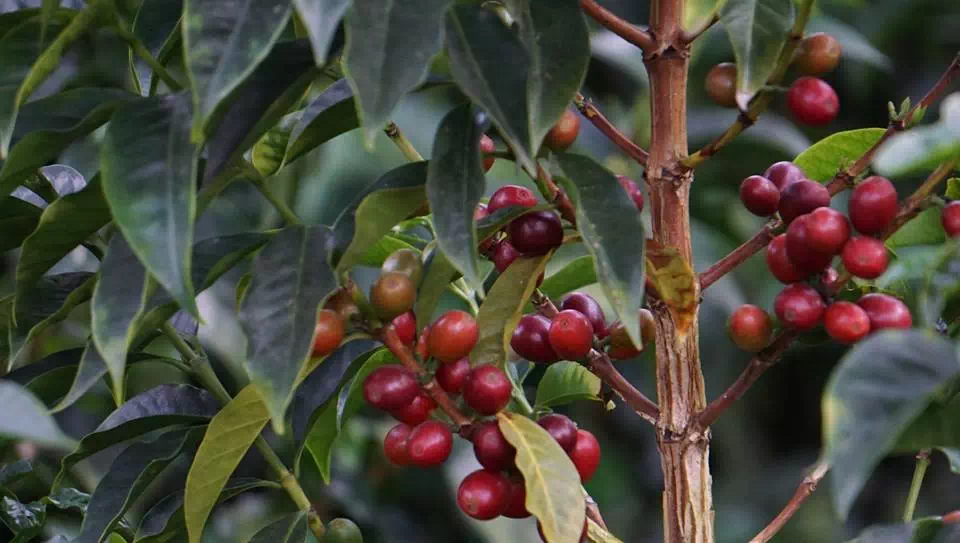
[Bolivian Java] The dry aroma has the fragrance of hazelnut; on the palate, it first shows the sweetness of cream, hazelnut, and almond, along with the sweet-and-sour tone of citrus and tropical fruit, carrying a fermented wine aroma.
Front Street Coffee (FrontStreet Coffee) Brewing Comparison
Dripper: HARIO V60 Water temperature: 90°C Coffee-to-water ratio: 1:15 Grind size: caster sugar size
Front Street Coffee (FrontStreet Coffee) uses staged extraction: use 30g of water for a 30-second bloom, pour in a small stream in circles until 125g for the stage break, and when the water level drops and is about to expose the coffee bed, continue pouring until 225g and stop pouring. When the water level drops and is about to expose the coffee bed, remove the dripper. (Timing starts from the beginning of the bloom.) The extraction time is 2'00".
[Hartmann Geisha] With the fermented fragrance of ripe fruit, the palate has the sweet-and-sour sensation of tropical fruit and berries, an obvious maple syrup sweetness, and a finish with some aromas of cocoa, grapes, and rose tea.
[Bolivian Java] On the palate, there is an obvious sweet-and-sour sensation of citrus, lime, and hawthorn, with a finish of fruit chocolate and vanilla cream. As the temperature drops, it becomes the acidity of sweet orange, and after it cools, it has a faint maple syrup sweetness and a finish of jasmine tea and rose tea, with a lingering sucrose aftertaste.
[Hartmann Geisha] is cleaner in flavor and mouthfeel, while [Bolivian Java] has a relatively richer sense of layering.
The above content is compiled by CoffeeHunters, a coffee news website.


