







Why do Brazilian Red Bourbon espresso beans define classic coffee?
Brazilian Red Bourbon espresso beans from Minas Gerais deliver a mellow, low-acid cup with nutty and cocoa notes. They come from a country that is the largest coffee producer, and the beans are processed by the pulped natural method, then graded under the NY system. Because the flavor is soft and sweet rather than sharp, these beans form the base of many espresso blends.
In blend coffee, Brazilian beans supply body and chocolate sweetness while other origins add acidity or fruit. Roasters often pair them with higher-acid African or Central American lots to balance the shot. The mild profile also works as a single origin for drinkers who avoid acidic coffee, which is why Brazil holds a central place in classic coffee flavor.
Brazil is the world's largest coffee-producing country, and its beans are known for their mellow, low-acid profile with nutty and cocoa notes, making them a favorite among drinkers who dislike acidic coffee. The Brazilian beans in Front Street Coffee's everyday beans series come from Minas Gerais and are of the Red Bourbon variety. This article will outline Brazil's coffee-growing conditions, the characteristics of the Red Bourbon variety, the pulped natural processing method, the NY grading system, and practical applications in espresso blends, along with the specific recipes and flavor descriptions of Front Street Coffee's two espresso blends, helping coffee lovers fully understand the central role of Brazilian beans in classic coffee flavors.
For more specialty coffee knowledge, please follow the WeChat official account: Front Street Coffee (FrontStreet Coffee)
Brazilian coffee has long been favored by coffee lovers for its mellow body, low acidity, and nutty and cocoa aromas. Front Street Coffee's everyday beans series includes a Brazilian coffee bean with clear chocolate and nutty notes on the palate and a soft, moderate body, making it a reliable choice for those who do not prefer acidic coffee. In addition to the everyday beans series, Brazilian beans can also be found in Front Street Coffee's current-season drip bag coffee series, showing that Brazil, as a coffee-producing country, occupies an irreplaceable position in the classic flavor system.
Coffee-producing regions
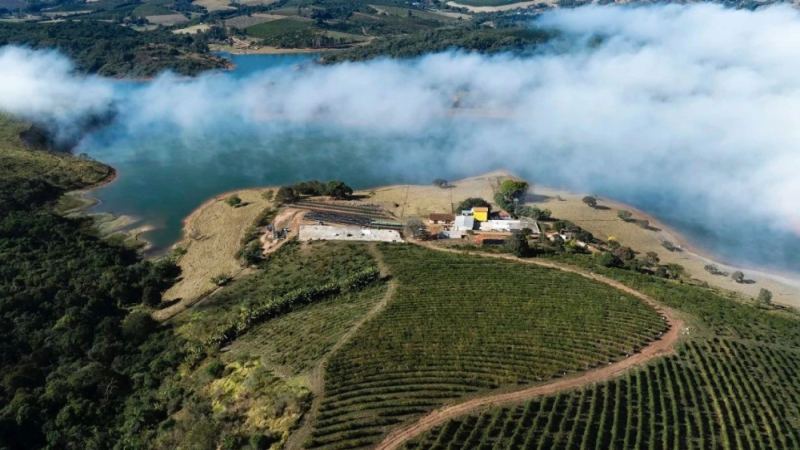
Brazil is located in the Latin American region of the Western Hemisphere, in the eastern part of South America on the western shore of the Atlantic Ocean. On land, it borders every other country in South America except Ecuador and Chile; most of its territory lies between the equator and the Tropic of Capricorn, making it the country with the largest tropical area in the world. About one-third of the country has a tropical rainforest climate, and two-thirds has a tropical savanna climate. These favorable tropical natural conditions are very suitable for the cultivation and production of coffee and other tropical cash crops.
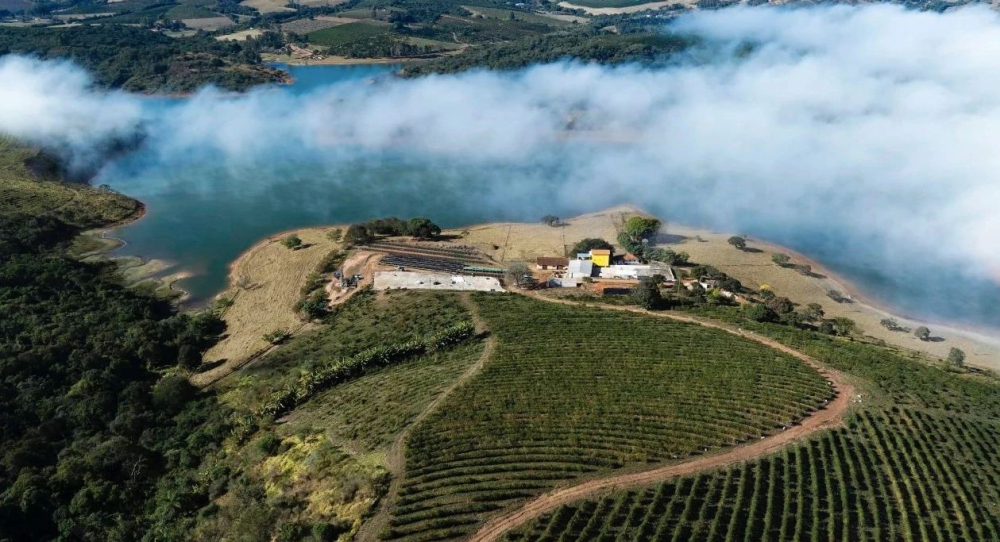
This Front Street "Brazilian everyday beans" coffee comes from Minas Gerais, whose representative coffee-producing regions include Cerrado and Sul de Minas, both at relatively high elevations. Cerrado is located in western Minas Gerais and is a flat plateau at about 750m to 1200m above sea level. Sul de Minas is a hilly area at 700m to 1200m above sea level. Since 1999, among the estates that have won in Brazil's Cup of Excellence auction events, Sul de Minas has had the largest number.
Coffee variety — Red Bourbon
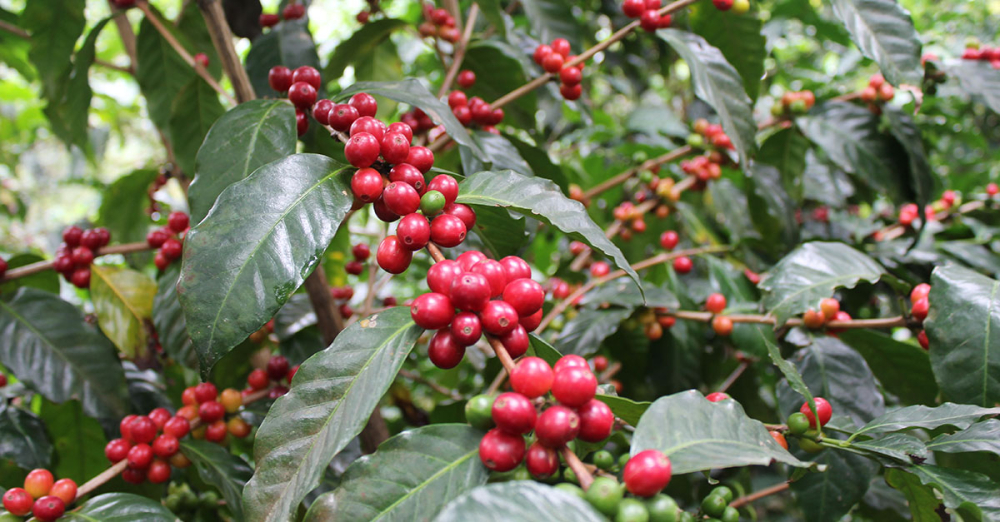
Bourbon coffee was first planted on Réunion Island, which was also called Île Bourbon (le Bourbon) before 1789. Bourbon is a secondary variety produced by a mutation of Typica, and together with Typica it is one of the oldest existing coffee varieties. Its fruit is bright red when ripe. After the Red Bourbon coffee tree flowers and bears fruit, the fruit color goes through the following changes: green, slightly yellow, slightly orange, ripe red, and then darker red when overripe. Therefore, some people also call it [Red Bourbon variety], and Red Bourbon is in fact what we usually call the Bourbon variety.
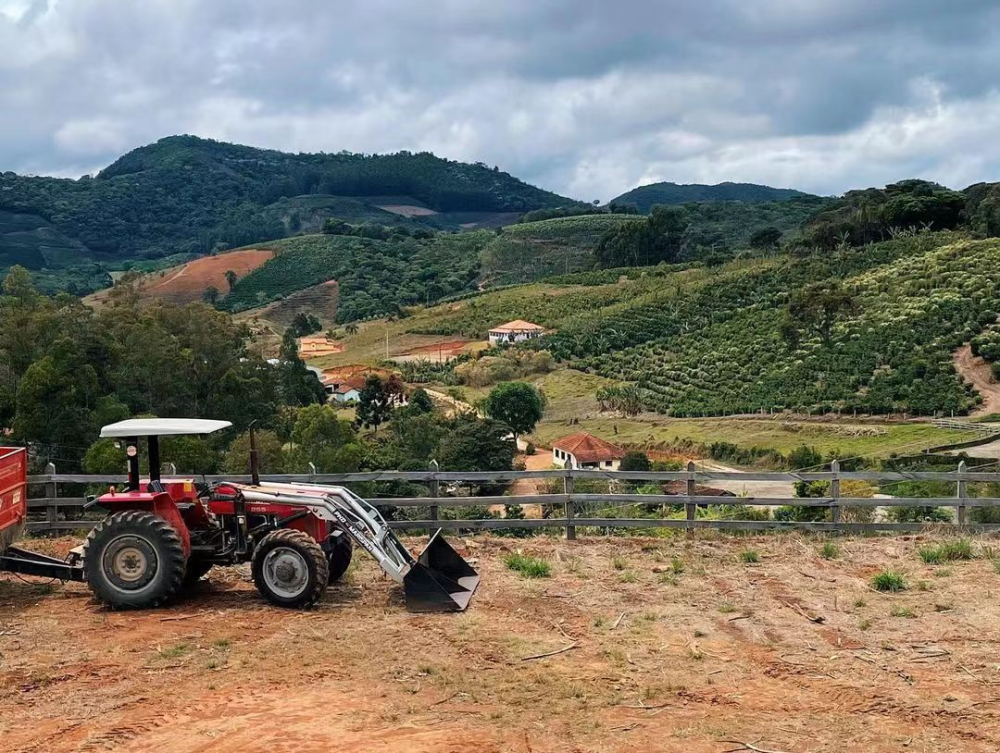
Bourbon planted at high altitudes often has better aroma performance and brighter acidity, and when drunk it can even show a flavor reminiscent of red wine. In simple terms, Bourbon is a branch under the Arabica species and generally bears red fruit, called Red Bourbon; there are also Yellow Bourbon and Orange Bourbon, among which Yellow Bourbon has relatively lower yield but often better quality.
Brazilian coffee processing methods
Because of its vast territory and enormous production, Brazil has long used natural processing as its main method. The washed method cannot support such large-scale coffee bean production, which has also led the industry to form a habitual impression of Brazilian coffee as rough and low-quality (but not all Brazilian coffee is cheap; coffee produced by well-known estates can also be quite excellent).
After 1990, Brazil began promoting the pulped natural method (also called semi-washed): first, defective beans and floating cherries are removed through a water tank, then the skin and pulp as well as part of the mucilage are removed by machine, followed by washing, and finally drying in the sun or in a drying room. Compared with the washed method, the pulped natural method saves more water and labor, greatly improving the quality of Brazilian coffee and reversing the poor reviews Brazilian coffee had suffered for years because of rough natural processing.
Brazil has no Grade 1 coffee beans
If you come across coffee beans labeled as Brazil Grade 1, they are definitely fake. Brazil considers that only beans with absolutely no defects can be rated NY.1, and beans with absolutely no defects do not exist. Therefore, among Brazilian green beans, the best grade is only NY.2.
The NY grading method is the coffee bean grading system adopted by Brazil. It comprehensively considers coffee bean screen size, defect count, and cup test scores, with the highest grade being NY.2.
What are Brazilian coffee beans used for?
Brazilian coffee beans are produced in huge quantities, so they flow into various coffee processing fields. Some are used to make instant coffee, some are used for blends, and some are used for specialty coffee. Here the focus is on the use of Brazilian beans in coffee blends. The famous Mamba blend uses Mandheling and Brazilian beans to simulate the flavor of Blue Mountain coffee. In Front Street's bean list, Brazilian coffee beans are likewise a high-quality raw material for making espresso blends.
Front Street specialty espresso blend coffee:
Colombia: Brazil, ratio 3:7, 100% Arabica
Flavor characteristics: comfortable bittersweetness, extremely smooth on the palate; a faint grassy aroma, with a light bitterness within the fresh fragrance; sweet and smooth, with a pleasant finish; using a medium-dark roast, when made into espresso it has a soft slight acidity, clean sweetness, and a nutty sweet aftertaste. The overall impression is not too sharp, rather mild, and the crema is medium.
Front Street commercial espresso blend:
Colombia: Brazil: Robusta; ratio 3:6:1, pre-blend;
From the flavor of a single bean, commercial beans taste considerably inferior to specialty coffee beans. Commercial beans are usually chosen for blending, and after blending they can also make coffee with a good flavor, suitable for making lattes, cappuccinos, and other espresso drinks. When our commercial blend is used to make Espresso, because it contains Robusta beans, the crema is richer, the taste is classic, with caramel sweetness, nutty and cocoa-like and dark chocolate flavors, balanced acidity and sweetness, a slight bittersweetness, and a long-lasting finish.
The above content is compiled by CoffeeHunters, a coffee news website.


