







Is Arabica a coffee brand from some country?Arabica is the name of a coffee variety, and it is a very common coffee variety name."Made with 100%Arabica coffee beans" "Selected Arabica coffee beans"... In our daily purchases of various coffee products, the packaging always bears the words "Arabica." So quite a few friends have asked Front Street Coffee about knowledge on Arabica coffee beans. In this article, Front Street will have a brief chat with everyone about what Arabica coffee is.
If we divide coffee varieties biologically, they can be categorized intoArabica(small-bean coffee/Arabica), Robusta (medium-bean coffee/Robusta), and Liberica (large-bean coffee/Liberica). The main coffee varieties popular in the world are Arabica and Robusta. Because Liberica has low yield or poor quality, it is usually only used for coffee variety research and development and rarely appears on the market sold separately.
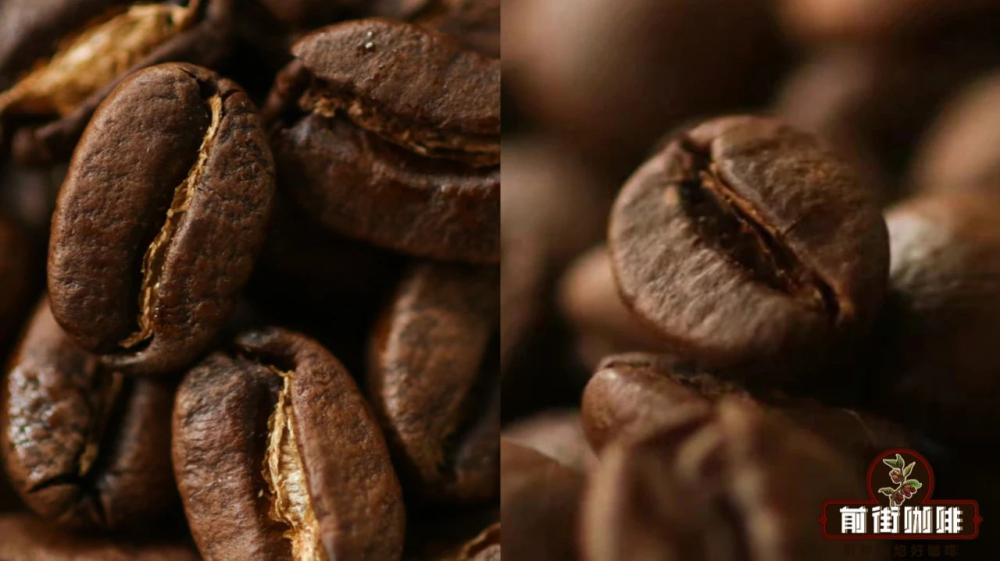
(Comparison of Arabica and Robusta)
Generally speaking,Arabicais mainly used for currently popular single-origin/specialty coffee, while Robusta is mostly used for instant coffee. This is not to say that Robusta is necessarily worse than Arabica; it is just based on the market's main uses for the two coffee varieties.
Although Arabica can be defined as premium coffee and Robusta as secondary, it does not necessarily have to be classified this way. It is more appropriate to distinguish by the flavor you personally like. Not all Arabica coffee beans are necessarily the best, and not all Robusta is necessarily bad~

What is Arabica coffee?
Arabica coffee beans are not just the name of a coffee variety. To be more precise, Arabica is a coffee species group. Through natural mutation/natural hybridization/artificial hybridization, cultivation, and so on, there are currently as many as hundreds of coffee varieties within the Arabica species group.
However, no matter which variety it is, coffee of the Arabica species group originated in the Ethiopia region, and its current output accounts for 70-75% of global coffee. Front Street believes that the reason Arabica coffee is popular with everyone is mainly that coffee of this species group has a more pleasant flavor/taste performance than Robusta and Liberica.

Although coffee of the Arabica species group has better flavor performance, its weakness is that many varieties do not have strong resistance to disease and pests. Therefore, it is suitable for growing in high-altitude areas. In particular, coffee grown at an altitude of 1200m will have a richer and more delicate flavor, but it will also require more manpower and material resources for planting and processing to ensure better quality coffee beans. So in terms of price, high-altitude Arabica is more expensive than low-altitude Arabica.
What is specialty coffee?
Not all Arabica coffee beans are specialty coffee. Specialty coffee was first proposed in English as "Specialty Coffee." If translated as "feature coffee" or "specialty product coffee," it means coffee beans cultivated under a producing region's unique microclimate and geographical conditions that have the flavor of the producing region.
To put it simply, specialty coffee is coffee in which you can taste flavors that represent the characteristics of the producing region. For example, from Arabica coffee beans from the Ethiopia region we can taste bright acidity, and from Arabica coffee beans from the Indonesia region we can taste a herbal-like full-bodied flavor.
With so many branch varieties under the Arabica species group,
what are the mainstream coffee varieties on the market?
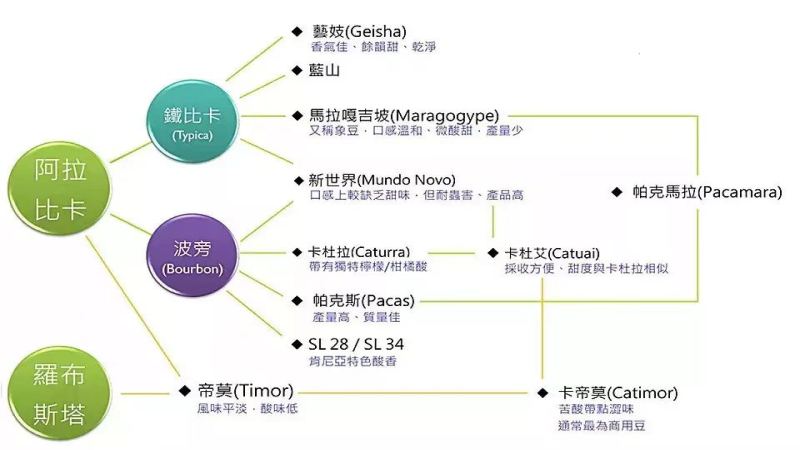
Although there are many branch varieties within the Arabica species group, the varieties currently widely used are actually very few, including Ethiopia's native variety Heirloom, Typica, Bourbon, Caturra, Catuai, Catimor, Geisha, and SL28 & SL34.

1. Jamaica: Typica
Typica is one of the oldest Arabica coffee varieties in the world. The top leaves of the Typica coffee tree are bronze-colored, and the beans are oval or slender-pointed. The flavor is elegant and balanced, but the plant is relatively weak, has poor disease resistance, and produces little fruit. Basically, wherever Arabica coffee can be grown, Typica has appeared. Many famous coffee beans, such as Jamaica Blue Mountain, Sumatra Mandheling, and Hawaii Kona, are Typica.
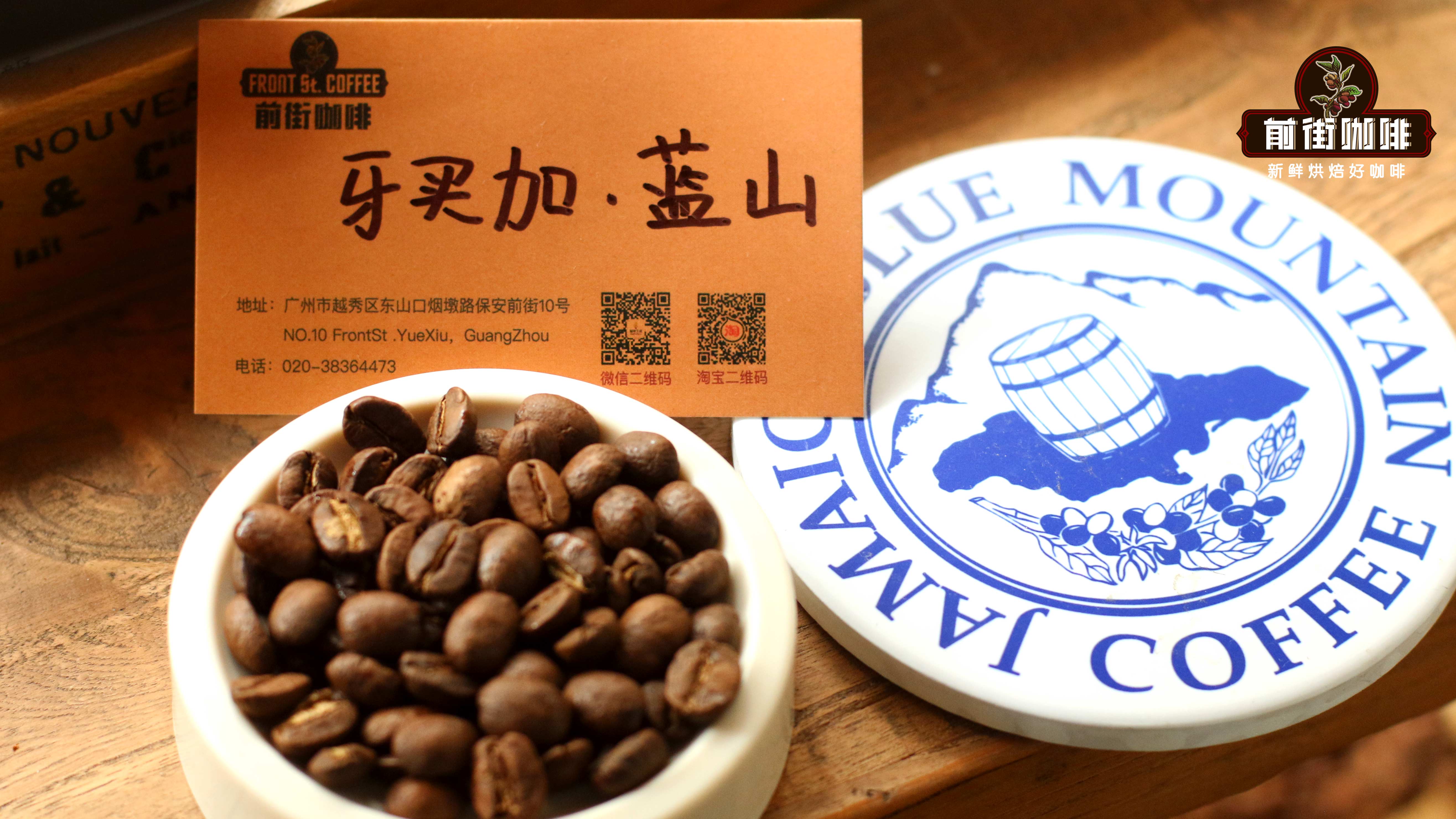
Front Street Blue Mountain No. 1 Coffee Beans
Origin: Jamaica, Blue Mountains
Estate: Clifton Estate
Altitude: 1310m
Variety: Typica
Processing method: washed processing
Brewing flavor: dark chocolate, nuts, cream, balanced acidity, sweetness, and bitterness
2. Brazil: Bourbon
It was first discovered in Brazil in 1930 and currently mainly grows in Brazil. It is generally believed that it may have originated from a mutation after hybridization between the red-fruited Bourbon variety and a yellow-fruited Typica variant called "Amerelo de Botocatu" (discovered in Sao Paulo in 1871). Because of its low yield and relatively poor resistance to wind and rain, it has not been widely planted. However, when grown in high-altitude areas, it has excellent flavor and obvious sweetness.
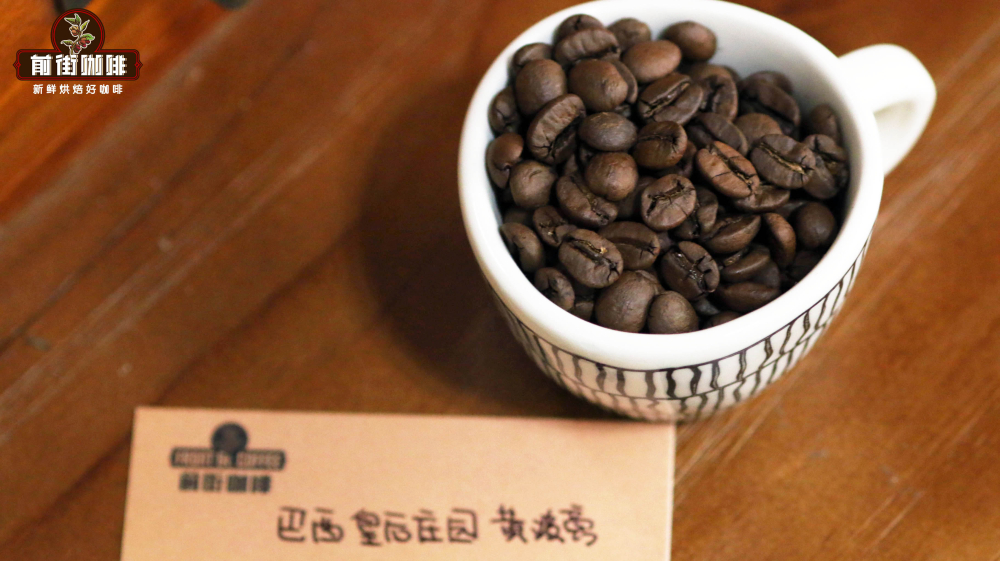
Front Street Queen Estate Coffee Beans
Producing region: Mogiana region, Brazil
Estate: Queen Estate
Altitude: 1400m - 1950m
Variety: Yellow Bourbon
Processing method: natural flavor: nuts, creamy peanut, cane sugar, fermented fruit
3. Colombia: Caturra
Caturra is a single-gene mutation of Bourbon, discovered by people in Brazil in 1937. Its productivity and disease resistance are both better than Bourbon, and the tree is shorter, making harvesting convenient. Unfortunately, like Bourbon, it has a cyclical problem of fluctuating productivity every two years. But its flavor is comparable to Bourbon beans, and more importantly, it has super strong adaptability and does not need shade trees, so it is also called Sun Coffee. It can adapt to high-density planting, but requires more fertilizer, which increases planting costs.
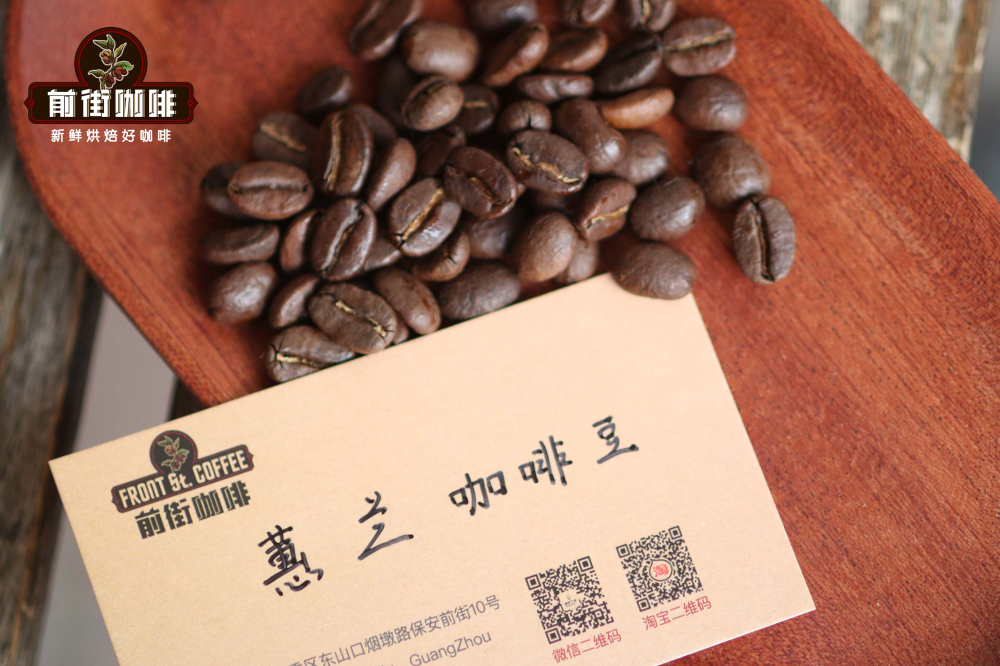
Front Street Huila Coffee Beans
Producing region: Huila region, Colombia
Altitude: 1500 meters - 1800 meters
Variety: Caturra
Processing method: washed processing method
Brewing flavor: nuts, dark chocolate, caramel, soft fruit acidity
4. Brazil: Catuai
Catuai is an artificially cultivated hybrid of Caturra and Mundo Novo developed in Brazil in 1950. Catuai inherited Mundo Novo's attributes of high yield, strong disease resistance, and good cup profile, and inherited Caturra's attributes of small size, high-quality acidity, and sun coffee. Because the plant is smaller, it can be planted at twice the density during cultivation. The flavor performance of Catuai is soft acidity, a clean mouthfeel, and rich fruit aroma.
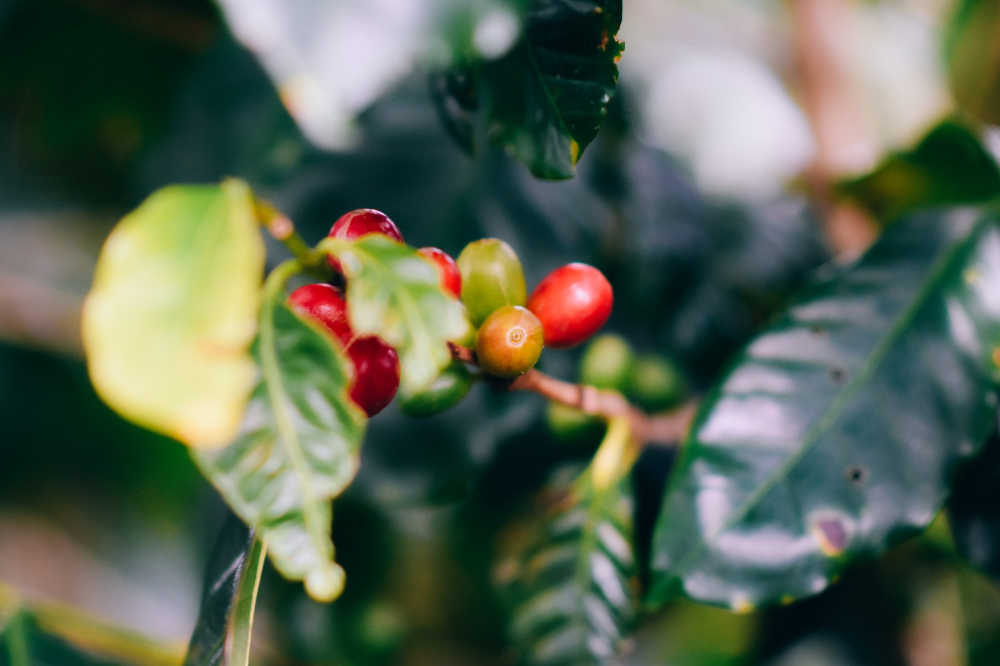
5. Kenya: SL28 & SL34
SL28 is one of Africa's famous coffee varieties. SL28 was selected, researched, and cultivated by the former Scott Agricultural Laboratories (now the National Agricultural Laboratories). This variety has good drought resistance, tolerates drought, pests, and diseases, and is suitable for planting in medium- and high-altitude areas, but it is susceptible to common diseases.
SL34 was also selected and cultivated by the former Scott Agricultural Laboratories in the late 1930s. At that time, researchers selected trees prefixed with SL in plantations and studied their yield, quality, drought resistance, and disease resistance.
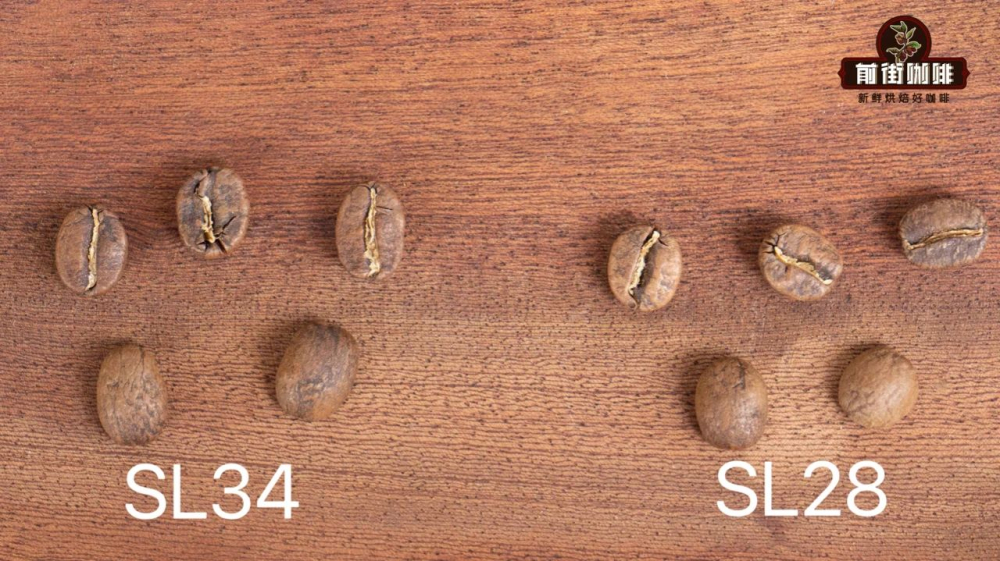
SL28 and SL34 have similar flavors, but SL34 has richer acidity and a more intense mouthfeel. However, both varieties have a unique Kenyan flavor, with rich fruit acidity and a balanced mouthfeel.

Front Street Kenya Little Tomato Coffee Beans
Producing region: Asali Processing Station, Thika region, Kenya
Altitude: 1550 meters - 1750 meters
Variety: SL28, SL34
Processing method: K72 washed processing
Flavor description: smoked plum, cherry tomato, snow pear, yellow sugar, plum
6. Panama: Geisha
Geisha is a genetic mutant of Typica, originating from the Geisha forest in Ethiopia. After decades of artificial cultivation, it spread to Panama in the 1960s, was discovered and independently planted by Hacienda La Esmeralda, and became famous overnight after winning first place at BOP in 2004, setting multiple auction price records. It has a jasmine-like delicate fragrance, citrus sweetness, and a rich floral and fruity aroma with a tea-like feel.
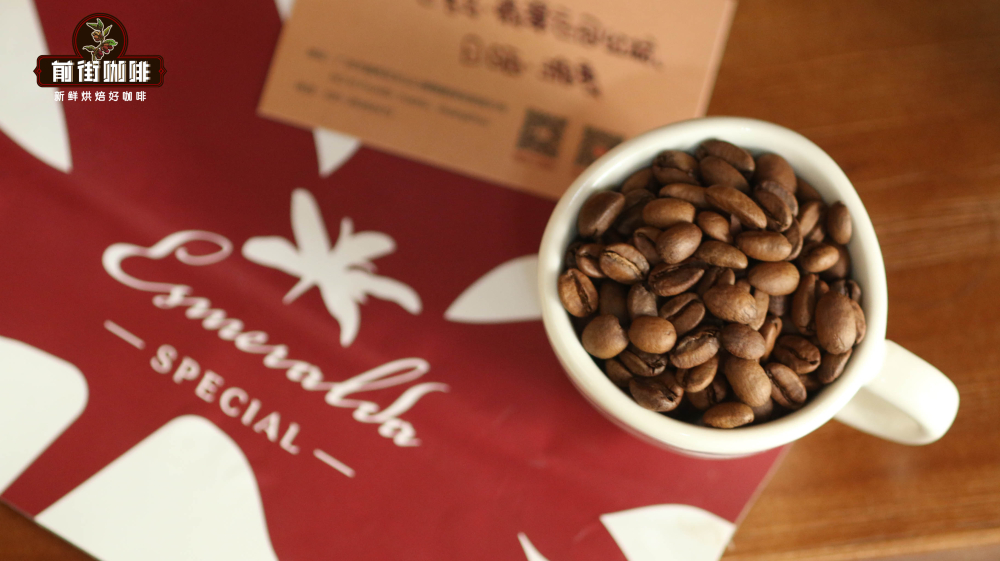
Front Street Hacienda La Esmeralda Red Label Geisha Coffee Beans
Region: Boquete, Panama, Hacienda La Esmeralda
Plot: Jaramillo, Mario
Altitude: 1700m
Variety: Geisha
Processing method: natural processing
Flavor description: citrus, complex fruit, rose tea, honey
7. Ethiopia: native variety (Heirloom)
The term "Heirloom" in Ethiopia refers to "the country's own coffee varieties." Many small coffee farmers in the Ethiopia region grow multiple varieties in their own backyards at the same time, and of course some coffee farmers also select better varieties separately for cultivation and sale. Because most local coffee is in a wild or semi-wild state with a huge population, not every household will carefully distinguish varieties.
Therefore, most coffee varieties are mixed planted and mixed harvested, so many coffee beans from the Ethiopia region are mixed together. Because specialty coffee needs to list the coffee variety, Ethiopia named these natural mixed varieties Heirloom. Because it is a mix of multiple varieties, the beans of Ethiopian Heirloom coffee appear uneven in size and at the same time show bright citrus acidity and green-tea-like sweetness.
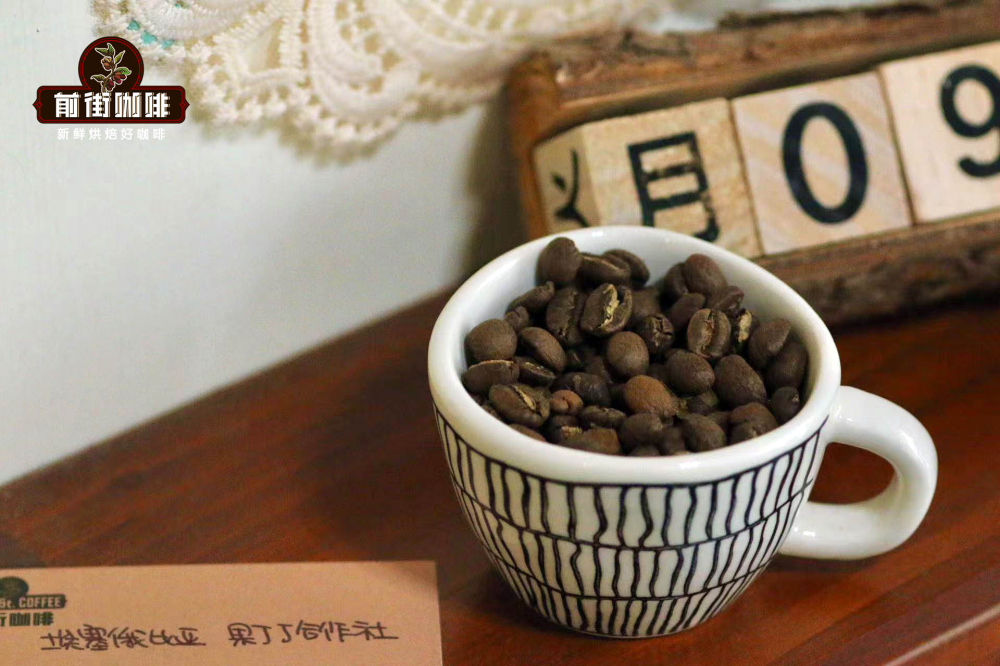
Front Street Yirgacheffe Gotiti Cooperative Coffee Beans
Producing region: Yirgacheffe, Ethiopia
Cooperative: Gotiti Cooperative
Altitude: 2000m - 2100m
Variety: local native variety
Processing method: washed
Flavor: citrus, black tea, floral, cream, caramel, almond
8. Yunnan: Catimor
In the 1970s and 1980s, coffee leaf rust broke out in many countries in Central and South America, seriously affecting coffee production. In response to the coffee leaf rust situation, CIFC, a Portuguese coffee research center, crossed Timor, which carries Robusta genes, with the Bourbon variant Caturra in 1959 to cultivate the disease-resistant and high-yielding Catimor.
Because it carries Robusta genes, Catimor's flavor performance is not as excellent as other common Arabica varieties, but it still has plum-like acidity and nutty aroma, while also having low planting costs and large harvest volume. In 1952, technical personnel from the Yunnan Academy of Agricultural Sciences distributed 80 kg of coffee seeds to farmers in Lujiangba, Baoshan, for trial planting, and found that its adaptability performed well and its quality was excellent. Coffee planting in Yunnan once again developed and expanded. By 1988, Nestle established a new joint venture in China to promote coffee planting projects and introduced the high-yield Catimor variety. This move greatly promoted the large-scale cultivation of coffee in Yunnan. Therefore, Catimor is widely planted in the Yunnan region of China.

Front Street Yunnan Baoshan Catimor Small-Bean Coffee Beans
Region: Lujiangba, Baoshan, Yunnan, China
Altitude: 1450-1550m
Variety: Catimor
Processing method: red cherry natural processing
Flavor description: nuts, chocolate, spices, caramel, red berries, plum
The above content is compiled by CoffeeHunters, a coffee news website.

