







Search Results for: Integration Amount

Master the Core of Latte Art: Key Techniques for Milk-Coffee Integration and a Coffee Bean Selection Guide
Latte coffee is a favorite of many coffee lovers. A cup of latte that is both beautiful and delicious cannot be achieved without solid latte art skills, and integration is one of the most crucial parts. From the perspective of Front Street, this article shares how to choose espresso beans suitable for latte art, deeply analyzes the impact of integration on the stability of latte flavor, and breaks down one by one the key details in integration techniques, including hardware requirements, pitcher spout height, technique, and the amount of integration. Whether you are a beginner who has just started or a home coffee enthusiast hoping to advance, you can find practical methods to improve your latte art level, so that every cup of latte presents a uniform taste and a beautiful pattern. [more…]

A Beginner's Guide to Latte Art: Key Techniques from Milk-Coffee Integration to Pattern Formation
Many coffee enthusiasts encounter the same confusion when practicing latte art: the milk foam is perfectly fine and the espresso crema is passable, yet once they get to the pouring stage, everything falls apart. The problem often lies in a step that seems simple but is easily overlooked—the integration of milk and coffee. Whether the integration is even not only directly determines whether the latte art pattern can be successfully presented, but also profoundly affects the mouthfeel and layers of the entire latte. This article will break down, one by one, the core points needed to make a beautiful and delicious latte—from the state of the espresso crema, the thickness and fineness of the milk foam, to the direction, height, flow rate, volume, and circling size in the integration technique—and will include espresso bean recommendations from Front Street Classic Blend and Front Street Commercial Blend to help beginners consistently produce lattes with a beautiful golden ring at home. [more…]
Latte art always failing? A detailed explanation of the eight key points and operational details for incorporating milk and coffee
Many coffee enthusiasts encounter the same confusion when practicing latte art: the milk foam is steamed perfectly fine, and the crema on the espresso is in decent shape too, yet the moment they start pouring, everything falls apart. The problem often lies in a seemingly simple yet easily overlooked step—the integration of milk and coffee. Whether the integration is even not only directly determines whether the latte art pattern can come through smoothly, but also affects the layered mouthfeel of the entire latte. This article will break down the key operational points one by one—covering the criteria for judging even integration, the appropriate thickness of espresso crema, milk steaming and anti-separation handling, the direction and size of the swirling circles, pouring height and flow rate, and controlling the amount used in integration—to help you make a cup of latte with clear patterns and a smooth mouthfeel right at home. [more…]
A Beginner's Guide to Latte Art: Key Points for Making Beautiful Patterns, from Pouring Technique to Milk Foam Control
Many friends who are just getting into latte art run into the same confusion: the milk foam is clearly fine enough, and the espresso crema looks fine too, yet the moment they start pouring latte art, it keeps going wrong. In fact, the problem often lies in an easily overlooked step—the incorporation of milk and coffee. Whether the incorporation is even not only directly determines whether the latte art pattern can form smoothly, but also affects the layering of flavor in the whole latte when you take a sip. This article will break down, one by one, the key details for making a beautiful latte from multiple dimensions, including the state of the espresso crema, the thickness and fineness of the milk foam, and the direction, height, flow rate, and circle diameter in the incorporation technique. It also recommends two espresso beans suitable for beginners to practice with, Front Street Classic Blend and Front Street Commercial Blend, to help you consistently produce latte coffee with golden crema at home. [more…]

Beginner Latte Art Lesson 1: A Detailed Guide to Milk Foam Thickness, Pouring Integration, and Finishing Techniques for the Large Heart Pattern
If you want to learn latte art, the large heart is the most suitable first pattern for beginners, and it is also the foundation for many complex patterns that follow. In this tutorial brought to you by Front Street Coffee, we break down the key points of making a large heart one by one, from the standards for steaming milk foam and controlling the amount of blending, to choosing the pouring point and the finishing technique. The article also includes images of common failure cases and analysis of their causes to help beginners quickly identify problems. Whether you are just starting out with latte art or always fall short at the finishing stage, this content will give you clear guidance. [more…]

Analysis of Four Common Mistakes in the Milk Integration Stage of Latte Art: A Complete Guide to Pour Height, Flow Rate, and Crema Condition
When making a latte, the integration step before latte art is often overlooked, yet it is just as crucial as the bloom in pour-over coffee. Improper integration directly affects the aesthetics of the pattern and the difficulty of drawing it. This article summarizes the four most common mistakes made by beginners and advanced players during integration: too low a pouring distance, too high a flow rate, unstable flow, and espresso crema left sitting too long and losing its fluidity. At the same time, Front Street Coffee offers recommendations for classic blend and commercial blend beans to help you achieve ideal crema and flavor. Mastering these key points can effectively improve your latte art success rate and overall coffee performance. [more…]

How Is Stirred Integration Different from Pre-Integration? An Analysis of Two Integration Techniques Every Latte Art Enthusiast Must Know
Before creating latte art, there is an often-overlooked yet crucial preparatory step—incorporation. The quality of incorporation directly determines whether the latte art pattern is neat and beautiful, as well as whether the flavor is balanced and unified when the coffee is tasted. For milk coffees that require milk foam, mastering the correct incorporation method can greatly reduce the difficulty of operation. This article will focus on two mainstream incorporation techniques: the classic stirring incorporation, and the recently emerging pre-incorporation. The former suits most scenarios but demands a high level of skill proficiency, while the latter can effectively handle tricky situations such as poor crema quality or latte art in takeaway cups. The article will also combine Front Street Coffee's espresso bean recommendations to explain the impact of coffee bean selection on incorporation and latte art, helping coffee enthusiasts flexibly choose the appropriate incorporation method based on actual conditions. [more…]

Latte Coffee Brewing Guide: Coffee Bean to Milk Ratios, Steaming Techniques, and Latte Art Integration Key Points
A latte may look simple, but every shop's version tastes different. The key lies in the quality of the coffee beans and milk, the ratio between them, and the details of extraction and integration. This article starts with coffee bean selection, introduces the flavor profiles of several of Front Street's espresso blends, analyzes the principles of choosing milk, and gives a reference ratio of 1:5 to 1:8. It also explains espresso extraction parameters, milk frothing temperature and thickness, and three key points of integration technique, helping coffee lovers make a balanced, beautifully latte-art-topped latte at home. [more…]
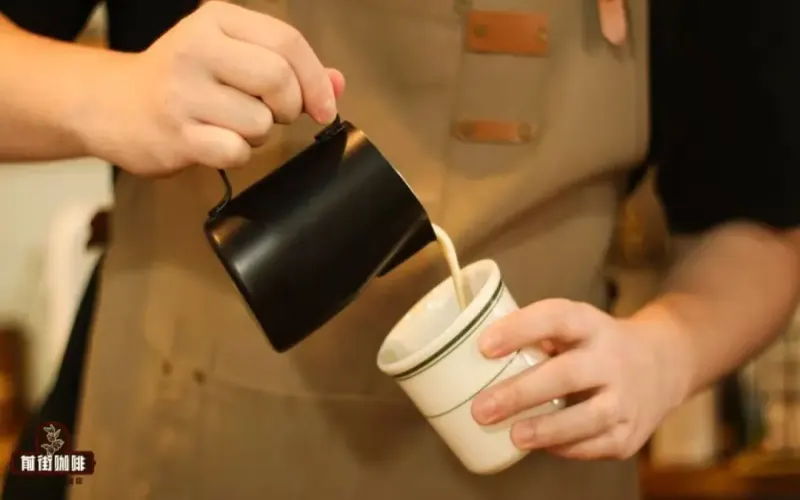
Key details in the milk-pouring and integration stage of latte art: how flow rate, pouring distance, and milk volume affect the final result
When making an espresso latte, the success of the latte art pattern often depends on whether the integration step is done properly. When integrated well, the pattern background is clean and the coffee flavor is unified; when integrated poorly, not only does the image look messy, but the mouthfeel also feels disjointed. Front Street Coffee points out that there are three easily overlooked details in the integration stage: the flow rate of the milk being poured, the distance between the milk pitcher and the liquid surface (the pouring distance), and the amount of milk used for integration. This article will break down these three key points one by one, explaining why a low flow rate combined with a high pouring distance is more conducive to integration, as well as the specific requirements for integration milk volume for different latte art patterns, helping you make latte coffee with consistent flavor and a clean image at home. [more…]

Ethiopia's Coffee Industry Credit Default Dilemma and the Controversy Over Vertical Integration Policy
Recently, Ethiopia's coffee industry has been thrown into chaos by a wave of credit defaults. Coffee farmers who supplied coffee beans to exporters and suppliers on credit have been waiting in vain for payment, with the amount owed reaching into the billions of birr. Some farmers have even committed suicide out of despair, and radicals have attempted to rob exporters of their property. The government blames the problem on the "vertical integration" plan introduced five years ago and fully implemented two years ago, which replaced the original ECX trading model and was intended to allow coffee farmers, suppliers, and cooperatives to export coffee directly and benefit from international price incentives. However, at a meeting between the government and growers on March 8, 2024, both the Minister of Agriculture and the Director General of the Coffee and Tea Authority held that the benefits of vertical integration outweigh the drawbacks, that defaulters are only a minority, and that violators have already been blacklisted. But coffee farmers and producers say that banks' suspension of loans and the National Bank's 14% credit growth cap have led to the market being controlled by a handful of wealthy exporters, leaving them with no choice but to sell on credit. Last year, 90% of coffee was exported through the vertical integration plan, and farmers are calling on the government to regulate the market. Front Street Coffee reminds that this incident highlights the importance of fair trade and financial support in the coffee industry chain. [more…]
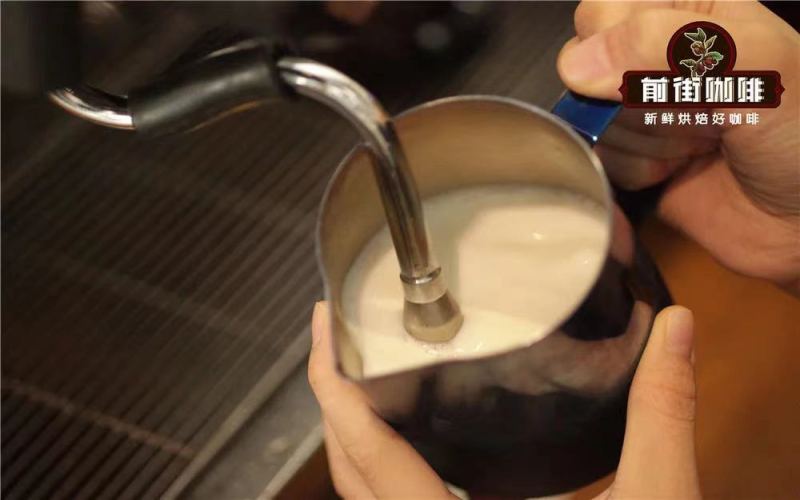
Milk Frothing Tutorial for Beginners | Why Does Milk Foam? How to Froth Milk for a Latte? What Are the Steps and Techniques for Latte Art Pouring and Integration?
At FrontStreet Coffee, steaming milk can be said to be a basic and core skill for every barista. Whether one can steam perfect milk is one of the factors used to judge whether a barista's level is up to standard. For example, the milk foam in a latte is on the thinner side, making it smooth and delicate to drink. The [more…]
A Complete Guide to Espresso: From Boiler Systems to Milk Frothing and Latte Art — Professional Fundamentals
Want to systematically master the underlying logic of espresso? This article provides a complete overview of the core knowledge system of espresso, from equipment principles to practical details. It first deeply analyzes the differences between four types of boiler heating systems and their impact on extraction stability, then explains one by one the selection of steam wands, the structure of grinder burrs, the matching principles of tampers, and key points for choosing latte art pitchers. In the materials section, it focuses on comparing the roasting differences between Northern and Southern Italian-style coffee beans and the logic for selecting suitable milk. Finally, it focuses on the five major variables of extraction and the six factors of milk frothing, and explains in detail the techniques for integrating coffee and milk foam. The full text balances theoretical depth with operational guidance, making it suitable for coffee enthusiasts who want to solidify their foundations to read carefully. [more…]
Latte Recipe Analysis: Milk-to-Coffee Ratio, Ingredient Selection, and Latte Art Integration Guide
To make a well-balanced latte, the key lies in the choice of ingredients, the ratio of coffee to milk, and the extraction and blending technique. Front Street Coffee believes that the quality of the coffee beans and milk is the foundation. An espresso blend will directly influence the flavor direction of the latte, while the milk should be chosen to pair well with the coffee, avoiding either an overly strong milky taste that masks the coffee's aroma or a thin, watery quality that makes the texture feel weak. There is no fixed ratio for milk coffee; it is generally recommended to float between 1:5 and 1:8, with the specific ratio adjusted according to the flavor performance of the espresso. Only by extracting a qualified espresso, steaming fine and dense milk foam, and mastering the correct blending technique can the coffee and milk fully combine to form a "golden ring" with a uniform surface color and no large bubbles. This article will provide a detailed explanation centered on ingredient selection, ratios, and operational steps. [more…]

The Principles of Milk Foaming and Latte Milk Frothing Techniques: A Complete Guide from Integration to Latte Art Patterns
Steaming milk is a fundamental skill that every barista must master, and the quality of the milk foam directly affects the taste of a latte and the result of latte art. Drawing on the practical experience of Front Street Coffee, this article explains in detail the physical principles of milk frothing, answers common problems such as foam that won't incorporate, separation, and surface bubbles, and explains how steam pressure and foam fineness determine incorporation. The article also compares the stability of milk foam at different temperatures, provides two frothing methods—manual and steam—summarizes five common mistakes, and finally includes a step-by-step tutorial on tulip latte art. Whether you are a beginner or a coffee enthusiast looking to refine your skills, you will find practical guidance here. [more…]
How to Make a Delicious Latte? A Complete Practical Guide from Coffee Bean and Milk Selection to Ratio, Extraction, and Integration
Latte is practically a standard offering at every coffee shop, yet the taste varies wildly from one establishment to another. A truly delicious latte comes down to three key aspects: the quality of the coffee beans and milk, the ratio of coffee to milk, and the operational details of extraction and integration. Drawing on the practical experience of Front Street Coffee, this article breaks down these three key points one by one. First, it analyzes how espresso blend beans shape the flavor direction of a latte, and why choosing milk isn't about it being richer the better; second, it provides a reference range for the milk-to-coffee ratio of 1:5 to 1:8, and explains the specific 1:6 pairing scheme for Front Street Coffee's Sunflower Warm Sun blend beans; finally, it details espresso extraction parameters, milk frothing temperature, and three core techniques for integration, helping you consistently make a cup of smooth, velvety latte at home or in the shop. [more…]

Specialty Coffee Knowledge: A Complete Guide to Latte Milk Frothing Principles, Integration Assessment, and Optimal Temperature
The key to an ideal latte lies not only in the quality of the espresso, but also in the fineness of the steamed milk and temperature control. Front Street Coffee will start from the basic principles of milk frothing to answer common questions such as why the milk foam does not blend and why it floats on the surface during latte art, and will also take an in-depth look at how steam pressure and foam fineness affect blending. At the same time, through experimental comparisons at different temperatures, we reveal why the 50 to 70°C range is the golden zone for long-lasting, stable milk foam, helping you master the core techniques for steaming perfect milk foam. [more…]
A Beginner's Guide to Milk Steaming for Latte Art: A Complete Breakdown of Techniques from Theory to Practice
Want to create dense, smooth latte art milk foam at home, but keep getting discouraged by "over-whipped," "separated," or "can't pour a pattern"? Actually, milk frothing isn't as mysterious as it seems. As long as you understand the principles, choose the right tools, and master a few key details, even beginners can produce consistent results. This article starts with the formation principles of milk foam, then breaks down the three major factors in steam frothing: milk, steam wand, and pitcher. It also includes detailed hands-on steps and advanced tips, covering core points such as temperature control, aeration ratio, vortex frothing, and judging integration. Whether you use an espresso machine or a handheld milk frother, you'll find a practice direction that suits you. The article also retains relevant recommendations for the Front Street Coffee brand for coffee lovers to reference when purchasing. [more…]

Latte Art Tutorial: Operational Differences Between Leaf Patterns and Layered Hearts, and a Detailed Guide to Creating Latte Art
After mastering the basic heart and the more advanced multi-layered heart, the leaf pattern is another hurdle to overcome in latte art practice. It may look similar to the multi-layered heart, but in reality there are clear differences in milk foam condition, the amount of integration, the pour point, and the swinging method. This article will break down the key points of making leaf latte art one by one, from milk foam thickness, the amount of milk used for integration, the pour point for creating the pattern, and swinging techniques to the complete hands-on steps. It will also explain the impact of different pitcher capacities on the process, and how to find the right position for creating the design by adjusting the amount of integration. Front Street Coffee suggests first practicing repeatedly with dish soap and soy sauce, and once the technique is proficient, then using milk and espresso for real practice, so you can pour a leaf pattern with clear stripes and a beautiful finish. [more…]

What to Do When Milk Foam Is Too Thick, Separated, or Too Thin? Practical Fixes for Pouring Pitcher and Pre-Mixing in Latte Art
Mistakes when steaming milk foam are occasionally unavoidable—foam that is too thick, too coarse, too thin, or milk and foam that have separated will all make latte art difficult. This article compiles several practical milk foam repair methods, including shaking and tapping the pitcher, using a spoon to scoop out excess foam, pouring the milk into another pitcher, and pre-blending techniques, and explains in detail the principle and points to note for each method. It also explains why pouring into another pitcher can improve milk foam fluidity, and how pre-blending helps thin milk foam successfully complete patterns. At the end, Front Street Coffee-related recommendations and further reading are retained, making it suitable for coffee enthusiasts who want to improve their latte art skills. [more…]

How long before latte milk foam dissipates? From milk foam and crema to integration, analyzing the key factors affecting stability
The milk foam on the surface of a latte begins to slowly dissipate from the moment it is made, but the rate of dissipation varies enormously between lattes of different quality—some develop large bubbles within two minutes, while others can hold out for over fifteen minutes. Foam stability is governed by three core factors: the quality of the foam itself, the state of the espresso crema, and the degree of integration between the foam and the coffee. In addition, details such as cup temperature and residual water droplets on the cup wall can quietly affect the pace of dissipation. This article breaks down these variables one by one to help you understand how to make a latte with lasting foam and a stable structure. [more…]