







How Do You Fix a Latte Milk Ratio Gone Wrong?
When steamed milk comes out too thick, too coarse, too thin, or already separated, the latte milk ratio is off and patterns become hard to pour. The fix starts in the pitcher: swirl the milk to recombine milk and foam, tap the pitcher to break large bubbles, spoon out excess foam, or pour the milk between two pitchers to restore fluidity.
Pre-integration also helps thin foam finish a pattern. Even baristas with mature coffee making skills meet failed steaming, often from a distraction or a delay that lets foam sit and separate. Swirling until the surface looks glossy is a practical sign that the milk is ready to pour again.
Mistakes happen occasionally when steaming milk—milk foam that's too thick, too coarse, too thin, or milk and foam that have separated will all make latte art difficult. This article compiles several practical milk foam recovery methods, including swirling and tapping the pitcher, spooning out excess foam, pouring between pitchers, and pre-integration techniques, and explains in detail the principle and precautions of each method. It also explains why pouring between pitchers can improve milk foam fluidity, and how pre-integration helps thin foam successfully complete patterns. At the end, it keeps Front Street Coffee's related recommendations and further reading, suitable for coffee enthusiasts who want to refine their latte art skills.
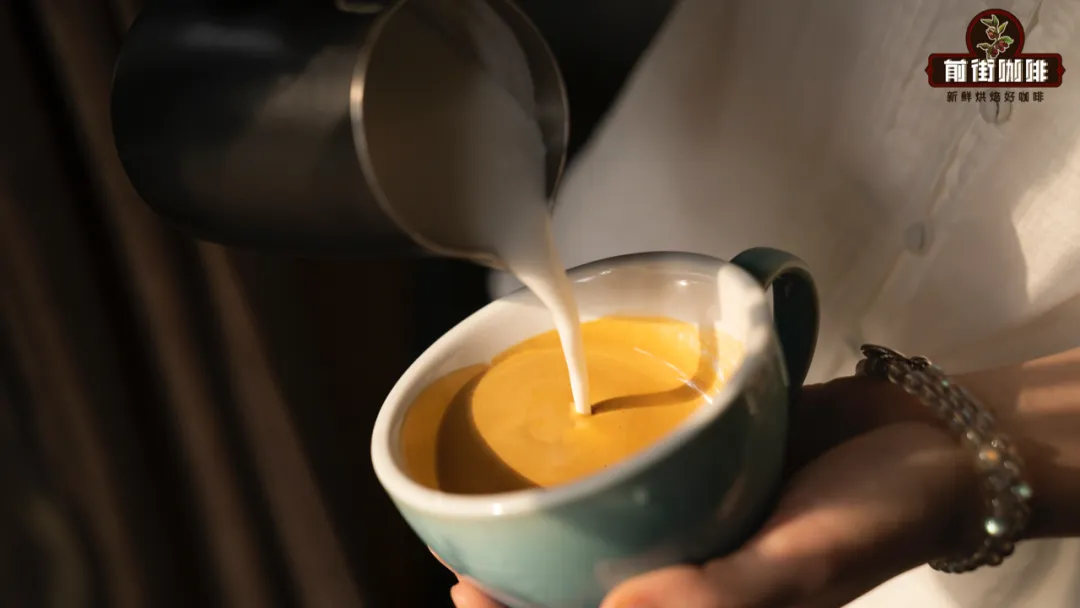
Even baristas with highly mature skills will inevitably encounter failed milk steaming. Sometimes it's a momentary distraction that causes the milk foam to become coarse, too thick, or too thin; sometimes it's because something suddenly comes up and delays the latte art, causing the milk foam to separate after sitting in the pitcher. These situations all cause the milk foam to lose its ideal state for latte art.
When faced with milk foam unsuitable for latte art, most people won't just pour it out, but if they force themselves to use it for latte art, the final pattern often leaves much to be desired. Therefore, in this situation, some targeted remedial measures are needed to restore this batch of milk foam to the condition needed for making delicate patterns.
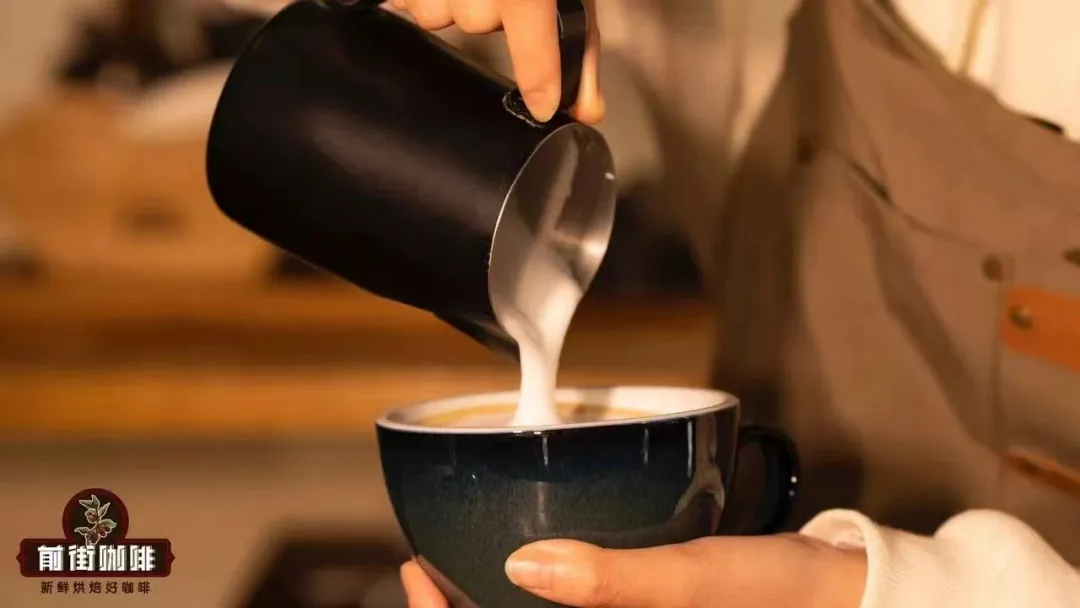
Today Front Street is here to talk with everyone about what methods can be used to improve milk foam quality when the milk foam has not been steamed properly—for example, when it is too thick, too coarse, or when the milk and foam have already separated.
1. Swirling and Tapping
Swirling and tapping are two small techniques commonly used in daily latte art, and both are performed on the milk pitcher.
Properly swirling the milk foam in the pitcher before latte art can effectively improve the integration between milk and foam, giving the foam better fluidity and making it easier to create delicate patterns. If, after steaming is completed, the milk foam and milk have slightly separated for some reason and fluidity has decreased, swirling can be used to remedy it.
(Just swirl until the surface of the milk foam appears glossy~)
The purpose of tapping the pitcher is to eliminate large bubbles in the milk pitcher by striking it. Sometimes, due to distraction or improper operation, some large bubbles are not drawn into the vortex and broken up, and after steaming a small amount of coarse foam still remains on the surface. At this point, you can tap the pitcher to break these bubbles; otherwise, they will hinder the formation of the pattern during latte art.

But note that tapping the pitcher accelerates the separation of milk and foam. The more times you tap and the greater the force, the faster the separation. Therefore, after tapping the pitcher, you need to swirl once more to let the milk and foam reintegrate.
2. Spoon Out Some of the Foam
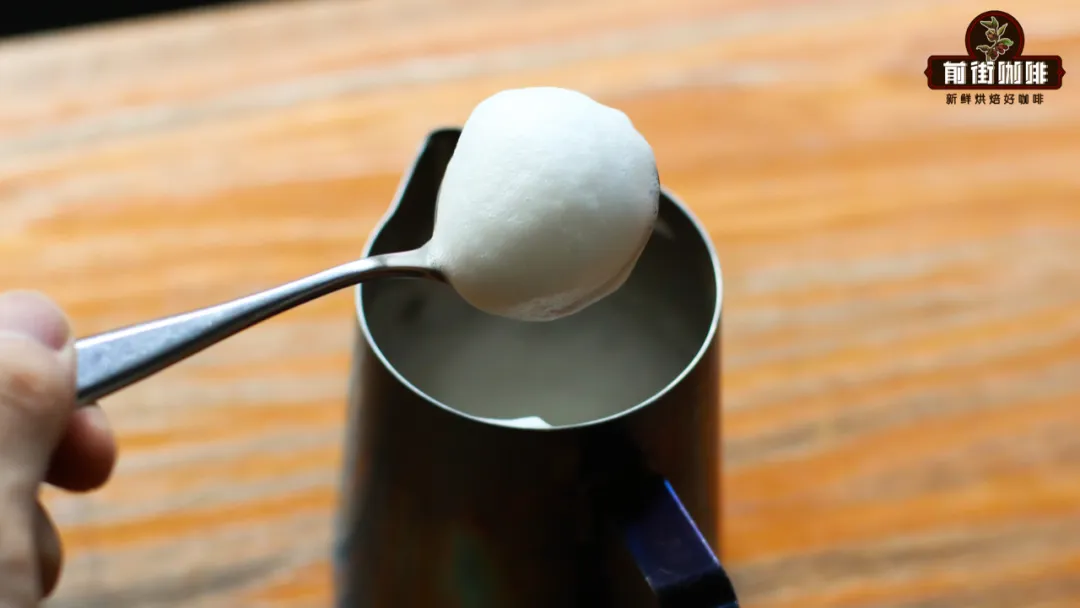
If too much air was incorporated during steaming and the milk foam has become too thick, other methods are needed to remove the excess foam, such as spooning it out.
This may sound a bit abstract, but this method can indeed effectively solve the problem of milk foam being too thick. Spooning out excess foam can quickly reduce foam thickness and restore relatively high fluidity. If the milk foam has been steamed very coarse, this method can likewise be used to remove those coarse portions.
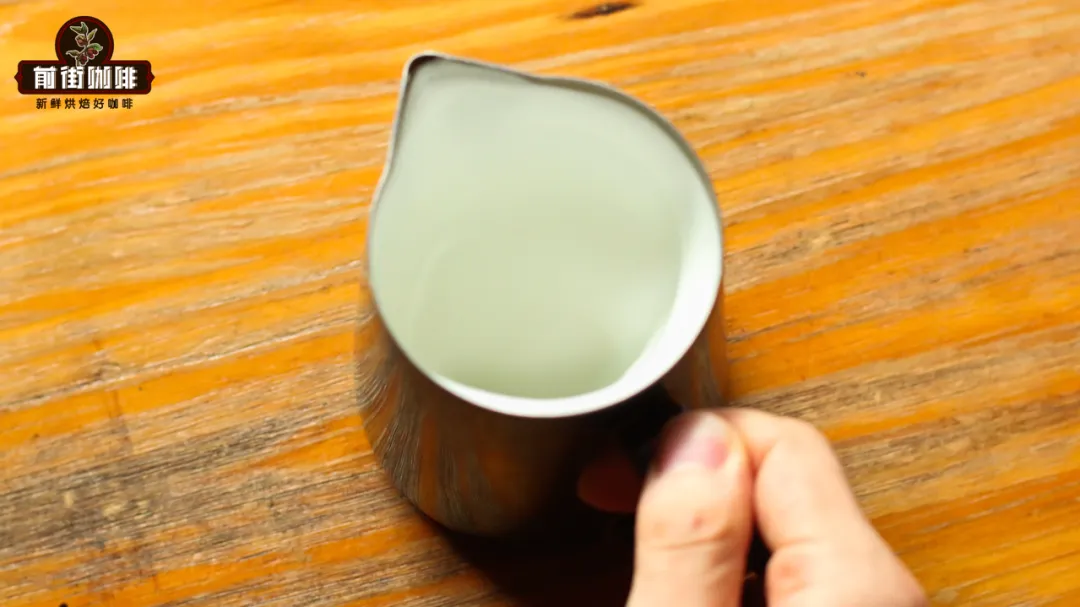
However, like tapping the pitcher, spooning out foam takes some time, during which the milk and foam will separate, so after spooning it is best to swirl once to let the two reintegrate.
3. Pouring Between Pitchers
Whether they are beginners who have just started or baristas with many years of experience, people often use pouring between pitchers to improve the quality of milk foam during latte art, making it easier to complete complex patterns. So-called pouring between pitchers means pouring the milk foam from one pitcher into another pitcher.
Front Street has shared before that the difficulty of making latte art patterns is actually related to pitcher capacity. When the weight of the milk liquid remains unchanged, the larger the pitcher capacity, the smaller the proportion of milk in the pitcher, and during latte art a greater tilt angle is needed to pour out the milk foam. The greater the tilt angle, the earlier the pitcher spout can get close to the coffee surface, and relatively speaking, more patterns and lines can be drawn.
But a problem follows: when the amount of milk used for latte art accounts for too little in a large latte art pitcher, the milk foam is difficult to steam well. Because the steam wand is not long enough or the amount of milk liquid is insufficient, the steam wand may not be able to be fully submerged in the milk, and it is also difficult to form a vortex. So people thought of first pouring the milk into a small latte art pitcher to steam it, and after completion pouring it into a large latte art pitcher for latte art.
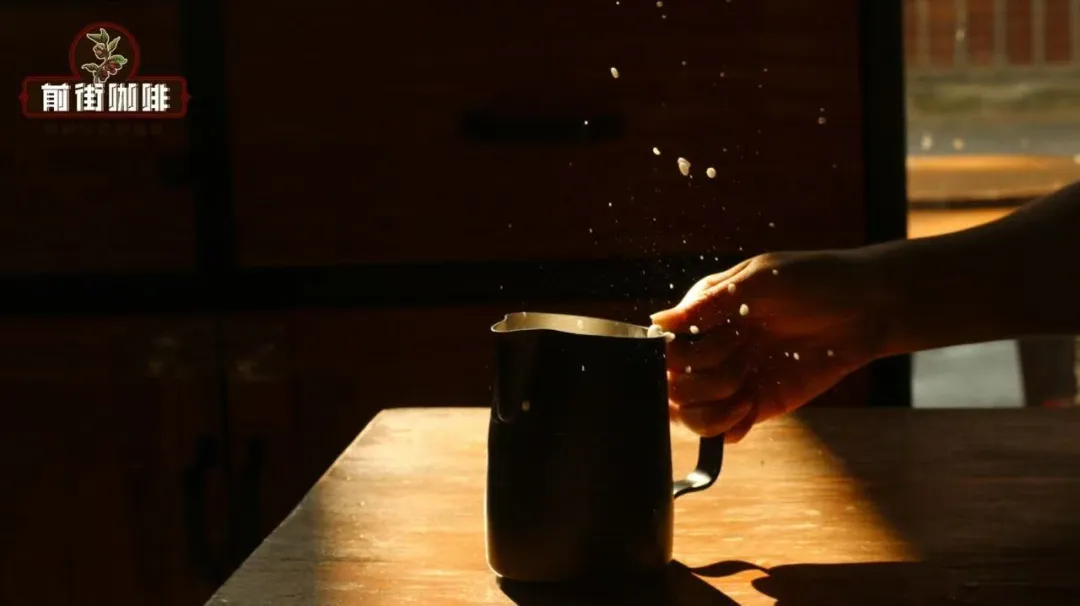
Later it was discovered that doing this makes the milk foam more fluid and also finer. Because the pouring process creates collisions, this not only improves the integration of milk foam and milk, but some foam, especially large particles, will also break apart due to the collisions, making the overall fluidity higher (thickness thinner) and finer. Combined with the advantages of a large latte art pitcher mentioned by Front Street, latte art becomes more effortless after pouring between pitchers.
So, if you accidentally steam the milk foam too thick or too coarse, or if you want to achieve a better latte art effect, you can improve and enhance milk foam quality by pouring between pitchers. But for the latter, the milk foam needs to be steamed a little thicker than usual to offset the portion of foam eliminated by pouring between pitchers.
Likewise, pouring between pitchers also has precautions. For the same reason as tapping the pitcher, after pouring between pitchers the separation speed of milk foam and milk will accelerate, so after pouring you should begin latte art as soon as possible to avoid separation affecting the result. In addition, the target pitcher for pouring should be preheated before use, using the steam wand to purge for a period of time to raise the pitcher temperature, so that when the milk foam is poured in, heat will not be lost because the pitcher temperature is too low.
4. Pre-Integration
Many friends may ask: Front Street, Front Street, what should we do if the milk foam has been steamed too thin?
To be honest, as long as the milk foam is not especially thin, not as thin as flat white milk, it can still be used directly for latte art (if it is too thin, it is recommended not to do latte art, or simply steam a new batch). If you are worried that the fluidity is too high to make a good pattern, you can also try pre-integration.
What is pre-integration? It means that before the formal latte art integration, first add a small amount of milk to the coffee, then shake the cup to integrate this small amount of milk with the coffee.
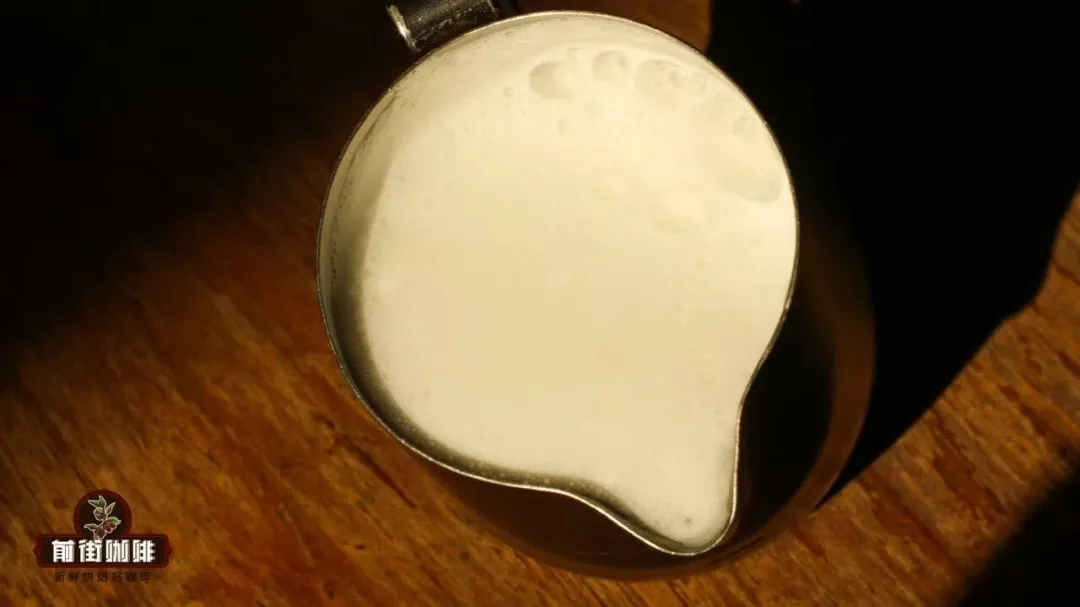
The benefit of doing this is that it reduces the fluidity of the liquid surface and also reduces the impact of clumping of coffee crema, allowing thin milk foam to successfully make patterns. But because explaining pre-integration in detail would easily make the article too long, interested friends can click the article in the blue text "Exposed! The integration secret that baristas are all using" to learn more~
That is all for Front Street's sharing this time. If there are other improvement methods, everyone is also welcome to leave comments and share them~
- END -
The above content is compiled by CoffeeHunters, a coffee news website.


