







How Does the Latte Milk Coffee Ratio Affect Fusion?
Fusion in latte art depends on three variables: flow rate, pour distance, and the volume of milk used. A thin, controlled flow poured from higher above the surface stirs the espresso gently, so coffee and milk combine without wrecking the crema. Wide-open flow creates turbulence that muddies both the pattern and the flavor. The milk to coffee ratio matters most during that first mixing pour.
Fusion milk volume differs by pattern: larger designs need more milk blended into the base, smaller ones need less. Keeping the fusion pour modest preserves the crema structure that later defines the pattern, whether the goal is a clean background or a unified taste. A low flow rate combined with a high pour distance supports better fusion, and the latte milk ratio sets how much goes in.
When making an espresso latte, the success of latte art patterns often depends on whether the fusion step is done properly. When fused well, the pattern background is clean and the coffee flavor is unified; when fused poorly, not only does the picture look messy, but the taste also feels disjointed. Front Street Coffee points out that there are three easily overlooked details in the fusion stage: the flow rate of the milk being poured, the distance between the milk pitcher and the liquid surface (pour distance), and the amount of milk used for fusion. This article will break down these three key points one by one, explaining why a low flow rate combined with a high pour distance is more conducive to fusion, as well as the specific requirements for fusion milk volume for different latte art patterns, helping you make latte coffee with consistent flavor and a clean picture at home.
If the fusion step is done well, the base color of the pattern will be clean and crisp, and the overall coffee flavor will tend to be unified; conversely, if the fusion is not done properly, not only will the background appear messy, but the flavors of the coffee and milk foam will each go their own way, creating a jarring sense of incongruity on the palate.
For this reason, doing the fusion step well during latte art is especially critical. To do this step well, Front Street suggests paying attention to the following three details during fusion.
I. Flow rate control during the fusion stage
As Front Street mentioned earlier, one purpose of fusion is to make the flavor more consistent—first mixing a small amount of milk with the espresso so that the milk poured afterward can blend in more smoothly. To achieve this effect, the milk must have a certain stirring force during fusion.
There is more than one way to increase the stirring force. Many friends choose to increase the flow rate during fusion to improve the stirring effect. This is indeed one approach, but Front Street does not recommend opening the fusion flow rate too wide.
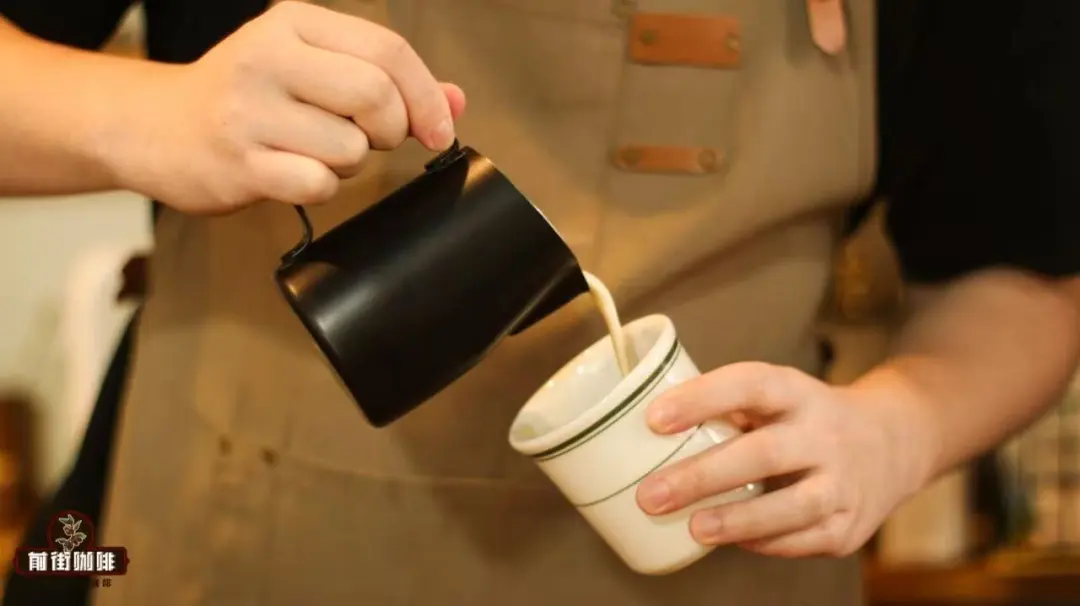
Flow rate, in plain terms, is the amount of milk poured per unit of time. The greater the flow rate, the more milk enters the cup at the same time; conversely, the less.
When the flow rate exceeds a certain limit, the drawbacks become apparent: the milk brings a strong impact force. This impact easily creates turbulence in the cup. Although the coffee and milk do mix, the intact structure of the coffee crema is disrupted, and the clarity and color both decline as a result.
So Front Street prefers to suggest keeping the flow rate finer during fusion rather than opening it too wide. The part where stirring force is insufficient can be compensated for in other ways, such as—height.
II. Height control during the fusion stage
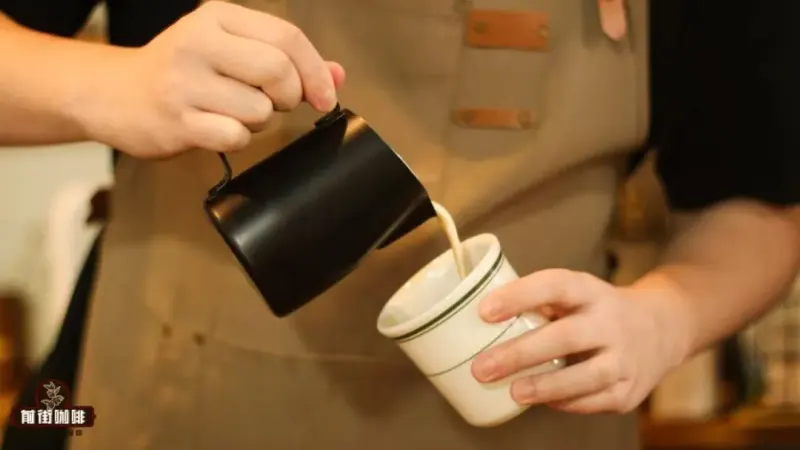
The height at which the milk is poured during fusion is exactly the opposite of that during formal latte art. During the latte art stage, the milk pitcher should be as close to the liquid surface as possible, because the milk foam needs to float on the coffee surface to form a pattern; during the fusion stage, however, the milk pitcher should be raised to increase the pour distance. This is not only to enhance the impact force of the milk, but also to avoid leaving traces of milk foam on the liquid surface, thereby keeping the latte art background clean.

A low flow rate combined with a high pour distance—when the two are paired, the milk and milk foam can all be driven into the coffee during fusion to complete the mixing, while leaving no traces of milk foam on the liquid surface. In addition, during the fusion process, remember to simultaneously move the cup and the milk pitcher, drawing circles in sync with both, so that the fusion will be more even.
III. Milk volume control during the fusion stage
The last thing to pay attention to is the amount of milk poured during fusion—provided that you intend to do latte art. This is because the more milk poured during the fusion stage, the higher the liquid level in the cup. And the vast majority of latte art patterns require enough space left in the cup to be completed, such as rippled patterns, or those complex combination designs.
Therefore, if you want to make this type of latte art, you should not use too much milk during fusion; stop once the fusion reaches below half the cup volume.
If you are only making relatively simple latte art patterns that do not require drawing too many lines, then the amount of milk used during fusion can be more relaxed, and fusing to about half the cup volume is fine. Just remember, the fuller the fusion, the worse the fluidity of the liquid, and vice versa. Exactly how much to fuse and what kind of fluidity is needed mainly depends on your own production needs.
The above are the three details worth paying attention to during the fusion stage. If you want to make a cup of milk coffee with a unified flavor and a clean pattern, you may as well refer to these points~
- END -
The above content is compiled by CoffeeHunters, a coffee news website.


