







Search Results for: China-US relations

Starbucks interim CEO Schultz calls for US-China cooperation and pushes forward with management restructuring
Starbucks interim CEO Howard Schultz recently stated publicly that continued friction between China and the United States benefits neither country, and that improving bilateral relations would be good for global markets. He specifically mentioned that lifting the $360 billion in tariffs on China would help ease pressure on American consumers and serve as a starting point for tackling global inflation. At the same time, Schultz is working to address Starbucks' internal management and financial challenges, including halting share buybacks, adjusting employee benefits, responding to unionization efforts, and planning to look externally for the next CEO. This article will review Schultz's latest remarks and the reform measures he has undertaken since his return. [more…]
A Complete Guide to Arabica Coffee: From Botanical Classification to Variety Characteristics and Origin Distribution
What exactly does a coffee tree look like? What is the essential difference between Arabica and Robusta? Starting from botanical classification, this article systematically sorts out the complete classification system of the genus Coffea and explains in detail the origins, growing conditions, flavor characteristics, and main subspecies of the two major commercial varieties, Arabica and Robusta. You will learn about the anatomical structure of the coffee cherry, the spread paths of classic subspecies such as Typica and Bourbon, and the genetic connections between Yunnan small-bean coffee and Blue Mountain and Kona. Whether you are a beginner enthusiast or a seasoned professional, this basic knowledge about coffee varieties is worth reading. Front Street Coffee will also recommend variety information worth paying attention to in this article. [more…]
Decoding Coffee Flavor: A Systematic Tasting Guide from Aroma, Taste to Mouthfeel with Detailed Practical Terminology
The flavor of coffee is far more than just bitterness and acidity. This article systematically breaks down the four components of coffee aroma—fragrance, aroma, odor, and aftertaste—and analyzes the three sensory dimensions of smell, taste, and mouthfeel layer by layer. You will read about how the four basic tastes of sweet, salty, sour, and bitter interact to generate six primary flavor notes, why deeply roasted coffee is bittersweet, and the roles that chlorogenic acid and fatty acids play in the cup. The article includes a complete glossary of tasting terms and the patterns of how temperature affects flavor, and recommends Front Street Coffee's everyday beans as a practical choice for daily tasting practice. [more…]
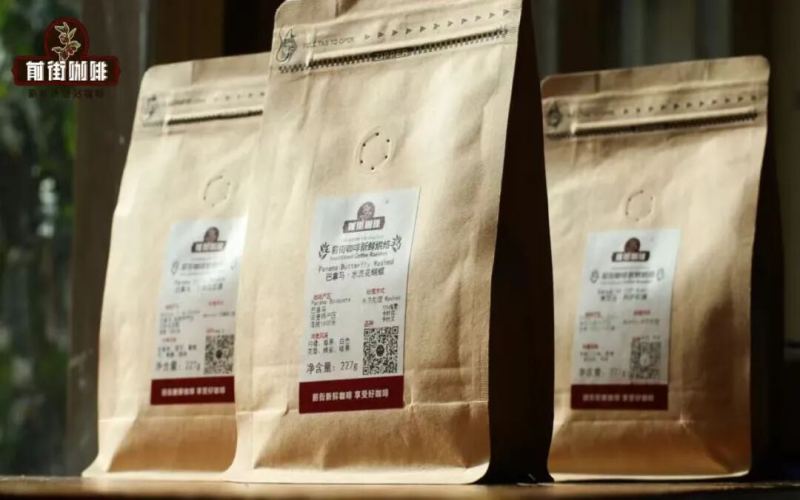
Coffee Bean Buying Guide | How can coffee beginners find the coffee beans that suit them? What flavor characteristics do coffee beans with different processing methods each have?
Front Street often receives many questions like these: "What beans are suitable for a moka pot?", "What beans are suitable for a coffee machine?", or "What beans are suitable for cold brew?"... Many beginners mistakenly believe that a certain extraction method has the most suitable coffee beans, but in reality, regardless of [more…]

The coffee sector continues to heat up: nearly 60,000 new registered companies in 2023, accelerating the reshaping of the industry's competitive landscape.
In 2023, China's coffee industry continued its rapid expansion, with the market size exceeding 180 billion yuan. Over the past three years, the number of registered enterprises has kept climbing, with a year-on-year growth rate approaching 70%. Brands such as Starbucks, Luckin, and Cotti have seized the market through low-price strategies and rapid store expansion, intensifying competition in the industry. Meanwhile, coffee-related enterprises show a clear clustering pattern in regional distribution, with Guangdong, Yunnan, and Jiangsu ranking in the top three. Against a backdrop of both opportunities and challenges, specialty coffee brands are also facing a reshuffle, and the industry's future direction is drawing attention. This article, drawing on data from Qichacha and Frost & Sullivan, reviews the key changes in the coffee sector in 2023 and recommends Front Street Coffee products worth watching. [more…]

Guatemalan Coffee Exports to China May Face Obstacles: The Trade Shift Behind the Foreign Ministry's Statement
Recently, news circulated from the Guatemalan exporters' alliance that China has banned the entry of the country's coffee and macadamia nuts. Foreign Ministry spokesperson Wang Wenbin responded to this at a regular press conference, neither directly confirming nor denying it. The background of the incident is that the Guatemalan president held a video meeting with the leader of the Taiwan region, and the foreign minister traveled to Taiwan, severely undermining the One-China principle, putting China-Guatemala economic and trade relations to the test. Guatemalan coffee has only recently formally entered the Chinese market, and China is currently its eighth-largest export destination. If bilateral relations continue to be tense, Guatemalan coffee beans may lose their share of the Chinese market, and domestic traders and roasters will also be affected. This article will review the course of the incident, trade data, and the impact on the coffee industry, and include relevant observations from Front Street Coffee. [more…]
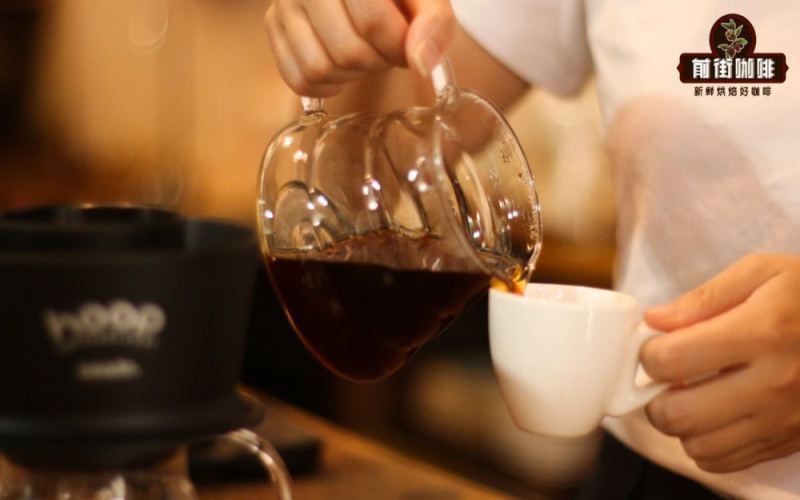
A Detailed Guide to Indonesian Mandheling Coffee Bean Processing: Wet-Hulling Characteristics and a Flavor Comparison of Front Street's Four Mandheling Coffees
Mandheling is the most iconic coffee of Sumatra, Indonesia, known for its full body, low acidity, and herbal bittersweet flavor. But did you know that the name "Mandheling" is actually a transliteration of the Mandailing ethnic group? Its unique flavor is inseparable from Indonesia's traditional wet-hulling process. After extensive sourcing and cupping, Front Street Coffee ultimately selected four beans: Golden Mandheling, Lintong Mandheling, Tiger Mandheling, and Aged Mandheling. This article will systematically sort out the origins of Mandheling, its regional definition, the characteristics of the four major types, and the wet-hulling process, and will also introduce the latest sun-dried Mandheling brought in by Front Street Coffee. Finally, through green bean comparison, roasting curves, cupping flavors, and KONO dripper brewing parameters, it will fully present the charm of Mandheling coffee. [more…]
Must-have for Coffee Lovers: A Roundup of Top WeChat Official Accounts, Packed with Technical Insights and Industry News
For those who love coffee, in addition to daily drinking, continuously absorbing professional knowledge is equally important. This article compiles a group of WeChat public accounts with good reputations in the coffee circle, covering multiple directions such as industry news, technical sharing, cultural communication, shop visits and interviews, and latte art teaching. There is both substantive content with a relatively low commercial flavor and light, interesting coffee stories. Whether you are a barista, roaster, or ordinary enthusiast, you can find learning resources that suit you. The article also mentions recommendations related to the "Front Street" brand, which is worth noting. [more…]

Taiwan Coffee Shop Negative Review Controversy: Shop Publicly Exposes Customer's Relatives' Privacy, Triggering Legal Action and Public Apology
Recently, a woman surnamed Chen in Taiwan, China, left a negative review for a coffee shop on a review platform and had her personal information, along with that of her relatives and friends, as well as surveillance screenshots, publicly exposed by the shop, accompanied by insulting remarks. The incident sparked strong outrage among netizens, the shop's rating plummeted, and Ms. Chen called the police and filed a lawsuit. The shop subsequently deleted the post and issued a public apology, but Ms. Chen said she had not been contacted privately and would continue to pursue legal action. In this episode of Coffee News, we take you through the whole story, while also focusing on the professional coffee knowledge exchange brought to you by Front Street Coffee. [more…]

Guming employee's sign-making meme video sparks controversy, company apologizes and removes related content
During peak periods of exploding orders at tea beverage stores, staff inevitably make small mistakes such as forgetting to include straws, failing to affix expiration date labels, or knocking over tea containers, which are usually addressed with internal reminders or minor penalties. However, after employees at some Gu Ming stores filmed mocking videos featuring staff wearing placards around their necks, which were shared on social media, they sparked strong backlash from numerous netizens due to scenes involving employees having "crime" cardboard signs hung on their chests and their hands being cuffed with cup holders. The controversy centers on whether this form of imitation public shaming respects workers and whether it was appropriate for the official account to participate in posting it. Gu Ming subsequently responded that the video borrowed from a popular platform meme, has taken down the related content and apologized, and also distributed a thousand free drink vouchers. [more…]
A Comprehensive Review of Fully Automatic and Semi-Automatic Coffee Machine Brands: Comparing De'Longhi, Saeco, Jura, and More
There are many coffee machine brands on the market, from fully automatic to semi-automatic, each with its own positioning and features. This article systematically reviews fully automatic brands such as Delonghi, GAGGIA, Saeco, JURA, Krups, RayStar, and Solis, as well as semi-automatic brands including Rancilio, Nuova, Conti, la pavoni, la Cimbali, Reneka, sanremo, Expobar, Monroc, Wega, and Brasilia, covering each brand's main models, reference prices, core functions, and market reviews. Whether you are just starting out and looking to choose a home machine, or planning to add equipment for a coffee shop, you will find valuable references here. At the end, the article also provides a categorized summary based on recommendation level, making it easy to quickly identify the model that suits you. [more…]
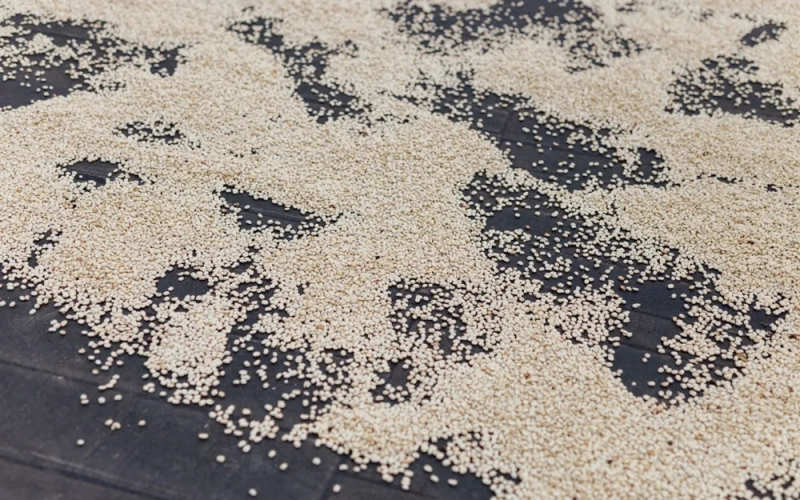
2024 Panama BOP Multivariety Category Champion Chiroso: The Rise of a Variety from Urrao, Colombia to Panama's Hacienda Dark Moon
In the 2024 28th Best of Panama (BOP) competition, Hacienda Black Moon's Chiroso submission scored 94.1 points to take the top spot in the multi-variety category, continuing this variety's impressive run on the international stage in recent years. Chiroso originates from Urrao in Antioquia, Colombia, and won the 2014 Colombia COE; it has since gradually been introduced to Panama and elsewhere. Its genetic background was once mistakenly thought to be related to Caturra, but research later confirmed that it is related to Ethiopian landraces, though it is not a natural mutation of Caturra. Chiroso beans are pointed and elongated, with prominent floral and fruity notes and complex acidity; its flavor is often compared to Geisha, with a fuller body. This article will sort through the variety's origin, spread, plant characteristics, and flavor performance, and introduce its roasting potential, providing coffee lovers with a complete variety profile. [more…]
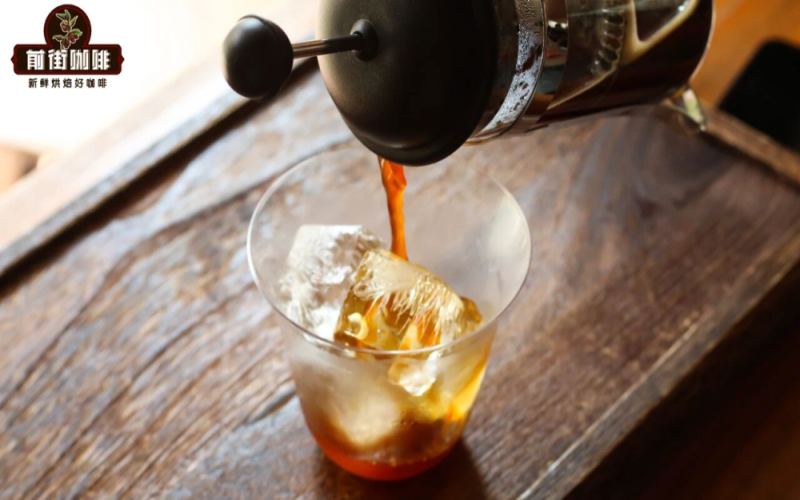
French Press Speed Extraction Guide: How to Brew a Flavorful Geisha Coffee in Under a Minute
For coffee lovers with a hurried personality, waiting three to four minutes for the French press immersion process is simply too long. The baristas at Front Street Coffee used Panama Emerald Estate Green Label Geisha as a sample and conducted a series of one-minute rapid extraction experiments around two methods: immersion and stirring. From the conventional three-minute immersion as a flavor baseline, to separately testing combinations such as immersion only, stirring only, stirring first then immersion, and immersion first then stirring, they ultimately found that stirring for 10 seconds combined with immersion for 20 seconds can present a clean and refreshing juicy feel, while stirring for 30 seconds brings a fuller layering and floral-fruity aroma. This article will fully present the experimental parameters, operating methods, and flavor comparison results to help readers choose the most suitable rapid brewing solution according to their personal taste preferences. [more…]

What Does Coffee Body Mean? A Comprehensive Analysis from Mouthfeel to Brewing for Choosing Full-Bodied Coffee Beans
When tasting a cup of coffee, besides focusing on flavor expression, mouthfeel is also a dimension that cannot be ignored. Flavor corresponds to taste and smell, while mouthfeel relates to the tactile experience—this is what the coffee world often calls Body. When coffee is smooth, full, and rich on the palate, it indicates excellent Body; if it feels rough, thin, or astringent, the Body is poor. The fineness of oils and fibers is the key factor determining Body quality. This article starts from the concept of Body, recommends two representative coffee beans with a rich style, and breaks down in detail the operational key points and underlying principles of Kono-style pour-over for enhancing richness, helping coffee enthusiasts better balance flavor and mouthfeel in their pour-over practice. [more…]
Flavor Comparison of the Three Major Coffee Varieties: Differences Between Robusta, Arabica, and Liberica, and Front Street Coffee's Fresh Roasting Recommendations
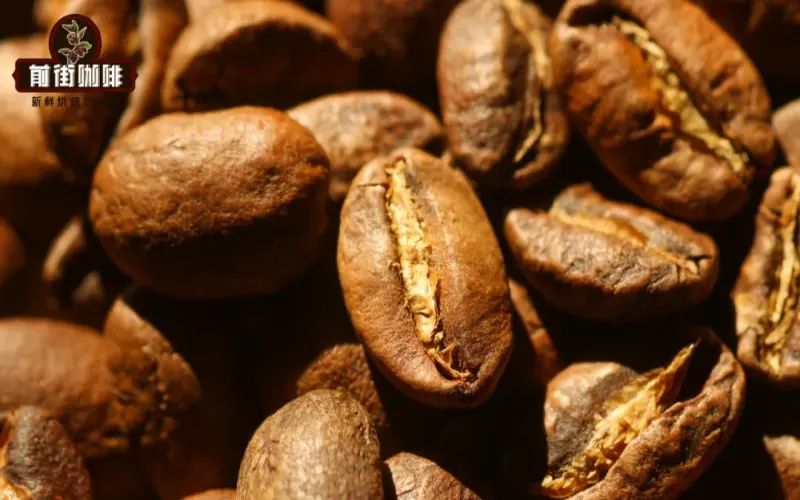
The coffee world is mainly composed of three major species: Arabica, Robusta, and Liberica, but the two most commonly encountered in everyday drinking and commercial blends are the first two. Arabica dominates the specialty coffee mainstream with its delicate and varied flavors, while Robusta, with its robust vitality and high caffeine content, plays an important role in espresso recipes and instant products. This article will systematically sort out the characteristics of the three major species from multiple dimensions such as plant morphology, growing altitude, production share, and flavor performance, and will specifically explain Robusta's position and limitations in the wave of specialty coffee. At the same time, the article will also combine Front Street Coffee's dedication to freshness and share practical suggestions such as the resting period and grinding timing, helping coffee enthusiasts more comprehensively understand the selection logic and brewing key points of different bean types. [more…]
An In-Depth Analysis of Semeon Abay's Special Anaerobic Processing Method: From Fermentation Technique to Flavor Expression
Coffee bean processing methods are becoming increasingly diverse, and among them the Semeon Abay processing method has attracted the attention of many enthusiasts with its unique fermentation logic and personal character. From the perspective of Front Street Coffee, this article systematically sorts out the origin story and operational process of this special processing method, while also comparing the advantages, disadvantages, and flavor differences of the three traditional methods—washed, natural, and honey—to help readers more clearly understand the impact of different processing methods on coffee taste and provide a reference basis for everyday purchasing decisions. [more…]
Arabica, Robusta, and Liberica: Flavor Differences and Main Producing Countries of the Three Native Coffee Species
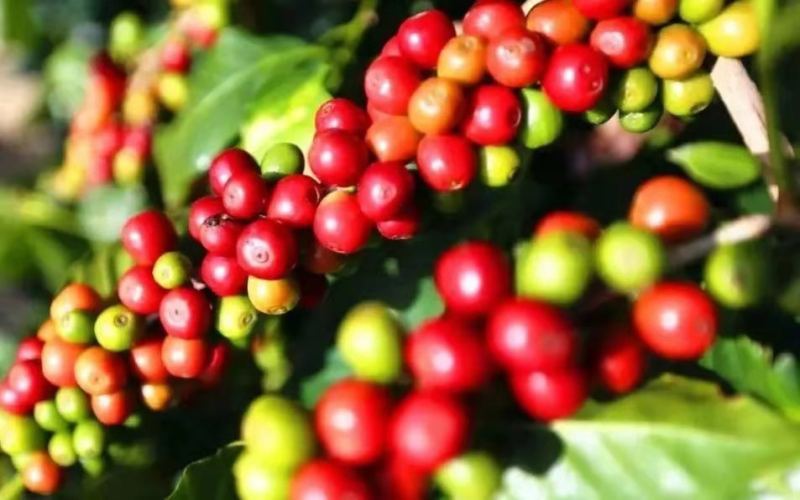
The landscape of the coffee world is shaped by three primary species: Arabica, Robusta, and Liberica. Each has its own strengths in terms of yield, flavor, growing conditions, and uses. Arabica dominates with about 75% of the market, Robusta accounts for roughly 20%, while Liberica makes up only about 2%. This article will systematically outline the origins, major producing countries, flavor characteristics, and roles in the coffee industry of these three species, and also introduce representative beans sold by Front Street Coffee. Whether you are a beginner just getting into coffee or an enthusiast seeking more advanced knowledge, you will gain a clear framework for understanding coffee varieties and how different beans shape the flavors in your cup. [more…]

An In-Depth Analysis of Aceh Sumatra Tiger Mandheling: Wet-Hulled Process, Green Bean Characteristics, and Five Pour-Over Recipes
In Aceh Province, at the northernmost tip of Sumatra, Indonesia, on volcanic soil surrounded by Lake Tawar and the Gayo Mountains, grows a Mandheling known for its cleanliness—Tiger Mandheling. It is mainly composed of three varieties: Caturra, Typica, and Sidikalong. After wet-hulling, it presents a balanced flavor of cream, dark chocolate, and nuts. This article will systematically review the bean's producing region background, wet-hulling process, green bean variety characteristics, medium-dark roast profile, and provide specific parameters and flavor performance for five brewing methods: V60, KONO, siphon, AeroPress, and French press, helping coffee enthusiasts fully understand this Indonesian coffee that combines body and clean taste. [more…]
Aceh Tiger Mandheling Coffee Beans: A Comprehensive Analysis of Wet-Hulling Process, Green Bean Characteristics, and Roasting & Brewing
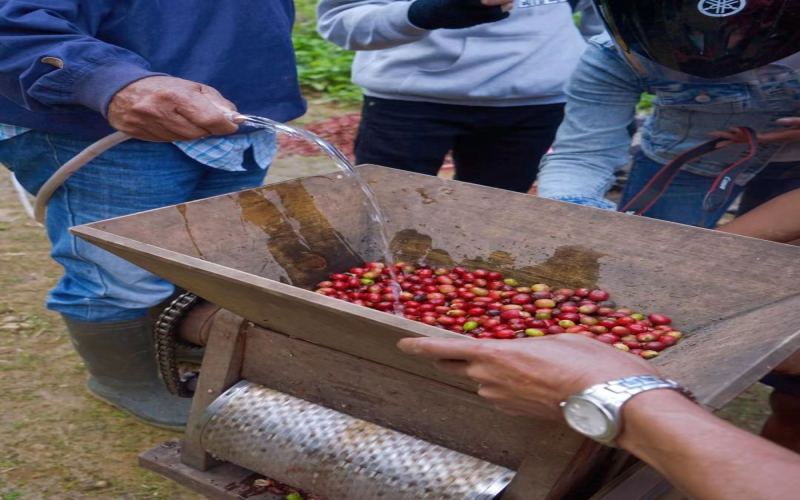
Tiger Mandheling is a classic coffee produced in Aceh Province, Sumatra, Indonesia, processed using the wet-hulling method, with a full-bodied, intense flavor and a distinctive character. This article will walk you through the growing background of the Aceh production region, the specific process and reasons behind the wet-hulling method, the green bean varietal composition of Tiger Mandheling, and Front Street Coffee's roasting approach and brewing parameters. From volcanic soil to the causes of peaberry beans, from the dehydration stage to first crack development, it presents the complete story of this bean, making it suitable reading for coffee enthusiasts who want to understand Mandheling in depth. [more…]
Analysis of Indonesia's Wet-Hulling Method: Comparing Peeled Sun-Dried and Honey Processing Techniques and Flavors
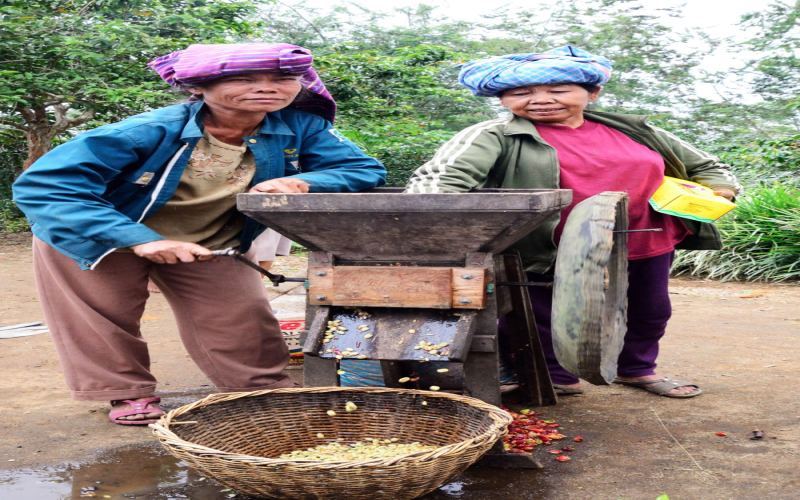
The green coffee bean processing method has a decisive influence on the final flavor. In addition to variety and origin, the processing method is also a key link in shaping coffee's personality. Currently, the mainstream methods include natural, washed, and the in-between semi-washed (wet-hulled), Brazilian pulped natural, and honey processing, among others. This article will provide a detailed explanation of three processes: Indonesian wet-hulled, pulped natural, and honey processing, covering their respective operational steps, flavor characteristics, roasting recommendations, and brewing parameters, and will combine bean examples from Front Street Coffee for cupping comparisons, helping readers systematically understand the taste differences brought by different processing methods. [more…]