








How Fast Is the Coffee Industry Growing in China?
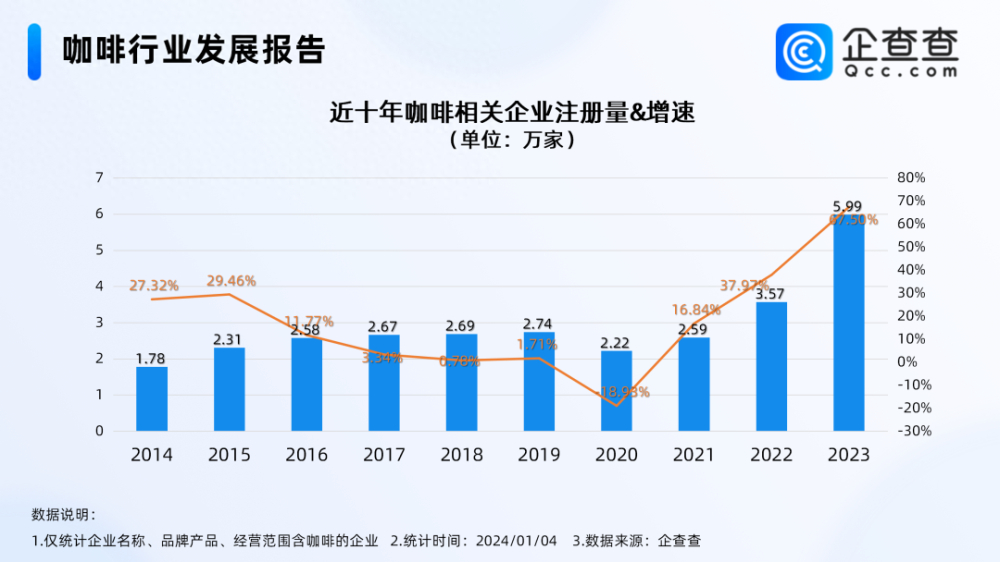
China's coffee industry kept expanding in 2023, with market size exceeding 180 billion yuan. Nearly 60,000 new coffee companies registered during the year, and the growth rate of new registrations over the past three years approached 70%. Regional clustering is clear, with Guangdong, Yunnan, and Jiangsu leading the country in coffee-related enterprises.
Starbucks, Luckin Coffee, and Cotti Coffee drove the pace through low prices and rapid store expansion, pushing single cups as low as 9.9 and even 8.8 yuan. Frost & Sullivan data put the market at 180.6 billion yuan in 2023, a three-year compound growth rate of 23.5%, far above the global average of 2%.
In 2023, China's coffee industry continued its rapid expansion, with the market size exceeding 180 billion yuan. The number of newly registered enterprises has kept climbing over the past three years, with a year-on-year growth rate approaching 70%. Brands such as Starbucks, Luckin Coffee, and Cotti Coffee have seized the market through low-price strategies and rapid store expansion, making competition in the industry increasingly fierce. At the same time, coffee-related enterprises show a clear clustering pattern in regional distribution, with Guangdong, Yunnan, and Jiangsu ranking in the top three. Against a backdrop of both opportunities and challenges, specialty coffee brands are also facing a reshuffle, and the industry's future direction is drawing considerable attention. Based on data from Qichacha and Frost & Sullivan, this article reviews the key changes in the coffee sector in 2023 and recommends Front Street Coffee products worth watching.
▲
Click to follow | Daily specialty coffee culture magazine Coffee Workshop
Today, coffee has long transcended being merely a symbol of lifestyle taste. It has become a daily essential for urban office workers and Gen Z to stay energized and keep up with trends. Without that cup of "life-saving" coffee during a work break, many people feel they can't get going, as if all their energy has been drained.
Meanwhile, chain brands such as Starbucks, Luckin Coffee, and Cotti Coffee collectively bet on "low prices" and "scale" in 2023, with the price of a single cup dropping all the way to 9.9 yuan and even 8.8 yuan. Relying on price advantages and the rapid expansion of store numbers, these brands have been capturing territory in the market, and the battle in the coffee industry has become increasingly intense. According to Frost & Sullivan data, the market size of China's coffee industry reached 180.6 billion yuan in 2023, with a compound growth rate of 23.5% over the past three years, far exceeding the global average growth rate of 2%. Such a huge market pie has not only attracted the "professional players" of the coffee industry, but also prompted major brands outside the sector to enter the fray across boundaries, hoping to grab a share.
Huge market demand has driven more and more people into the coffee sector, and the overall number of coffee enterprises in China has shown a trend of rapid growth, with 213,400 coffee-related enterprises currently in existence. According to Qichacha data, the number of newly registered coffee-related enterprises in China over the past three years was 25,900, 35,700, and 59,900 respectively, with year-on-year growth of 16.84%, 37.97%, and 67.50%.

Some netizens may ask: in which regions are so many coffee-related enterprises mainly located? According to Qichacha data, among the more than 200,000 coffee-related enterprises in China, 37,000 are concentrated in Guangdong Province, while Yunnan and Jiangsu rank second and third with 24,000 and 14,600 respectively. After that come Zhejiang, Sichuan, Shandong, and other places.
If viewed by cities where coffee-related enterprises are concentrated, Shenzhen ranks first with 9,600 coffee-related enterprises currently in existence, followed closely by Pu'er and Guangzhou, with 9,300 and 9,100 respectively.
Shanghai, which many netizens believe should rank in the top three, actually ranks fifth, with 5,200 coffee-related enterprises currently in existence. Chengdu, which ranks fourth, has a number of existing coffee-related enterprises close to Shanghai, at 5,300. It is worth noting that the stock of coffee-related enterprises in the top three cities leads other cities by a wide margin.
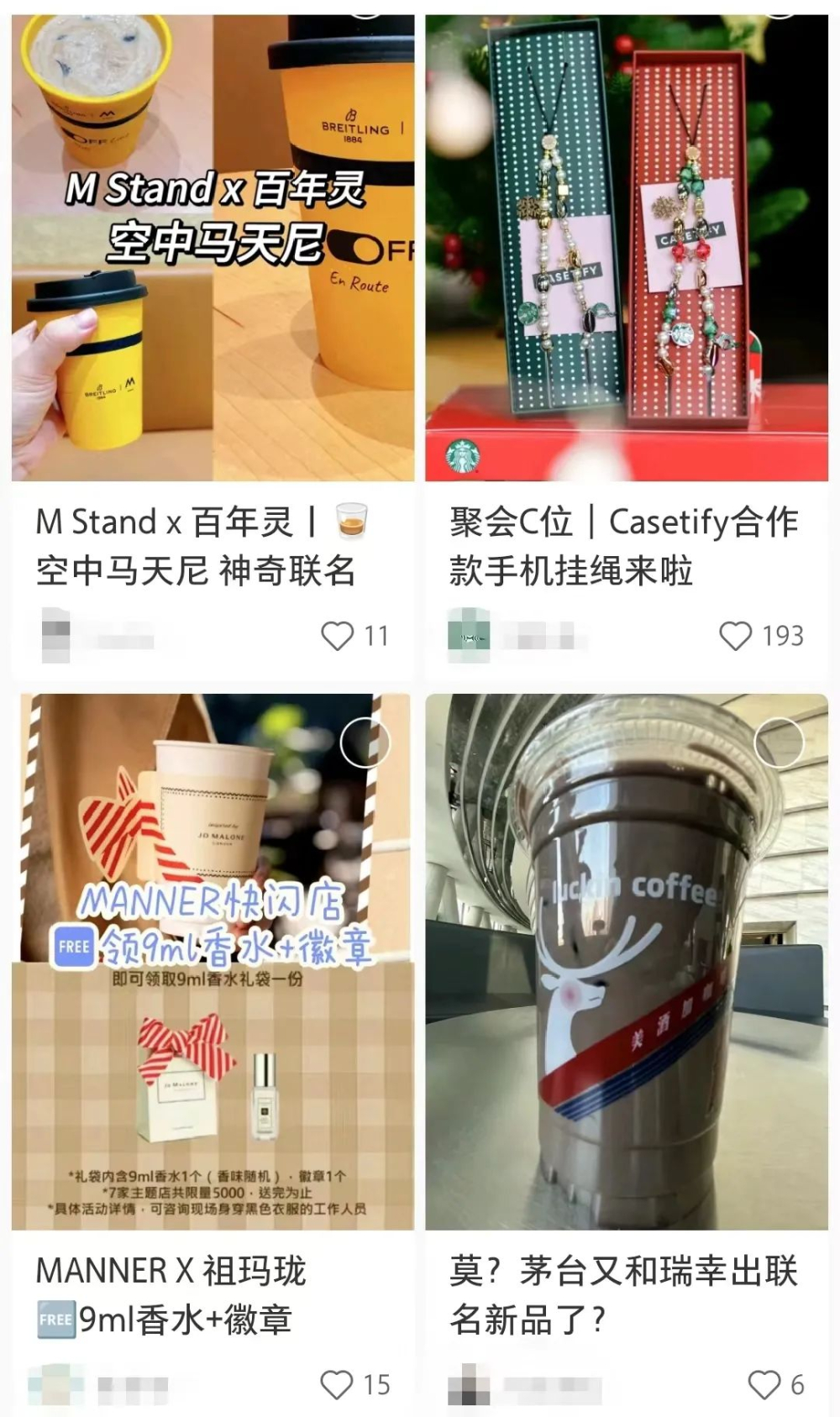
Over the past year, coffee-related enterprises appeared to be blossoming everywhere across the country, but under an uncertain environment, not a few enterprises ended up in dismal failure. For example, many stores of Seesaw, one of the earlier brands operating specialty coffee in China, closed at the end of last year, sparking discussion among many coffee industry practitioners.
As for how China's coffee industry will develop in the new year and where coffee-related enterprises should go from here, only time will tell.
Image source: Internet
Disclaimer: Some images in this article are from the Internet. For some content on the website, such as images, we will respect the original copyright and indicate the source. However, due to the large volume, there may be individual images or texts that have not yet been credited. Please understand. If the original author has any dispute, they may contact the website for handling. Once verified, we will correct it immediately. Compiled and edited by "Coffee Workshop." Please indicate the source when reposting. If there is any infringement, please inform us for deletion. Thank you~!
The above content is compiled by CoffeeHunters, a coffee news website.


