







Can Geisha Coffee Be Brewed in Under a Minute?
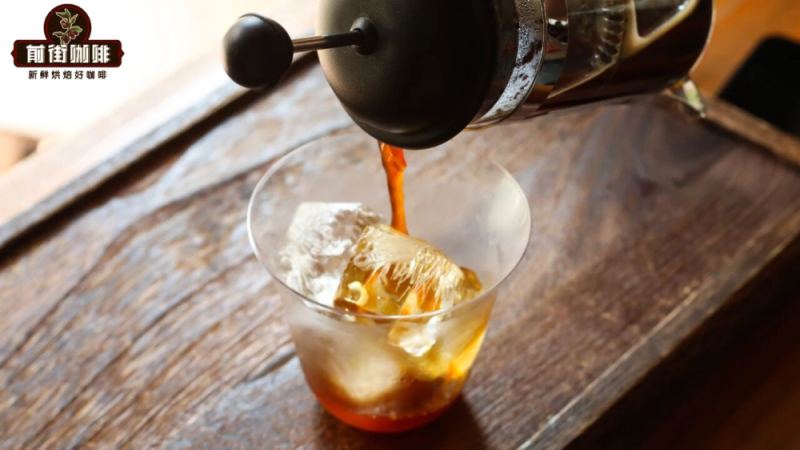
A French press steep usually runs three to four minutes, but tests with Panama Hacienda La Esmeralda Green Label Geisha show a good cup can come faster. Agitating for 10 seconds then immersing for 20 seconds gave a clean, juice-like cup, while 30 seconds of agitation produced a fuller body with more floral and fruity layers.
Baristas compared immersion only, agitation only, agitate-then-immerse, and immerse-then-agitate against a three-minute immersion baseline. The parameters were 89°C water, a 1:15 ratio, 15 grams of coffee, and a grind similar to granulated sugar. The Geisha itself showed jasmine, pomelo, cantaloupe, honey, and orange notes.
For impatient coffee lovers, waiting three to four minutes for a French press to steep feels far too long. Using Panama Hacienda La Esmeralda Green Label Geisha as a sample, Front Street Coffee baristas conducted a series of one-minute rapid extraction experiments centered on two methods: immersion and agitation. From a conventional three-minute immersion as the flavor baseline, to separately testing immersion only, agitation only, agitate-then-immerse, immerse-then-agitate, and other combinations, they ultimately found that agitating for 10 seconds combined with a 20-second immersion produces a clean, refreshing juice-like quality, while agitating for 30 seconds brings a fuller body with more layered floral and fruity aromas. This article presents the complete experimental parameters, operating methods, and flavor comparison results to help readers choose the rapid brewing approach best suited to their personal taste preferences.
[Front Street Coffee Barista's Notes]
For impatient lazy people using the coffee brewing wonder tool—the French press | How to quickly extract a good cup of coffee?
As an impatient person, Front Street Coffee has recently been researching how to use a French press to quickly and fully extract a cup of good coffee with rich flavor in the shortest time possible. Previously we discussed the operation methods of the French press, the grind size settings for the French press, the flavor differences between adding coffee grounds first versus adding them later, and also conducted research on immersion time. Today, the editor wants to explore how coffee tastes when rapidly extracted within 1 minute using immersion and agitation methods.
This time, let's first try using Front Street's Hacienda La Esmeralda Green Label Geisha beans to compare flavors within 1 minute based on different immersion and agitation durations. The comparison times are 10s, 20s, and 30s respectively.
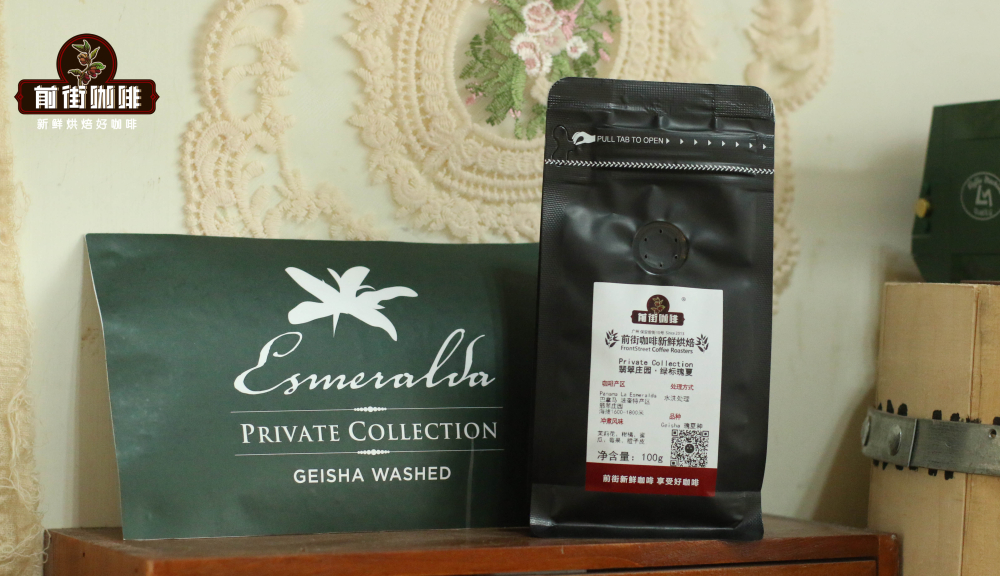
Front Street Hacienda La Esmeralda Green Label Geisha coffee beans
Country: Panama
Region: Boquete
Estate: Hacienda La Esmeralda
Altitude: 1600m-1800m
Processing method: Traditional washed
Variety: Geisha
Flavor: Jasmine, pomelo, cantaloupe, honey, Tieguanyin tea, orange
When we use a French press for extraction, we generally immerse for 3 minutes. This serves as the flavor reference for this experiment.
Parameters: 89℃/1:15/15g coffee/grind size granulated sugar (Chinese standard No. 20 sieve pass rate 75%)
Method: Pour water directly to 230g, wait 3 minutes 00 seconds then press out, total time ends at 3 minutes 40 seconds.
Flavor: Citrus, jasmine, tea aroma, lemon, kumquat, honey, cream. Overall mouthfeel is relatively full-bodied and smooth, with a rich aroma and distinct layering.
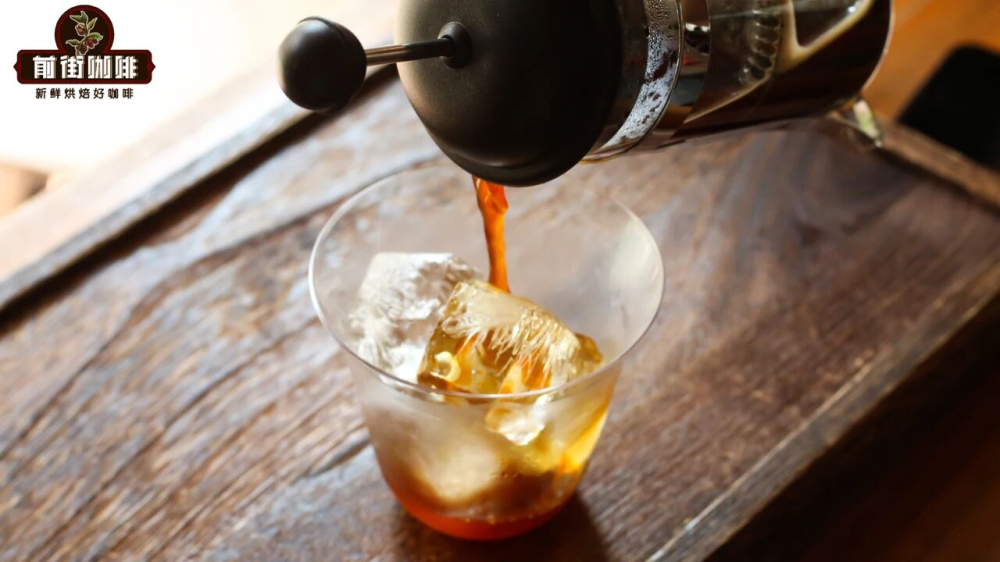
For an impatient editor like me, I don't want to wait 3~4 minutes that long, so can we shorten the extraction time to about one minute through agitation at the same grind size and water temperature?
Experiment One: "Immerse 30s" "Agitate 30s" (pressing out to fully pouring out takes about 30 seconds)
"Immerse 30s"
Parameters: 89℃/1:14/15g coffee/grind size fine granulated sugar (Chinese standard No. 20 sieve pass rate 80%)
Method: Pour water directly to 210g, immerse 30s then press out, total time 1 minute 00 seconds.
Flavor: Orange, citrus, overall relatively light, layering not obvious, acidity not rounded enough.
"Agitate 30s"
Parameters: 89℃/1:14/15g coffee/grind size BG-6M (Chinese standard No. 20 sieve pass rate 48%)
Method: Pour water directly to 210g, agitate 30s then press out, total time 1 minute 00 seconds
Flavor: Grapefruit, orange, green tea, jasmine aroma, plum, juice-like, cherry tomato. Overall mouthfeel is relatively full, floral and fruity aromas are prominent, layers are distinct, aftertaste is lasting.
We then compared "Immerse 30s" and "Agitate 30s" within about 1 minute when agitation and immersion were not performed simultaneously, and found:
In "Immerse 30s," the coffee is under-extracted. With the shorter time, many coffee substances cannot be fully extracted, so overall it tastes relatively light. While "Agitate 30s" allows the coffee to reach a balanced extraction rate, so the overall mouthfeel is relatively full, floral and fruity aromas are prominent, layers are distinct, and the aftertaste is lasting.
So can combining agitation and immersion make the flavor more complete? What changes would occur?
Experiment Two: "Agitate 20s Immerse 10s" "Agitate 10s Immerse 20s"
"Agitate 20s Immerse 10s"
Parameters: 89℃/1:14/15g coffee/grind size BG-6M (Chinese standard No. 20 sieve pass rate 48%)
Method: Pour water directly to 209g, first agitate 20s, immerse 10s then press out, time 0'39".
Flavor: Noticeable astringency, oolong tea, brown rice. Overall mouthfeel and flavor characteristics are not prominent, layers are not distinct.
"Agitate 10s Immerse 20s"
Parameters: 89℃/1:15/15g coffee/grind size coarse granulated sugar (Chinese standard No. 20 sieve pass rate 70%)
Method: Pour water directly to 210g, first agitate 10s, immerse 20s then press out, total time 1 minute 02 seconds.
Flavor: Sucrose, grapefruit, orange, tangerine, floral aroma, nuts, green tea. Overall mouthfeel is relatively thin, aftertaste not lasting enough.
Through the French press agitation experiment comparison, we can intuitively see that comparing "Agitate 20s Immerse 10s" and "Agitate 10s Immerse 20s" both at around 1 minute:
In "Agitate 20s Immerse 10s," the editor believes that with longer agitation time and shorter immersion time, the extraction rate is relatively accelerated, causing easily soluble molecules and less easily soluble molecules in the coffee to all blend together, so the resulting coffee has noticeable astringency in the mouthfeel, and the overall flavor is not prominent with indistinct layers. While "Agitate 10s Immerse 20s" is relatively better. With longer immersion time, the flavor is mainly focused on the sweet and sour fruit notes. Its extraction time is the shortest, and many substances have not yet dissolved in the water in time, resulting in lower saturation and a relatively thin mouthfeel. This also indicates that the extraction rate will be lower, but overall the fruity sweet and sour notes are prominent and relatively clean, as refreshing as drinking a glass of juice.
Summary
After experimental comparison, Front Street feels that if you prefer the sweet and sour fruity notes, clean and refreshing juice-like quality, the editor suggests you can use the "Agitate 10s Immerse 20s" method for brewing. If you prefer a fuller mouthfeel with richer layers, you can use the "Agitate 30s" method for brewing.
The above content is compiled by CoffeeHunters, a coffee news website.


