







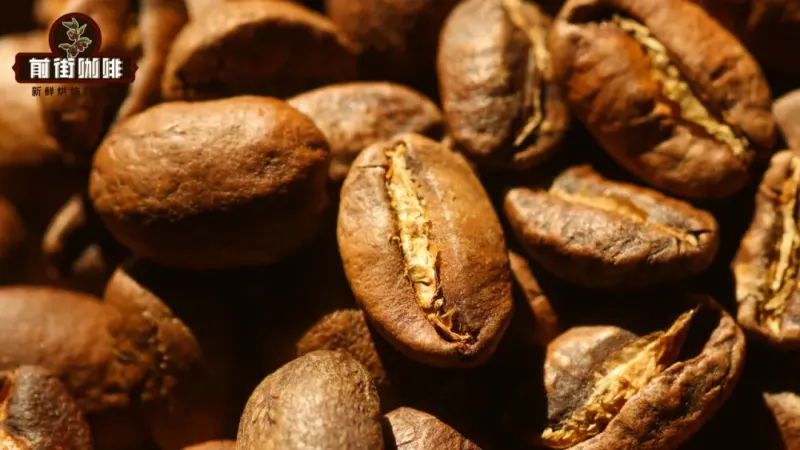
The coffee world is mainly composed of three major species: Arabica, Robusta, and Liberica, but the two most commonly encountered in everyday drinking and commercial blends are the first two. Arabica dominates the specialty coffee mainstream with its delicate and varied flavors, while Robusta, with its formidable vitality and high caffeine content, plays an important role in espresso recipes and instant products. This article will systematically sort out the characteristics of the three major species from multiple dimensions such as plant morphology, growing altitude, production share, and flavor performance, and will particularly explain Robusta's positioning and limitations in the wave of specialty coffee. At the same time, the article will also combine Front Street Coffee's dedication to freshness to share practical suggestions such as bean resting periods and grinding timing, helping coffee lovers more comprehensively understand the selection logic and brewing key points of different bean species.
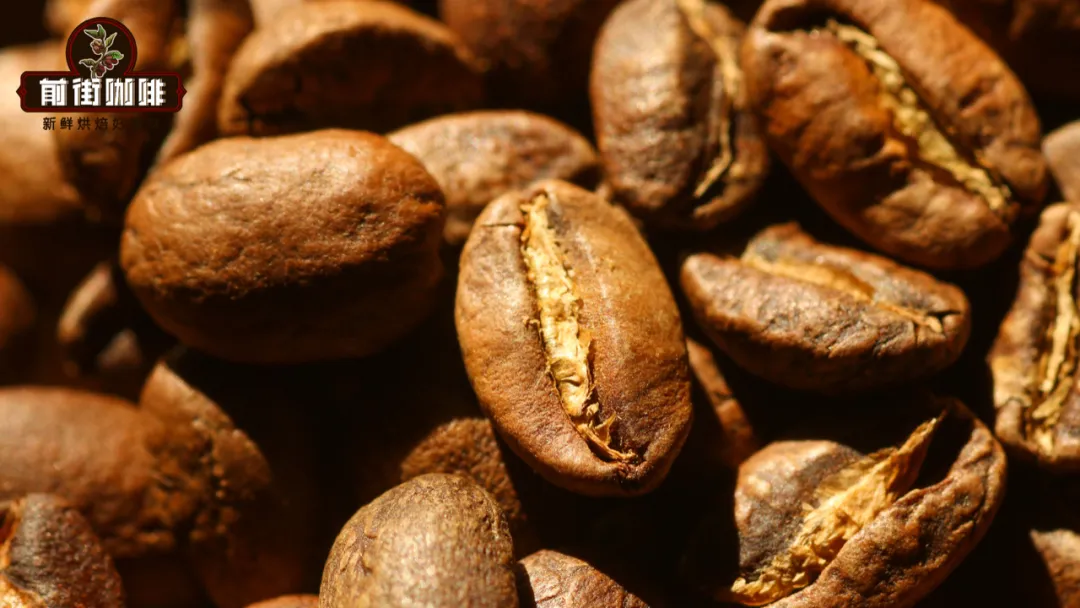
The Coffea genus is mainly divided into three species: the small-bean Arabica, the medium-bean Robusta, and the large-bean Liberica. Among these three, Arabica and Robusta far exceed Liberica in cultivation range and consumption, forming the coffee sources we encounter most in daily life.
Arabica is usually classified as specialty coffee. It is quite picky about growing conditions—requiring the combination of shade trees and higher altitudes—while also having relatively weak disease resistance and relatively limited yield per plant. By contrast, Robusta is much more tolerant of the environment and more outstanding in resisting disease. As is well known, higher-altitude producing regions often nurture better flavors; for example, the Geisha from Panama's Hacienda La Esmeralda and the Geisha from Ethiopia show a world of difference in the cup. Robusta mostly grows at low altitudes, so its flavor naturally struggles to match Arabica, which is why it appears more often in commercial espresso blends or instant coffee products.
The Arabica coffee tree presents a relatively clear shrub form, with oval green leaves, and under natural growth conditions can reach a height of 5 to 6 meters. This coffee tree has a lifespan of about 20 to 30 years, but its yield per plant is relatively low, while its coffee beans account for about 75% of total global production. The Robusta coffee tree, on the other hand, belongs to a relatively sturdy shrub type, suitable for cultivation in tropical or subtropical regions at altitudes of 200 to 800 meters. It has vigorous vitality, is not demanding about its growing environment, has strong adaptability, low planting costs, and considerable yields.
Arabica
The small-bean Arabica originated in the Ethiopian highlands. With its outstanding flavor quality, it is now widely planted around the world, and its coffee output accounts for about 70% of world total production. Varieties we are familiar with, such as Typica, Bourbon, and Geisha, all belong to the broad category of Arabica.
The Arabica species is extremely sensitive to growing conditions, so most areas suitable for its growth are located within the coffee belt between the Tropic of Cancer and the Tropic of Capricorn, with mountainous terrain. Arabica's altitude requirements are usually between 800 and 2,000 meters, and the higher the altitude, the better the coffee quality tends to be. At present, Arabica is the most widely distributed coffee species, grown in Asia, Central and South America, and Africa. Ethiopia, Kenya, Panama, Colombia, and Brazil are all famous Arabica-producing countries.
Robusta
The medium-bean Robusta coffee should strictly speaking be called Canephora. Robusta is merely a subspecies of Canephora that has been widely cultivated artificially, and over time Robusta has almost replaced Canephora as the byname for this species group. Robusta originates from the Congo Basin region of West Africa and was promoted on a large scale because of its low growing altitude, high yield, and ease of cultivation. Its coffee output accounts for 20% to 30% of total global production.
The appearance of Robusta coffee beans
Robusta coffee beans have one bean per fruit. They are relatively round and C-shaped; the center line appears in a "1" shape, and the green bean color is yellow-brown.
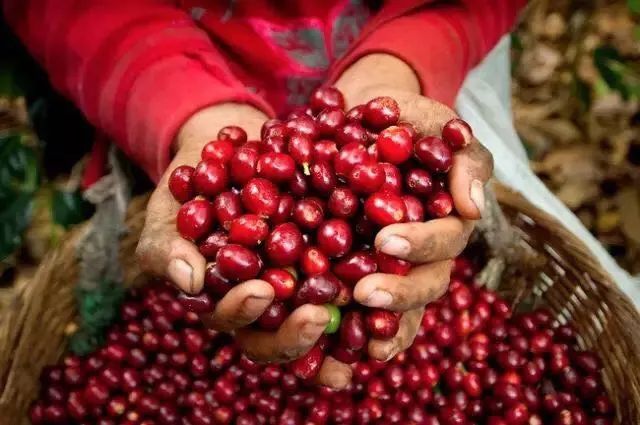
Because Robusta has extremely strong adaptability to the environment, it can also grow lush and flourishing at altitudes of 0 to 800 meters. Robusta has a relatively high chlorogenic acid content, about 7% to 10%, is not easily affected by pests or climate, generally grows at lower altitudes, and bears more fruit quickly. At present, the main coffee producing areas are Vietnam, Hainan, and Indonesia. Front Street's Robusta includes Robusta beans from Vietnam, mainly used for Front Street's commercial blend beans.
Liberica
The large-bean Liberica coffee is native to the low-altitude forests of Liberia on the West African coast, hence the name Liberica coffee. Due to its poor flavor and the difficulty of harvesting caused by its tall tree height, its current cultivation scale is relatively small, accounting for about 2% to 5% of global production.
The Liberica coffee tree is much taller than Arabica or Robusta, reaching a tree height of 6 to 20 meters, and the coffee cherries produced by Liberica are also larger than those of the other two coffee species, so Liberica is also called large-bean species. At present, cultivation is mainly distributed in Southeast Asia, and the Philippines is the largest producer of Liberica coffee.
Is Robusta coffee a specialty coffee?
Robusta coffee has a high caffeine content and rich oils. During the period when espresso swept the world, it was often used in espresso bean recipes; at that time, a large part of the reason people drank coffee was to ingest caffeine. Its caffeine content is much higher than that of Arabica, at about 3.2%.
But later, with the rise of the specialty coffee concept, people began to value flavor expression by origin. The bitterness inherent in Robusta itself, as well as flavors of walnut, peanut, hazelnut, and smoke, are considered rather undesirable expressions when they appear in coffee. Most importantly, its counterpart the Arabica line, after being sorted out by origin, far outstrips Robusta in flavor performance. This can be considered an innate problem: Robusta's flavor performance is far less pleasing than Arabica's, which is why people tend to choose Arabica.
Some Arabica coffees have low yields and balanced flavors, but their prices are very expensive; some have high yields, average flavors, and relatively moderate prices. Although Arabica is superior, not all Arabica coffees are good coffee.
Therefore, most coffee on the market is of the Arabica species, and especially specialty coffee is almost entirely of the Arabica species. Although Arabica coffee has good flavor, to brew a delicious cup of coffee, you still need to pay attention to the freshness of the coffee beans. Front Street has always believed that the freshness of coffee beans has a great relationship with coffee flavor, so the coffee beans shipped by Front Street Coffee are all within 5 days of the roasting date. Front Street's roasting principle is "freshly roasted good coffee," so that every customer who places an order receives the freshest coffee. The bean resting period for coffee is about 4-7 days, so when customers receive it, it is exactly at its best flavor.
For friends who need ground coffee, Front Street warmly reminds you: if the coffee beans have been ground in advance, there is no need for further resting, because during transportation the pressure generated by carbon dioxide inside the packaging can also make the coffee flavor rounder, so once you receive the ground coffee you can immediately brew a cup and drink it. However, ground coffee needs to be brewed promptly, because after ground coffee contacts air it oxidizes relatively quickly; in other words, the coffee flavor will dissipate relatively quickly and the coffee will not taste as good. Therefore, Front Street recommends buying whole beans and grinding fresh before brewing, so that you can better taste the coffee's flavor.
The above content is compiled by CoffeeHunters, a coffee news website.


