







What does Starbucks say about coffee and fair trade talks?
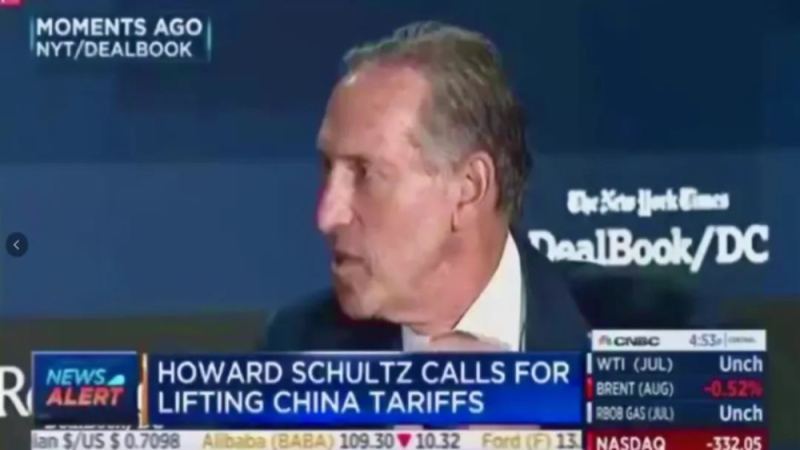
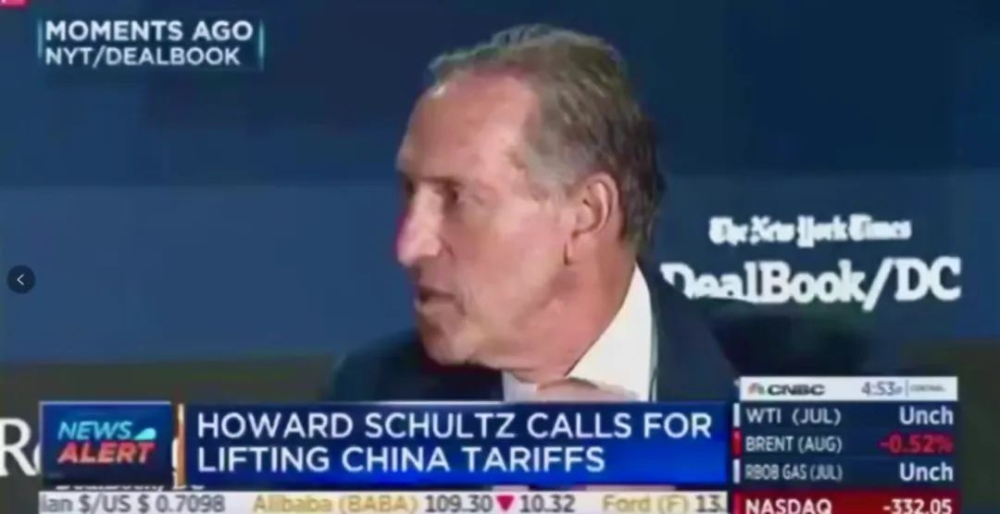
Starbucks interim CEO Howard Schultz has publicly called for improved US-China relations, saying continued friction benefits neither country. He pointed to the $360 billion in tariffs on Chinese goods, arguing that removing them would ease pressure on American consumers and serve as a starting point for addressing global inflation. Schultz also continues restructuring Starbucks' internal management and finances.
The company operates more than 34,600 stores in 84 countries, with 5,700 in China, its largest overseas market. Schultz returned in April as interim CEO to handle a new round of financial and management crises, halting stock buybacks, adjusting employee benefits, responding to unionization efforts, and planning to look externally for the next CEO.
Starbucks interim CEO Howard Schultz recently stated publicly that continued friction between China and the US benefits neither country, and that improving bilateral relations would be good for global markets. He specifically mentioned that removing the $360 billion in tariffs on China would help ease pressure on American consumers and would be a starting point for tackling global inflation. At the same time, Schultz is working to address Starbucks' internal management and financial challenges, including halting stock buybacks, adjusting employee benefits, responding to unionization efforts, and planning to look externally for the next CEO. This article will review Schultz's latest remarks and his reform measures since returning.
Howard Schultz said candidly: "The US and China competing against each other benefits neither side, nor is it what global markets would like to see. If relations between the two countries can improve significantly, it would be a huge positive for both sides and the entire world. The US and China need to build a positive and constructive cooperative relationship."
Schultz has long advocated for moving US-China relations forward. In January last year, he received a reply letter from Chinese President Xi Jinping, in which the president acknowledged his and Starbucks' efforts in promoting trade exchanges and bilateral relations between the two countries.
At this meeting, Schultz emphasized that removing the $360 billion in tariffs on Chinese goods would "ease the burden on American consumers" and would be "the first step toward resolving the global inflation problem."
As a globally renowned coffee chain brand, public data shows that as of April this year, Starbucks operates more than 34,600 stores in 84 countries and regions. Among these, the Chinese market has 5,700 stores, making it both Starbucks' largest overseas market and its second-largest market globally.
At such a massive scale, Starbucks must simultaneously deal with global supply and demand fluctuations, rising raw material costs, employee compensation and benefits, and mental health, among many other issues. As the soul figure of the brand, Howard Schultz returned in early April this year to serve as interim CEO, helping the company resolve a new round of financial and management crises.
Before his return, due to the continued spread of the pandemic, Starbucks employees were dissatisfied because of staff shortages in stores and a mismatch between pay and workload, and employees in many locations began joining unions, demanding direct dialogue with the company. At the same time, changes in global market supply and demand led to continuously rising prices of beverage raw materials, and inflation further pushed up various costs, leaving Starbucks trapped in a vicious cycle in terms of operations, finances, and employee management.
To address this, on his first day back, Howard halted the stock buyback plan and intended to redirect that money into employee benefits and store operations.
Facing wave after wave of unionization efforts, Howard did not take a hardline approach, but instead used a combination of carrot and stick, hoping employees would change their minds. On the one hand, he stated that under federal law, Starbucks cannot unilaterally adjust the compensation and benefits of union members or the operating funds of unionized stores; on the other hand, he hoped this would let employees decide their own future direction.
However, as interim CEO, Howard emphasized that he would not stay at Starbucks too long. In a recent media interview, he said: "For the company's long-term development, we need to fill in the experience and expertise we lack in many areas."
Howard believes that some of the problems Starbucks currently faces originate within the company. Therefore, during more than two months since his return, he has asked several company veterans to leave, making room for new people. In May this year, Starbucks revealed externally that its head of human resources and two vice presidents responsible for public affairs and public policy would leave, two of whom had worked at Starbucks for more than fifteen years.
Another part of the reason is that the COVID-19 pandemic accelerated changes in consumer behavior. Howard said: "No CEO can fully predict these challenges, and Starbucks needs to re-examine its own operating model." For this reason, he is looking for an external manager to serve as the next CEO, but this approach has left many investors and former members of the company's management doubtful about whether Howard can truly let go of Starbucks.
In response, Schultz said that the diversity and quality of the existing CEO candidates made him excited, and the only thing he cared about was whether the next CEO could lead the company to success. He also said that he would determine the next CEO candidate in the fall of this year, and if things go smoothly, he would step down as interim CEO after the release of first-quarter earnings next year and continue to remain on the company's board of directors.
Image source: Internet
For professional coffee knowledge exchange and more coffee bean information, please follow Coffee Workshop (WeChat public account: cafe_style)
For more specialty coffee beans, please add the private WeChat of Front Street Coffee (FrontStreet Coffee), WeChat ID: qjcoffeex
The above content is compiled by CoffeeHunters, a coffee news website.


