







How does each coffee bean process change the flavor?
The coffee bean process covers every step that turns coffee fruit into green coffee beans, and it shapes flavor as much as variety or origin. Methods fall into natural and washed, the two main families, with intermediates in between: Indonesian wet-hulling, Brazilian pulped natural and honey processing.
Indonesian wet-hulling, locally called Giling Basah, is a traditional method that typically yields a full-bodied, intense cup with a distinct personality. The choice of method depends on local climate and resources, since natural processing suits dry, hot areas with little water, while washed processing is used where water is readily available.
The processing method of green coffee beans has a decisive impact on the final flavor. Besides variety and origin, the processing method is also a key link in shaping coffee's personality. Currently, mainstream methods include natural, washed, and the intermediate methods such as semi-washed (wet-hulled), Brazilian pulped natural, and honey processing. This article will elaborate on three processes: Indonesian wet-hulled, pulped natural, and honey processing, covering their operational steps, flavor characteristics, roasting suggestions, and brewing parameters, and combine with Front Street Coffee's bean examples for cupping comparison, helping readers systematically understand the taste differences brought by different processing methods.
Among the many factors affecting coffee flavor, Front Street believes that besides variety, origin, and cultivation methods, green bean processing methods also occupy a position that cannot be ignored. Different processing techniques lead coffee beans to completely different flavor directions. Today, coffee bean processing methods are increasingly diverse. Front Street's bean list covers almost all current mainstream processing methods, and the store also displays beans of various processing methods for customers to refer to. The so-called coffee processing method refers to the entire process of converting coffee fruit into green coffee beans (i.e., seeds). Overall, it is mainly divided into two categories: natural and washed, while intermediate methods include semi-washed (wet-hulled), Brazilian pulped natural, and honey processing. Today, Front Street Coffee (FrontStreet Coffee) will explain the three processing methods: wet-hulled, pulped natural, and honey processing.
What is Indonesian wet-hulled processing?
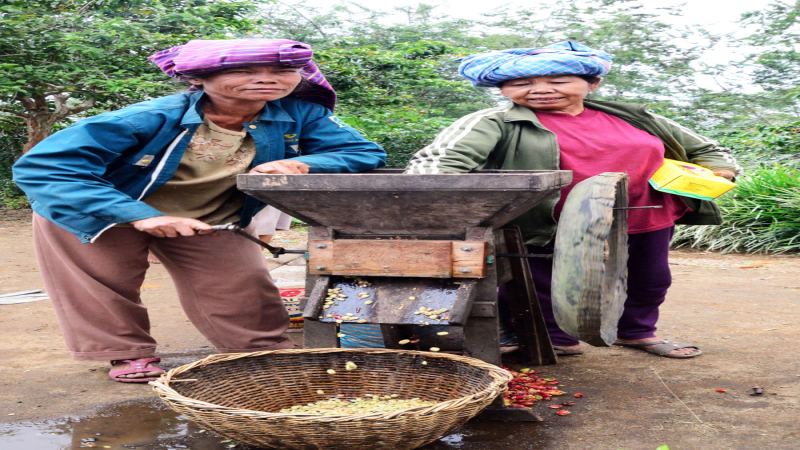
Indonesian wet-hulled processing, also known as Wet Hulling, and locally called Giling Basah, is a traditional coffee processing method in Indonesia. Compared with other common traditional processing methods, coffee processed by wet-hulling usually has a full-bodied and intense mouthfeel, with a very distinct personality.
The choice of green bean processing method usually depends on the region's natural climate and resource conditions. Natural processing is generally common in dry, high-temperature areas with scarce water resources; washed processing is mostly used in areas where water resources are easily accessible. The wet-hulled method is a green bean processing method derived to adapt to Indonesia's humid and rainy climate conditions.
Wet-hulled processing steps
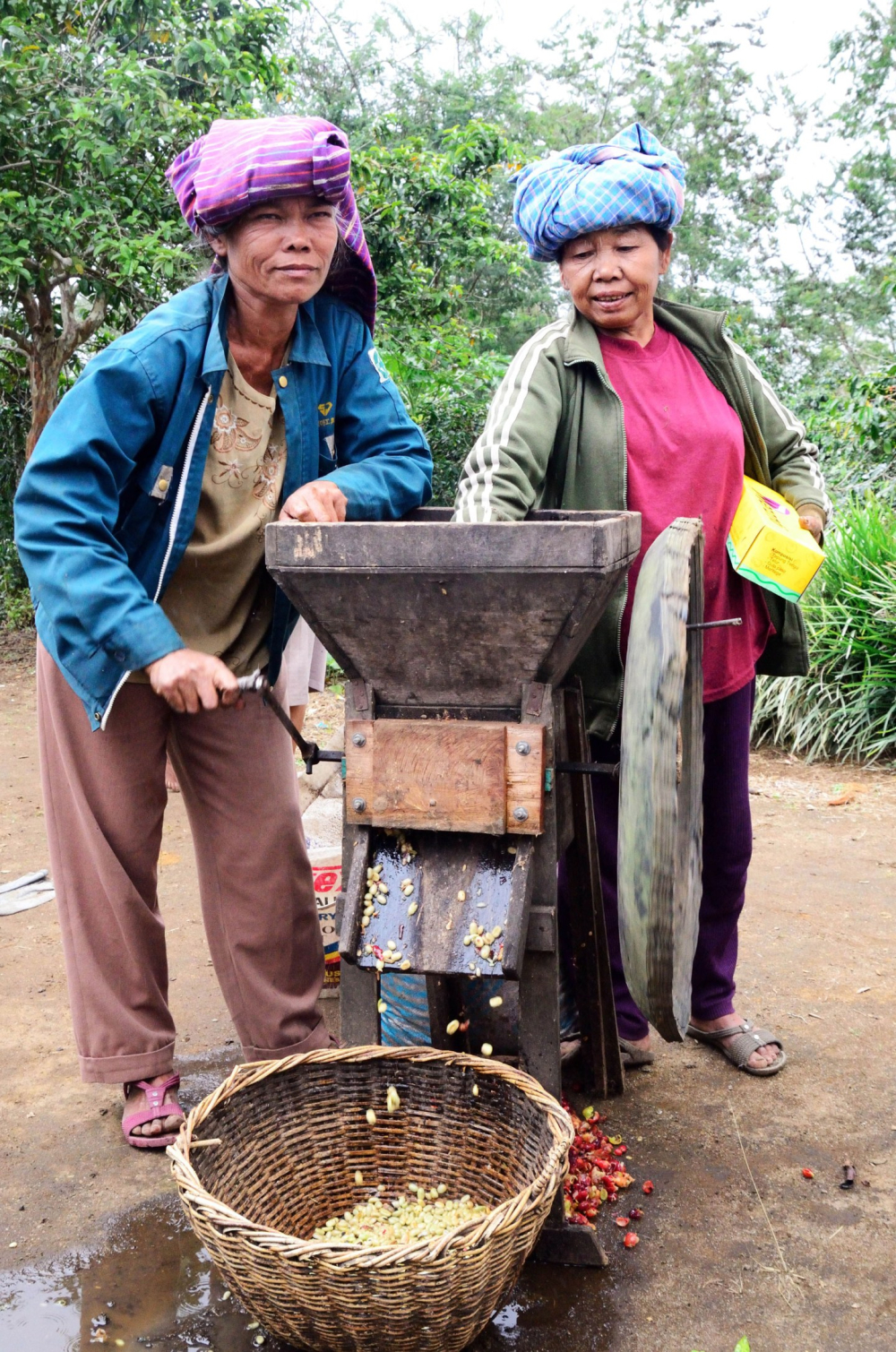
1) Remove the skin and pulp, retain the parchment and mucilage
2) Ferment in water tank
3) Wash off the mucilage
4) Sun-dry with parchment for 2-3 days, to a moisture content of 20-24%
5) Remove the parchment
6) Dry the green beans to a moisture content of 12-13%
7) Prepare for export
Flavor characteristics of wet-hulled coffee
Indonesia's climate conditions have created a local processing flow of multiple drying stages, plus the method of final drying after removing the parchment, which makes wet-hulled coffee present unique flavors such as low acidity, thick mouthfeel, and herbal spices. However, its disadvantages are also relatively obvious, and quality stability is relatively insufficient.
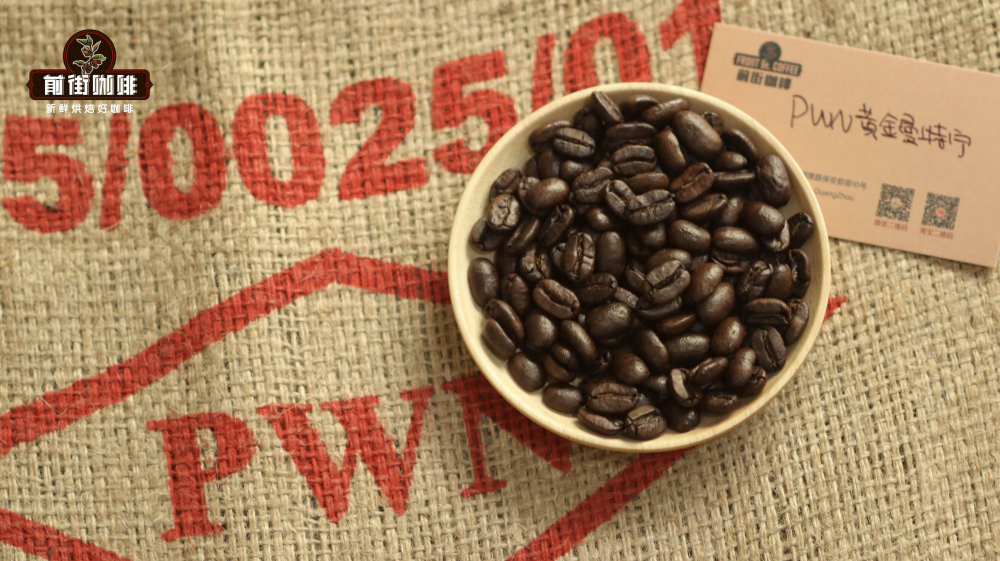
Front Street Coffee (FrontStreet Coffee): Indonesia · Golden Mandheling coffee beans
Company: PWN
Region: Sumatra
Altitude: 1100-1600m
Variety: Typica
Processing method: Wet-hulled
Roasting suggestions
Golden Mandheling is a green bean with relatively high moisture content, and there is a large deviation in moisture compared with natural beans, so special attention is needed during the dehydration stage. Front Street Coffee (FrontStreet Coffee) suggests closing the damper immediately after putting in the green beans, then opening the damper to 3 after 30 seconds of steaming, and when the green bean color turns light green or white, open the damper to 4, and open it to the maximum after first crack.
Machine: Yangjia 800N, 550g green beans input
Charge temperature: 200℃
Turning point: 5'40", 148℃
First crack: 9'54", 191.2℃
Develop for 3'30'' after first crack, discharge at 204.5℃
Brewing parameters
Dripper: KONO
Water temperature: 88-90℃
Coffee-to-water ratio: 1:15
Grind size: Medium grind (70% passing rate with No. 20 standard sieve)
Brewing method: For the first pour, use 30g of water for blooming, blooming time about 30 seconds. For the second pour, pour in stages until 125g of water. When the water level drops and is about to expose the coffee bed, continue with the third pour until 225g. When the water level drops and is about to expose the coffee bed, remove the dripper. (Timing starts from the beginning of blooming.) The extraction time is 2 minutes.
Flavor description: Multi-layered, full-bodied and clean, high balance, with strong nutty and chocolate flavors, rich spice and caramel aroma, with fruity notes, and a long finish.
Pulped natural
The quality of the natural method is difficult to control; while the washed method consumes a huge amount of water, on average 1 ton of coffee fruit requires 10-20 tons of water to produce about 200 kilograms of coffee beans, which is difficult for producing countries with limited water resources to bear. In the 1990s, Brazil took advantage of its unique dry climate and invented the pulped natural method.
After multiple improvements, according to the version of the late Dr. Ernesto Illy, the pulped natural process is: coffee fruit is first put into a water tank to remove defective floating fruits, then the skin, pulp, and part of the mucilage layer are removed, then washed for one hour. Because the soaking fermentation time is very short, the mucilage is not easily completely washed off, and mucilage still remains on the bean shell. At this time, the sticky parchment beans are spread on a drying patio to dry, preferably using well-ventilated African raised beds.
Front Street Coffee (FrontStreet Coffee): Brazil · Cerrado Red Bourbon coffee beans
Region: South Minas region
Variety: Red Bourbon (Red Bourbon)
Processing method: Pulped natural processing
Altitude: 1000m
Brewing parameters
Dripper: KONO
Water temperature: 88-90℃
Coffee-to-water ratio: 1:15
Grind size: Medium grind
Brewing method
For the first pour, use 30g of water for blooming, blooming time about 30 seconds. For the second pour, pour in stages until 125g of water. When the water level drops and is about to expose the coffee bed, continue with the third pour until 225g. When the water level drops and is about to expose the coffee bed, remove the dripper. (Timing starts from the beginning of blooming.) The extraction time is 2 minutes;.
For coffee beans with a darker roast level, to highlight the coffee's full-bodied feel, Front Street Coffee (FrontStreet Coffee) will choose the Kono dripper for brewing. The Kono dripper is characterized by its soaking function, which can be used to extract more coffee substances and enhance the full-bodied mouthfeel. Because its ribs are few and located at the lower end, it can make the filter paper fit closely to the dripper to limit airflow, thereby slowing the water flow and increasing the contact time between water and coffee grounds.
Flavor description: Overall has nutty, chocolate, creamy, peanut, caramel, fruity acidity, and sucrose flavors.
Honey processing
After Brazil's pulped natural method spread to Central American countries such as Costa Rica and El Salvador, it was improved and called honey processing. Honey processing process: a process of making green beans by sun-drying with mucilage. After the coffee beans have their outer pulp removed, there will be a sticky gelatinous substance. In the traditional washed processing method, it is washed off with clean water, but because some high-altitude production areas have water resource restrictions, this method of directly drying with mucilage was born.
Honey-processed coffee has higher sweetness than washed coffee, higher sugar content, and relatively higher body. (Provided the comparison is at the same roast level.) According to the thickness of mucilage removed, the length of sun-drying time (or the thickness during drying), the frequency of turning during drying, etc., honey processing is further divided into black honey, red honey, orange honey, yellow honey, and white honey.
According to the thickness of mucilage removed:
Black honey: 80% mucilage removed. Some estates' black honey processing almost does not remove mucilage, so drying takes the longest, requiring more than 14 consecutive days. During the process, to avoid drying too quickly, covers are used to block overly strong sunlight, so that sugar conversion is more complete.
Red honey: 25% mucilage removed (specific practices vary among estates), sun-drying lasts about 12 days, and shade sheds may also be used during the process.
Yellow honey: 40% mucilage removed, receives the most sunlight drying, lasting about 8 days.
Some regions and estates distinguish them according to drying thickness and turning frequency. For example, yellow honey and white honey, both retaining 20-30% mucilage:
Yellow honey: Thick-layer drying, fewer turnings, longer drying time;
White honey: Thin-layer drying, more turnings, shorter drying time.
Front Street Coffee (FrontStreet Coffee) compares three honey-processed beans: black honey, red honey, and yellow honey.
Green bean comparison
In terms of color, black honey-processed beans retain more mucilage, so the color is relatively obviously uneven, and it smells of relatively rich fermentation aroma and a fresh fragrance like snow pear;
Yellow honey-processed beans retain relatively less mucilage, so they look relatively uniform yellow-green, and smell of grass and brown rice;
Red honey is in the middle, smelling of light fermentation aroma and grassy fragrance.
Roasting comparison
Yellow honey processing
Turning point 5:30 seconds, first crack starts at 8:46 seconds, temperature is 184, first crack development 2:30 seconds, discharge, temperature 196 degrees.
Red honey processing
Turning point 5:10 seconds, first crack starts at 8:40 seconds, temperature is 185, first crack development 2:35 seconds, discharge, temperature 197 degrees.
Black honey processing
Turning point 5:05 seconds, first crack starts at 8:50 seconds, temperature is 183.6, first crack development 2 minutes, discharge, temperature 195.8 degrees.
Flavor comparison
Cupping 8 hours after roasting, weigh 11.3g of powder, grind at EK43s setting 10 (75% passing rate with China standard No. 20 sieve), water temperature is 94℃, pour in 200ml of water, after four minutes break the crust and remove the grounds, then cupping can begin.
Yellow honey
Smells of light fermented fruit aroma; when slurping, there are citrus, cocoa, nutty, honey, and caramel flavors. The overall flavor is relatively light.
Red honey
Smells of rich fermented red wine aroma; when slurping, there are pineapple, sweet orange, nectarine, grape, cream, raisin, and maple syrup flavors.
Black honey
Smells of rich jackfruit, raisin, and fermented wine aroma; when slurping, there are plum, citrus, raisin, caramel, and spice flavors.
Summary
Comparing the three honey-processed beans, black honey-processed has a rich fermentation aroma and is richer in aroma; red honey-processed is slightly weaker in aroma; while yellow honey-processed smells of relatively light fermented fruit aroma;
In terms of flavor, black honey-processed has obvious sweet and sour sensation, somewhat like fruit juice; red honey-processed is relatively balanced, with obvious grape flavor; yellow honey-processed is relatively clean, with not heavy fermentation taste, leaning toward citrus flavors.
Finally, let's summarize the characteristics of various green bean processing methods:
Acidity: Washed > Semi-washed > Honey > Wet-hulled > Natural
Sweetness: Natural > Honey > Wet-hulled > Semi-washed > Washed
Production risk: Wet-hulled / Natural > Washed / Honey > Semi-washed
Equipment cost: Washed / Semi-washed > Honey / Wet-hulled > Natural
Water usage: Washed > Semi-washed > Honey / Wet-hulled
For more specialty coffee beans, please follow: Front Street Coffee (FrontStreet Coffee)
The above content is compiled by CoffeeHunters, a coffee news website.


