








What Defines the Aceh Sumatra Tiger Mandheling Green Coffee Bean?
Tiger Mandheling grows in Aceh Province at Sumatra's northern tip, on volcanic soil near Lake Tawar and the Gayo Mountains. The coffee green bean is mainly Caturra, Typica, and Sidikalong, wet-hulled and roasted medium-dark, giving a balanced cup of cream, dark chocolate, and nuts with a clean mouthfeel.
Local coffee farms sit at about 1,500 meters, with cultivation starting around 1924 under traditional shade and largely without pesticides. Roughly 60,000 smallholders work one to two hectares each, and the multi-point supply chain moves beans through intermediaries. Front Street lists brewing parameters for V60, KONO, siphon, AeroPress, and French press to show the bean across methods.
In Aceh Province, at the northernmost tip of Sumatra, Indonesia, on volcanic soil surrounded by Lake Tawar and the Gayo Mountains, grows a Mandheling known for its cleanliness—Tiger Mandheling. It is mainly composed of three varieties: Caturra, Typica, and Sidikalong. After wet-hulling, it presents a balanced flavor of cream, dark chocolate, and nuts. This article systematically covers the bean's origin background, wet-hulling process, green bean variety characteristics, medium-dark roast profile, and provides specific parameters and flavor performance for five brewing methods: V60, KONO, siphon, AeroPress, and French press, helping coffee enthusiasts fully understand this Indonesian coffee that combines richness with a clean mouthfeel.
Ache Sumatra
Tiger Mandheling
Aceh Sumatra Tiger Mandheling
Region: Aceh
Varieties: Caturra, Typica, Sidikalong
Soil: Volcanic soil
Altitude: 1500m
Processing method: Wet-hulled
01 | Region Introduction
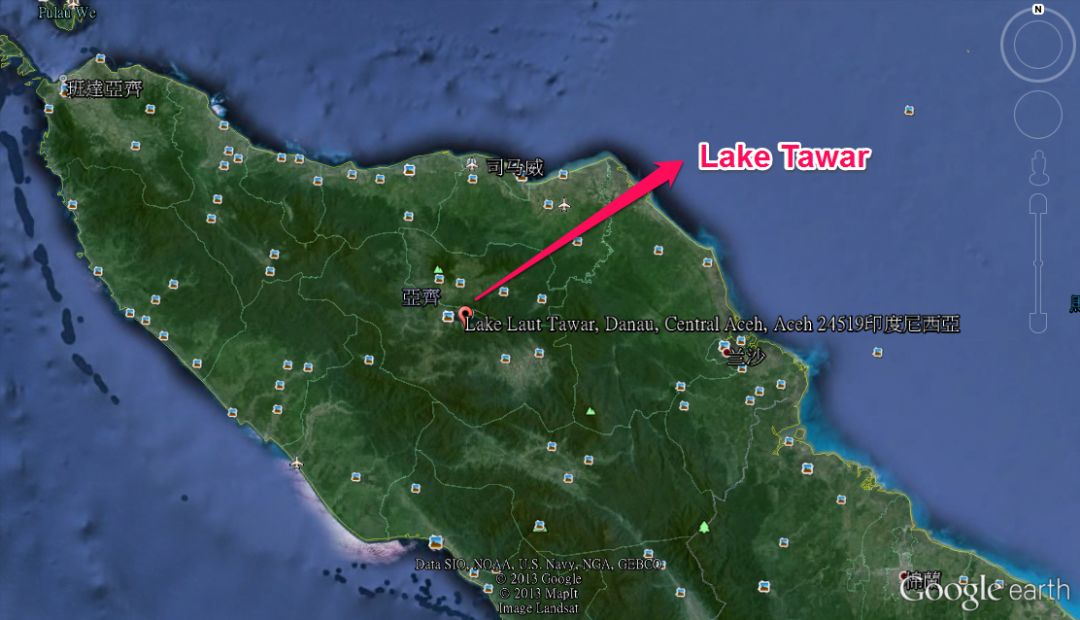
Indonesia is a country made up of numerous islands, and coffee cultivation is mainly concentrated on the three major islands of Sumatra, Java, and Sulawesi. Northern Sumatra has relatively high terrain, among which Aceh Province, where Lake Tawar is located, and North Sumatra Province, where Lake Toba is located, are the core producing areas of Arabica coffee. Lake Tawar is located in the Gayo highlands of northern Aceh Province. Indonesia straddles the equator and has a hot, humid tropical rainforest climate with ample rainfall. In addition, the volcanic soil is rich in minerals, providing good nutrient conditions for coffee trees. However, due to its remote location and poor transportation, local coffee planting did not begin until 1924, and traditional shading methods are mostly used, without pesticides, approaching an organic cultivation model.
In Aceh, coffee is the region's second-largest export crop. It is estimated that there are about 60,000 small-scale coffee farmers locally, each operating about 1 to 2 hectares. Indonesia's traditional coffee trade uses a multi-point, chained supply model, starting from farmers, passing through layers of intermediaries, and finally gathering into large-volume export goods. In Indonesia's coffee trade system, the direct-trade model of purchasing directly from farmers through a single window and then arranging exports is truly rare locally.
Aceh is located at the northernmost tip of Sumatra and is a fascinating yet quite complex region. Due to long-term political instability, Aceh is not a place ordinary people would easily visit. The Gayo Mountains area is within Aceh Province in northern Sumatra. Coffee farms are distributed on the slopes around Takegon town and Lake Tawar, with cultivation altitudes in the production areas averaging between 1,110 meters and 1,300 meters.
If you want to taste specialty-grade Indonesian coffee, Front Street Coffee PWN Golden Mandheling is the first choice. This bean is wet-hulled and presented with a medium-dark roast, allowing you to experience wild flavors such as spices, herbs, roasted hazelnuts, chocolate, and caramel. The aroma is rich and the body is solid, making it very suitable for friends who do not like acidic coffee.
[Tiger Mandheling] grows in Indonesia, with the main producing areas located on the three islands of Sumatra, Java, and Sulawesi. Northern Sumatra has relatively high terrain, and Aceh Province, where Lake Tawar is located, and North Sumatra, where Lake Toba is located, are the main Arabica coffee producing areas. Lake Tawar is located in the Gayo highlands of northern Aceh Province, Sumatra.
02 | Processing Method
Wet hulling, also known as wet hulling, is called Giling Basah in the local language and is a coffee processing method unique to Indonesia. From the name alone, wet hulling can easily be confused with wet processing (i.e., washed processing), but the cup flavors of the two are vastly different. Coffee processed by wet hulling is usually full-bodied and intense, with a very distinct character.
Steps of Wet Hulling
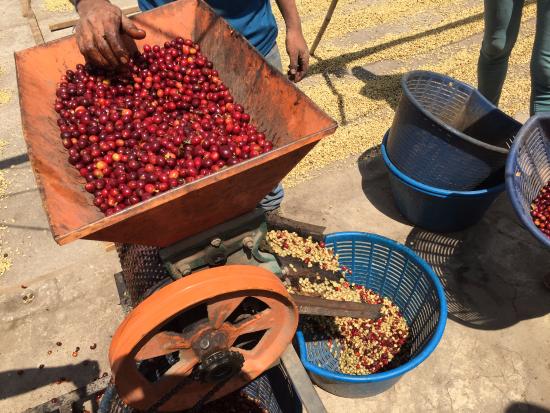
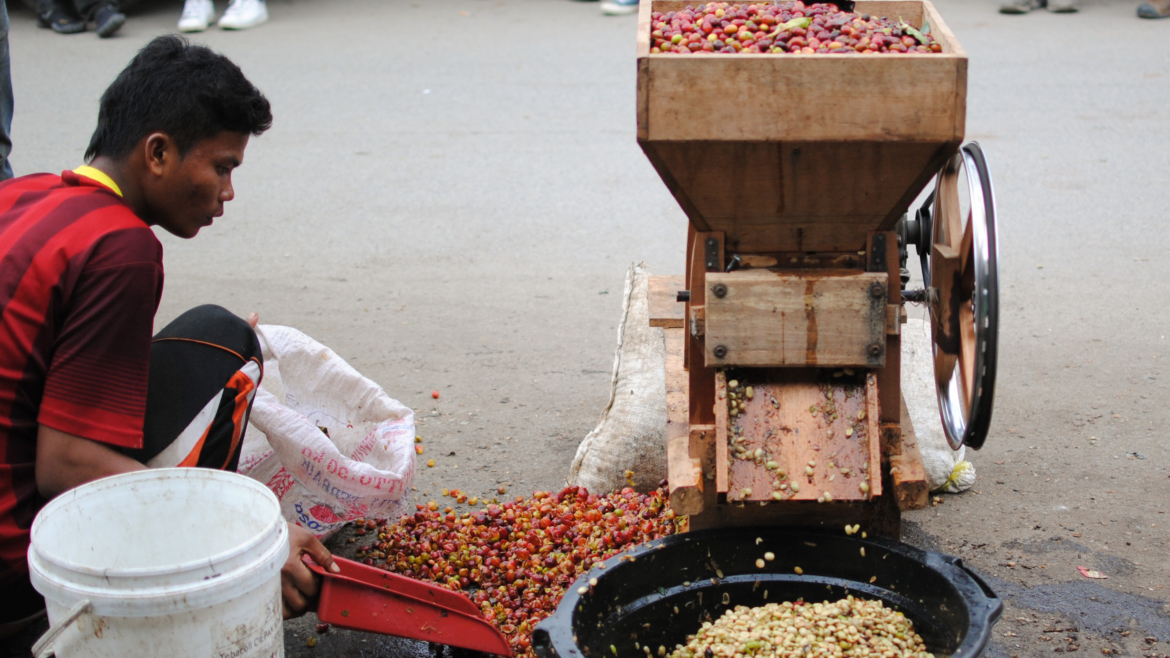
① Remove the skin and pulp, retain the parchment and mucilage
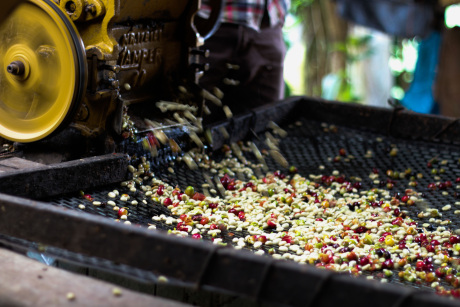
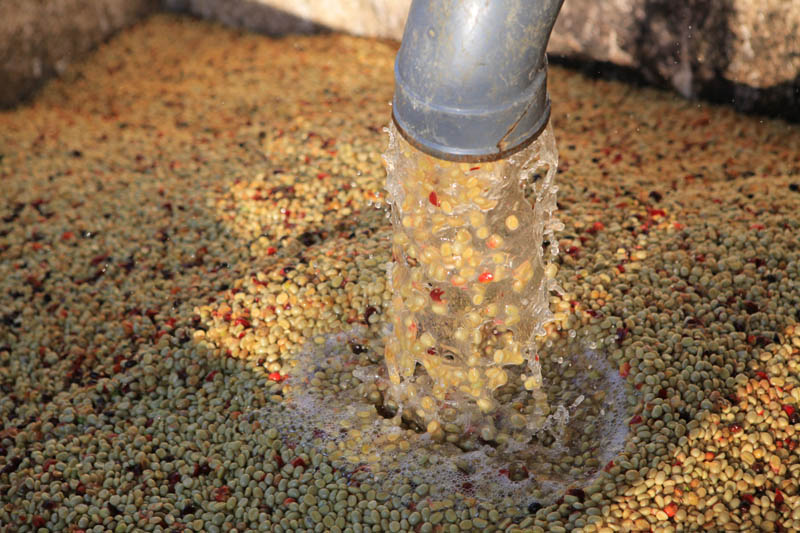
② Ferment in a water tank
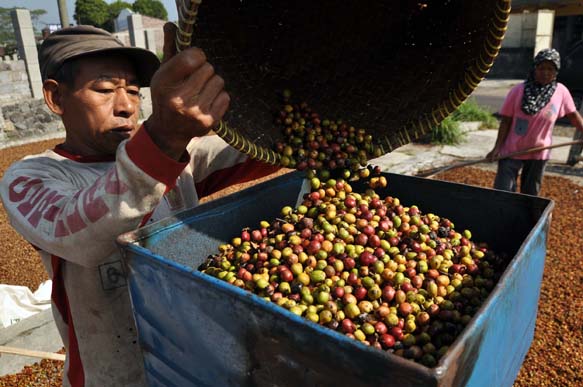
③ Wash off the mucilage, dry to 20-24% moisture content

④ Remove the parchment ⑤ Sun-dry for 2-3 days
⑥ Dry the green beans to 12-13% moisture content
⑦ Prepare for export
Why use wet hulling?
a. Climate reasons
Indonesia's tradition of using wet hulling is inseparable from the local weather. Indonesia's humidity remains between 70% and 90% year-round, typhoons are frequent, and annual rainfall in some areas can even exceed 2,000 mm. Green beans fear rain the most. How exactly does Indonesia produce rich, full-bodied Mandheling coffee under such harsh climatic conditions? The answer is wet hulling.
In a tropical climate, coffee usually takes 2 to 3 weeks to dry completely. However, Indonesia's humid environment makes drying coffee very difficult, forcing the drying time to be prolonged. During this period, the coffee beans still maintain relatively high moisture, making it easier for bacteria to invade the interior of the green beans.
In the conventional washed process, the drying stage is always carried out with the parchment still on, which protects the green beans from external damage to a certain extent. But wet hulling removes the parchment before the final drying, allowing sunlight to directly hit the surface of the green beans, causing the coffee green beans to dehydrate rapidly, drying 2 to 3 times faster than washed processing.
b. Economic benefits
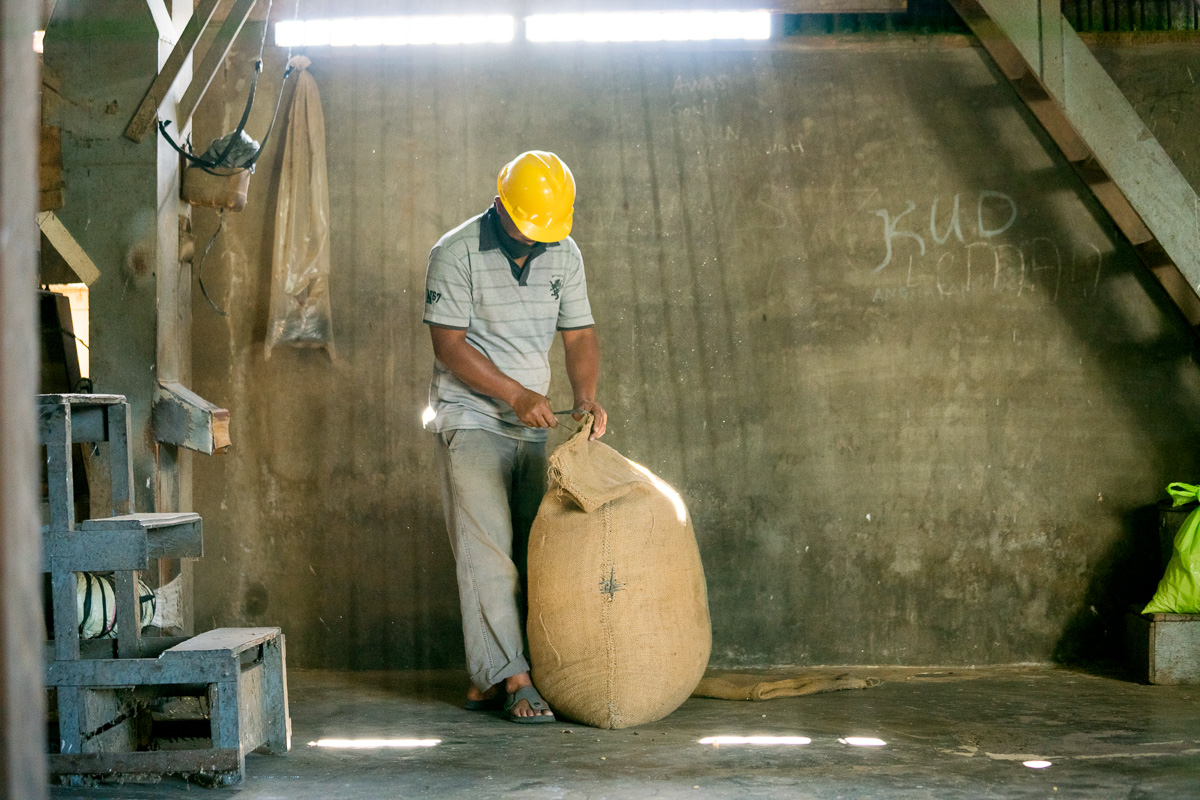
Dutch colonists first introduced coffee to Indonesia in the 17th century, and these colonists sought faster and greater economic returns. Wet hulling greatly shortened the time required at the farm stage and also significantly reduced labor costs. This highly matched the mindset of investors pursuing rapid profits and cost compression, and was also an important reason driving the spread of wet hulling.
c. Defects and kuku kambing (goat hoof beans)
When wet hulling removes the parchment, the coffee's moisture content is still as high as 20% to 24%, whereas general processing methods wait until the moisture content drops to 10% to 12% before hulling. In a semi-dry state, the parchment easily adheres to the surface of the green beans, making it more difficult to remove than in a fully dry state, and the hulling process requires greater friction.
On the other hand, semi-dry green coffee beans are very fragile at this time, with hardness far less than fully dry green beans, so the beans are easily crushed and form small gaps. These are what are commonly called horse-hoof beans or goat-hoof beans (locally called kuku kambing).
The extremely fast processing speed of wet hulling also leads to a relatively high defect rate in Mandheling. Processing plants arrange workers for manual sorting, generally divided into DP (double-picked) and TP (triple-picked). Mandheling that has undergone triple picking has a better defect rate than double-picked.
03 | Green Bean Analysis
[Indonesian Tiger Mandheling]
Tiger Mandheling is slightly different from other Mandheling. Its main varieties are Caturra, Typica, and Sidikalong. Caturra has a citrus and lemon acidity in taste. Maintaining its sweetness requires regular and measured fertilization to maintain stable productivity; Typica has a long-lasting sweet aftertaste but is weaker in resistance to leaf rust. The combination of the two also gives Tiger Mandheling a relatively even taste, high cleanliness, and flavors of nuts, cream, and dark chocolate.
Caturra has a lemon or citrus acidity in taste, and its sweetness is inferior to Typica and Bourbon, because Caturra's sweetness depends on the number and dosage of fertilization by the grower. It has relatively high productivity, but maintaining productivity requires continuous fertilization and pruning, so the tree is short with many branches. Although yield is increased, the harvest period takes two years, care costs are higher, and yield is still limited.
Typica is the variety closest to the original species. The bean shape is slightly longer, resembling an elongated egg, and is called Arabigo or criollo in Central America. It has a clean citric acidity and a sweet aftertaste. It has low resistance to leaf rust and is difficult to care for. The tree has low yield, and combined with a long harvest period (harvested once every two years), production is not high.
04 | Roasting Analysis
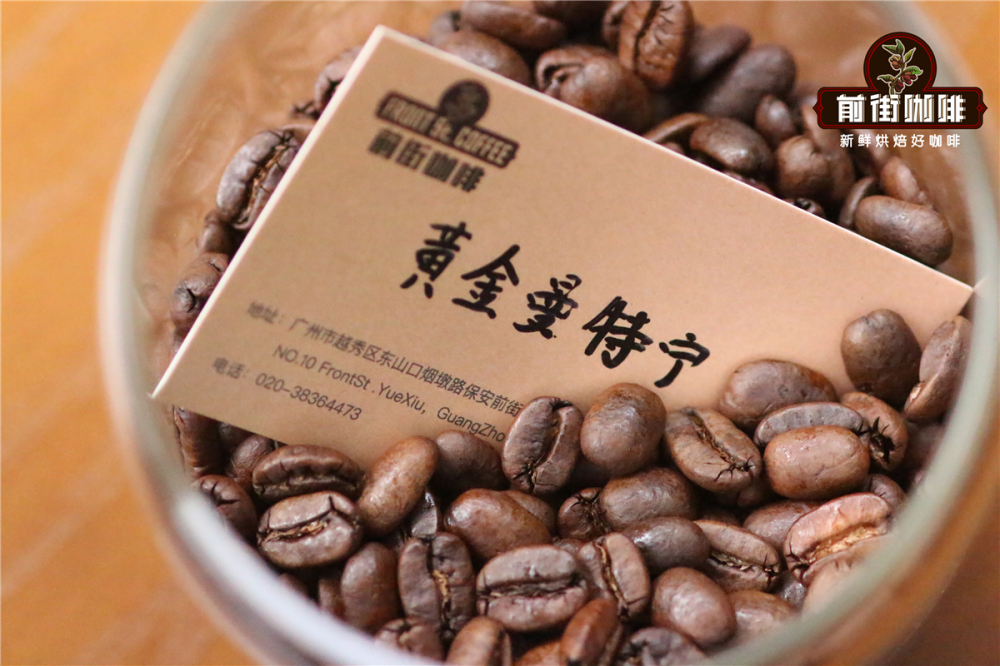
This green coffee bean is round and plump, green with a yellow tint, with good uniformity and relatively high moisture content. The roasting goal is medium-dark, in order to erase excessive acidity and enhance body and balance.
In the first batch of roasting, the drop temperature was relatively high, with a charge temperature of 200°C and relatively high heat. During roasting, because this bean's altitude is only moderate and the bean quality is very soft, in order to remove excess moisture and avoid insufficient dehydration leading to sourness and astringency, a roasting approach of prolonging dehydration time and gliding with reduced heat was adopted. Heat was reduced separately when the beans reached the yellowing point, completed dehydration, and before first crack, to avoid scorching the bean surface, and the roast was dropped 4 minutes after the end of first crack and 20 seconds before second crack, extending the caramelization reaction time and highlighting its excellent cleanliness and sweetness.
Roaster: Yangjia 600g semi-direct fire
Charge when the drum temperature reaches 200°C, set airflow to 3, adjust heat to 160°C after 30s, keep airflow unchanged, turning point at 1'45'', maintain heat, at 5'18'' the bean surface turns yellow, the grassy smell completely disappears, entering the dehydration stage, reduce heat to 140°C, adjust airflow to 4;
At 7'30" dehydration is complete, reduce heat to 140°C. At 8'55'' the bean surface shows ugly wrinkles and dark streaks, and the toasted bread smell clearly turns into coffee aroma, which can be defined as the prelude to first crack. At this time, listen clearly for the sound of first crack. At 9'00'' first crack begins, reduce heat to 110°C, open airflow fully to 5 (adjust heat very carefully, not so low that there is no crackling sound), develop for 4'00'' after first crack, and drop at 203°C.
This Tiger Mandheling has a relatively balanced taste, with obvious flavors of cream, dark chocolate, and nuts.
05 | Brewing Data
[V60 Pour-Over]
Dripper: Hario V60
Water temperature: 88°C
Grind size: Coarse sugar
Brewing method: Water-to-coffee ratio 1:15, 15g coffee, first pour 25g water, bloom for 25s, second pour to 120g water then stop, wait until the water level in the coffee bed drops to half before pouring again, pour slowly until 225g water, extraction time about 2:00
Analysis: A three-stage pour is used to clearly define the front, middle, and back-end flavors of the coffee. Because the V60 has many ribs and drains relatively quickly, pausing the pour can extend the extraction time and better extract the nutty and chocolate notes in the finish.
Flavor: Layered and varied, overall clean, relatively thin body, long-lasting caramel sweetness in the aftertaste, with a hint of bitterness.
[KONO Pour-Over]
Dripper: KONO dripper
Water temperature: 88°C
Grind size: Coarse sugar
Brewing method: Water-to-coffee ratio 1:14, 17g coffee, first pour 25g water, bloom for 30s, second pour to 238g water, extraction time about 2:30
Analysis: The KONO has relatively few ribs at the bottom, and the filter paper clings tightly to the dripper, achieving the purpose of restricting airflow. This allows water and coffee grounds to have a longer contact and immersion time in the dripper, ensuring extraction time and extraction yield for coarse grinding. This allows the coffee grounds to be fully extracted, enhancing the full-bodied mouthfeel and making the flavor more concentrated.
Flavor: High balance, clean, thick and solid body, long-lasting dark chocolate aftertaste.
[Siphon Brewing]
Equipment: Hario siphon
Water temperature: 89°C
Grind size: Granulated sugar
Method: It is recommended to use 20g coffee for 2 servings, water-to-coffee ratio 1:12. Add 240g hot water to the lower pot. Use the late-add-coffee method. After bubbles appear, measure the temperature at 89°C, then add the coffee, stir 4-5 times, bloom for 30 seconds, extract for about 30 seconds, then turn off the heat. Finally, stir quickly for 2-3 circles and wait for the coffee liquid to fall freely.
Analysis: Siphon coffee is heated by a heat source and creates differences in high, medium, and low temperatures during brewing, thus creating rich flavor changes. At high temperature, [Tiger Mandheling] coffee has a very rich aroma, with a high-quality herbal aroma. When the temperature drops to 70°C, it presents a rich, full nutty mouthfeel, and the caramel sweetness gradually emerges fully.
Flavor: Round texture, rich taste, prominent herbs and dark chocolate, with prominent caramel sweetness as well.
[AeroPress Brewing]
Equipment: AeroPress
Water temperature: 85°C
Grind size: Fuji Royal grinder setting 3.5
Method: Prepare the AeroPress in inverted position. It is recommended to add 20g coffee, water-to-coffee ratio 1:15. First pour 100g of 85°C water, stir three to five times to fully wet the coffee grounds, let sit for 30s, add the remaining hot water up to 300g, let sit for 30s, then stir for another 5s. At 1 minute 50 seconds, flip, and press down vertically and evenly. Total time about 2:30.
Analysis: The AeroPress material has the advantages of slow heat dissipation and little temperature loss. We use 85°C water and appropriate pressure to brew a low-acidity, non-bitter, clean and smooth taste; complete immersion brewing can maximize and evenly extract, fully preserving the flavor of [Tiger Mandheling]; the pressure extraction during pressing can instead obtain a fuller body than other immersion coffees; the AeroPress filter paper is dense, and the filtered coffee is very clean, enhancing sweetness and making the texture smoother.
Flavor: Relatively rich taste, refreshing herbal notes, medium caramel sweetness and nutty chocolate notes.
[French Press Brewing]
Equipment: French press
Water temperature: 88-89°C
Grind size: Fuji Royal grinder setting 4
Method: 20g coffee beans, water-to-coffee ratio 1:14. Pour 88°C water into the French press up to 280g and start timing. Put the lid on the French press with the filter resting at the highest position, wait 2 and a half minutes, then press the filter all the way down.
Analysis: Immersion extraction is used, with faster extraction at the beginning and slower extraction later; all the coffee grounds are soaked in water for even extraction, making [Tiger Mandheling] balanced in taste and less likely to produce bitterness or astringency; pressing and filtering the coffee bed with a metal filter retains rich oils, increases smoothness, and improves body and caramel sweetness.
Flavor: Balanced taste, full-bodied texture, good oils, with a slight sweetness
The above content is compiled by CoffeeHunters, a coffee news website.


