







Search Results for: sun umbrellas

Persistence Under 40°C Heat: Why the MUJI Suzhou Coffee Pop-Up Store Drew Long Queues
On a sweltering 40°C day, most people would rather stay cocooned in air-conditioned rooms, yet an unusual queue formed at Suzhou's Yanlord Cangjie Commercial Plaza—outside the nation's first MUJI coffee pop-up store, customers were lining up under the scorching sun, umbrellas in hand. What drew them was not a new matcha product, but two Suzhou-exclusive brand badges. However, the queuing process was nothing short of a "roasting" ordeal, with indoor areas also unable to escape direct sunlight, weakening the air conditioning and leading to frequent complaints about insufficiently cold drinks and ice cream melting in seconds. This pop-up event will continue until November, and those who have already "braved the battle" are advising: if you're not set on the giveaways, it might be better to wait for cooler weather before going. [more…]

Hefei Starbucks store under fire for removing umbrellas and chairs on rainy day, store cites safety hazard of rain-soaked umbrellas
Recently, a Starbucks store in Hefei, Anhui Province, took down its outdoor parasols and removed the seats on a rainy day, prompting a customer to film a video and question whether the store was "shooing people away." The incident quickly sparked heated discussion online: some agreed with the store's safety-minded approach, while others felt that removing the chairs was lacking in human warmth. The Starbucks store manager explained to the shopping mall that the parasols posed a safety hazard after absorbing water, but did not explain why all the chairs had to be moved back inside. As coffee lovers, we might as well use this incident as a starting point to talk about the balance between outdoor space management and customer experience at coffee shops. Front Street Coffee has always paid attention to detail-oriented service in coffee consumption scenarios, and this article walks you through the entire incident and the views of various parties. [more…]

Can you predict short-term weather with a sugar cube and a cup of coffee? Here's how air pressure changes can actually be observed.
From late March to around Qingming, Guangdong often enters a mode of continuous rainfall. The weather forecast says it will rain, yet it occasionally clears up when you go out, making it hard to decide whether to bring an umbrella. There is an interesting little experiment circulating among the public: brew a cup of hot coffee, drop in a sugar cube, do not stir, and observe where the bubbles gather; this can roughly tell whether it will clear up or rain in the short term. This saying originates from the British writer Matthew Cole's *A Cup of Coffee Tells the Weather*, and it is actually related to the surface tension formed by coffee oils and the weather changes under the control of high and low atmospheric pressure. Of course, not all coffees are suitable; instant coffee and pour-over are not ideal choices. Freshly ground and freshly made hot Americano is more suitable, and the sugar should be sugar cubes rather than ordinary granulated sugar. [more…]

How should you drink Americano to help with weight loss? The right way to enjoy Starbucks espresso and black coffee
When many people mention black coffee, the image that immediately comes to mind is the light-bodied Americano brewed from dark-roasted beans, like the one from Starbucks. In fact, black coffee is an umbrella term for a whole category of pure coffee—as long as no milk or sugar is added, whether it's cold brew, ice drip, or pour-over, it all falls under this category. What exactly is the relationship between Americano and espresso? How should you drink it to both enjoy the flavor and help with fat loss? This article will sort out the origins of Americano and its connection to Starbucks espresso, and, drawing on Front Street Coffee's production experience, provide the optimal drinking temperatures and extraction recommendations for beans of different roast levels, helping you find the cup that suits you. [more…]
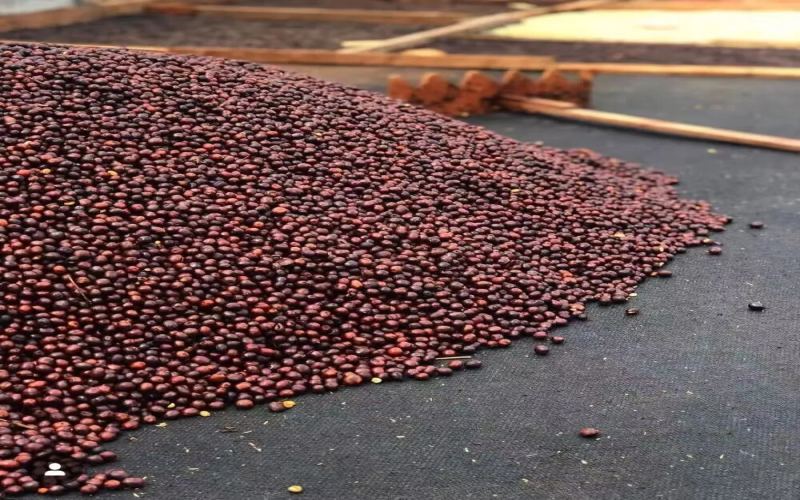
Are Caturra and Catuai coffee beans both Arabica varieties? What are the differences in their flavor characteristics?
"Caturra" and "Catuai" are two varieties under the Arabica umbrella. They may not be as universally well-known as Typica, Bourbon, Geisha, and other varieties, but they are the rising stars that most coffee farmers are eager to cultivate. Whether it's a large estate like La Esmeralda or Elida, or [more…]

A Great Bean Overshadowed by the Geisha Halo: An In-Depth Analysis of Panama Hacienda La Esmeralda Diamond Mountain Catuai Coffee Beans
When people mention Hacienda La Esmeralda in Panama, most think first and only of Geisha, often overlooking another high-value product line under its umbrella—Diamond Mountain. This article focuses on the newly introduced sun-dried Diamond Mountain Catuai coffee beans from Front Street Coffee: first, it reviews the brand classifications on the Hacienda La Esmeralda official website, then delves into the two major farms behind Diamond Mountain, Jaramillo and Cañas Verdes, interpreting the local altitude, temperature differences, and rainfall conditions; subsequently, it introduces the origin and characteristics of the Catuai variety, the specific process of sun-drying, and discloses Front Street's medium-light roasting curve, cupping conclusions, and V60 three-stage brewing parameters, helping coffee enthusiasts appreciate the balanced flavors of Hacienda La Esmeralda at a more accessible threshold. [more…]

Analysis of the Impact of Espresso Grinder Hopper Bean Level on Espresso Extraction
In espresso preparation, baristas often require the bean hopper to be kept nearly full, but what principle lies behind this? How do changes in hopper pressure affect the uniformity of coffee grinding, and in turn alter the flavor expression of espresso? Starting from the internal structure of the grinder, this article explains the mechanism by which hopper pressure forms and its impact on extraction, and, combined with comparative experiments by Front Street Coffee, presents the actual differences in espresso between a full hopper and a less-than-full hopper. For home users who do not pull shots continuously, is it also necessary to pay attention to this detail? Read the full article, and you will get a clear answer. [more…]
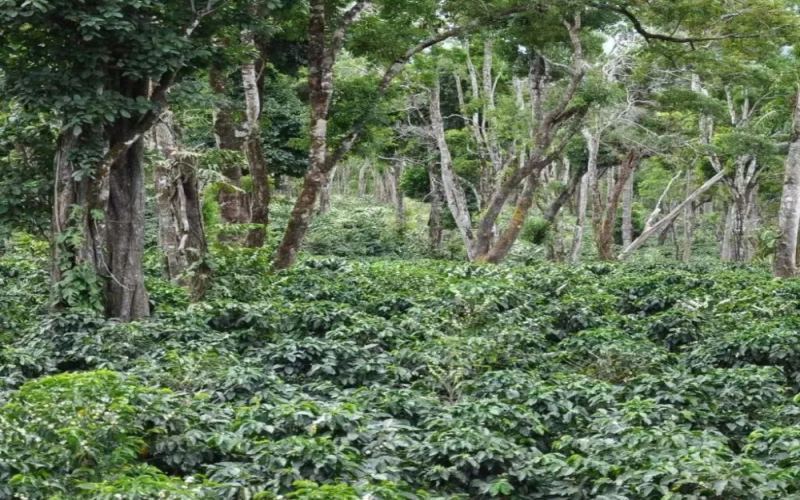
Hacienda La Esmeralda Is Not Just Geisha: The Origins, Grading, and Front Street Coffee's Sun-Dried Brewing Analysis of the Diamond Mountain Catuai Variety
When people mention Hacienda La Esmeralda in Panama, most first think of Geisha. However, before Geisha swept the globe, Hacienda La Esmeralda, like other Central American estates, mainly grew Caturra and Catuai. Among these, Catuai is sold under the "Diamond Mountain" brand, selected from plots at 1,400–1,600 meters elevation on the Jaramillo and Cañas Verdes farms, primarily processed as washed and natural. This article will outline Hacienda La Esmeralda's variety layout, the grading systems for Geisha and Catuai, introduce the breeding background of Diamond Mountain Catuai and the terroir of the Boquete region, and include the brewing parameters and three-pour method for Front Street Coffee's Hacienda La Esmeralda Diamond Mountain traditional natural, helping coffee lovers understand the flavor profile of this high-value everyday drinking bean. [more…]

Panama Santos Estate Geisha ASD Anaerobic Low-Temperature Slow Dry Process and Flavor Analysis
Santos Café Panamá is located in the Nacimiento area of Santa Clara and has been owned and passed down by the Lezcano family since their purchase in 1947, now spanning five generations. In 2014, estate owner Mario Lezcano acquired La Marma estate and formally entered the specialty coffee field, and his Pacamara "White Horse" even won the traditional washed category championship at the 2021 BOP competition. This article focuses on Santos Estate's Geisha coffee beans, providing a detailed explanation of the ASD anaerobic fermentation low-temperature slow sun-drying process they use, and presenting Front Street Coffee's roasting approach, cupping performance, and V60 brewing parameters for this bean, offering you a comprehensive understanding of this Panamanian Geisha that combines dark berries, hawthorn acidity, and a black tea finish. [more…]
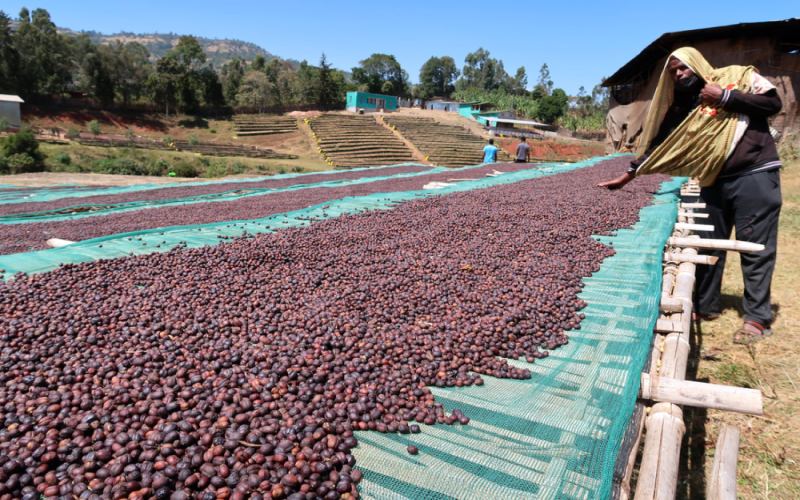
Ethiopia Yirgacheffe and Kochere: Regional Characteristics, Washed Processing, and Front Street Coffee Recommendations
Ethiopia, as the birthplace of coffee, is home to numerous distinctive coffee-growing regions. Among them, Yirgacheffe and Sidamo are the two most renowned and representative specialty regions. This article will guide you through the regional definition of Yirgacheffe, its flavor characteristics, and how the washed processing method shapes its signature citrus and floral notes. We will also introduce sub-regions such as Kochere and Worka, and recommend Front Street Coffee's Washed Geddid and Worka Cooperative coffee beans, helping you gain a deeper understanding of the captivating flavors nurtured by this land. [more…]

Ethiopian Yirgacheffe Worka Coffee Beans: An Analysis of the Unique Flavor Where Floral and Fruity Notes Intertwine
Yirgacheffe is the starting point for many pour-over enthusiasts venturing into specialty coffee, and the Worka Cooperative, as a quality representative of this region, imparts richer sweetness and more complex aromas to the beans through anaerobic natural processing. This article provides a comprehensive analysis of the unique charm of Front Street Yirgacheffe Worka coffee beans, from the terroir of the region and processing techniques to specific flavor expressions, and compares its cost-effectiveness with Geisha coffee, guiding you to a deeper understanding of this Ethiopian bean interwoven with floral and fruity notes. [more…]

Yirgacheffe Origin Story and Flavor Grade Analysis: Three Ways to Identify Authentic Yirgacheffe
Yirgacheffe is a highly representative name in the world of specialty coffee, having become almost synonymous with high-quality African coffee. This article teaches you how to identify authentic Yirgacheffe from three angles: flavor characteristics, variety classification, and origin information. It also sorts out the historical context of Yirgacheffe, the operating model of cooperatives, the differences between the washed and natural processing methods, and the grading standards for green beans. The article also includes specific information and brewing suggestions for several Front Street brand Yirgacheffe products, helping you fully understand the unique charm of this coffee from purchasing to extraction. [more…]
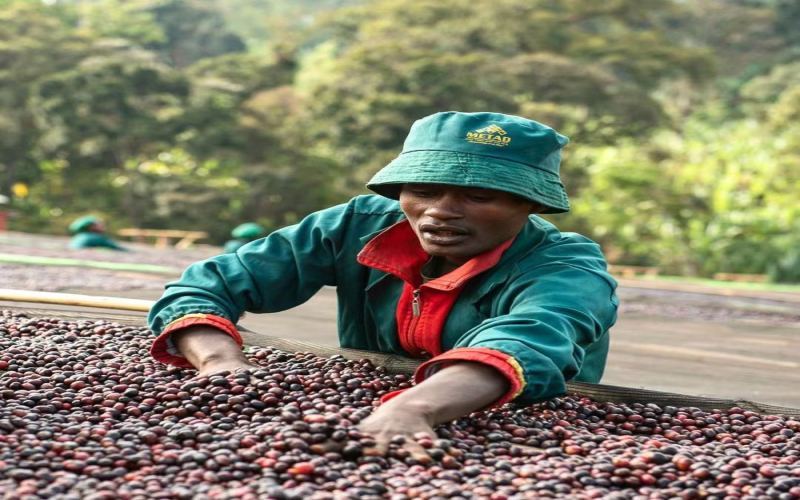
Yirgacheffe Worka Cooperative Coffee Flavor Analysis: Strawberry, Magnolia, and Small Taiwan Mango Notes from Anaerobic Natural Processing
Yirgacheffe, as a representative producing region of Ethiopian specialty coffee, is world-renowned for its floral and citrus notes. This article focuses on a Yirgacheffe from Front Street Coffee's Worka Cooperative that uses a non-traditional processing method—neither the ancient natural process nor the traditional washed process, but rather anaerobic natural processing. The article will outline the Worka Cooperative's geographical location, founding background, and organic certification status, explain why Heirloom native varieties have become the collective term for Ethiopian varieties, and detail how the specific steps of anaerobic fermentation give the coffee its strawberry, magnolia, and small Taiwan mango flavor profile, bringing you a comprehensive understanding of what makes this bean unique. [more…]
Yirgacheffe Worka Cooperative Coffee Flavor Analysis: Behind the Floral Aroma and Fruit Acidity, Why Are There So Many Ethiopian Varieties?
Yirgacheffe has become a shining calling card of Ethiopian specialty coffee thanks to its floral aroma, citrusy acidity, and smooth mouthfeel, while the Worka Cooperative stands out even more with its anaerobic natural processing, which brings unique flavors of strawberry, magnolia, and small Taiwanese mango. This article will provide a complete analysis of this Front Street Worka Cooperative coffee's flavor sources and quality logic, from the Worka Cooperative's origin background, organic certification, and farmer collaboration, to the complex causes behind Ethiopia's diverse Heirloom landraces, and the specific process of anaerobic natural processing, helping you understand why Yirgacheffe can stand out among numerous producing regions and possess such a rich and varied flavor spectrum. [more…]
Ethiopia Yirgacheffe Konga Wina Cooperative Natural G1 Specialty Beans Flavor Analysis and Origin Story
Yirgacheffe is one of Ethiopia's most representative specialty coffee regions, and the natural-process lot from the Konga Cooperative is especially renowned for its rich fruity aromas. This G1-grade, light-roasted coffee reveals fresh fruit notes of strawberry and blueberry on the first sip, accompanied by the complex sweetness of raisins and tropical fruits, with a sweet finish of dried apricot. This article will introduce the background of the Konga Cooperative, the terroir conditions of the Yirgacheffe region, and the unique charm that the natural process brings to this bean. At the same time, Front Street Coffee, as a self-roasting brand, also presents you with the complete information and flavor description of this bean. [more…]
Ethiopian Yirgacheffe Worka Coffee: The Flavor, Mouthfeel, and Estate Story Behind Its Rich Fruity Aroma
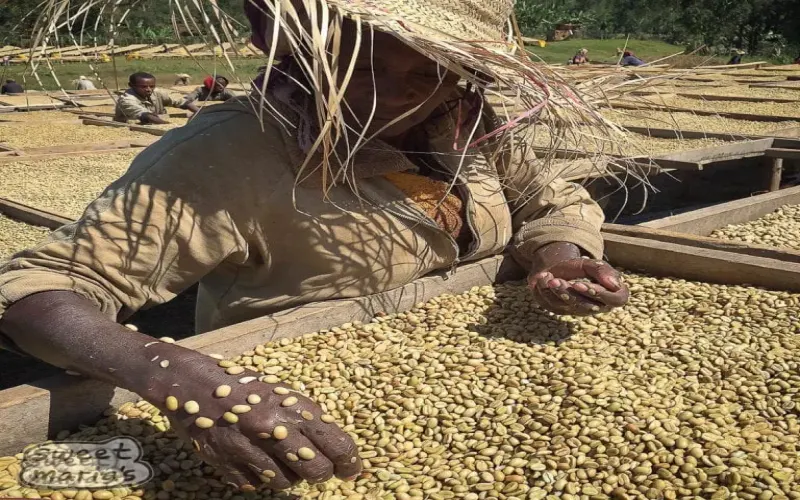
Yirgacheffe is the specialty entry choice for many coffee lovers, and this bean produced by the Worka Cooperative showcases the fruity charm of Yirgacheffe to the fullest. This Ethiopian Yirgacheffe Worka brought to you by Front Street Coffee uses an anaerobic natural processing method, is grown at a high altitude of 1,650 to 1,800 meters, and is of the Heirloom variety. The Worka Cooperative was established in 2005 and is part of the famous Yirgacheffe Coffee Farmers Cooperative Union, known for producing high-quality natural Yirgacheffe. This article will walk you through the regional relationship between Yirgacheffe and Sidamo, the background of the Worka Cooperative, and how anaerobic natural processing gives this coffee its rich strawberry, lemon, and floral notes. [more…]
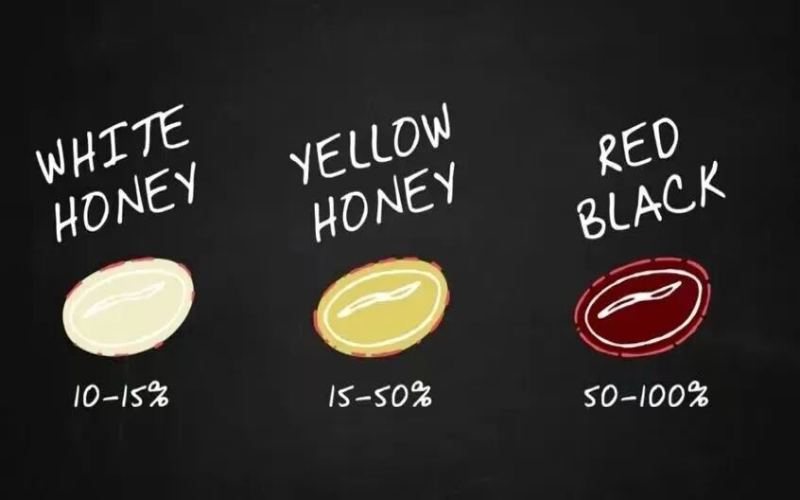
Specialty Pour-Over Coffee Bean Recommendation | What's the Difference Between Red Honey, Yellow Honey, and Black Honey Processing? An Introduction to the Flavor and Mouthfeel of Costa Rica's Pilon Processing Plant Black Honey Process Caturra
"Sweetness" is an excellent trait that can make a bean stand out. At Front Street Coffee, when selling coffee beans, we often have friends ask for "a bean with higher sweetness." When it comes to high-sweetness coffee, Front Street believes that the first thing many people think of is Costa Rican honey-processed coffee! As a honey-processed [more…]
Can Americano Help with Fat Loss? A Complete Guide to Calorie Breakdown and the Best Drinking Temperature
Americano is often equated with black coffee, but how does it differ from pure coffees such as pour-over and cold brew? Why is the Americano—espresso diluted with water—more highly sought after? Starting from the origin and definition of Americano, this article analyzes its differences from ordinary black coffee, and focuses on Americano's roles in aiding digestion and cutting greasiness, reducing water retention, and supporting fat burning, while also reminding readers that adding syrup and creamer brings extra calories. Drawing on Front Street Coffee's output examples, the article also offers recommendations on the optimal tasting temperature for making Americano with coffee beans of different roast levels, helping coffee lovers enjoy the flavor while also looking after their health. [more…]
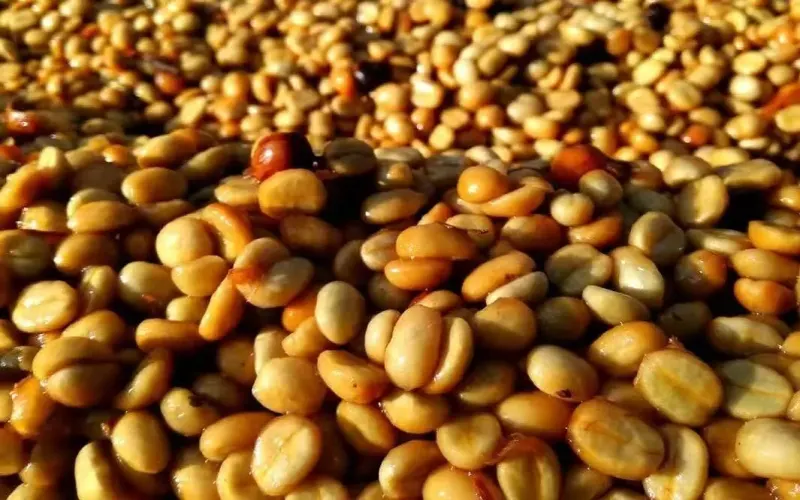
What makes Costa Rican honey-processed coffee so unique? Flavor profile and brewing analysis of Black Honey Caturra from Pilon Treatment Plant
Costa Rica, the birthplace of the honey processing method, has secured a significant place in the international market with honey-processed coffees known for their outstanding sweetness. Front Street Coffee recently selected a black honey processed Caturra from the Pilon Processing Plant in the Tarrazu region, and we're taking this opportunity to give everyone a deeper look into the unique sweetness that honey processing brings to coffee. This article will explore multiple dimensions, including the regional background of the Pilon Processing Plant, the history of the Caturra variety, the processing details of black honey, and the flavor profile and brewing recommendations of this bean, offering a complete picture of a quality black honey coffee from cultivation to cup. [more…]

Berry Tea-Like Flavor Coffee Bean Recommendations | How to Brew Ethiopian Washed Gedingding for the Best Taste? Which Coffee Varieties Have Distinct Berry Flavors?
The term "berry" does not refer to a single specific fruit, but rather broadly denotes a category—all small, juicy fruits. However, unlike tropical fruits, berries have their own separate category in the new coffee flavor wheel released by the SCA in 2016. The berry category in the flavor wheel includes strawberry (Strawberry [more…]