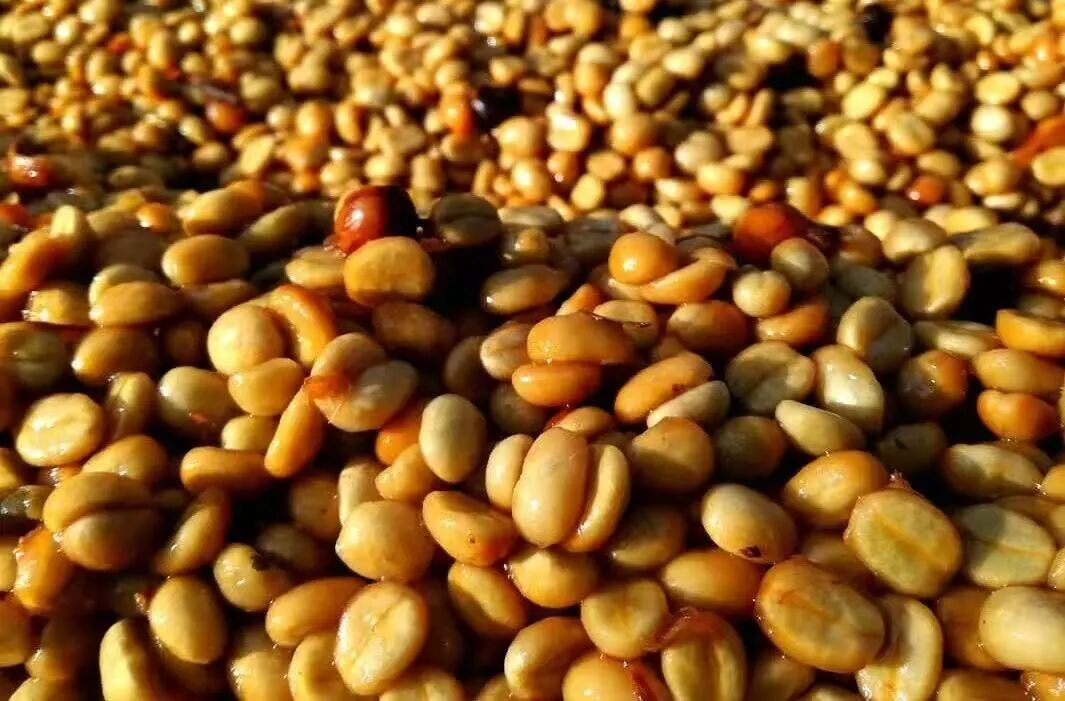
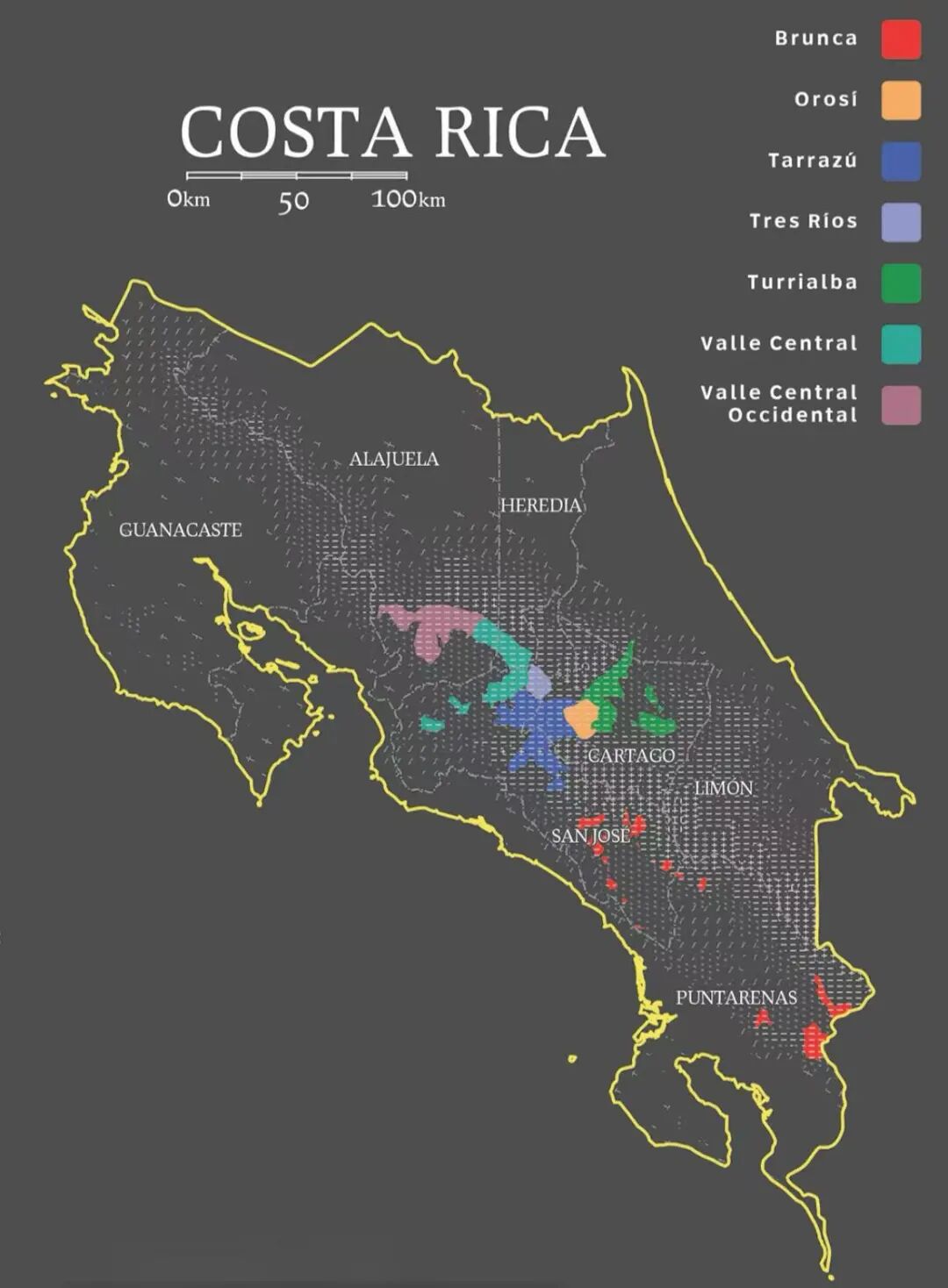
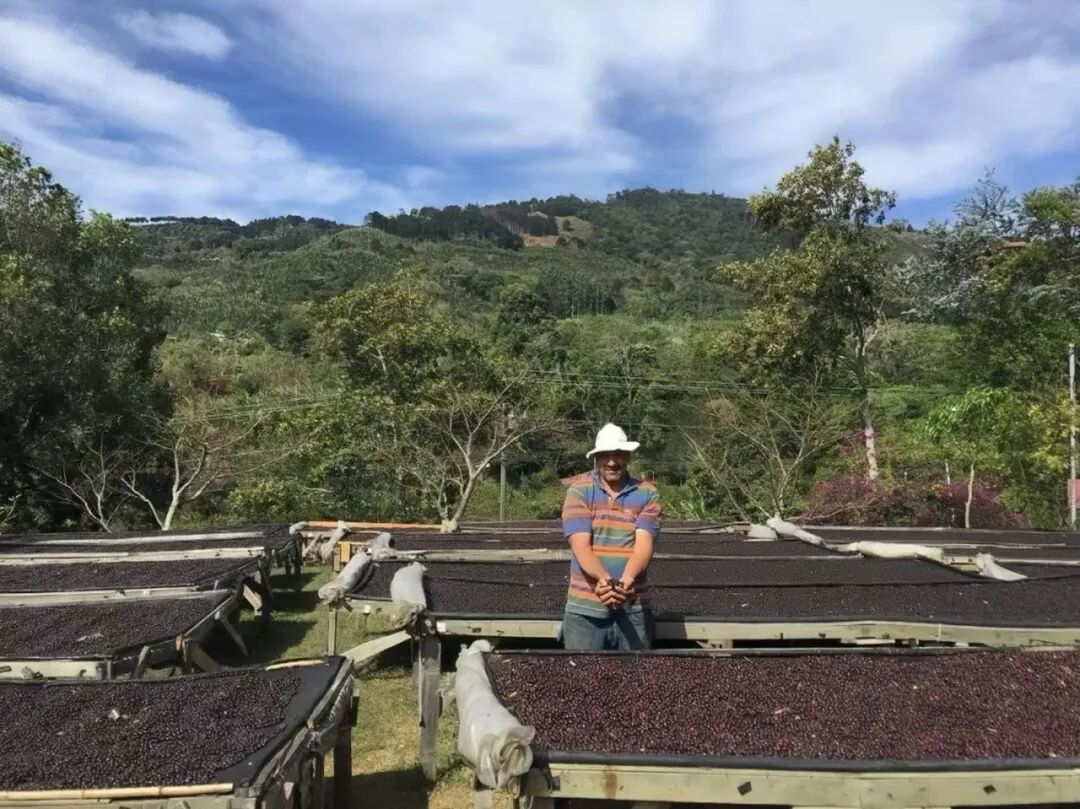
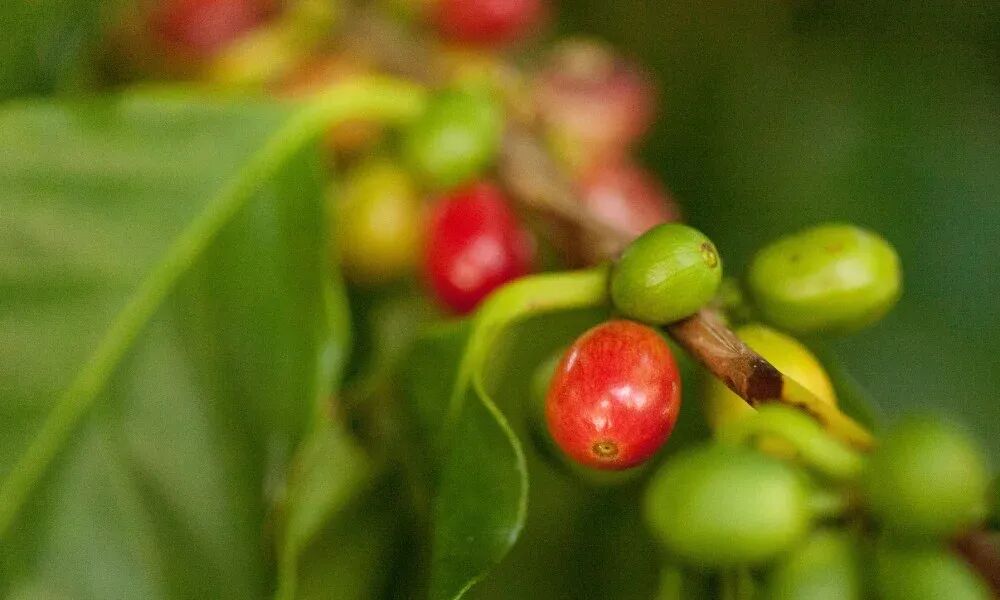
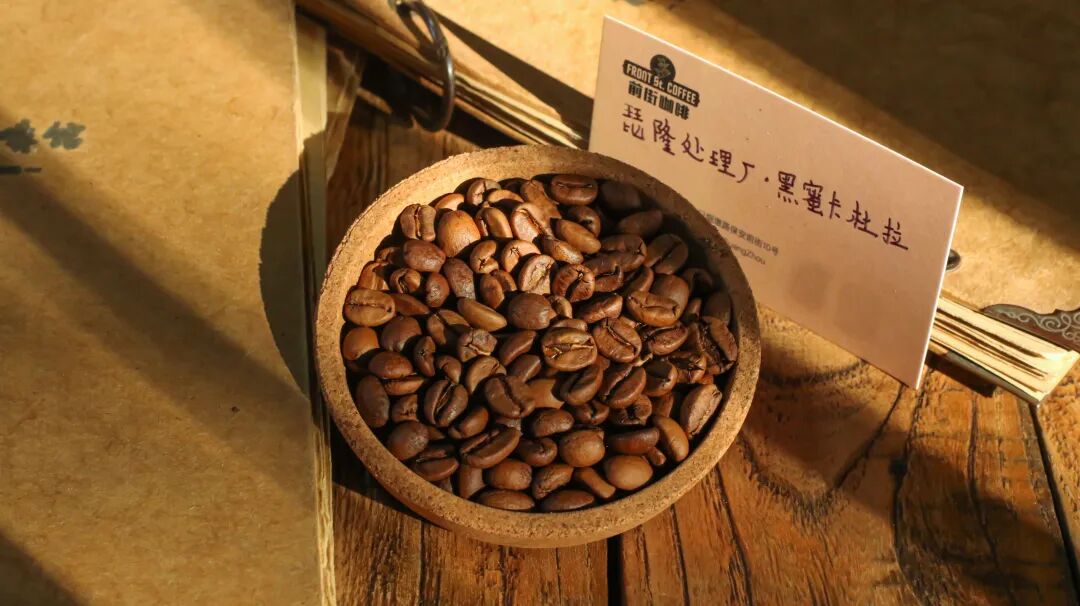
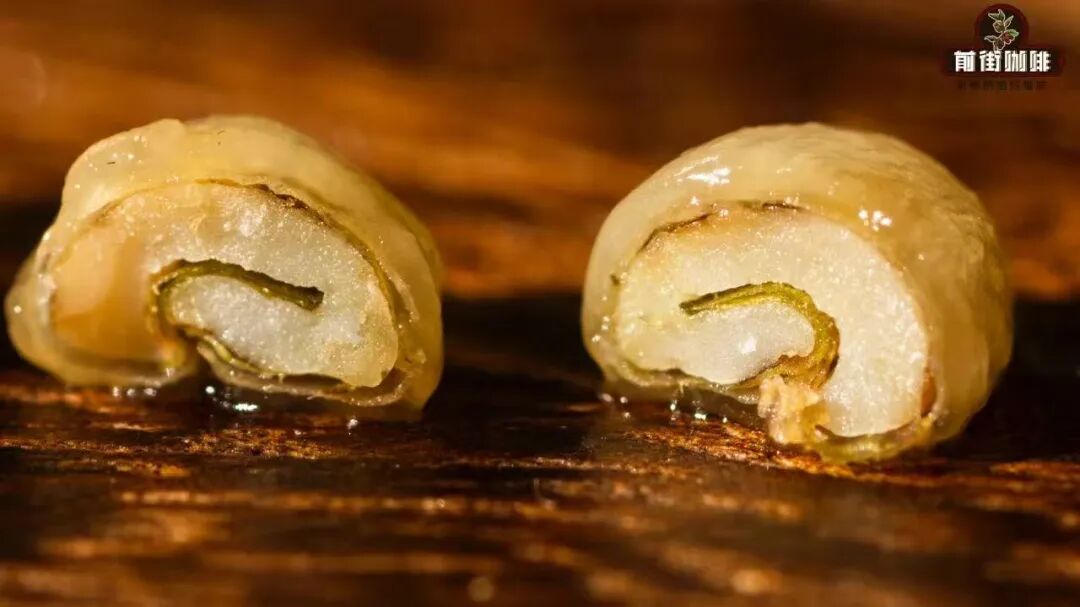
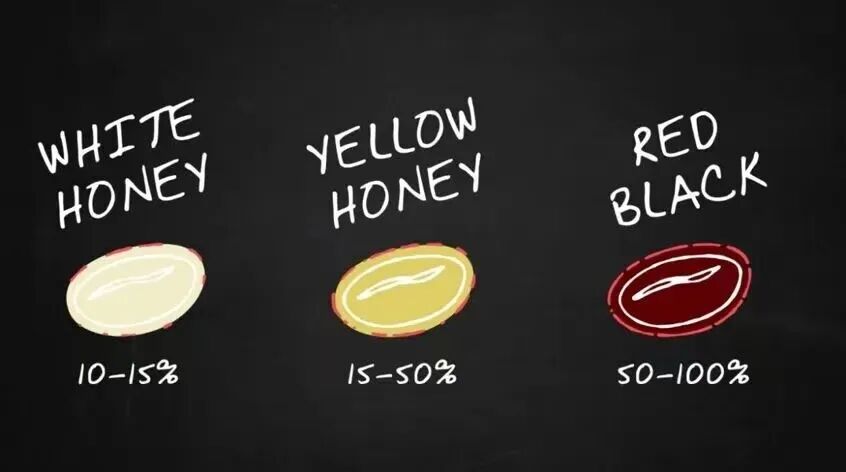
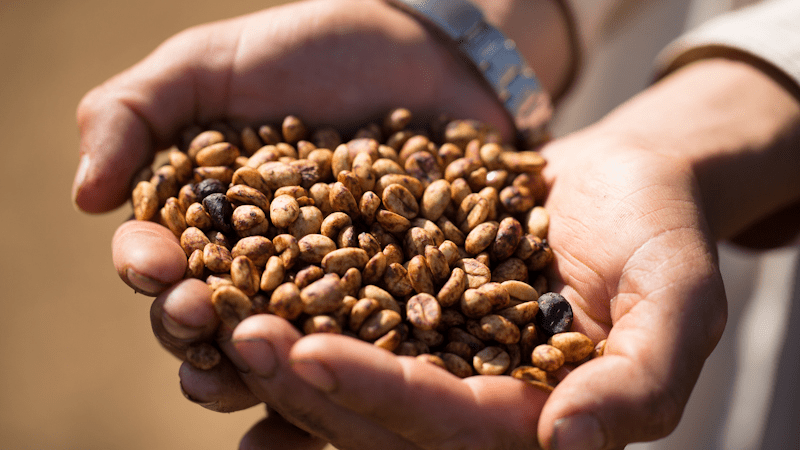
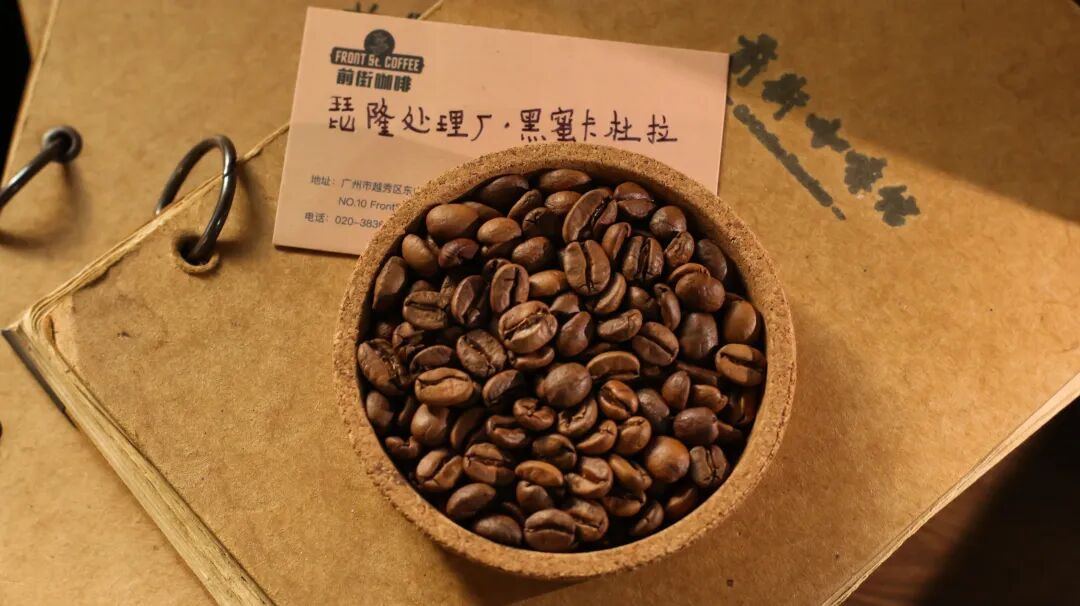
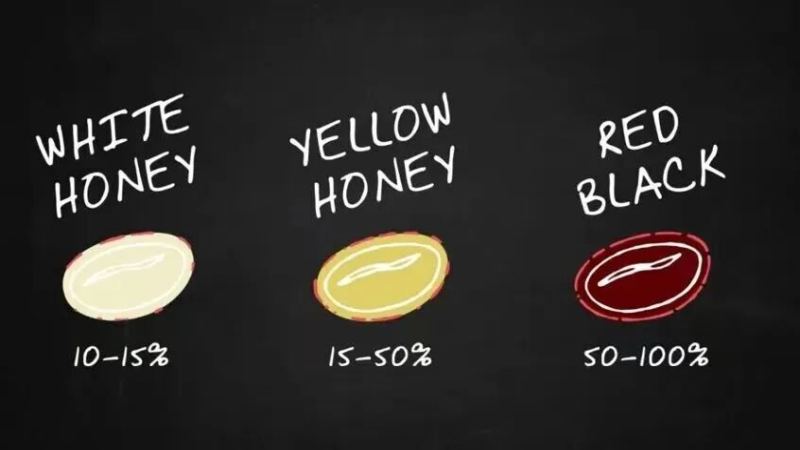
"Sweetness" is an excellent trait that can elevate a bean. When Front Street Coffee sells coffee beans, friends often express a desire for "beans with higher sweetness." When it comes to high-sweetness coffee, Front Street Coffee believes that many people's first thought is Costa Rican honey-processed coffee!As the birthplace of honey processing, the honey-processed coffee produced there has a very prominent sweetness, and with honey-processed coffee, Costa Rica has established a solid position in the global coffee market.Coincidentally, Front Street Coffee recently took a liking to a coffee from Costa RicaPilon Processing Plantblack honey processed Caturra, so today we will experience together just what kind of charm honey processing brings to coffee's sweetness.Pilon Processing Plant is located in Costa Rica's famousTarrazu region, and is jointly operated by Edgar Urena, Efrain Mendez, and their family members. Here, Front Street Coffee will briefly introduce Tarrazu. The Tarrazu region is located in a volcanic area and is an excellent place for growing coffee in Costa Rica.It not only has a humid climate and fertile volcanic soil, but also a high altitude, and dense forests that can provide natural shade for coffee. It can truly be said to be a uniquely advantageous environment for coffee cultivation.The Pilon Processing Plant is located on the border of the town of Leon Cortez in Tarrazu, and the coffee is grown at an altitude of about 1,700 to 1,800 meters. According to Costa Rica's coffee grading, coffee produced at this altitude belongs to the country's highest gradeSHB(Strictly Hard Bean). It is therefore imaginable that the coffee produced by Pilon Processing Plant has potential that cannot be underestimated.(At the 2018 World Brewers Cup, a Japanese competitor perfectly confirmed this by winning the championship with coffee from Pilon Processing Plant.) The coffee Front Street Coffee selected this time is Pilon Processing Plant'sblack honey processedCaturra. Front Street Coffee has often shared this variety recently, so everyone should already be familiar with it~ It is a descendant of the old Bourbon variety. Because of its high yield, excellent flavor performance, and relatively easy cultivation, it has become a sought-after star variety in Central American coffee-producing regions.Caturra was discovered in the early 20th century on a plantation in Minas Gerais, Brazil. Because one set of genes in the planted Bourbon mutated, the plant's shape became smaller.Because of its petite size, locals named this new variety "Caturra," which means "small" in the Guarani language. Transliterated, it is Caturra.The reason Caturra is high-yielding also lies in its small tree shape. It can be planted compactly and densely at twice the density of other varieties, and this size also makes it very convenient for people to harvest and manage. At the same time, it can be exposed directly to sunlight, unlike other Arabica varieties that are so delicate they need shade trees to block a large amount of sunlight, so it is also called "sun-grown coffee."Coupled with its excellent flavor performance, after its release it immediately became one of the main planted varieties in Central American countries. For example, many beans on Front Street Coffee's bean list are of the Caturra variety, such as Front Street Coffee Panama · Butterfly, Duncan Estate · Caturra, and this time's selected black honey processed Caturra from Pilon Processing Plant.Everyone may already be very familiar with honey processing, but when it comes to black honey processing, many friends may find it relatively unfamiliar. So next, Front Street Coffee will share exactly what kind of processing method black honey processing is.Front Street Coffee will first briefly introduce honey processing. Honey processing was improved from Brazil's pulped natural process, and it is a processing method that can shorten coffee drying time while also saving water resources.When using honey processing, coffee farmers first pour fresh coffee cherries into a tank for flotation, screening out some defective and bad beans that are not sufficiently ripe. Then they use specialized equipment to remove the coffee skin and pulp, and the beans with mucilage are subjected to a period of "dry fermentation." After fermentation is complete, they can be transferred to drying beds for sun drying. When dried to a certain moisture content, the beans can be hulled or transferred to a warehouse for storage while waiting for export.The "honey" in honey processing actually refers to the sticky state presented after the sugary substances in the mucilage ferment. It looks very easily reminiscent of honey, so this process was named "honey processing."Honey processing can be said to be an umbrella term, because depending on the different amounts of mucilage retained, honey processing is further distinguished into white honey, yellow honey, red honey, and black honey.During the pulping stage of honey processing, coffee farmers can freely adjust the amount of mucilage retained according to the desired degree of fermentation. Because mucilage is rich in sugar, the more mucilage retained, the darker the color of the coffee beans after drying. White, yellow, red, and black are honey processing names based on the final dried coffee bean color under different levels of mucilage retention.Black honey has the highest mucilage retention among the four, with almost no mucilage removed, and it takes the longest to dry, generally requiring more than 14 days of sun drying. During the drying process, in order to avoid drying too quickly and insufficient sugar transformation, coffee farmers use covers to appropriately shade the sunlight, allowing the substances to have a longer conversion time and ensuring that the sugar can be better absorbed by the beans. Because of this, coffee processed as black honey has very rich flavors, and its sweetness is therefore also very abundant.Front Street Coffee observed this green bean of Pilon Processing Plant's black honey Caturra and found that because more mucilage is retained and it is not very uniform, the green beans show obvious unevenness in color, and when smelled, a rich fermentation aroma can be perceived.In order to showcase all the characteristics of this black honey processed bean while highlighting the coffee's sweetness, Front Street Coffee decided to use a medium-light roast level, and then immediately conduct a cupping tasting.Costa Rica · Pilon Processing Plant Black Honey Process CaturraRegion: Costa Rica Tarrazu Region Processing Plant: Pilon Processing PlantProcess: Black Honey Process
Flavor: Grape, berry, floral, slight fermented note
In terms of dry aroma, after grinding this black honey processed Caturra from Pilon Processing Plant, we can smell obvious sweet aromas of berries and grapes, with a faint floral scent and a slight fermented note. The aroma is rich and solid, and very pleasant to smell.During tasting, Front Street Coffee perceived through slurping the elegant fruity acidity and sweetness in the coffee. At high temperature, it has notes of grape, green grape, and berry, as well as subtle floral notes and a faint fermented note. As the temperature drops slightly, we can taste some delicate acidity likeapricotas well as creamy sweetness. The aftertaste is like fruit wine, and the overall mouthfeel is clean with a long finish. The above content is compiled by CoffeeHunters, a coffee news website.