







Is Hacienda La Esmeralda Only About the Geisha Coffee Variety?
Hacienda La Esmeralda is known for Geisha, but the Panama estate also grows Caturra and Catuai, and Catuai continues to be sold under the Diamond Mountain brand. Those lots come from plots at 1,400 to 1,600 meters on the Jaramillo and Canas Verdes farms, mostly washed or natural, giving buyers a lower-priced everyday option from the same farms.
The estate's three farms, Jaramillo, Canas Verdes and El Velo, also hold trial plantings such as SL34, Pacamara and Laurina. Geisha is split into Esmeralda Auction, Esmeralda Special and Private Collection, plus a newer Black Label. Coffee central America estates like this one show how one farm can carry several varieties at different price levels. Front Street adds brewing parameters and a three-pour method for the Diamond Mountain natural.
When people mention Hacienda La Esmeralda in Panama, most first think of Geisha. However, before Geisha swept the globe, Hacienda La Esmeralda, like other Central American estates, mainly grew Caturra and Catuai. Among them, Catuai was sold under the "Diamond Mountain" brand, selected from plots at 1,400–1,600 meters elevation on the Jaramillo and Canas Verdes farms, primarily washed and natural. This article will outline Hacienda La Esmeralda's variety layout, the grading systems for Geisha and Catuai, introduce the breeding background of Diamond Mountain Catuai and the terroir of the Boquete region, and include Front Street Coffee's brewing parameters and three-pour method for Hacienda La Esmeralda Diamond Mountain Traditional Natural, helping coffee lovers understand the flavor profile of this high-value everyday bean.
Geisha has long been a highly favored variety in the coffee world. According to World Coffee Research, this variety was first discovered in the forests of Ethiopia in the 1930s, then sent to research institutions in multiple countries, and did not arrive in Panama until the 1960s.
What truly brought Geisha to the world stage was Hacienda La Esmeralda's discovery and its participation in the BOP competition. However, before Geisha arrived, Panama, like other Central American countries, mainly cultivated Caturra and Catuai. Hacienda La Esmeralda was no exception, and Catuai cultivation there continues to this day, sold externally under the Diamond Mountain brand.
Hacienda La Esmeralda currently has three farms under its umbrella: Jaramillo, Canas Verdes, and El Velo. In addition to Geisha and Catuai, these farms also trial-planted quite a few experimental varieties, such as SL34, Pacamara, and Laurina, which in recent years led to the launch of the Varietals collection brand.
Within Hacienda La Esmeralda, Geisha is mainly divided into three lots: the Esmeralda Auction, Esmeralda Special, and Private Collection. The Esmeralda Special and Private Collection are what everyone commonly calls Red Label and Green Label. In addition, this year Hacienda La Esmeralda also added a "Black Label" lot, sourced from some experimental lots within the Red Label, special processing methods, or very high-altitude plots, with black as its identifying color.
Catuai is instead sold under the Diamond Mountain brand. The name "Diamond Mountain" is intended to symbolize its outstanding quality and flavor, as precious as a diamond. Coffee beans under this brand are harvested from Catuai at 1,400–1,600 meters elevation on the Jaramillo and Canas Verdes farms, with processing methods mainly washed and natural.
Catuai was bred by the Instituto Agronomico de Campinas (IAC) in Campinas, Brazil, and is a cross between Mundo Novo and Caturra. Its name comes from the Guarani phrase "multo mom," meaning "very good."
Compared with Bourbon, Catuai has a shorter tree form and tightly arranged fruit, is suitable for dense planting, has higher yield, can also adapt to higher-altitude growing environments, and performs excellently in quality, making it widely popular and commonly seen on many estates in Panama.
The various farms of Hacienda La Esmeralda are all located in Panama's Boquete region. This is an important coffee-producing area in Panama, located in Chiriqui Province in the west of the country, near the famous Volcan Baru. The area has both fertile volcanic soil and a unique, changeable microclimate, providing good conditions for the growth of coffee and other crops.
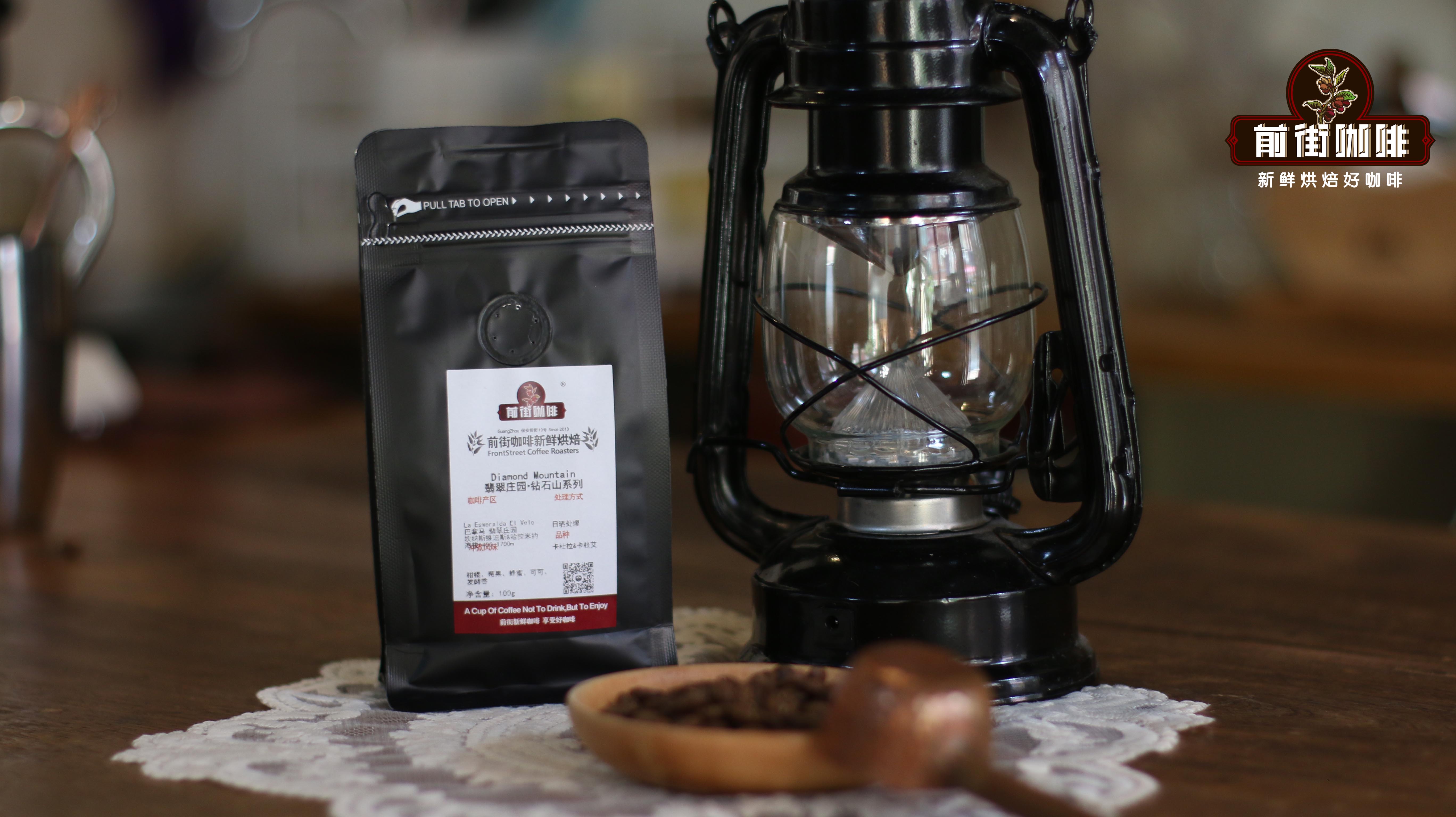
Although less famous than Geisha, Diamond Mountain also benefits from the unique environment of the Boquete region and the strict management of Hacienda La Esmeralda, with solid quality performance. Combined with a more affordable price, its value for money is even more outstanding. Front Street's Hacienda La Esmeralda Diamond Mountain uses traditional natural processing; after brewing, you can sense the slight fermentation aroma brought by natural processing, with bright acidity on the entry, flavors of citrus, nuts, and honey, a smooth mouthfeel, and a cocoa finish in the aftertaste.

FrontStreet Coffee Brewing Recommendations
Dripper: V60#01 Water temperature: 90-91℃ Dose: 15g Coffee-to-water ratio: 1:15 Grind size: medium-fine (80% passing through China standard No. 20 sieve)
Brewing method: three-pour extraction. Use 30 grams of water for a 30-second bloom, pour in a small stream in circles until 125 grams for the first pour stage, then when the water level is about to expose the coffee bed, continue pouring until 225 grams and stop, and when the water level is about to expose the coffee bed again, remove the dripper; (timing starts at the beginning of the bloom) extraction time is 1'55".
The above content is compiled by CoffeeHunters, a coffee news website.


