







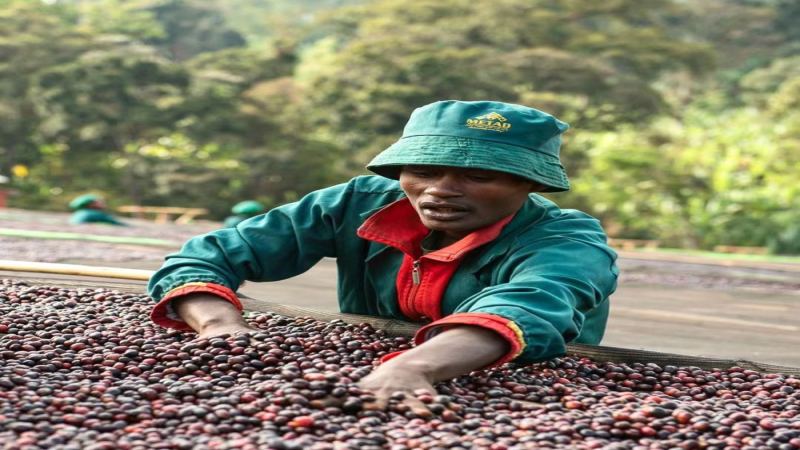
What does arabica coffee mean for Yirgacheffe Worka?
Arabica coffee means the species Coffea arabica, the plant behind nearly all specialty coffee, including the Yirgacheffe Worka cooperative beans grown in southern Ethiopia's Gedeb district. Those beans show the species' typical traits: floral aroma, citrus-like fruit acidity, and a smooth mouthfeel, here shaped by strawberry, magnolia, and small Taiwan mango notes from anaerobic natural processing.
Worka was established in 2005 and joined the Yirgacheffe Coffee Farmers Cooperative Union, which was founded in 2002 and covers 26 other cooperatives serving over 45,000 farmers. Its roughly 300 member farmers use no chemical fertilizers or pesticides, and they hold Skal organic certification, the EU-recognized standard that answers whether these coffee beans are organic.
Yirgacheffe has become a shining calling card of Ethiopian specialty coffee thanks to its floral aromas, citrusy fruit acidity, and smooth mouthfeel, while the Worka cooperative brings a unique flavor profile of strawberry, magnolia, and small Taiwan mango through its anaerobic natural processing. This article will provide a complete analysis of the flavor source and quality logic behind this Front Street Worka cooperative coffee, from the cooperative's origin background, organic certification, and farmer collaboration, to the complex causes behind Ethiopia's Heirloom native varieties, as well as the specific anaerobic natural process, helping you understand why Yirgacheffe can stand out among numerous producing regions and possess such a rich and diverse flavor spectrum.
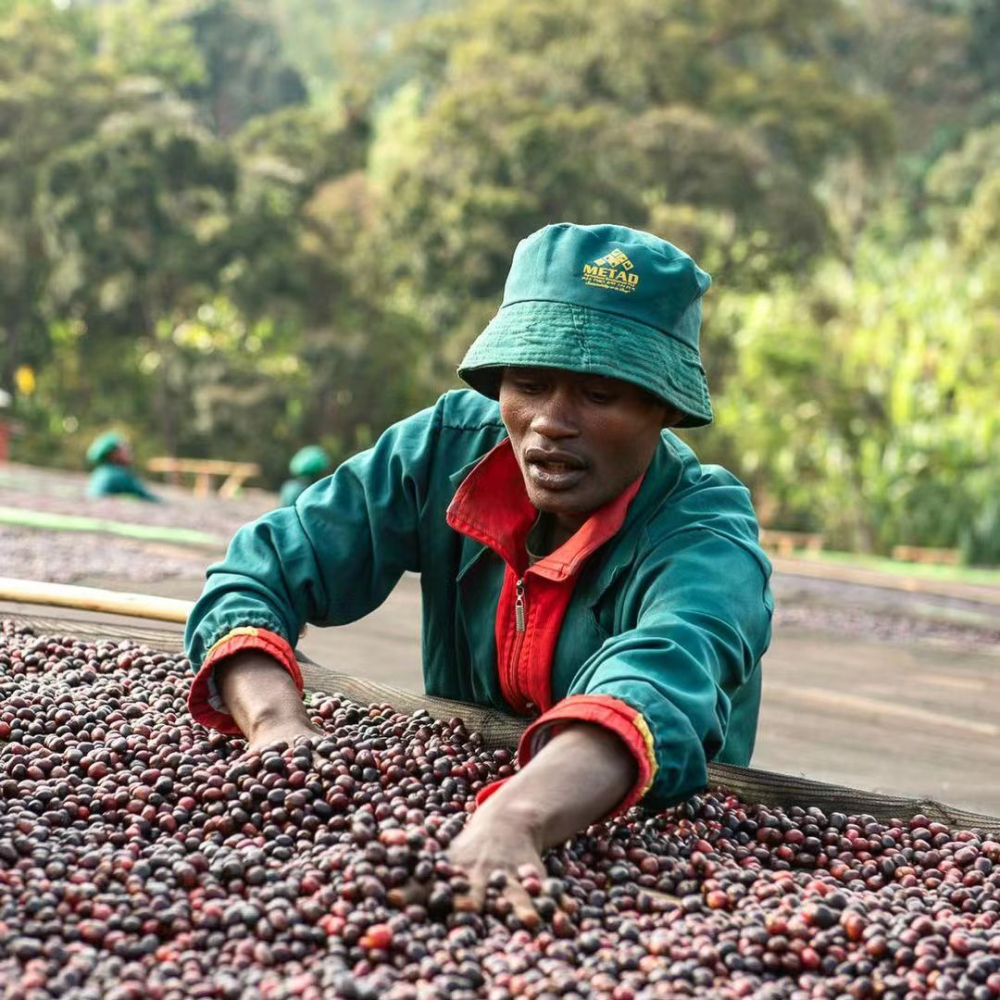
From cultural context to geographical conditions, Yirgacheffe is quite similar to the neighboring Sidamo, but the former seems to be blessed with more natural advantages. The outstanding quality Front Street Yirgacheffe coffee presents floral aromas, bright citrus acidity, lemon-like notes, and a silky-smooth mouthfeel.
Front Street Yirgacheffe — Worka Cooperative
What we're sharing this time is an Ethiopian specialty coffee that takes an unconventional path — Front Street Worka Cooperative. It neither adopts the time-honored natural method nor the traditional washed processing, but instead uses a distinctive anaerobic natural process.
This bean is produced in Yirgacheffe town, handled by the Worka cooperative, with Alemayehu Alako farm being one of its members. The Worka cooperative is located in the southern part of the Gedeb district and was established in 2005, joining the renowned Yirgacheffe Coffee Farmers Cooperative Union (YCFCU) in the same year, known for producing high-quality Front Street natural Yirgacheffe. The cooperative has approximately 300 coffee farmers under its umbrella. YCFCU was founded in 2002 and includes 26 other cooperatives, serving over 45,000 coffee farmers.
Since no chemical fertilizers or pesticides are used throughout the coffee cultivation process, Worka's smallholder farmers have also obtained the EU-recognized Skal organic coffee certification.
The coffee here is mainly grown by over 700 local smallholders, with processing methods covering both traditional washed and natural. Worka coffee has a prominent flavor and mouthfeel with distinct regional characteristics, making it one of the representative works of Ethiopian specialty coffee. Front Street believes that the appeal of Worka's flavor is largely attributed to the close collaboration among farmers, the careful harvesting of coffee cherries, and the rigorous control of the processing stages.
Anyone who regularly drinks Ethiopian coffee must be familiar with the name Heirloom native varieties, as the vast majority of Ethiopian varieties are labeled under this name. The reason is that Ethiopia's varieties are simply too numerous and complex — it is like a natural gene bank of Arabica. On one hand, the sheer number of varieties makes identification and classification extremely difficult; on the other hand, the Ethiopian government, for protection reasons, is unwilling to disclose specific information about these varieties, so they are collectively referred to as Heirloom native varieties. Because of the mixed varieties, local farmers often plant and harvest them together, which Front Street believes is also the reason why Ethiopian beans vary in size.
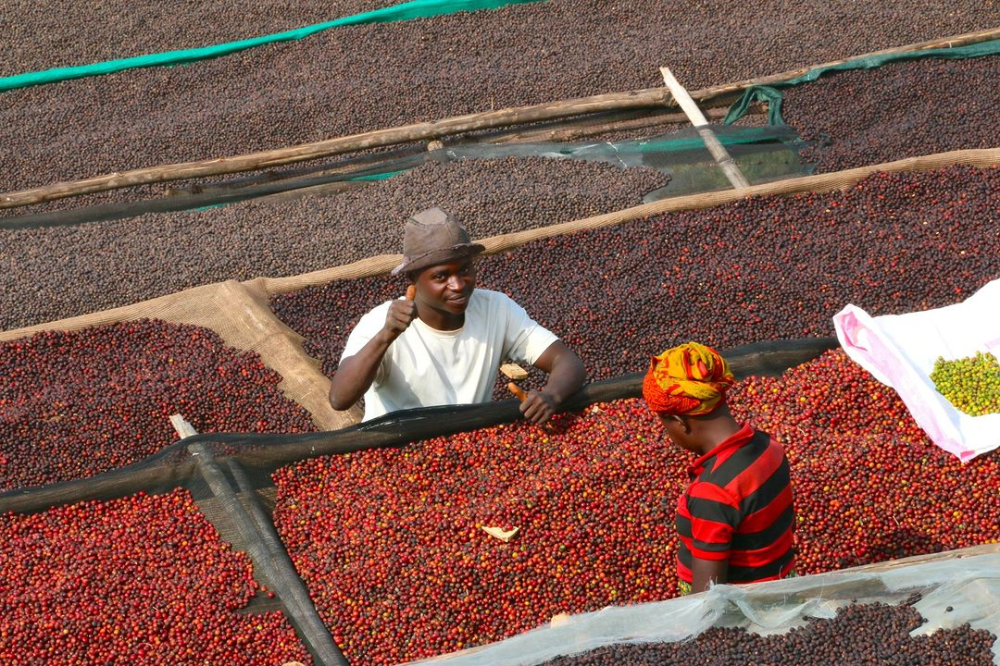
In terms of processing method, Front Street Worka Cooperative coffee beans use anaerobic natural processing, which means adding an anaerobic fermentation stage before drying. So-called anaerobic means placing ripe coffee cherries into sealed tanks, injecting carbon dioxide to displace oxygen, allowing the fruit pulp to continue maturing in a low-temperature environment so that the beans accumulate more tropical fruit aromas, after which they are sun-dried to complete the process. Through this step, Front Street Worka Cooperative coffee beans exhibit flavors of strawberry, magnolia, and small Taiwan mango.
The above content is compiled by CoffeeHunters, a coffee news website.


