







Search Results for: financing

Kenya's Supreme Court Rules 2023 Finance Act Constitutional, Coffee Industry Faces Dual Challenges of Taxation and EUDR
Kenya's Supreme Court overturned the Court of Appeal's ruling on August 20, finding the 2023 Finance Act constitutional—a move that had previously sparked large-scale protests in the capital Nairobi and other regions. The act doubles the fuel value-added tax, introduces a housing levy, and raises the top personal income tax rate. The opposition and civil society groups expressed deep disappointment, fearing a further rise in the cost of living. For the coffee industry, the tax increases have pushed up production and transportation costs, squeezing profit margins; more seriously, the EU Deforestation Regulation (EUDR), set to take effect in January 2025, could deal a severe blow to Kenya's coffee exports. Currently, only about 30% to 40% of coffee is certified, while smallholder farmers are generally poorly informed about compliance requirements. Front Street Coffee will continue to monitor developments in the producing regions. [more…]

All provisions of Kenya's Finance Bill withdrawn, yet unrest persists, coffee and tourism industries hit hard
On July 25, the Kenyan Parliament unanimously voted to delete all 65 clauses of the 2024 Finance Bill, yet failed to quell the escalating wave of public protests. From the clashes triggered by tax increases in June to the dissolution of the cabinet and the opposition party's entry into government, which sparked even greater discontent, the demonstrations have spread to Nairobi, Mombasa, and other places, affecting the tourism and coffee industries. As an important coffee-producing country in Africa, Kenya has seen coffee processing plants shut down and exports blocked, casting a grim outlook on the industry's development. Front Street Coffee continues to monitor developments in the producing areas and brings you in-depth analysis. [more…]

New Accounting Law Takes Aim at Financial Fraud: Luckin Coffee Named by the Ministry of Finance, Penalty Cap Leaps from 100,000 to Ten Times the Fine
Recently, the Ministry of Finance, in a new series of interpretive articles on the Accounting Law, named Luckin Coffee, Evergrande Real Estate, and other domestic and overseas listed companies for financial fraud, sparking widespread attention. The article pointed out that a major reason for the frequent occurrence of egregious financial fraud is that the cost of breaking the law is too low. Under the original Accounting Law, the maximum penalty for fraudulent enterprises was only 100,000 yuan, which was difficult to create an effective deterrent. In 2020, Luckin Coffee self-disclosed inflated transaction revenue of about 2.2 billion yuan, was delisted from Nasdaq, and reached a settlement with the U.S. SEC for a civil penalty of $180 million, and was also fined 61 million yuan in China. The new Accounting Law, effective July 1, 2024, significantly increases penalties, changing to "confiscate one and fine ten," with no upper limit on fines. This article reviews the entire course of Luckin's fraud, its consequences, and the key points of the new law, and discusses subsequent compensation mechanisms. [more…]
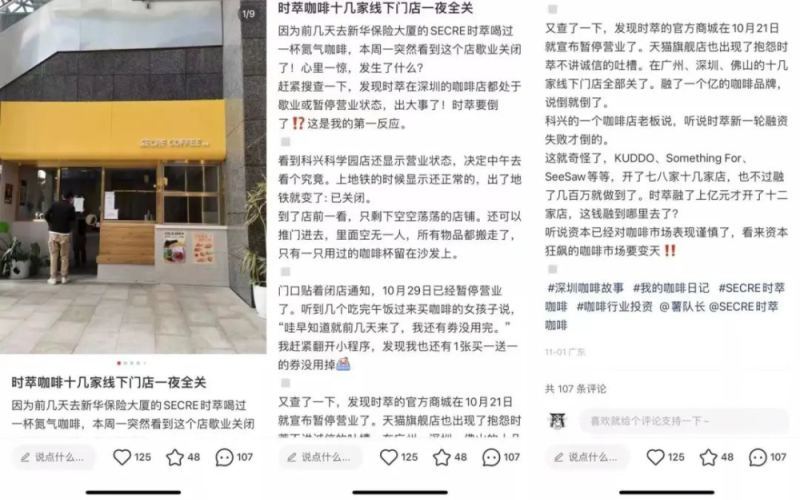
Time Extract Coffee's physical stores appear to have collectively shut down; the company once raised nearly 100 million yuan in funding, with a single-store valuation exceeding 100 million.
Once regarded as a key player in the specialty instant coffee sector, Shicui Coffee has recently been exposed by netizens for the near-simultaneous closure of its offline stores in multiple locations. Founded in 2019, this brand rose rapidly with its internet-savvy team and subscription-based model. After securing nearly 100 million yuan in financing in 2021, it accelerated its offline expansion, with a single-store valuation once exceeding 100 million yuan. However, stores in Shenzhen, Guangzhou, Foshan, and other places have now posted closure notices, the official phone line goes unanswered, and only the Lingnan Tiandi store in Foshan remains open. Although its e-commerce channels are still operating normally, does the offline setback mean the brand will retreat to its main online battlefield? Its financing-driven growth model has also prompted the industry to reflect on the risk resilience of emerging coffee brands. [more…]
Luckin Achieves Overall Profitability: Why Coconut Latte Went Viral, and a Roundup of the Most Worth-Drinking Beverages
After weathering a financial scandal, delisting, and a top-level restructuring, Luckin Coffee has finally received good news: it has achieved overall profitability. At the same time, viral drinks such as Coconut Latte continue to trend, bringing the brand back into the public eye. This article sorts through Luckin's recent financing rumors, business turnaround, store scale, and new product landscape, and discusses what makes Coconut Latte taste so good and why it became a hit. If you are also looking for Luckin's most worthwhile drinks, or want to know Front Street Coffee's recommendations for related beans, this article will give you clear answers. [more…]

Jasmine Naibai completes nearly 100 million yuan financing led by Alibaba Local Life, focusing on Eastern floral tea drinks to accelerate expansion
Recently, the new Chinese-style tea beverage brand Jasmine Naibai announced that it has secured nearly 100 million yuan in financing, led by Alibaba Local Life, with Xiangyang Capital serving as the exclusive financial advisor. This round of funding will be directed toward product research and development, brand building, supply chain upgrades, and team expansion, while further empowering franchise partners and continuously refining the lightweight model. Since its establishment in 2020, Jasmine Naibai has started with Jasmine Dragon Buds and focused on the floral fresh milk tea segment, launching series such as Gardenia, White Orchid, and Osmanthus. It now has 785 stores nationwide, with revenue growth of nearly 400%, and is expected to surpass 1,000 stores by the end of the year. The brand is also expanding overseas, opening its first stores in New York and Bangkok, promoting Eastern tea beverage culture to the world. [more…]

Cotti Coffee outlet in the cafeteria of Jilin University of Finance and Economics was vandalized by students; the university responded that no one was injured at the scene.
Recently, a Cotti Coffee outlet inside the cafeteria at Jilin University of Finance and Economics was suddenly vandalized by a male student. The bar area was left in complete disarray, with tables, chairs, takeaway cups, and cash register equipment scattered everywhere. According to students who witnessed the incident, the student involved appeared to have lost emotional control, possibly after being rejected in a confession of love. He first stomped his feet and slapped the tables, then flipped them over and rushed to smash the coffee shop's machines. The whole ordeal lasted over ten minutes, forcing the store staff to hide by the entrance. After the incident, campus security personnel quickly arrived and escorted the student away, and the university confirmed that no one was injured. The store involved has currently suspended operations, and the first floor of the cafeteria has returned to normal operation, but the exact amount of damage has not yet been disclosed. In this episode of coffee news, Front Street Coffee joins you in following the developments of the incident. [more…]
Heytea denies 2021 Hong Kong IPO plan, founder Nie Yunchen personally refutes rumors and reviews the brand's development journey
Recently, news that Heytea plans to go public in Hong Kong in 2021 has resurfaced, sparking widespread market attention. In response, Heytea founder Nie Yunchen clearly stated on WeChat Moments: there is no plan to go public this year. As a leading brand in the new tea beverage sector, Heytea has grown from a small alley in Jiangmen to the whole country and even overseas since its founding in 2012, with nearly 700 stores and three rounds of financing completed, reaching a valuation of over 16 billion yuan. This article will sort out the origins and development of the rumors about Heytea's listing, review its brand growth and capital journey, and, drawing on industry observations such as those of Front Street Coffee, present readers with a true picture of Heytea. [more…]

Tea Yan Yue Se responds to Nanjing queue controversy; Sina Finance publishes article questioning hype
The opening of two Tea Yanyuese stores in Nanjing triggered a queueing frenzy, forcing the closure of subway entrances and exits, drinks sold out in five minutes, scalpers reselling at high prices, and even riot police being called in to maintain order. Faced with questions over hiring people to queue and reselling hype, Tea Yanyuese issued an apology and promised purchase limits; however, two hours later Sina Finance published an investigative article pointing directly at the agency-buying queues as a premeditated false prosperity. Is this uproar down to brand appeal or marketing tricks? With the pandemic not yet subsided, what hidden dangers does gathering in queues bring? This article sorts through the whole incident and explores the queue economy and public order issues behind internet-famous tea brands. [more…]
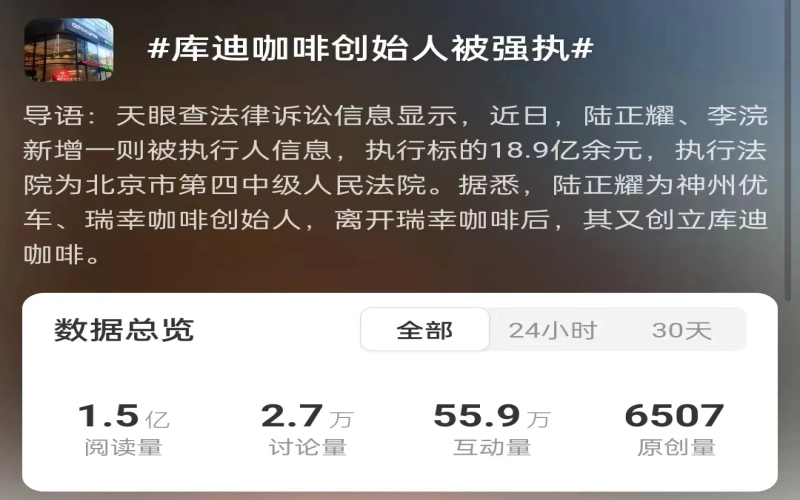
Lu Zhengyao Hit with Another 1.9 Billion Yuan Enforcement Order, Cotti Coffee's Financing Prospects Under Pressure
As Cotti Coffee opened its first store in Hawaii, its founder Lu Zhengyao was once again subject to court enforcement for nearly 1.9 billion yuan, drawing widespread attention. According to China's enforcement information disclosure network, the case was filed by the Beijing Fourth Intermediate People's Court, with the enforcement amount approximately 1.896 billion yuan. This is already the third time Lu Zhengyao has been subject to enforcement within a year, with the cumulative amount approaching 3 billion yuan. From the Luckin financial scandal to the collapse of the Shenzhou system, and now to the rapid expansion of Cotti Coffee, Lu Zhengyao's business trajectory has always been accompanied by controversy and the shadow of debt. Cotti responded that operations are all normal, but whether the massive enforcement information will affect its subsequent financing remains a focal point of industry attention. [more…]
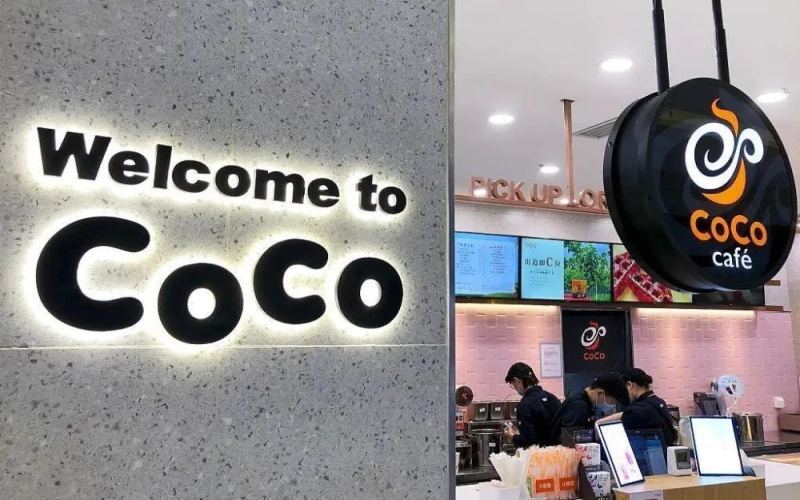
New-style tea brands are crossing over into the coffee sector, intensifying the battle for a hundred-billion market.
In recent years, new-style tea beverage brands have no longer been content with their original track and have turned their eyes toward the coffee sector. From Tea Yanyuese launching an independent coffee brand, to Heytea investing in a specialty coffee chain, and then Naixue Tea taking a stake in AOKKA, cross-sector moves have been frequent. At the same time, Mixue Ice Cream & Tea had long been deeply cultivating the coffee market with "Lucky Cup," and CoCo都可 was even earlier, taking the lead in testing the waters back in 2014. As China's coffee market scale approaches 500 billion, capital and companies of all kinds are accelerating their entry, and the number of financing events has surged. This article will sort out the journey of new-style tea beverage brands entering the coffee track, key cases, and market data, and explore the strategic considerations and industry impact behind this trend. [more…]

Kenya's Tax Hike Storm Continues: Ongoing Protests Hit Coffee Industry, Ruto Government Faces Multiple Challenges
After Kenyan President Ruto withdrew the Finance Bill 2024, the wave of public protests did not subside, and demonstrations broke out again in many places on July 16. This social unrest triggered by tax increases has already had a substantial impact on Kenya's coffee industry: shrinking cultivation area, shutdowns at processing plants, and export delays, leaving the industry's prospects full of uncertainty. This article reviews the sequence of events and examines the chain effects of political instability on coffee production and trade. [more…]
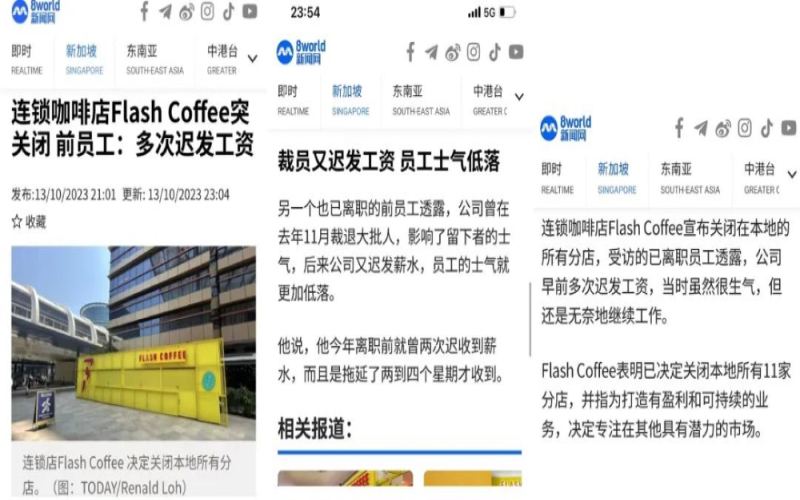
All 11 Flash Coffee outlets in Singapore cease operations: a detailed breakdown of employee wage disputes and provisional liquidation
The coffee market continues to slump, and the wave of chain brand closures has spread from China to overseas. Flash Coffee, once dubbed by some media as Luckin's "knockoff," recently abruptly closed all 11 of its stores in Singapore and has become embroiled in disputes over unpaid employee wages and provisional liquidation. The brand had just completed a $50 million funding round, with investors including White Star Capital and Delivery Hero, claiming the funds would be used to improve profitability and accelerate Asia-Pacific expansion. However, less than six months later, news emerged of a creditors' voluntary liquidation, and labor unions also stepped in to address unpaid wages, CPF contributions, and the cashing out of unused leave. Flash Coffee promised to retain the Hong Kong market, but its Luckin-copying, cash-burning approach became unsustainable when funding faltered. This article outlines the sequence of events and key details. [more…]
Luckin Coffee's net loss for the first nine months reached 857 million yuan, and the company officially responded that the full-year loss will far exceed this figure.
A recently leaked Series B financing business plan for Luckin Coffee shows that in the first three quarters of 2018, the brand's cumulative sales revenue was 375 million yuan, while its net loss reached as high as 857 million yuan, with a gross margin of -115.5%, in stark contrast to Starbucks' gross margin of over 50% for five consecutive years. In response to outside doubts, Luckin officially said that the full-year loss would be far greater than that figure and stressed that spending money on subsidies is an established strategy, with the loss in line with expectations. This article sorts through Luckin's revenue targets, user data, and its full official response, while also looking at the quality route behind its choice of coffee beans and equipment, offering a reference for coffee lovers. [more…]
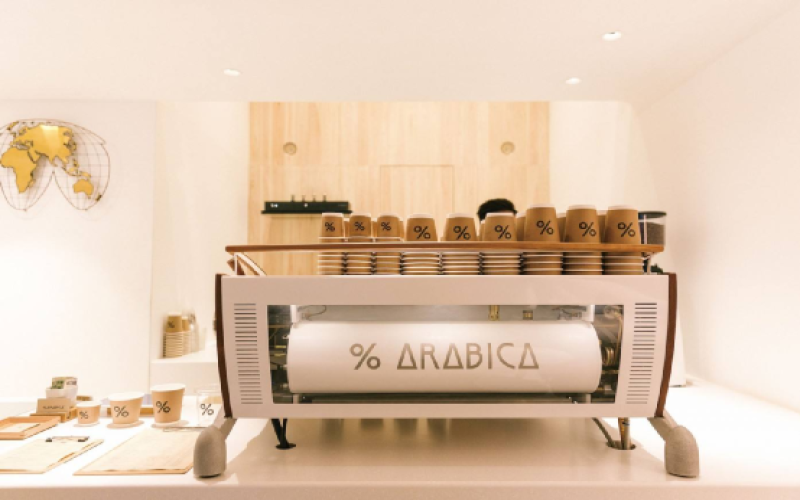
%Arabica's China operator Fumeng International plans to raise $300 million at a target valuation of $1.2 billion, bringing new challenges for specialty coffee expansion.
China's coffee chain market is expected to surpass 36,000 stores by 2025. Despite the pandemic repeatedly disrupting the food and beverage industry, the Chinese market is still regarded as a key growth engine for coffee brands both at home and abroad. Against the backdrop of a sharp pullback in financing enthusiasm, Fumeng International, the Chinese operator of the influencer specialty coffee brand %Arabica, is seeking about $300 million in new funding at a target valuation of $1.2 billion. The brand started with a minimalist visual style, gained popularity from Hong Kong to Arashiyama in Kyoto, and expanded rapidly after entering Shanghai in 2018. It now has 61 stores in mainland China, Hong Kong and Macau. However, as its locations become more mainstream and its influencer halo fades, %Arabica's balance between scale and specialty positioning has become a focus of attention. [more…]

Ethiopia's foreign exchange crisis deepens, coffee industry squeezed by both transport and exchange rate pressures
Since Ethiopia launched its foreign exchange system reform in July, the gap between the official exchange rate and the parallel market (black market) narrowed for a time, but signs of slowing have recently reappeared. As of mid-October 2024, the official exchange rate was 116.97 birr per US dollar, while the black market rate was as high as 140 birr, forcing businesses to take desperate risks amid the foreign exchange shortage. Costs are climbing for import-dependent enterprises, and inflationary pressure is transmitting to the coffee industry, driving up cultivation costs and pushing the minimum selling price across the board up by 2%. At the same time, the government is accelerating the opening of the logistics industry, attempting to ease transport bottlenecks by bringing in foreign investment, but port access and regional security remain uncertain factors. This article will sort out the chain reaction among exchange rates, logistics, and coffee exports. [more…]

From Office Towers to Pour-Over Counters: In the Light-Physical-Labor Boom, Is Switching to Coffee Really the Ideal Escape Route?
When involution becomes the norm in the workplace, a group of workers tired of mental exhaustion begin to set their sights on "brainless" light physical labor, and barista, with its romantic filter, is voted the top choice for a career change. Young people who have fled from fields such as law, finance, and architectural design share the joy and the gap between expectations and reality of shaking coffee at chain brands like Luckin and Starbucks. However, real problems such as shoulder and neck strain, shrinking salaries, and limited development also emerge. Is switching to coffee a cost-effective and respectable job, or just another besieged city? This article sorts through the real experiences of several career changers to provide reference for those hesitating at life's crossroads. [more…]

El Niño's lingering havoc wreaks havoc in East Africa: Kenya floods kill 289, core coffee-producing regions face crisis of reduced output
Although El Niño is expected to wrap up in April, its impact on global coffee-producing regions is far from over. Several countries in East Africa are being battered by both torrential rains and floods, with Kenya suffering especially devastating losses—at least 289 people have died and more than 280,000 have been forced to flee their homes. Worryingly, the hardest-hit areas happen to cover Kenya's main coffee-producing regions such as Nyeri, Nakuru, and Kiambu. With the critical flowering and fruiting stage now underway, this natural disaster has all but sealed the fate of a reduced harvest next season. Faced with the prospect of total crop failure, the Kenyan government has urgently allocated 4 billion shillings, while the International Finance Corporation, together with Absa Group, has injected US$60 million into coffee trading giant Volcafe in an effort to stabilize the East African coffee supply chain. Front Street Coffee will also continue to follow developments in the producing regions and bring coffee lovers the latest news. [more…]
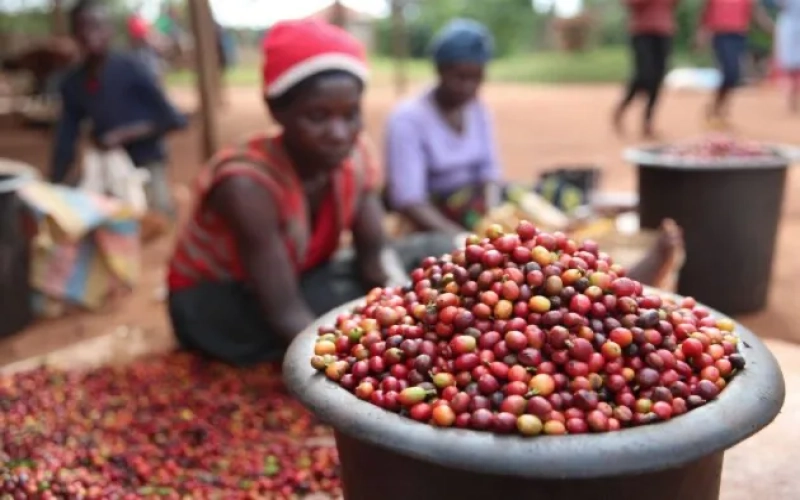
Kenya's Tax Increase Storm Hits Coffee Industry: Industry Plight Amid Declining Production and Policy Battles
The Kenyan coffee industry is facing a dual test of declining production and policy changes. A USDA report shows that due to heavy rain and reduced planting area, Kenya's coffee production in 2024/25 is expected to drop to 750,000 bags, a year-on-year decrease of 6.3%. Although the government plans to increase production by 55% to 102,000 metric tons by 2027 and has introduced support measures such as debt write-offs and a cherry fund, recent tax-increase protests and clashes triggered by a finance bill have cast a shadow over the industry's prospects. Coffee beans are traded in US dollars, and the 16% value-added tax will push up farmers' operating costs; new coffee regulations have led to processing plants halting operations, cherry rotting, and exports being hindered. Front Street Coffee notes that although the president has withdrawn the tax-increase plan, the industry still expresses concern about policy uncertainty. [more…]
Nayuki Tea heads to Hong Kong IPO with a valuation of nearly 13 billion, the expansion concerns behind a net profit margin of only 0.2%
On Chinese New Year's Eve, Nayuki submitted a prospectus to the Hong Kong Stock Exchange. This premium freshly made tea beverage brand, centered on "fruit tea + soft European bread," has completed five rounds of financing and is now valued at nearly RMB 13 billion. However, behind the glossy listing process, its 2020 net profit margin was only 0.2%, with net profit of just RMB 4.484 million, raising concerns about the cost pressures and profitability shortcomings brought by rapid expansion. Can Nayuki leverage its listing to become a dark horse in the new-style tea beverage track? This article will sort through the valuation, membership system, store expansion, financial data, and industry views for you one by one. [more…]