







What Draws Tea Brands Toward Arabica Coffee and Cafes?
New-style tea brands are moving into coffee. Tea Yanyuese launched an independent coffee brand with five stores, Heytea invested in the boutique chains Seesaw and Minority Coffee, and Nayuki Tea took a stake in AOKKA after rolling out specialty drinks under Nayuki PRO in late 2020. China's coffee market is approaching 500 billion yuan, and financing events have surged.
CoCo Milk Tea tested the format as early as 2014, cooperating with coffee service institutions, and Mixue Ice Cream & Tea built its position through Lucky Cup. Camera-ready demand for arabica has made quality beans the shared ground between tea and coffee menus, which helps explain why these brands are willing to invest, partner and open their own shops as competition widens.
In recent years, new-style tea beverage brands are no longer content with their original track and have turned their eyes to the coffee sector. From Tea Yanyuese launching an independent coffee brand, to Heytea investing in boutique chains, to Nayuki Tea taking a stake in AOKKA, cross-industry moves have been frequent. At the same time, Mixue Ice Cream & Tea had long been deeply cultivating the coffee market with "Lucky Cup," and CoCo都可 was even earlier, taking the lead in testing the waters back in 2014. As China's coffee market scale approaches 500 billion, capital and enterprises of all kinds are accelerating their entry, and the number of financing events has surged. This article will sort through the journey of new-style tea brands entering the coffee track, key cases and market data, and explore the strategic considerations and industry impact behind this trend.
For professional coffee knowledge exchange and more coffee bean information, please follow Coffee Workshop (WeChat public account cafe_style)
For more specialty coffee beans, please add the personal WeChat Front Street Coffee (FrontStreet Coffee), WeChat ID: qjcoffeex
Competition in the new-style tea beverage industry has long ceased to be confined to its own category boundaries, and extending into the coffee sector has become a common choice for many brands—this is no longer a novel topic. Tea Yanyuese was the first to create an independent coffee brand and opened five stores in one go; Heytea, meanwhile, has invested in the boutique chains Seesaw and Minority Coffee one after another, making frequent moves.
Recently, news spread on social platforms that the coffee chain brand Monster Sleepy had completed an angel round of financing in the millions, and the investor was none other than Nayuki Tea, which has a similar positioning. In fact, as early as the end of 2020, Nayuki launched a new store format called "Nayuki PRO," simultaneously rolling out seven specialty coffee drinks, marking Nayuki's official entry into the coffee business. By September this year, Nayuki had also taken a stake in AOKKA Coffee and opened the brand's first offline coffee shop within its first Nayuki Life store.
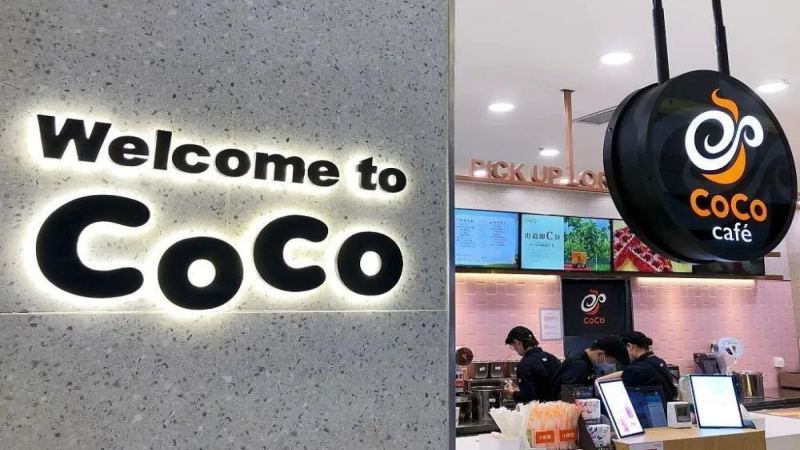
However, if we trace the pioneers of new-style tea crossing into coffee, CoCo都可 is undoubtedly one of the earliest pathfinders. In 2014, CoCo都可 began cooperating with coffee service institutions to lay out its coffee business, and in January 2015 it opened its first coffee store near Fudan University at Wujiaochang in Shanghai, focusing on high-cost-performance creative coffee.
Since then, major brands have successively entered the coffee market, and the cross-industry melee between new-style tea and coffee has intensified. Tea beverage brands such as Mixue Ice Cream & Tea, Shuyi Tealicious, and 7FenTian have all launched their own coffee products or sub-brands one after another. In August this year, Tea Yanyuese's newly created coffee brand "Yuanyang Coffee" officially opened its first five stores, declaring its entry into the coffee market.
But in fact, before Tea Yanyuese entered the fray, Mixue Ice Cream & Tea had already relied on its Henan headquarters to create "Lucky Cup," focused on the coffee market, and opened franchising. Heytea had also long added coffee drinks to its menu, and in 2020 it repeatedly cooperated with the specialty coffee brand %ARABICA on pop-up stores in Shanghai and Guangzhou, trying to blend tea beverage and coffee elements. In July 2021, Heytea took a stake in the specialty coffee brand Seesaw, and in June this year it invested in Minority Coffee.
Data from iiMedia Research shows that in 2021 China's coffee market scale was about 381.7 billion yuan, and it is expected to reach 485.6 billion yuan in 2022, with the consumer base exceeding 300 million person-times. At the same time, China's coffee market is expected to continue expanding at a growth rate of 27.2%, far higher than the global average growth rate of 2%, and by 2025 the market scale is expected to reach 1,000 billion yuan.
Against this backdrop, more and more cross-industry players are pouring into the coffee track. Data from the Tianyancha App shows that between 2020 and 2022, the number of enterprises laying out cross-industry coffee businesses increased significantly, jumping from 2 in 2020 to more than 10 in 2022. These enterprises come from multiple industries; in addition to catering companies, they also include large state-owned enterprises such as China Railway and China Post, whose entry has jointly pushed up the heat of the coffee track. As of mid-November, the number of coffee brand financings in 2022 had reached 13, accounting for nearly 80% of the total number of financings in the entire coffee track.
For new-style tea brands facing fierce competition, the greater significance of entering the coffee sector may lie in seizing market share and strengthening brand promotion. Some industry insiders analyze that whether to secure an early position in the coffee track or to seek a second growth curve, entering coffee has become the "optimal solution" before new-style tea brands. In addition, given the coffee track's booming prospects, rapid growth, huge potential consumer group, and high market ceiling, new-style tea brands naturally also hope to get a slice of the pie.
The entry of new-style tea brands can not only provide new ideas for coffee product innovation and marketing tactics, but more importantly, they have already accumulated rich experience and advantages in standardized store operations, scaled expansion, and supply chain integration. How new-style tea brands will stir up the coffee market—let us wait and see!
Image source: Internet
The above content is compiled by CoffeeHunters, a coffee news website.


