







Search Results for: digital nomads

Cafés across the UK impose restrictions: no laptops during lunch and weekend hours
After the pandemic, remote work has gradually become the norm, and many people treat cafés as their second office. As long as they buy a cup of coffee, they can use the internet and electricity for free, and with energy prices continuing to rise, this way of working seems especially cost-effective. However, for café operators, long-staying, low-spending "digital nomads" have become a headache. Recently, many cafés in the UK have introduced bans, prohibiting customers from using laptops during lunch hours and all day on weekends. Cafés in Paris are also taking action to protect coffee culture. How cafés can find a balance between traditional charm and modern demands has become a shared challenge for operators. Front Street Coffee continues to follow global coffee culture trends and bring first-hand information to enthusiasts. [more…]

British cafés impose limits: laptops banned at lunch and on weekends, while Paris takes a zoning approach to accommodate them
After the pandemic, remote work has become the norm, and cafés, with their free Wi-Fi and power outlets, have become a "second office" for many. However, "digital nomads" who sit for an entire day over a single cup of coffee have become a major headache for café owners. Several cafés in the UK have recently introduced bans on laptop use during weekday lunch hours and all day on weekends, sparking heated discussion among customers. Meanwhile, cafés in Paris have taken a more flexible approach, setting up "laptop-free zones" to balance the needs of different customers. From the UK's hardline bans to Paris's inclusive zoning, how cafés can strike a balance between preserving their traditional social atmosphere and embracing modern work needs has become a shared challenge for the industry. Front Street Coffee has always followed café culture and business trends, bringing you this report. [more…]

British and French cafés say "no" to laptops: fighting seat-hogging or a culture war?
Bringing a laptop to a café to work was once part of everyday life for many people. Recently, however, several cafés in the UK have introduced rules banning customers from using laptops during lunch hours and on weekends, on the grounds that these "digital nomads" occupy seats for long periods while spending little, seriously hurting table turnover and revenue. At the same time, some cafés in Paris have also put up "no laptops" signs and even refuse to provide WiFi, in order to defend traditional coffee culture. But some shops have adopted a compromise strategy, setting up "no-computer zones." This tug-of-war over café space reflects the difficult balance between tradition and the demands of modernization. Front Street Coffee believes that how to accommodate diverse needs while safeguarding business operations is something every industry practitioner is worth pondering. [more…]

One Cup of Coffee, Ten Hours: The Long-Stay Dilemma Behind Japan's Café Closure Wave
In an era where remote work is increasingly common, more and more people are choosing to treat cafes as their second office. For just a few hundred yen spent on a cup of coffee, they can stay in the shop for hours or even longer. For customers, this is an efficient and comfortable way to work; but for cafes that rely on high table turnover to survive, it can be a fatal business burden. Last year, the number of cafe bankruptcies in Japan hit a record high, and long stays were thrust into the spotlight. Time limits, fewer power outlets, customer dissatisfaction... operators are caught in a dilemma. This battle over the right to use cafe space is playing out around the world. [more…]

The Origins of Bulletproof Coffee Founder Dave Asprey's Connection to Butter Tea and a Simple DIY Method
Bulletproof coffee has attracted considerable attention in recent years. Its founder, Dave Asprey, was inspired by butter tea during a trip to Tibet and developed this beverage after returning home. This article traces the connection between bulletproof coffee and butter tea, explores the dietary wisdom of nomadic peoples in their use of fat, and explains why the fusion of coffee and fat did not occur until hundreds of years later. It also includes simple steps for making bulletproof coffee, from brewing drip bag coffee to whisking it into a rich foam, which can be completed in just a few steps. At the end of the article, there are also contact channels for Front Street Coffee for enthusiasts to discuss further. [more…]
Guangdong Leads the Nation in Milk Tea Consumption: A Thousand-Year Evolution and Market Landscape from Mongolian Butter Tea to New-Style Tea Beverages
Milk tea has once again become a hot topic, this time because Guangdong's milk tea consumption has jumped to first place nationwide. Alipay's spring report shows that warmer weather has driven an overall 10% increase in milk tea consumption, with online orders from middle-aged and elderly groups surging by 25%. From the fact that southern provinces account for 80% of consumption to Guangdong residents drinking 2.5 more cups per week per person than those in the Northeast, the data behind this reflects the deep penetration of milk tea culture. This article will trace the thousand-year evolution of milk tea from Mongolian butter tea to Hong Kong-style and Taiwanese-style, and then to new-style tea drinks, analyze the capital layout and brand echelons under a market scale of hundreds of billions, and remind readers: although milk tea is good, do not be greedy. [more…]

Flavor Analysis of Various Geisha Coffee Bean Lots from Gesha Village, Ethiopia, and Gold Label Pour-Over Parameters Sharing
Located on the southwestern frontier of Ethiopia, bordering Sudan, Gesha Village Coffee Estate is named after the local nomadic Surma people. Its elevation ranges from 1909 to 2063 meters, and its primary variety is Gesha 1931. The coffee produced here is renowned for its delicate aromas of jasmine and pale red roses, accompanied by the sweetness of strawberry, ripe watermelon, and apple, along with a refined and soft spicy finish. Drawing on the Panamanian business model, the estate classifies its Geisha into different grades such as Gold Label, Red Label, Green Label, and Chaka. This article will systematically review the flavor characteristics and product information of each grade, and include a complete pour-over guide for Front Street Coffee's Gold Label Geisha, including dripper, water temperature, coffee-to-water ratio, and three-stage pouring details, for coffee enthusiasts' reference. [more…]

Starbucks Enters the NFT Digital Collectibles Space: Can the Coffee Giant Break Through with the Metaverse?
Starbucks' performance in China continues to decline, and it is trying to reshape its brand appeal by launching NFT digital collectibles and building a virtual "third place." However, the NFT market is highly volatile and mired in controversy, and whether Starbucks can break through via the metaverse remains uncertain. This article sorts out the ins and outs of Starbucks' NFT plan and presents the different voices of netizens and industry insiders. [more…]

Taiwan coffee shop sets a threshold: children under 12 must recite 30 digits of pi to enter—a tribute to specimen preservation sparks polarized debate
How many digits of pi can you recite? Most people only remember 3.14, and the more impressive ones might manage 3.1415926. But at a coffee shop in Taipei, Taiwan, called "Migratory Bird Exhibition Hall," children under 12 who want to dine inside must accurately recite 30 digits of pi after the decimal point. This unusual rule quickly sparked heated debate, with some criticizing it as discrimination against children and others praising the shop for cleverly creating a fair opportunity for proof. The shop displays over a hundred rare animal specimens, including giraffes, zebras, and peacocks, costing hundreds of thousands each, with the most expensive giraffe specimen priced at 600,000 New Taiwan dollars. The owner admits that this move is both to protect the expensive exhibits and to give children a chance to prove their self-control. So far, a 6-year-old and a 10-year-old have successfully recited 30 digits to enter and dine. [more…]

Single-Digit Coffee Sweeps the Market: Can a Low-Price Strategy Sustain the Survival Space of Coffee Shops?
In recent years, coffee priced under 10 yuan has gone from impossible to the norm. Leading brands such as Luckin, Cotti, and Lucky Cup have all entered the fray, while regional chains and even newly opened small shops are racing to use single-digit pricing as their calling card. From Nantong to Qingdao and then to Shanghai, low-priced coffee is blooming everywhere, but the cost pressure and profit logic behind it deserve deeper scrutiny. Giants rely on supply chain advantages to dilute costs, while independent stores try to attract first-time triers and cultivate repeat purchases with a low threshold. However, when coffee prices are simplified into two camps—"under 10 yuan" and "over 10 yuan"—stores priced above 10 yuan that lack brand and quality support will face a severe test of survival. This article analyzes the underlying logic and future direction of this price war. [more…]
Starbucks' Odyssey NFT platform shuts down after just two years of operation, dealing a setback to its exploration of a digital third place.
Starbucks recently announced that it will shut down its Odyssey NFT test platform on March 31, a decision made just two years after the program's high-profile launch. Odyssey NFT had originally been expected to accomplish much, aiming to deeply integrate emerging NFT technology with the traditional loyalty program Starbucks Rewards, offering users substantive rewards ranging from virtual coffee courses to visits to coffee estates, and even allowing users to trade and cash out on the secondary market. However, the platform's sudden shutdown has left the industry and users quite surprised. Does this mean Starbucks will completely withdraw from Web3.0 exploration? This article sorts through the rise and fall of Odyssey NFT and follows Starbucks' subsequent moves in digital innovation. [more…]

Starbucks establishes a technology innovation center in China, with an initial investment of 1.5 billion yuan to accelerate its digitalization process.
Starbucks recently announced the establishment of a China Innovation and Technology Center in Shenzhen, planned to officially begin operations in September of this year, with an initial investment of approximately 1.5 billion RMB over the next three years. This move marks a further deepening of Starbucks' digital layout in the Chinese market. As a well-known brand in the coffee industry, Starbucks' action has attracted widespread attention, and local brands such as Front Street Coffee are also continuously monitoring industry developments. [more…]
The Origin and Flavor Characteristics of Ethiopian Digital Coffee Varieties 74158 and 74110
When purchasing Ethiopian coffee, in addition to the common Heirloom native variety label, in recent years more and more varieties with numerical codes have entered the public eye, such as 74158, 74110, and others. What exactly do these numbers represent? They are closely related to a period of disease-resistant breeding history in the Ethiopian coffee industry. In the 1970s, coffee anthracnose ravaged Ethiopian producing regions, prompting the Jimma Agricultural Research Center to launch a systematic breeding program, selecting from hundreds of samples several varieties that combined disease resistance with excellent flavor. This article will outline the origins of these numerical varieties, their classification logic, the flavor characteristics of their main representatives, and their performance in COE competitions, and will also introduce related products brought in by Front Street Coffee. [more…]
The Origin of Coffee, Ethiopia: A Complete Analysis of the Flavors of Arabica Native Heirloom Varieties Such as Yirgacheffe and Sidamo
Ethiopia is widely recognized as the birthplace of Arabica coffee, home to the world's richest variety of native coffee species and genetic resources. This article begins with the country's geography and cultivation history, outlines Ethiopia's unique standing in the coffee world, and highlights the flavor characteristics of two representative producing regions: Yirgacheffe and Sidamo. Yirgacheffe is known for its citrus-lemon acidity and jasmine floral aromas, with washed and natural processing each offering distinct styles; Sidamo, thanks to its diverse terrain and soils, presents a wide range of flavors including florals, nuts, and cocoa. Whether you are a coffee enthusiast just getting started or a seasoned drinker looking for Front Street Coffee's recommended beans, this article will guide you into a deeper understanding of what makes this coffee homeland so captivating. [more…]
Costa Rica Aquiares Estate Coffee Bean Profile: 2017 WBC Competition Bean and Rainforest Certification Information
Located in the Turrialba region of Costa Rica, Hacienda Aquiares is one of the largest coffee plantations in the country and the birthplace of Centroamericano, the competition bean used at the 2017 World Barista Championship (WBC). Founded in the late 19th century, the estate sits on volcanic slopes between two rivers, with abundant natural water sources and a pristine forest reserve, and it obtained Rainforest Alliance certification as early as 2003/2004. The estate primarily cultivates Arabica varieties such as Caturra, Catuai, and Catimor, employs washed processing combined with sun-drying and mechanical drying, and produces approximately 15,000 bags annually. Its coffee is known for flavors of nuts, caramel, plum, chocolate, and a sucrose-cream finish, with bright fruit acidity and a smooth body. Front Street Coffee has specially compiled complete estate information to give you an in-depth look at the terroir story behind this WBC competition bean. [more…]
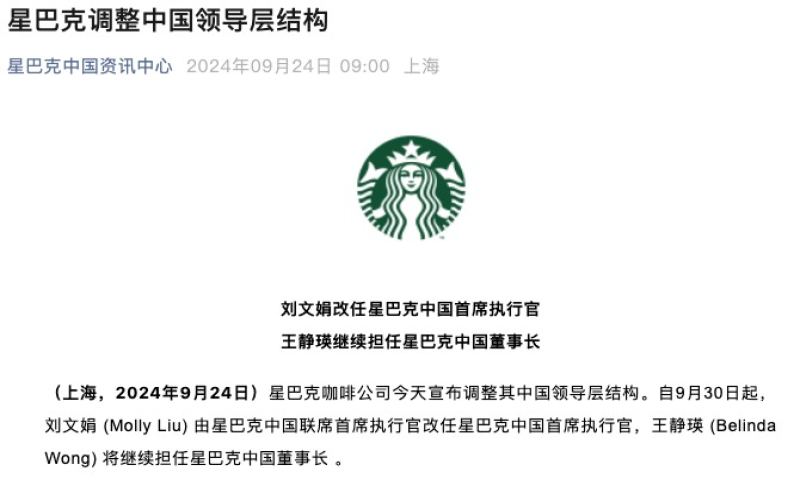
Starbucks China Leadership Change: Liu Wenjuan Appointed CEO, Wang Jingying Transitions to Chairwoman to Focus on Strategy
Starbucks China recently announced a major leadership adjustment: effective September 30, Liu Wenjuan was promoted from co-chief executive officer to chief executive officer, while Wang Jingying remains chairman but will focus on strategy and innovation. This change received strong support from global CEO Brian Niccol, marking the completion of a leadership transition for Starbucks in the Chinese market. Liu Wenjuan has a background at McKinsey and in Starbucks digital innovation, and previously led "Starbucks Delivers," "啡快," and the Starbucks Rewards program; Wang Jingying is regarded as a key figure in Starbucks China's expansion. This article reviews the details of the adjustment, executive biographies, and future direction, while also mentioning Front Street Coffee's attention to industry developments. [more…]
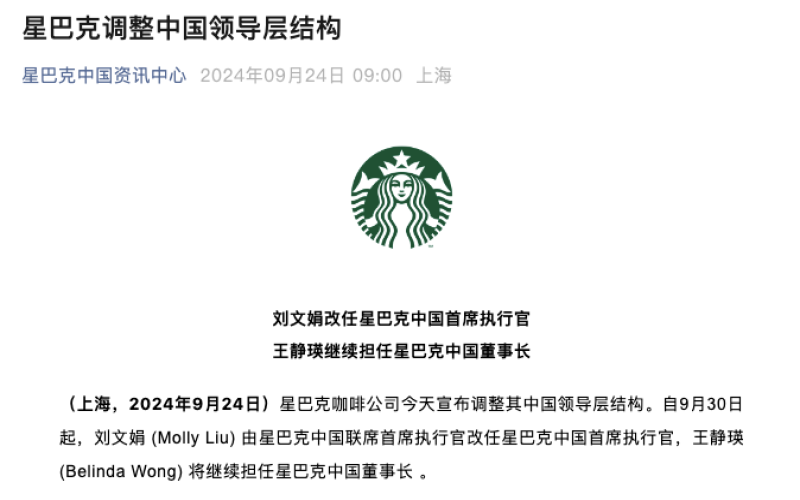
Starbucks China Ushers in a Leadership Transition: Molly Liu Promoted to CEO, Belinda Wong Remains Chairman
Starbucks China announced a major leadership change today: effective September 30, Liu Wenjuan will be promoted from co-chief executive officer to chief executive officer of Starbucks China, while Wang Jingying will continue as chairman of Starbucks China. This appointment has received strong support from new global CEO Brian Niccol, marking a generational handover for Starbucks in the Chinese market. Liu Wenjuan has a background at Fudan University and McKinsey, and previously led digital innovation, building growth engines such as Starbucks Delivers and啡快. Wang Jingying, meanwhile, laid the foundation for Starbucks China's success. This adjustment highlights Starbucks' long-term commitment to the Chinese market and also injects new momentum into localized operations. [more…]

Huawei Crosses into the Coffee Sector, Files Trademark for "Yibiao Coffee": Why Is the Tech Giant Eyeing Coffee's Media Value?
The coffee industry has become a popular field for various giants to compete in laying out their presence in recent years, with catering and non-catering enterprises entering the fray across sectors. According to Qichacha data, China has more than 320,000 coffee-related enterprises, with 15,000 new registrations annually. After Li-Ning, tech giant Huawei has also been reported to have applied to register the trademark "One Cup of Coffee Absorbs Cosmic Energy," classified under catering and accommodation, and is currently awaiting substantive examination. Unlike directly seizing market share, Huawei seems to place greater emphasis on coffee's connective function as a global medium, hoping to use it to attract younger groups. Ren Zhengfei once interpreted Huawei's spirit of openness with "a cup of coffee absorbs cosmic energy," and this trademark application continues that philosophy. Whether Huawei's advantages in the digital field can help it create new miracles in the coffee track is worth watching. [more…]
Ethiopian 74110 Digital Variety: Origin and Flavor Characteristics of Resistance to Coffee Berry Disease
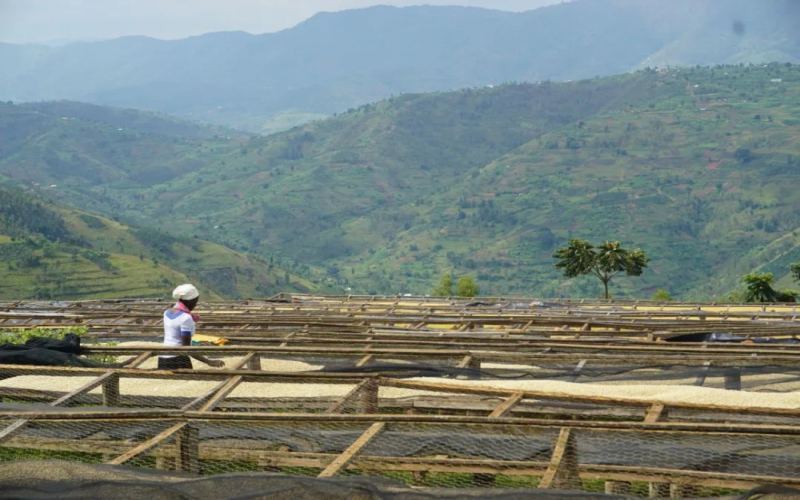
Ethiopia, as the birthplace of Arabica coffee, is home to tens of thousands of native varieties, usually collectively referred to as "Heirloom." However, in recent years, numerically named varieties such as 74110 have gradually entered the public eye. Behind these numbers lies a history of disease-resistant breeding: in the 1970s, coffee berry disease ran rampant, and JARC collected and selected 13 resistant varieties, giving rise to the 74 series. This article will explain the naming logic, variety characteristics, cultivation distribution, and flavor performance of 74110, and compare its similarities and differences with 74112, helping you gain a more comprehensive understanding of this batch of numbered varieties. [more…]
Behind the Camping Coffee Craze: Natural Healing or Environmental Burden? A Deep Look from the Origins of Glamping to Safety Hazards
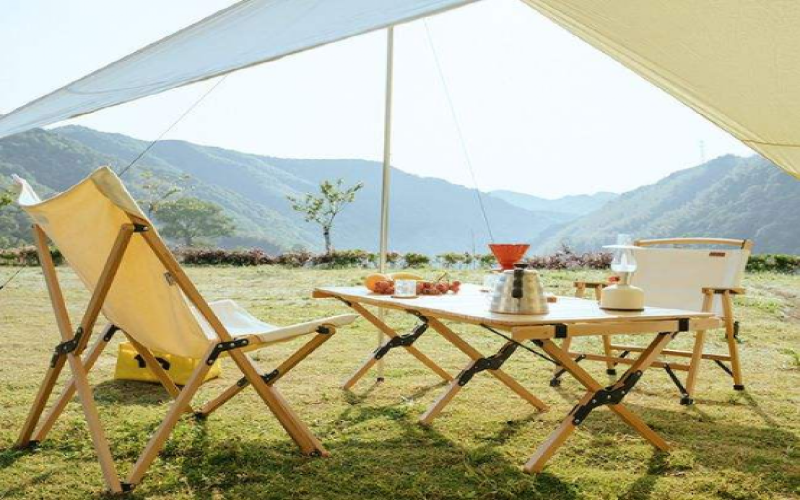
When the cicadas sing and summer arrives, city dwellers flock to the great outdoors seeking solace in nature. Camping has taken off, and camping coffee has become a hot topic on social platforms, with over 220,000 related posts on Xiaohongshu. Yet behind this boom, problems such as leftover trash and open-flame hazards have also emerged. Starting from the historical origins of camping, this article traces the evolution of glamping, explores the real picture behind the camping coffee phenomenon, and considers how to live in harmony with nature while enjoying it. [more…]