







Is the Camping Coffee Boom Really Good for Nature?
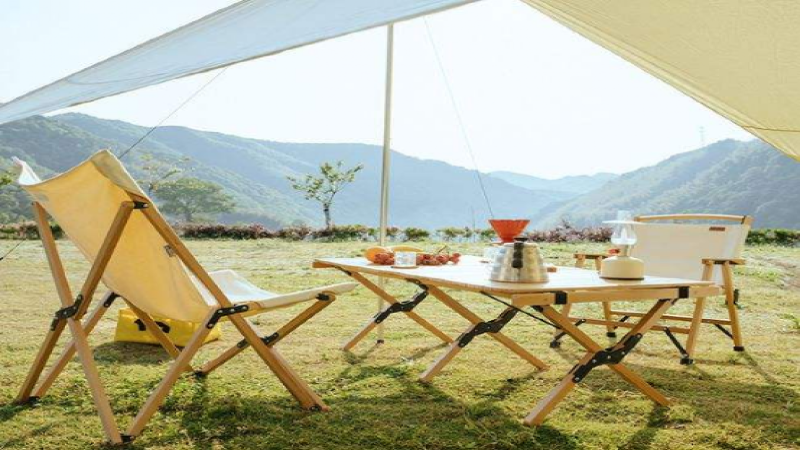
Camping coffee has become a fixture of summer social media, with over 220,000 related posts on Xiaohongshu. The appeal is simple: brew a cup outdoors and share the moment. But the trend brings leftover garbage and open-flame hazards. After the May Day holiday, camping trended for a less pleasant reason, piles of trash left behind at popular sites.
The camping and coffee pairing grew out of street coffee culture that young urban drinkers already followed, and coffee sharing photos spread it further. Early camping served nomadic herding, hunting, migration or military tasks, while modern recreational camping began with Englishman Thomas Hiram Holding, who crossed 1,200 miles of American prairie. That history helps explain today's balance between enjoyment and impact.
When the cicadas sing and summer arrives, people in the city flock to the wilderness in search of nature's solace. Camping has become popular, and camping coffee has become a hot topic on social platforms, with over 220,000 related posts on Xiaohongshu. However, behind this craze, issues such as leftover garbage and open-flame hazards have also emerged. Starting from the historical origins of camping, this article sorts out the evolution of glamping, explores the real picture behind the camping coffee phenomenon, and considers how to live in harmony with nature while enjoying it.
From the large tree with lush branches and leaves in the distance, the sound of cicadas rises and falls. This signals that the scorching summer has arrived. Dazzling sunlight, clear blue skies, soft white clouds—every symbol of summer keeps calling you, trapped in a jungle of reinforced concrete, to go to the open fields and feel the breath of nature.
Everyone on the internet knows full well that camping has become thoroughly popular. Browsing those exquisite camping coffee photos on social media, surely many of you can no longer hold back your longing and want to try it for yourselves. But most people have not noticed the real situation behind these glossy images.
Not long after the nationwide celebration of the May Day holiday ended, camping made it onto the trending list. Only this time, the reason it trended was the garbage left everywhere.
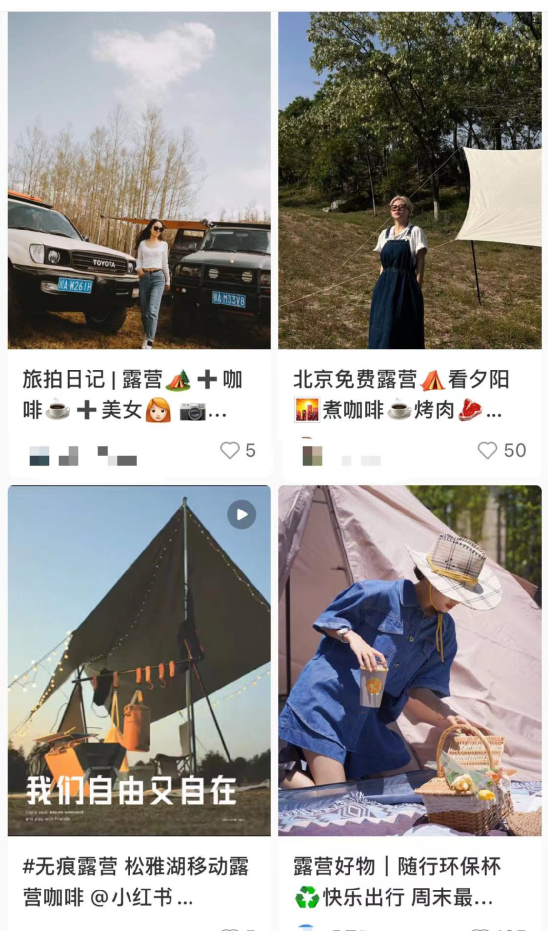
The continued heating up of the camping economy also fueled the popularity of the "camping + coffee" combination model. The distinctive street coffee culture quickly won the favor of a large number of young people. Enter "camping coffee" on the Xiaohongshu platform, and you can find as many as 220,000 related posts.
In these camping coffee shares, in almost every photo, in addition to essential camping gear, there are also brightly colored and extremely fresh ingredients, as well as models with exquisite makeup appearing in the shots.
Early camping activities served production or military purposes, such as nomadic herding, hunting, and migration in ancient human societies, or soldiers carrying out military tasks in the wild. Contemporary wild camping, by contrast, is recreational in nature.
The pioneer of recreational camping was the Englishman Thomas Hiram Holding, who once crossed 1,200 miles of American prairie with a carriage party of more than 300 people. After that, he also used canoes and bicycles as means of transport to carry out camping trips in the United States and the Scottish Highlands, and in 1908 he poured all his experience and dedication into writing and published the world's first "Campers' Handbook."
Although not everyone is capable of hardcore camping, some readily available technology and comforts are already commonplace for modern people. If you had to suddenly live deep in the mountains and cut off all entertainment, wouldn't that be asking for trouble?
Glamping is actually not a new thing that appeared only in contemporary times. As early as the 16th century, the Earl of Atholl in Scotland specially set up luxurious tents to welcome the visiting King James V and his mother, in order to host a high-standard Highland journey; by the 1920s, wealthy Americans and Britons traveled to Africa for camping safaris. Unwilling to give up comfort and luxury during their expeditions, travelers moved all the luxurious items available in the city to the campsite—from generators to folding bathtubs, from champagne to coffee, everything was there.
As time passed, glamping gradually spread across various socioeconomic classes. The progress of the times and technology has brought all kinds of conveniences to life, while also keeping more people away from the natural environment and leading them into a faster-paced life. The fast-paced lifestyle has caused psychological pressure for many people. As a result, people began looking for activities that could help them escape the city, and camping is one of them.
Unlike hardcore camping, glamping only wants to return to nature, yet never intends to give up equipment. A tent, a folding chair, a hand grinder, a generator—costing at least over a thousand and at most tens of thousands, people place orders and wait for delivery without even blinking.
Some owners of mobile coffee carts, after noticing the camping trend, immediately kept pace. Coffee Workshop reported in early April that the camping coffee business emerging beside tea plantations was very popular. As long as you buy a cup of coffee, you can feel the natural and cozy camping atmosphere. The owners of "trunk coffee" seized the opportunity, set out their tools in suitable locations, and made a hefty profit.

However beautiful it looks when you arrive, it is that shocking when you leave. Not long ago, at a campsite in Yangjiang, Guangdong, tourists left a large amount of garbage after camping on Windmill Mountain. A volunteer exposed it in a post on an online platform, and the tourists later responded that because the weather changed suddenly, they planned to come back to clean it up on a rest day.
In many camping coffee sharing posts, you can see open flames or equipment that can produce open flames. After all, without fire, where would the camping atmosphere come from? The combination of open flames and camping also means that fire safety hazards objectively exist.
In December 2017, a camping enthusiast set up a shelter and lit a fire to cook noodles on a mountainside flat near the tail of Tangbaoshi Reservoir in Fenghuang Mountain, Zhuhai, which subsequently caused a fire. For this bowl of noodles, the person compensated more than 4.7 million yuan. Among camping coffee enthusiasts, how many could afford a cup of coffee worth more than 4 million?
On online platforms, you can also see some quite terrible camping behaviors, such as leaving garbage all over the ground for the next person who rents the campsite tent to clean up the mess.
Camping gives everyone a chance to get close to nature again and lets people temporarily stay away from the noise of the city. Then, while enjoying it, everyone should also avoid disturbing nature. Living in peace with nature and ultimately healing the soul as well—isn't that a beautiful thing?
Image source: Weibo, Xiaohongshu, internet
For more coffee bean information, please follow Coffee Workshop (WeChat public account cafe_style) For professional coffee knowledge exchange, please add WeChat ID kaixinguoguo0925
The above content is compiled by CoffeeHunters, a coffee news website.


