







How Do Gesha Village Geisha Lots Differ?
Gesha Village Coffee Estate sits on Ethiopia's southwestern edge near Sudan, spanning 1,909 to 2,063 meters, and plants Gesha 1931. The coffee shows jasmine and pale red rose aromas with strawberry, ripe watermelon, and apple sweetness plus a soft spice finish. The estate grades its geisha coffee into Gold, Red, and Green Label plus Chaka, following the Panamanian model.
Gold Label accounts for only about 10% of annual production and sits close to auction-lot quality, so competitors often choose it; a champion lot scored an average of 90.96 in cupping this year. Gesha Village cupped more than 2,500 samples for its auction, and expert Willem Boot noted stronger, clearer flavors. The article adds pour-over parameters for the Gold Label.
Located on the southwestern edge of Ethiopia, bordering Sudan, Gesha Village Coffee Estate is named after the local nomadic Surma people, spans an elevation of 1,909 to 2,063 meters, and its main variety is Gesha 1931. The coffee produced here is known for its delicate aromas of jasmine and pale red roses, accompanied by sweetness of strawberry, ripe watermelon, and apple, along with a refined and soft spice finish. Drawing on the Panamanian business model, the estate classifies its Geisha into different grades such as Gold Label, Red Label, Green Label, and Chaka. This article will go through the flavor characteristics and product information of each grade one by one, and also include Front Street's complete pour-over recommendations for the Gold Label Geisha, including dripper, water temperature, coffee-to-water ratio, and three-stage pouring details, for coffee lovers' reference.
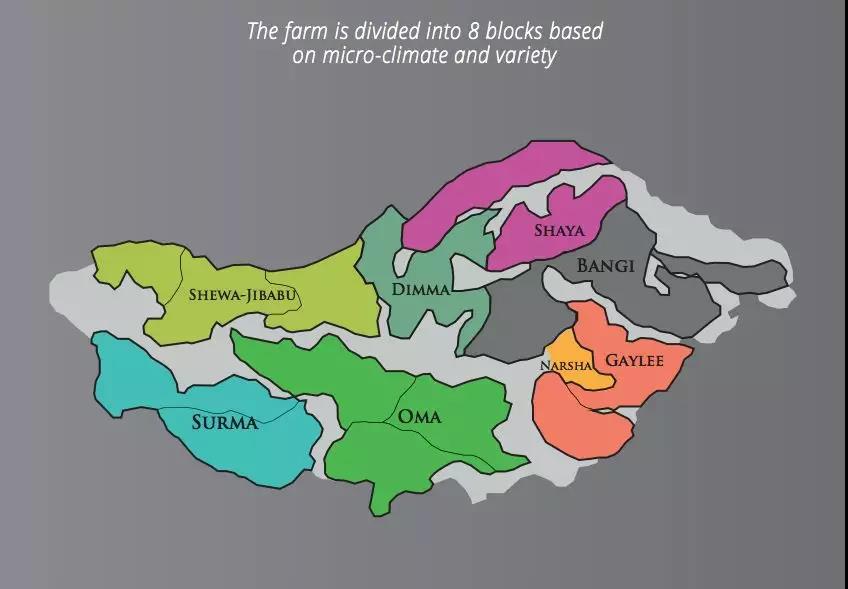
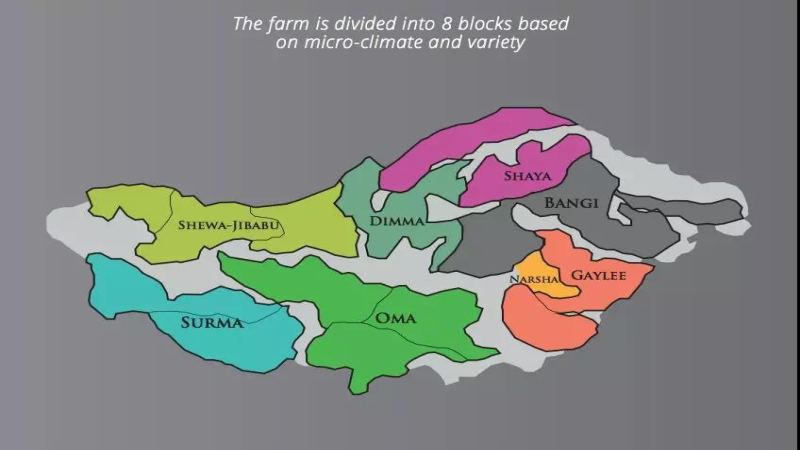
The Surma block features the canyon scenery shown in the image. This area is located on the southwestern edge of Ethiopia, not far from the Sudanese border, and its name comes from the local nomadic ethnic minority. Its elevation ranges from 1,909 to 2,063 meters, with a planting area of 46 hectares. The only variety planted locally in Surma is Gesha 1931, and its flavor profile is delicate, with aromas of perfume, jasmine, and pale red roses, as well as notes of strawberry, ripe watermelon, and apple, mixed with a soft and refined spice character. The champion lot we scored had an average cupping score of 90.96!
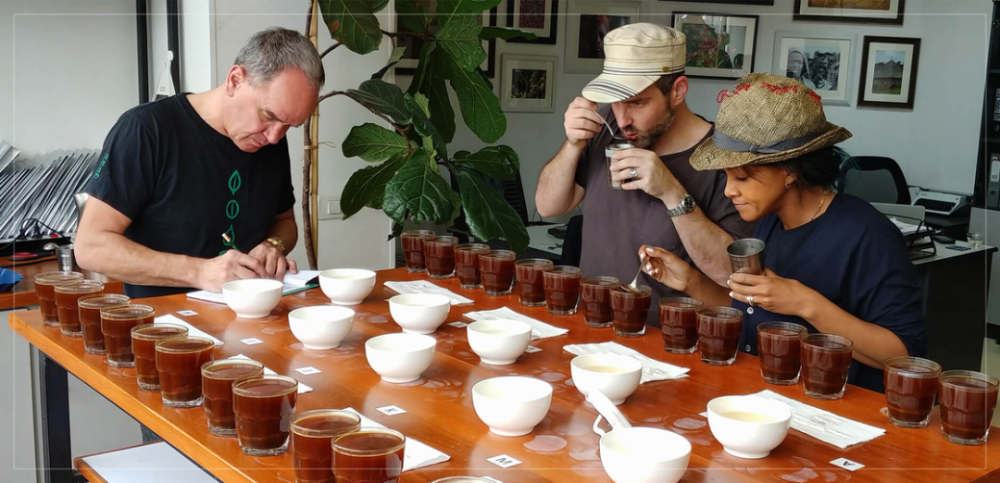
This year's auction coffees are even better in quality than previous years, and production has nearly doubled: part of this is thanks to the ideal dry weather in the later stages of coffee processing, which was especially beneficial for natural beans; more importantly, the Gesha Village family is thriving, and everyone is full of drive. The expert Willem Boot said that this year's auction lots have stronger and clearer flavors, selected after cupping more than 2,500 samples, and we have every reason to trust his judgment.
Gesha Village Coffee Estate drew on the Panamanian business model, so it uses different grades to classify its Geisha coffee:
Gold Label lot: Gold Label accounts for only 10% of Gesha Village's annual production and can almost be said to be at the same level as the auction lots. Competitors around the world usually choose this lot; for example, at the 2018 WBC World Championship held in the Netherlands, the Australian and Japanese champions chose Gold Label lots for competition. Roasters with high quality standards also purchase it. This lot has full traceability, and each batch has outstanding flavor and high complexity, making it the estate's finest grade after the auction lots. The Gesha Village Gold Label that Front Street obtained this time comes from Oma lot 059.
Front Street Gesha Village Coffee Estate Gold Label Geisha Coffee Beans
Region: Bench Maji, Ethiopia Estate: Gesha Village Coffee Estate, Oma Block Elevation: 1,900-2,040 meters Variety: Gesha 1931 Processing Method: Natural Flavor: Citrus, lemon, tropical fruit, cream, nuts, tea-like SCA
Red Label lot: This lot accounts for 15% of Gesha Village Coffee Estate's total production and also has full traceability. Its cupping score must meet the 88-point standard under the SCA scoring system, and it has the typical Gesha Village flavor. Its flavor intensity and complexity are slightly weaker than the Gold Label lot, making it a very cost-effective single-origin lot.
Front Street Gesha Village Coffee Estate Red Label Geisha Coffee Beans
Region: Bench Maji, Ethiopia Estate: Gesha Village Coffee Estate Elevation: 1,909-2,069 meters Variety: Gori Gesha Processing Method: Natural Flavor: Coconut, licorice, cream, chocolate, toffee, citrus, almond, strawberry
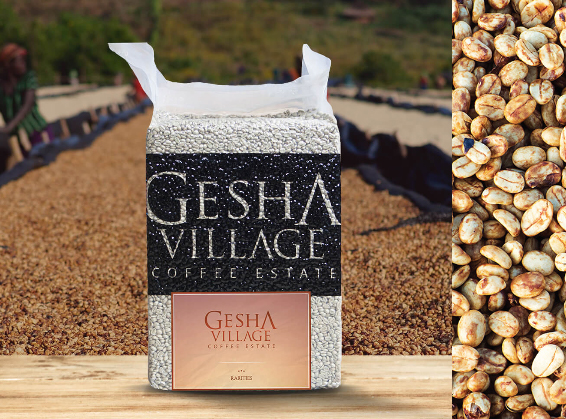
Green Label lot: Its official name is SINGLE-TERROIR (single terroir/block). These coffee beans come from a single farm in Gesha Village. In the Single-Terroir series, complete traceability information can be found for each lot number, including farm name, coffee variety, and processing date. Front Street Coffee has not yet listed the Green Label Geisha, but it will be listed soon. Next, Front Street Coffee will also share the basic information of Gesha Village Green Label Geisha coffee beans.
Front Street Gesha Village Coffee Estate Green Label Geisha Coffee Beans
Region: Bench Maji, Ethiopia Estate: Gesha Village Coffee Estate Elevation: 1,911-2,001 meters Variety: Gori Gesha Processing Method: Natural Flavor: Citrus, cherry, berries, honey, fermented notes.
Chaka lot: This is a Geisha coffee blend produced by Gesha Village, including three varieties: Gori Gesha, Gesha 1931, and Illubabor (a native Ethiopian disease-resistant variety).
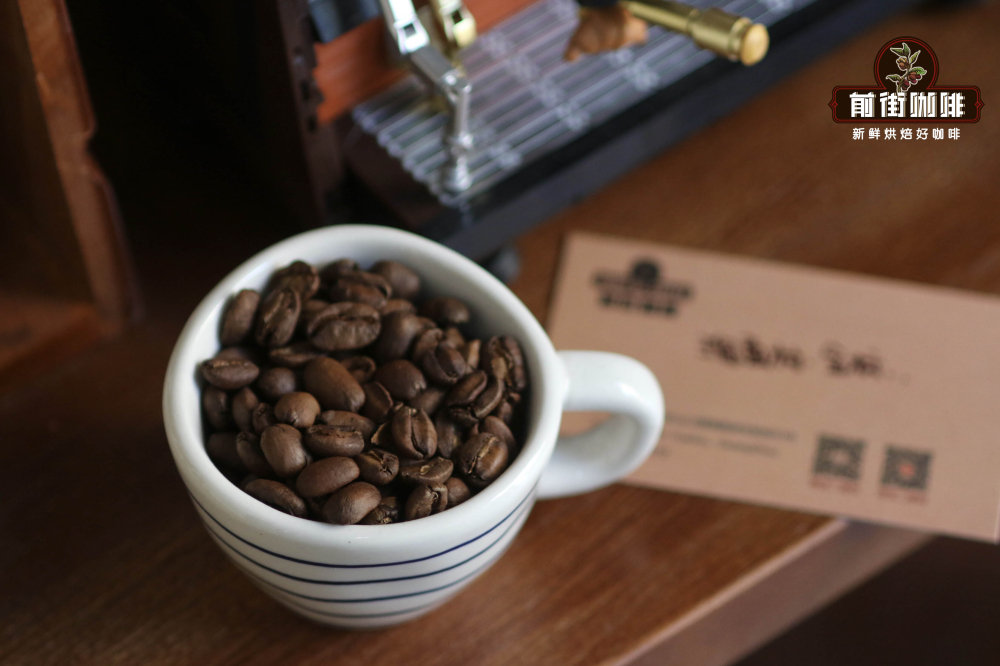
Front Street Gesha Village Coffee Estate Chaka Geisha Coffee Beans
Region: Bench Maji, Ethiopia Estate: Gesha Village Coffee Estate Elevation: 1,909-2,069 meters Variety: Gesha 1931, Gori Gesha, Illubabor
Processing Method: Natural Flavor: Citrus, grapefruit, cream, chocolate caramel
Front Street Gesha Village Gold Label Pour-Over Reference
Dripper: V60
Water temperature: 91°C
Coffee dose: 15 grams
Coffee-to-water ratio: 1:15
Grind size: 80% passing through a No. 20 standard sieve
After roasting, coffee beans need 4-7 days of degassing and resting before entering their optimal flavor period. As storage time lengthens, the coffee's aroma volatilizes more quickly, and the flavor and mouthfeel also deteriorate greatly. To ensure everyone drinks the coffee at its best, Front Street guarantees that only beans freshly roasted within 5 days are shipped. Fresh coffee beans are more conducive to extracting the excellent flavors of Yirgacheffe.
For brewing, Front Street baristas are accustomed to using a three-stage pouring method:
In the first stage, pour 30 grams of water for a 30-second bloom, then pour 95 grams (the electronic scale shows about 125 grams), finishing in about 1 minute. When the water level drops to two-thirds of the coffee bed, pour the remaining 100 grams (the electronic scale shows about 225 grams), finishing in about 1 minute 35 seconds. Dripping is completed at 2 minutes 10 seconds. Remove the dripper and the extraction is complete.
The above content is compiled by CoffeeHunters, a coffee news website.


