







Why Does 74110 Matter in Arabica Coffee Breeding?
74110 Is an Ethiopian coffee variety bred for resistance to coffee berry disease, not an heirloom selection. Ethiopia is the birthplace of arabica coffee and holds tens of thousands of native trees, most grouped under the blanket term Heirloom because large-scale genetic testing is impractical. The 74 series came out of that disease crisis in the 1970s and is named by number.
After 1970, coffee berry disease spread across Ethiopian growing regions, turning cherries gray-black and killing them on the branch, with losses near 80 percent on infected trees. Chemical fungicides used from 1972 only treated symptoms, so the Jimma Agricultural Research Center surveyed 19 sites in 1973, collected 639 seed samples by 1975, and bred 13 resistant varieties including 74110 and 74112.
Ethiopia, as the birthplace of Arabica coffee, is home to tens of thousands of native varieties, usually collectively referred to as "Heirloom." However, in recent years, numerically named varieties such as 74110 have gradually entered the public eye. Behind these numbers lies a history of disease-resistant breeding: in the 1970s, coffee berry disease ran rampant, and JARC collected and bred 13 resistant varieties, giving rise to the 74 series. This article will explain the naming logic, variety characteristics, cultivation distribution, and flavor performance of 74110, and compare its similarities and differences with 74112, helping you gain a more comprehensive understanding of this batch of numbered varieties.
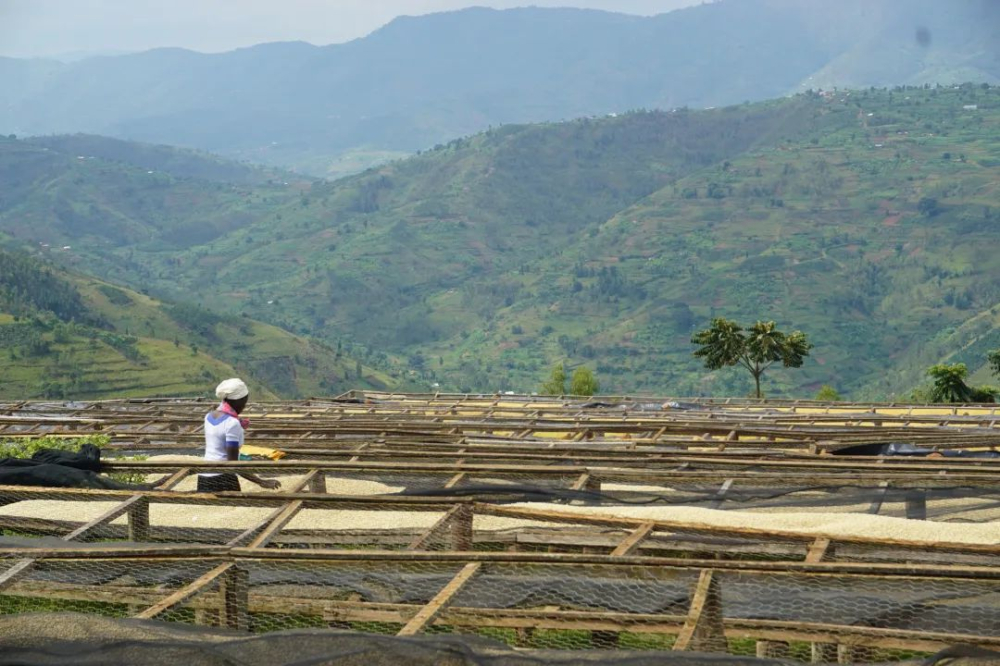
Ethiopia is the birthplace of Arabica coffee worldwide, with as many as tens of thousands of native coffee tree species within its borders. Due to the enormous number of varieties, coffee farmers often rely on long-accumulated experience to identify and confirm plants, and it is nearly impossible to conduct genetic testing and verification on them on a large scale. At the same time, in order to protect these varieties that have not yet been fully recognized and prevent practitioners from various countries from scrambling to obtain them, the local government decided to use the collective term "Heirloom" to refer to them. For example, Front Street Coffee's Yirgacheffe and Huakui are labeled as heirloom varieties.
However, in recent years, in addition to heirloom varieties, many Ethiopian coffee varieties named with numbers have appeared on the market, such as 74110.
What does 74110 mean?
After 1970, coffee berry disease (CBD) spread rapidly across major producing regions in Ethiopia. Coffee cherries infected with berry disease gradually turn from green to gray-black, eventually dying on the branches. Once a coffee tree is infected, the harvest may suffer losses of about 80%. In 1972, growers began using chemical fungicides to prevent CBD. Although certain results were achieved, merely spraying pesticides only treats the symptoms; the long-term solution is to find natural varieties with strong resistance to coffee berry disease.
In 1973, the Ethiopian coffee institution JARC (Jimma Agricultural Research Center) identified 19 collection sites in the southwestern region. By 1975, researchers had collected a total of 639 seed samples and conducted scientific identification and field trials on them, ultimately selecting 13 coffee varieties that were resistant to CBD while also being drought-tolerant, high-yielding, and excellent in flavor.
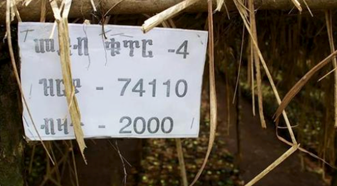
The subsequent 74*** and 75*** were improved and cultivated from this batch of mother coffee trees, and JARC recorded this category as "1974/1975 CBD-Resistant Selections." Therefore, 74 represents the year 1974, meaning the variety was cataloged in that year, and the last three digits are the experimental sample number. The well-known 74 series were all cataloged during this period.
What are the characteristics of the 74110 variety planted in Ethiopian producing regions?
Ethiopia's elevated terrain creates an excellent climate environment, belonging to a tropical rainforest climate, with abundant rainfall and lingering mist, plus an extremely high altitude of about two thousand meters forming significant temperature differences, providing uniquely favorable growing conditions for coffee trees. Coffee cultivation in Ethiopia is mainly concentrated in the western and southern regions, with smallholder families accounting for 90% of total cultivation, and nearly 1.2 million smallholder families making a living from coffee cultivation. The local coffee production systems are divided into four types: forest coffee, semi-forest coffee, garden coffee, and large plantations, among which garden coffee is the most common, with each household cultivating no less than 4 hectares.
Because the coffee produced by smallholders is relatively small in volume, there are coffee cooperatives and processing plants of various sizes locally, mainly responsible for processing the green coffee beans in that region. Farmers deliver their harvested coffee beans to nearby processing plants established close to water sources for unified processing, and subsequently sell them under the name of the processing plant. The Yirgacheffe producing region is one of them.
Both 74110 and 74112 are short tree varieties with small beans, but 110 has broad leaves while 112 has small leaves, so the planting spacing differs somewhat. They are mainly grown in the Sidama and Guji producing regions. In terms of flavor, lightly roasted 74110 and 74112 both present typical citrus acidity and light floral aromas, and they are currently the two most commonly seen 74 series among Ethiopian beans sold on the market.
For professional coffee knowledge exchange and more coffee bean information, please follow Coffee Workshop (WeChat public account: cafe_style).
For more specialty coffee beans, please add the private WeChat of Front Street Coffee (FrontStreet Coffee), WeChat ID: qjcoffeex
The above content is compiled by CoffeeHunters, a coffee news website.


