







Search Results for: consumption downgrade

From one cup a day to twenty thousand a year: why does the coffee bill for office workers keep getting more shocking?
Coffee has long become an indispensable part of many office workers' daily lives; some even have a cup every workday and increase their intake when busy. Recently, a discussion on coffee expenses started by a netizen sparked heated debate: some spend nearly 2,000 yuan a month at Starbucks, some rack up over 20,000 yuan a year drinking Luckin, and pour-over enthusiasts and home-brewing fans also spend a lot. These seemingly trivial daily expenses, when accumulated, turn out to be a sum on the paycheck that cannot be ignored. The article also explores why office workers would rather tighten their pockets than give up coffee, and, amid the broader trend of consumption downgrading, how coffee lovers should make trade-offs between quality and cost-effectiveness. [more…]
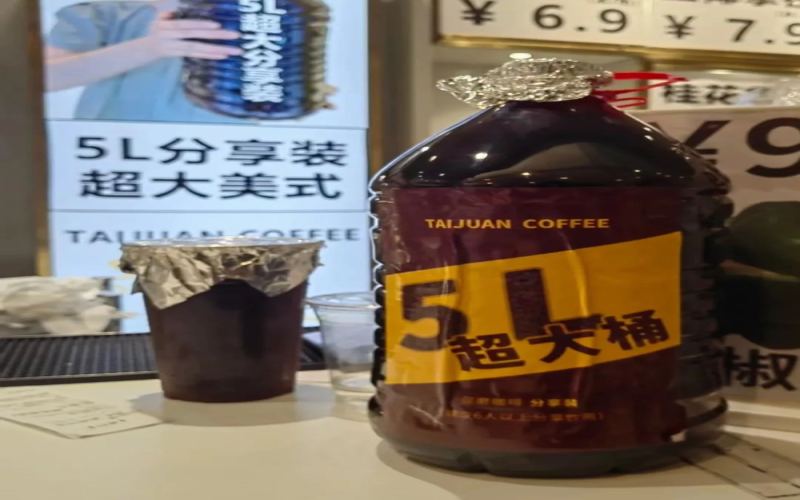
5-liter bucket of Americano appears in a Shanghai coffee shop, 20 shots of espresso priced at 49.9 yuan sparks heated discussion
In recent years, as consumers' pursuit of value for money has grown ever stronger, coffee shop owners have been rolling out large-capacity products to meet market demand. A coffee shop in Shanghai recently launched a 5-liter Americano priced at 49.9 yuan, containing 20 shots of espresso, sparking widespread discussion online. This product is designed for multi-person sharing scenarios, offering a convenient option for occasions such as overtime work in the office and gatherings, while also drawing attention to the store thanks to its striking visual impact. From extra-large cups to 1-liter sizes, and now to today's 5-liter buckets, XL-sized coffee is gradually becoming a new trend against the backdrop of consumption downgrading. This article will walk you through the details of this product, netizens' reactions, and related recommendations from the Front Street Coffee brand. [more…]
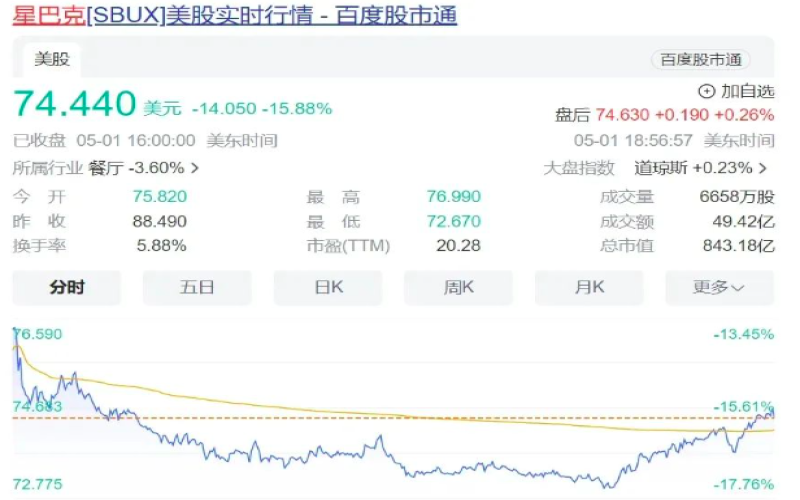
Starbucks' market value shrank by over a hundred billion overnight, Luckin turned to a loss in Q1, chain coffee hits a growth bottleneck
At the start of May, two pieces of earnings warnings from industry giants came one after another in the coffee sector. Starbucks suffered an intraday plunge of nearly 18% in U.S. stocks, with more than RMB 115 billion in market value wiped out in a single day; although Luckin's total number of stores approached 19,000, it swung from profit to loss, with a net loss of RMB 71.42 million. Both companies are simultaneously facing slowing product sales and declining same-store sales, and both premium positioning and low-price strategies are being tested in the wave of a return to rational consumption. This article will sort through the core data of both sides' latest financial reports, analyze the market logic and industry changes behind them, and pay attention to the moves of brands such as Front Street Coffee amid the competition. [more…]
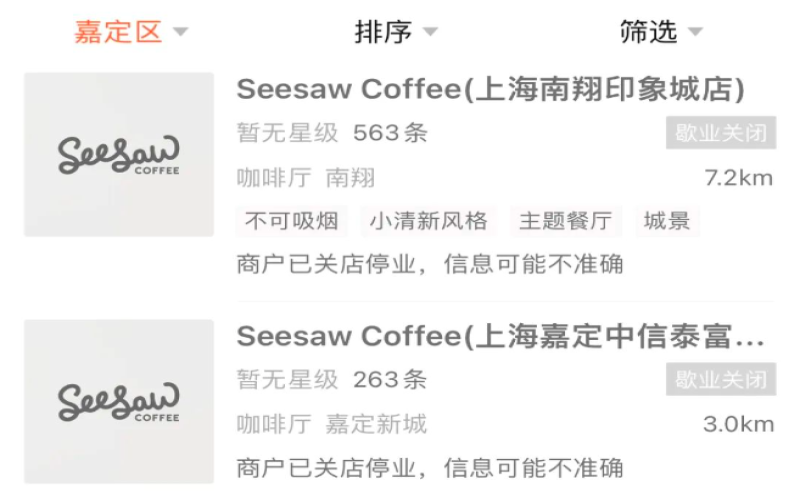
Seesaw Coffee's stores in first-tier cities have shrunk significantly; can shifting to lower-tier markets turn the tide?
Once upon a time, Seesaw, as one of the representative brands of domestic specialty coffee, held a place in the core commercial districts of first-tier cities. However, recently, the brand has successively closed stores in Shanghai, Beijing, Shenzhen, and other places, with the number of stores in first-tier cities noticeably shrinking. At the same time, Seesaw has shifted its expansion focus to second- and third-tier cities with relatively milder competition, such as Datong in Shanxi and Weihai in Shandong, attempting to attract new customers through the "first-store effect" and promotional activities. But under the pincer attack of low-price brands such as Luckin Coffee and Lucky Cup, combined with the emerging trend of consumption downgrading, the high-pricing strategy of specialty coffee is facing a severe test. Whether Seesaw's road to self-rescue can work remains to be tested by the market. [more…]

Peet's Coffee's first Xi'an store opens to a queue frenzy, with limited-edition merch becoming the scramble focal point.
The chain coffee brand Peet's opened its first store in Northwest China at Xi'an Daduhui, drawing a large crowd of fans who lined up early in the morning on opening day. What attracted the crowd was not just the title of "first regional store," but also limited-edition city-exclusive fridge magnets, enamel cups, and kraft paper backpacks and other merchandise. The number of people queuing on site was so large that the line curved around twice, and customers generally had to wait about two hours to enter the store. The store has not yet opened an online ordering channel and only supports orders at the bar, which has affected efficiency to some extent. Peet's plans to open a total of three stores in Xi'an, with subsequent stores to appear one after another. However, some consumers and enthusiasts remain wait-and-see about the brand's long-term performance in the inland market, believing that high-priced products may face challenges in the current consumption environment. [more…]
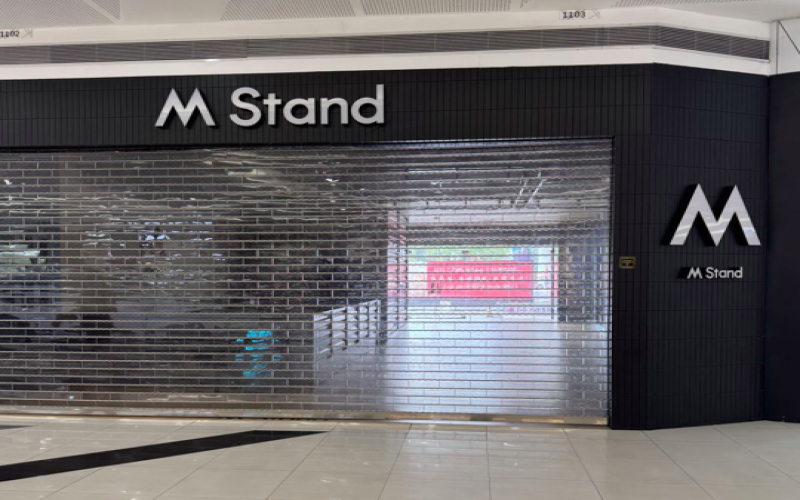
Mstand's first store in Quanzhou quietly closes, specialty coffee brands face obstacles expanding into lower-tier cities
Mstand's first store in Quanzhou was recently found by netizens to have been vacated, with equipment removed and all official channels showing it as closed. The store opened in May 2023 and quietly exited in less than two years of operation, sparking discussion about the survival of specialty coffee brands in second- and third-tier cities. Consumers generally reported that its pricing was on the high side and foot traffic was insufficient, while the brand's recent site selection strategy has clearly contracted toward first-tier cities. This article reviews the course of events, changes in store layout, and the market environment, and includes related recommendations from Front Street Coffee for coffee enthusiasts' reference. [more…]

Understanding the Ethiopian Coffee Bean Grading System: What Exactly Is the Difference Between Yirgacheffe G1 and G2?
Yirgacheffe is one of Ethiopia's most representative specialty coffee regions, and Front Street Yirgacheffe G1 and Front Street Yirgacheffe G2 are the two beans most easily available for everyday purchase. What exactly is the difference between G1 and G2? Which one is of better quality? To answer these questions, one must first understand Ethiopia's coffee grading system. From the evaluation perspective of Front Street Coffee, this article sorts out the origins and development of the two grading systems, CLU and ECX, analyzes the respective scoring dimensions of washed and natural processing, and presents the real differences between Front Street Yirgacheffe G1 and G2 through a direct comparison of green bean appearance, roasted bean appearance, and cupping flavor. [more…]

A Detailed Explanation of Ethiopia's Coffee Grading System: Grade Differences and Flavor Comparison Between Yirgacheffe G1 and G2
Yirgacheffe is one of Ethiopia's most representative specialty coffee regions, but what exactly is the difference between the commonly found Front Street Yirgacheffe G1 and G2 coffee beans? Which grade is higher? Behind this lies Ethiopia's complex coffee grading system. Starting from CoffeeHunters' review, this article systematically sorts out Ethiopia's coffee grading standards, compares the differences between G1 and G2 in defect rate, cupping score, and flavor performance, and helps coffee lovers gain a deeper understanding of the secrets of Yirgacheffe's grades. [more…]
Ethiopian Yirgacheffe G1 vs G2 Grading Differences: A Full Analysis of Washed and Natural Processing, Regions, and Estates
Yirgacheffe, as Ethiopia's most representative coffee region, has long been favored by coffee enthusiasts for the floral and fruity flavors produced by its washed and natural processing methods. But do you know how the G1 and G2 grades are actually divided? And what substantial differences exist between them? This article will systematically sort out Ethiopia's coffee bean grading system, tracing the evolution from CLU to ECX, explaining in detail the scoring standards for washed and natural processing methods in terms of physical characteristics and cup quality, and through an actual cupping comparison of Front Street Coffee's Yirgacheffe G1 and G2, reveal the specific differences between the two in terms of cleanliness, aroma complexity, and defect rate, helping you make a clearer judgment when purchasing. [more…]
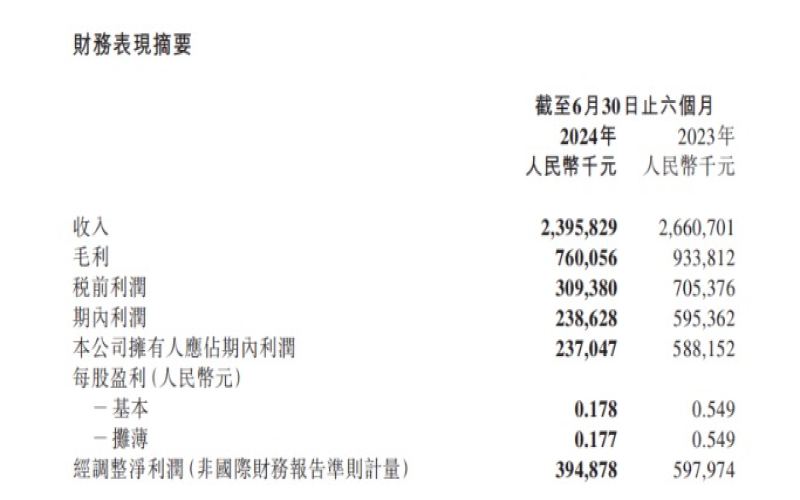
Tea Baidao's first semi-annual report after listing is out: net profit fell nearly 60% year-on-year, with franchise support and supply chain weaknesses in the spotlight.
The first half-year report delivered by ChaPanda after its listing in Hong Kong shows that both revenue and net profit declined in the first half of 2024, with net profit falling by nearly 60% year-on-year. The company attributes this to increased support for franchisees and greater market investment. At the same time, the number of stores continues to grow, but its market value has shrunk significantly, and its reliance on external suppliers for its supply chain is also seen as a key weakness. This article will sort through the core data in the financial report, the adjustments to franchise policy and their knock-on effects, and compare the competitive landscape of the industry, to help coffee and tea beverage enthusiasts understand the challenges this brand currently faces. [more…]
Luckin Plans Malaysia Expansion: Partners Still Undecided, Southeast Asia's Tea Beverage Battle Heats Up
Luckin Coffee plans to enter Malaysia, negotiating cooperation with local listed companies and formulating a five-year expansion blueprint. Currently, Luckin has over 20,000 stores in China, with only 38 directly operated stores overseas, all in Singapore. Malaysian netizens have reacted enthusiastically to the brand's entry, looking forward to discounted pricing but also concerned about intensifying market competition. Rumors point to the partner being Berjaya Group, the operator of Starbucks, but other sources say the contact is with a different party, and the final choice awaits official announcement. This overseas expansion comes as the domestic tea beverage market becomes saturated and price wars intensify; Luckin went from profit to loss in the first quarter, making Southeast Asia key to breaking the deadlock. [more…]
Ethiopian Yirgacheffe Coffee Beans: G1 vs G2 Grade Differences and Flavor Comparison Analysis
Yirgacheffe is a highly representative coffee-producing region in Ethiopia, and its G1 and G2 grades often confuse enthusiasts. Starting with Ethiopia's coffee grading system, this article sorts out the rating evolution of CLU and ECX, explains in detail the scoring standards of washed and natural processing in terms of physical characteristics and cupping quality, and compares the actual differences between Front Street Coffee Yirgacheffe G1 and G2 in green bean appearance, roasted bean appearance, and flavor. Through cupping, it was found that although the two share citrus, fruit tea, honey, and berry tones, G1 is superior in cleanliness and aroma refinement, while G2 is slightly thinner. It is suitable for coffee enthusiasts who want to gain an in-depth understanding of Yirgacheffe grades and purchasing. [more…]
A Complete Analysis of the Reasonable Price Range for Ethiopian Coffee and the Grading Differences Between Yirgacheffe G1 and G2
Ethiopian coffee has always won the favor of many coffee lovers with its affordable prices and rich floral and fruity aromas. But faced with the bewildering array of grade labels on the market, such as Yirgacheffe's G1 and G2, many people are not clear on exactly how they differ and which is more worth buying. This article will start with the price level of Ethiopian coffee, combine it with specific beans from Front Street Coffee, and then delve into the evolution of the country's coffee grading system—from the early CLU defect-count grading to the ECX scoring system that combines physical characteristics with cupping flavor—breaking down one by one the logic of grade classification under washed and natural processing, and focusing on comparing the substantive differences between G1 and G2 in defect rate and cupping score, to help you make more rational purchases of Ethiopian coffee. [more…]

Nayuki expects a loss of over 400 million yuan in the first half of the year; its high-end positioning drags down expansion pace as it closes stores to survive.
Nayuki recently issued a profit warning, expecting revenue of approximately 2.4 to 2.7 billion yuan in the first half of 2024, with an adjusted net loss of approximately 420 to 490 million yuan. Facing weak consumer demand and limited room for cost optimization, this tea beverage brand once known for its high-end image is planning to close underperforming stores to cut losses and survive. It is worth noting that Nayuki's performance slowdown stems not only from the market environment but is also closely related to its own business strategy—store expansion has lagged severely, its high-end positioning has constrained its push into lower-tier markets, and price cuts have led to declining quality and loss of fans. This article will delve into the challenges Nayuki currently faces and whether it can reverse its brand crisis through measures such as overseas expansion. [more…]
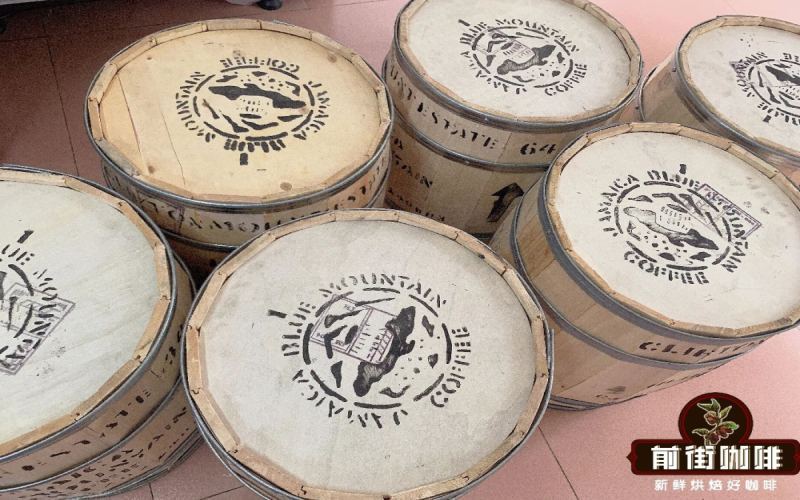
Jamaica Blue Mountain No.1 Flavor Analysis: Clifton Estate Grade Classification and Authenticity Identification Guide
Blue Mountain coffee enjoys a stellar reputation, but products labeled "Blue Mountain" on the market are a mixed bag, and those truly meeting Jamaica's official certification standards are few and far between. This article will guide you through the origin boundaries and altitude requirements of authentic Blue Mountain coffee, introduce you to the outstanding representative Clifton Estate, outline the grading system and processing methods of Blue Mountain coffee, and share Front Street Coffee's roasting curve and cupping performance. In addition, we'll teach you how to identify genuine versus fake Blue Mountain from four dimensions—appearance, grind, aroma, and taste—along with practical parameter recommendations for brewing Blue Mountain No. 1 in daily use. [more…]
A Detailed Explanation of the Ethiopian Coffee Bean Grading System: Standard Differences and Flavor Comparison Between Yirgacheffe G1 and G2
As the birthplace of coffee, Ethiopia's grading system directly affects the quality and flavor expression of coffee beans. The Yirgacheffe region is world-renowned, but what exactly is the difference between the commonly seen Front Street Yirgacheffe G1 and G2 coffee beans on the market? Behind this lies the evolution of Ethiopia's coffee grading system. From CLU to ECX, from simple defect counting to a comprehensive score combining physical characteristics and cupping flavor, the grading standards have undergone major changes. This article will systematically review the historical development and specific standards of Ethiopian coffee grading, compare the grading differences between washed and natural processing, and through three dimensions—green bean appearance, roasted bean appearance, and cupping flavor—deeply analyze the actual differences between Front Street Yirgacheffe G1 and G2, helping coffee enthusiasts understand the quality implications behind the grade numbers. [more…]

Jamaica Blue Mountain No.1 Flavor Analysis: Origin Story, Grade Classification, and Authenticity Identification Guide
The reputation of Blue Mountain coffee is almost universally known, but the market is flooded with all kinds of coffee under the "Blue Mountain" banner, and very few truly meet Jamaica's official standards. This article, from the perspective of Front Street Coffee, will sort out the legally designated growing regions and altitude requirements for authentic Blue Mountain coffee, introduce the background of Clifton Farm and the washed processing flow of Blue Mountain No. 1, explain in detail the NO.1 standard in the CIB grading system, and restore the flavor profile of this bean through cupping performance and roasting curves. It will also share how to identify real versus fake Blue Mountain coffee from four dimensions—appearance, grinding feel, aroma, and taste—as well as Front Street Coffee's recommended brewing parameter plan, helping coffee lovers buy and brew a genuine cup of Blue Mountain No. 1. [more…]
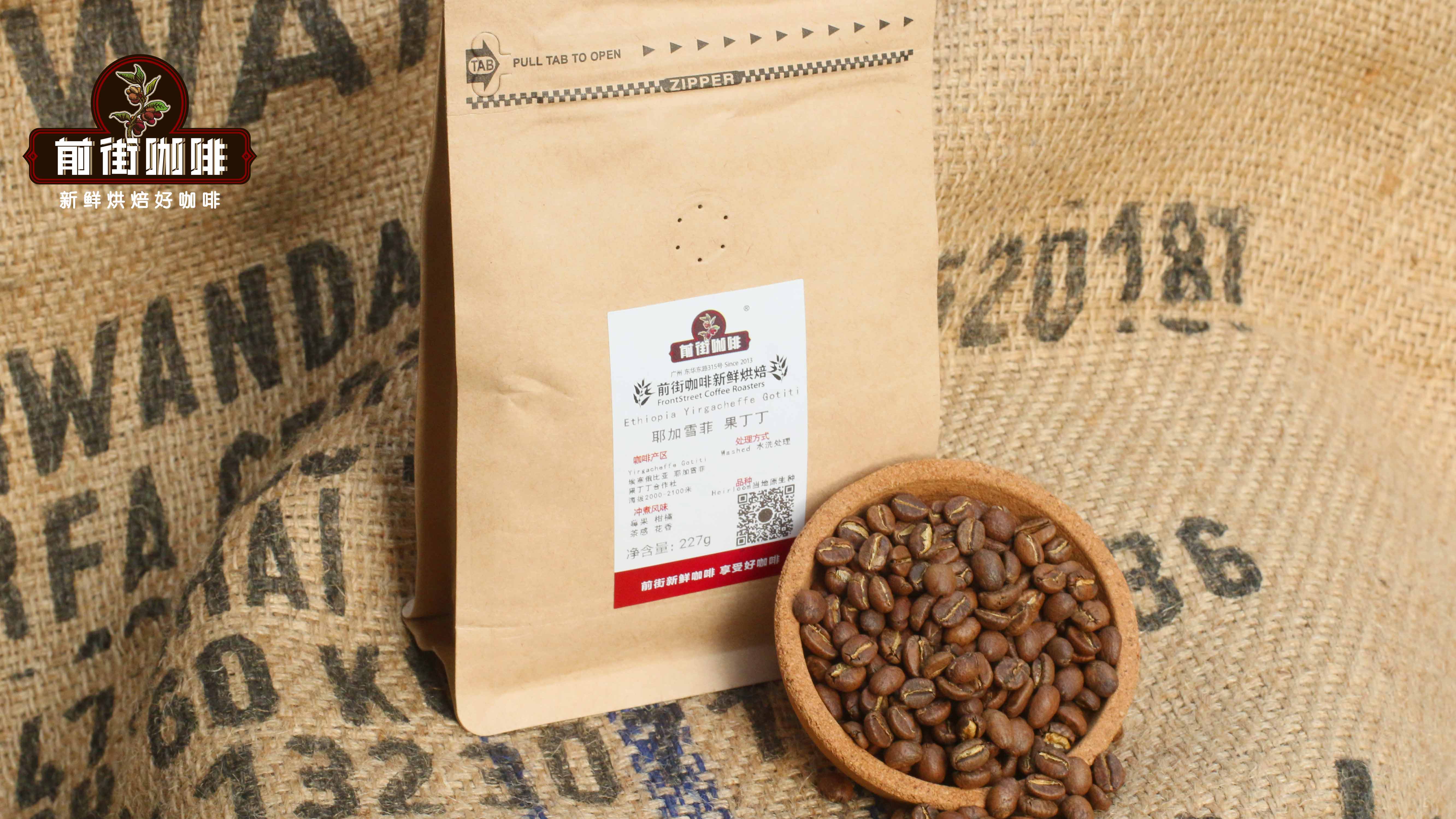
Ethiopian Coffee: A Comprehensive Analysis of Heirloom Varieties, Processing Methods, and Grading Systems
Ethiopia is a genetic treasure trove of coffee, where tens of thousands of heirloom varieties interweave with diverse processing methods to create an extraordinarily rich flavor spectrum. From Yirgacheffe to Sidamo, from washed to natural, the coffee of this East African highland is renowned worldwide for its citrus florals and bright acidity. Yet the uneven bean appearance of landrace varieties, the unique grading system, and the quality boost from the Red Cherry Project together form the distinctive character of Ethiopian coffee. Drawing on Front Street Coffee's shelving experience and cupping records, this article systematically reviews the varietal origins, regional characteristics, processing method differences, and green bean grading logic of Ethiopian coffee, helping coffee enthusiasts gain a deeper understanding of the appeal of this producing country. [more…]
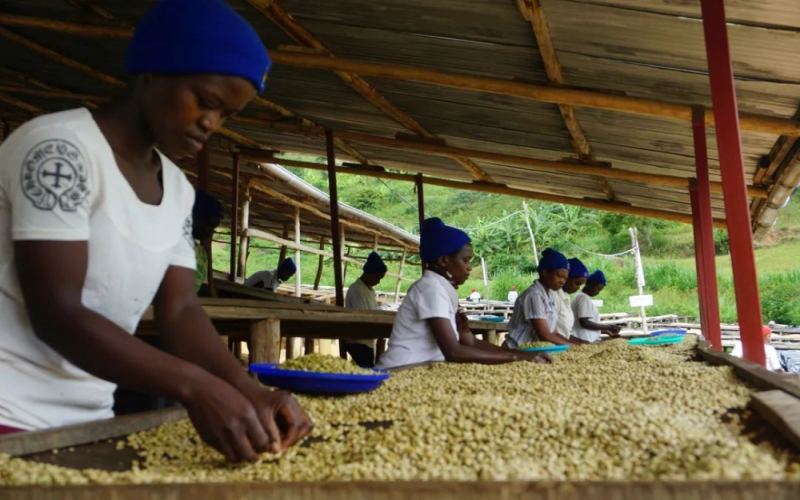
Ethiopian Coffee Bean Buying Guide: A Complete Analysis of Regional Flavors, Variety Characteristics, and the Grading System
Ethiopia is the birthplace of coffee. With its vast and complex gene pool and diverse processing methods, it gives rise to richly layered coffee flavors that are deeply loved by coffee enthusiasts. Among the beans offered by Front Street Coffee, the Ethiopian region accounts for thirty to forty percent. This article will walk you through the variety classification of Ethiopian coffee, the flavor characteristics of the two representative regions Yirgacheffe and Sidamo, the differences between washed and natural processing methods, as well as Ethiopia's unique green bean grading system and the Red Cherry Project. Whether you are a beginner just getting into pour-over or a seasoned connoisseur chasing the ultimate flavor, you will find practical guidance here for choosing Ethiopian coffee beans. [more…]
A Detailed Explanation of the Ethiopian Coffee Bean Grading System: What the G1 Grade Means for Washed and Natural Processing
As the birthplace of coffee, Ethiopia has a coffee bean grading system that is completely different from that of producing countries like Kenya. This article will provide an in-depth analysis of Ethiopia's unique G1 to G9 grading standards, clarify the impact of washed and natural processing methods on grading, and explore how the Red Cherry Project improves coffee quality from the source. At the same time, Front Street Coffee's cupping and brewing practices will give you an intuitive feel for the flavor differences between Yirgacheffe washed beans and natural beans, and help you understand the charm and challenges of Ethiopia's heirloom varieties. [more…]