








How does Ethiopia's coffee grading system separate G1 from G2?
Ethiopia's coffee grading system began with the CLU, which set export grade standards before the ECX existed. Washed coffee was split into G1 and G2, while natural coffee could only reach G3. After the ECX was formed, the washed names stayed the same and natural coffee gained a G1 grade, so natural G1 and G2 now appear on shelves and G3 is fading.
The older method judged grade only by the number of defective beans, giving washed beans a top of G1 and natural beans a top of G3. Cupping then evaluates flavor. Yirgacheffe is one of the most recognized regions, and the real differences between G1 and G2 show up in green bean appearance, roasted bean appearance and the cup itself.
Yirgacheffe is one of Ethiopia's most representative specialty coffee regions, and Front Street Yirgacheffe G1 and Front Street Yirgacheffe G2 are the two beans most easily purchased in daily life. What exactly is the difference between G1 and G2? Which one is of better quality? To answer these questions, one must first understand Ethiopia's coffee grading system. From the evaluation perspective of Front Street Coffee, this article traces the origins and development of the two grading systems, CLU and ECX, analyzes the scoring dimensions of washed and natural processing respectively, and presents the real differences between Front Street Yirgacheffe G1 and G2 through direct comparisons of green bean appearance, roasted bean appearance, and cup profile.
When it comes to Ethiopian coffee, Yirgacheffe is undoubtedly one of the most well-known regions. Currently, the most commonly seen on the market are Front Street Yirgacheffe G1 coffee beans and Front Street Yirgacheffe G2 coffee beans. Many enthusiasts ask: What exactly is the difference between G1 and G2? Which one is more worth buying? To answer this question, we must start with Ethiopia's coffee grading system. This time, Front Street Coffee (FrontStreet Coffee) will conduct a practical evaluation of the flavor differences between Front Street Yirgacheffe G1 and G2.
Grading of Ethiopian Coffee Beans
Under the Ethiopian Ministry of Agriculture, there is an institution called CLU (Cupping and Liquoring Unit), whose responsibility is to approve the quality of exported coffee, including the key task of establishing grade standards. The CLU existed before the ECX. Before the ECX appeared, washed export coffee was divided into two grades, G1 and G2; natural processed export coffee was divided into G3, G4, and G5. In other words, the highest grade for natural beans at that time could only reach G3.
After the ECX was established, the grading standards were redefined. The grade names for washed processing remained unchanged, while for natural processing, the G1 grade appeared for the first time. This is precisely why natural G1 and G2 can now be seen on the market, while G3 is gradually decreasing. Ethiopia's old grading method determined grades solely based on the number of defective beans, with the highest grade for washed beans being Grade 1 (G1) and the highest grade for natural beans being Grade 3 (G3). The current grading method is formulated by the ECX, combining physical attributes and cup profile characteristics for scoring to determine the grade.
All coffee is divided into three types according to processing method, namely natural or washed:
a. Specialty (washed & unwashed): Few defects, high cup profile quality;
b. Commercial (washed & unwashed): Does not reach specialty level, but quality is higher than domestic consumption grade;
c. Local / Domestic (washed & unwashed): Coffee with more defective beans (unripe beans), or poor flavor due to being out of season or improper storage.
Among these, Specialty and Commercial are aimed at the international export market, while Local is sold to the domestic consumption market.

The specific grading and scoring standards of the ECX are as follows:
A. Scoring definitions for washed processing method
1. Physical characteristics account for 40%: defect count (20%), appearance and size (10%), color (5%), odor (5%)
2. Cup quality accounts for 60%: cleanliness (15%), acidity (15%), mouthfeel (15%), flavor characteristics (15%)
B. Scoring definitions for natural processing method
1. Physical characteristics account for 40%: defect count (30%), odor (10%)
2. Cup quality accounts for 60%: cleanliness (15%), acidity (15%), mouthfeel (15%), flavor characteristics (15%)
C. Overall summary:
1. All coffee is first divided into two categories by processing method: natural and washed;
2. Each is graded from G1 to G9, a total of 9 grades, based on physical characteristics and basic cup quality;
3. G1 to G3 are then cupped according to SCAA standards for more detailed evaluation of flavor attributes, with G1 and G2 scoring no less than 85 points classified as Q1 grade;
4. G1, G2, and G3 scoring between 80 and 85 points are classified as Q2 grade, while all G1, G2, and G3 scoring below 80 points are classified as G3 grade;
5. Q1 and Q2 belong to Specialty Grade export. G4 to G9 maintain their original grading and, together with G3, are classified under Commercial Grade export.
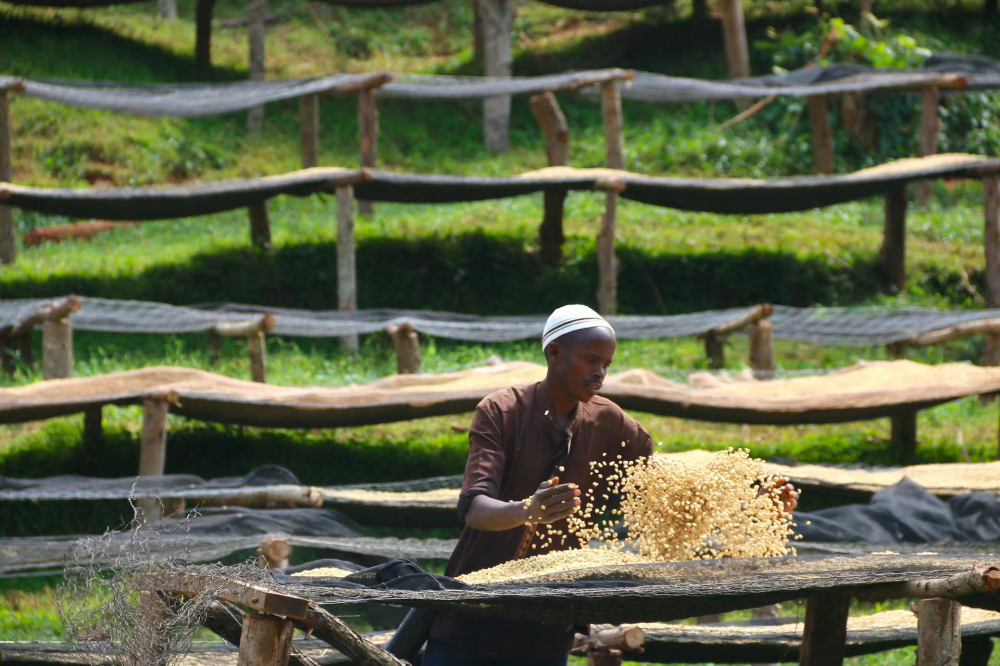
The standard for washed beans Grade 1 is 0 to 3 defective beans per 300 grams of green beans; Grade 2 is 4 to 12 defective beans per 300 grams. Of course, in actual trading, buyers and sellers will inevitably have some discrepancy in their criteria for determining defective beans (otherwise how could so many defective beans still be picked out?), but the comparison of defect rates is still easy to distinguish. The number of defective beans in G1 is clearly lower than in G2. In other words, setting aside specific flavor and roast level, Ethiopian G1 coffee beans are of better quality and score higher than G2 coffee beans, at least in terms of defective flavors, a clear distinction can be made.
Therefore, the biggest difference between G1 and G2 currently lies in two aspects: defect rate and cupping score. G1 has a lower defect rate than G2, and its cupping score is naturally higher than G2's. However, there is now another scenario: if the defect rate has reached G1 standards but the cupping score does not reach G1 level (below 91 points), it will also be downgraded to G2 grade.
Appearance Comparison
Having understood the grading system for Yirgacheffe coffee, let's compare the differences between Yirgacheffe G1 and G2, starting with the green bean appearance of both. Whether in terms of size or shape, the appearance of G1 and G2 is very similar, except that G2 is relatively more prone to insect-damaged and other defective beans being picked out.
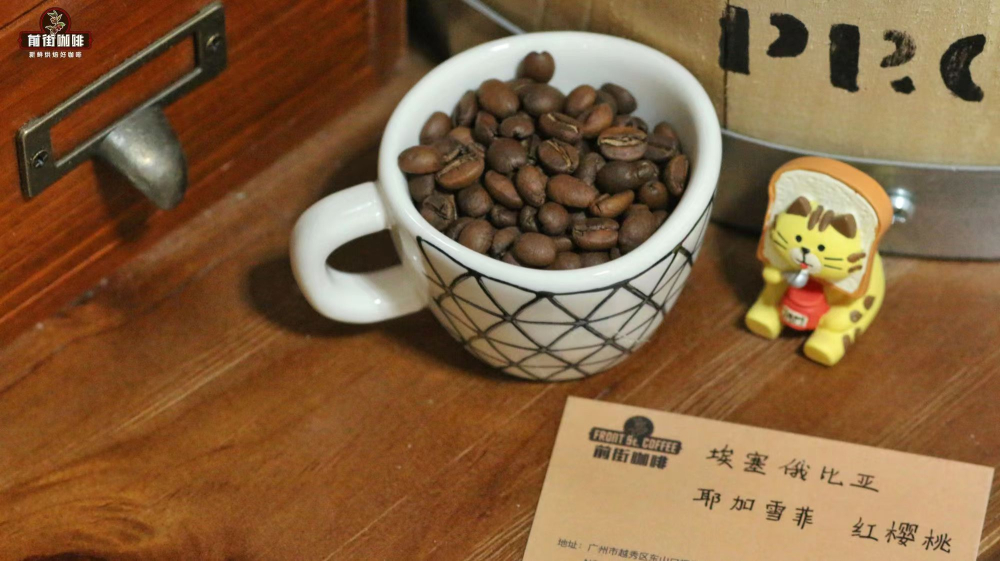
Now let's look at the roasted bean appearance of Front Street Yirgacheffe Coffee G1 and G2. In fact, no difference can be seen at all, because Front Street manually screens out defective beans both before and after roasting. Therefore, Front Street Yirgacheffe coffee, which is graded by defect rate, does not show obvious differences in appearance characteristics after roasting is completed.
Flavor Comparison
Next, a cupping comparison is conducted. By cupping these two washed Front Street Yirgacheffe G1 and G2, the following results were obtained: the common performance of Front Street Yirgacheffe Coffee G1 and G2 is citrus, fruit tea, honey, and berry flavors. The difference is that G1 has higher cleanliness and clearer recognition, while G2's taste is slightly thinner. However, since both batches are washed Front Street Yirgacheffe, and both green beans and roasted beans have undergone selection, the flavor profile gap is not large, with both presenting bright acidity and floral aromas. But through direct comparison, G1's mouthfeel is clearly cleaner than G2's, and its aroma is also more refined and richer.
The above content is compiled by CoffeeHunters, a coffee news website.


