







How Do You Verify Jamaica Blue Mountain Coffee?
Authentic Jamaica Blue Mountain coffee must be grown in St. Andrew, St. Thomas, St. Mary, or Portland at 1,000 to 1,700 meters, within roughly 6,100 hectares. Beans from those districts at 500 to 1,000 meters fall to Jamaica High Mountain, and anything below 500 meters becomes Jamaica Prime. Labels reading Blue Mountain Blend or Blue Mountain Flavor are not the certified product.
The Clifton Estate shows how grading, processing, and roasting shape the cup. Checking appearance, grind, aroma, and taste separates genuine lots from imitations, and the Jamaican coffee association framework ties the name to a defined region rather than a flavor description. Brew parameters for Blue Mountain No. 1 should follow the roast level of the lot.
Blue Mountain coffee enjoys a stellar reputation, but products labeled "Blue Mountain" on the market are a mixed bag, and those truly meeting Jamaica's official certification standards are few and far between. This article will guide you through the region definition and altitude requirements of authentic Blue Mountain coffee, offer an in-depth look at the outstanding Clifton Farm as a representative, outline the grading system and processing methods of Blue Mountain coffee, and share Front Street Coffee's roasting curve and cupping performance. In addition, we'll teach you how to identify authentic Blue Mountain from four dimensions—appearance, grinding, aroma, and taste—along with practical brewing parameters for Blue Mountain No. 1.
When it comes to drinking coffee, many people's first reaction is "I'll have a Blue Mountain." Jamaican Blue Mountain coffee, with its long history, scarce production, and immense fame, has almost become synonymous with specialty coffee—even those who rarely touch specialty coffee have surely heard its name. However, the market is flooded with labels like "Blue Mountain Coffee," "Blue Mountain Flavor Coffee," and "Blue Mountain Blend," making it hard to tell genuine from fake. Not all coffee bearing the words "Blue Mountain" comes from the authentic region, and you might unknowingly drink a counterfeit. So how exactly do you distinguish real Blue Mountain coffee? Front Street is here to take you through it.
The authentic Blue Mountain coffee region recognized by Jamaican authorities is located in four administrative districts in the eastern part of the country: St. Andrew, St. Thomas, St. Mary, and Portland. These four areas happen to cover the foothills extending from the Blue Mountain range. The growing altitude must be between 1,000 and 1,700 meters, with a total area of only about 6,100 hectares. Only coffee grown within this range and at altitudes of 1,000–1,700 meters qualifies as authentic Blue Mountain. Even if grown within the aforementioned four administrative districts, coffee at altitudes of only 500–1,000 meters must be downgraded to Jamaica High Mountain Coffee; those below 500 meters fall into the even lower category of Jamaica Prime Coffee. Moreover, the other 1.21 hectares of land outside this region have no right to use the name Blue Mountain coffee. The Jamaican government has strict regulations for Blue Mountain coffee; in fact, at most only 25% of Jamaica's coffee production meets Blue Mountain standards.
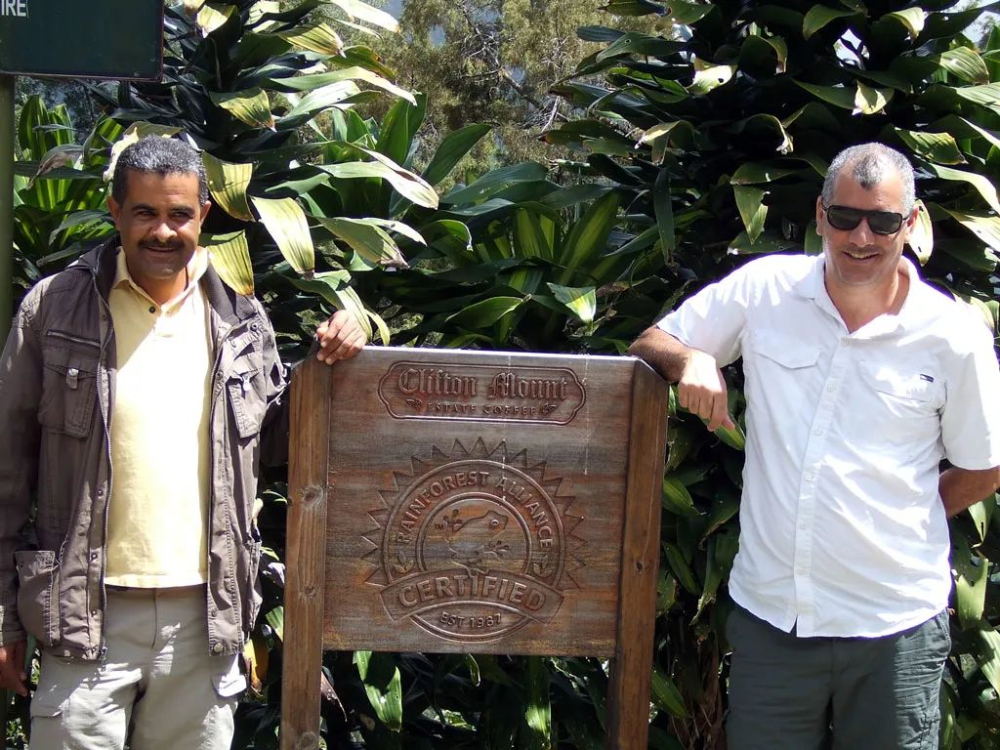
The total Blue Mountain region is only about 6,000 hectares—a very limited scale—so clearly not all coffee labeled "Blue Mountain" can come from there. Today, Clifton Farm is the largest estate in the area, but even by international standards it remains a small-scale operation; many estate owners are merely small landholders whose families have worked this land for two centuries. After repeated comparisons, FrontStreet Coffee concluded that Clifton Farm's Blue Mountain No. 1 stands out in particular, making it one of the finest representatives of Blue Mountain coffee.
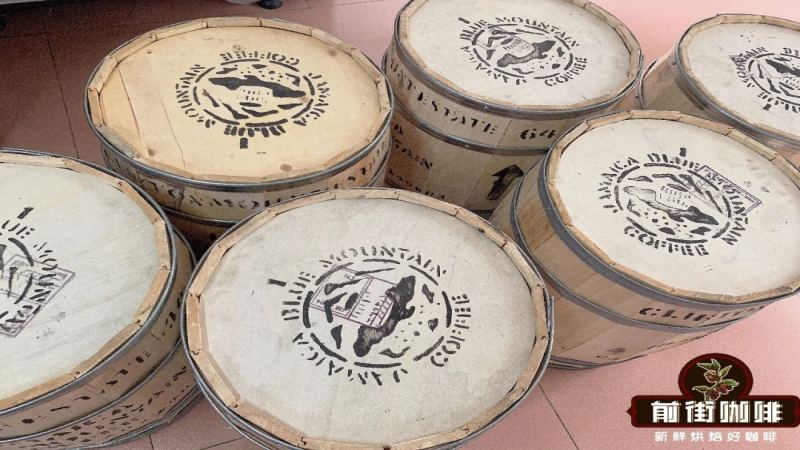
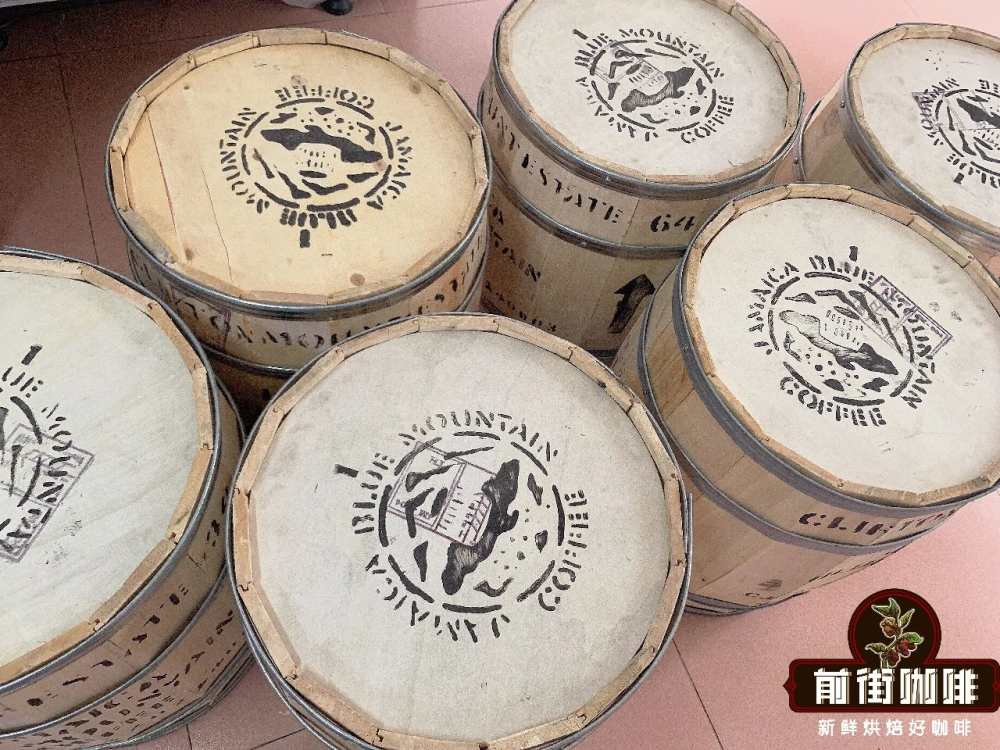
Blue Mountain coffee remains the only coffee region in the world that ships green beans in wooden barrels; other coffee exports generally use burlap sacks.
Clifton Farm
Jamaica Clifton Mount Estate
Estate owner: The Sharp family
Certification: Rainforest Alliance Certified
Location: Newcastle area
Total area: 250 acres
Coffee planting area: 180 acres
Average altitude: 4,300 feet (1,310.64 meters)
Processing method: Washed
Variety: 100% Arabica Typica
Flavor: A perfect and balanced combination of acidity, body, and aroma
Processing Method
Before this year, Blue Mountain No. 1 coffee was exclusively washed. This method uses washing and fermentation to remove the skin, pulp, and mucilage. Farms using the washed method must build washing channels and have a continuous supply of fresh water. The process is: first remove the skin and pulp, let it ferment for 12 to 18 hours, then move the fermented beans into channels and push them back and forth; relying on friction between the beans and the force of the water, the coffee beans are washed to a smooth, clean state. After washing, the beans are still wrapped in parchment and have a moisture content of about 50%, so they must be dried to reduce moisture to 12–14%, otherwise fermentation will continue and cause mold and spoilage. The beans are then sorted and stored in dedicated warehouses. All these steps must be strictly controlled; a single misstep can affect the coffee's quality.
Coffee Grading
Coffee from Jamaica's Blue Mountain region is divided into three grades: Blue Mountain Coffee, Jamaica High Mountain Supreme Coffee Beans, and Jamaica Prime Coffee Beans.
Blue Mountain Coffee and High Mountain Coffee are each further subdivided into two levels. Ranked from highest to lowest quality: Blue Mountain No. 1, Blue Mountain No. 2, High Mountain No. 1, High Mountain No. 2, Jamaica Coffee. By quality classification from top to bottom: NO.1, NO.2, NO.3, and PB, where PB stands for Peaberry. According to CIB standards, the basic requirements for NO.1 Blue Mountain green beans are: bean size of 17 screen or above, defect rate below 3%, moisture content around 13%, etc.
Here we share a record of Blue Mountain No. 1 from the 2017–2018 crop year, from ordering to customs clearance to entry and then express delivery to our FrontStreet Coffee.
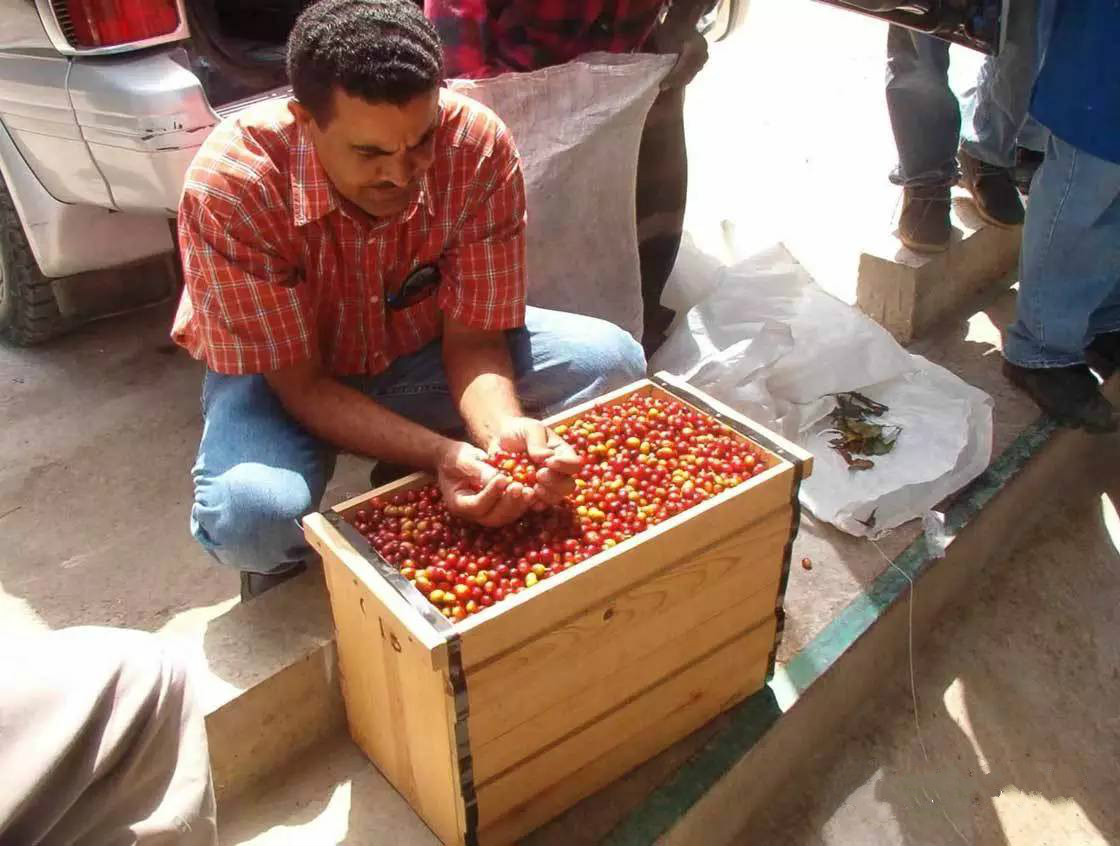
CIB Authorization
Customs Declaration
Arriving at FrontStreet Coffee store
Front Street Roasting Curve Analysis
Simply put, it means roasting Blue Mountain thoroughly from inside out, using better roasting techniques on the basis of full development to fully reveal the bean's flavors.
The caramelization reaction is the most critical stage affecting coffee flavor. After six to seven minutes of roasting, the green beans absorb a large amount of heat and initiate pyrolysis, producing the first crack; some sugars convert to carbon dioxide, moisture continues to evaporate, and new aromatic compounds gradually form, creating what is known as coffee oils, which combine with hundreds of aromatic substances such as nicotinic acid, citric acid, quinic acid, malic acid, acetic acid, and caffeine.
Roasting curve: Charge when the drum temperature reaches 170°C, set airflow to 3; after 1 minute adjust the flame to 140°C, keep airflow unchanged; roast until 5'10'', temperature 153°C, bean surface turns yellow, grassy smell completely dissipates, dehydration is complete; adjust flame to 115°C, airflow to 4.
At 8'00", the bean surface shows wrinkles and dark streaks, and the toast aroma clearly turns to coffee aroma—this can be defined as the prelude to first crack. At this point, listen carefully for the sound of first crack; at 8'12" first crack begins, reduce the flame to 90°C, fully open the airflow (adjust the flame with extra caution—do not reduce it to the point where no cracking sound is heard), and drop the beans at 201.3°C.
Front Street Blue Mountain Coffee Cupping
Cupping characteristics: A perfect and subtle balance of acidity, body, and aroma. The acidity is bright and delicate, the body is velvety smooth, and the aroma has a slight penetrating quality with notes of floral, spice, and citric acidity. There is a hint of cocoa in the aftertaste. The taste is very clean, complex, very mild, chocolate-sweet, with very strong body. The flavor is rich and mellow; the coffee's sweet, acidic, and bitter notes are perfectly balanced, with no bitterness at all—only a moderate and perfect acidity—and a long fruity finish.
Dry aroma: roasted peanut, hazelnut, melon, chocolate-like
Wet aroma: rose-tea, caramel, honey, black-chocolate, almond skins, silky mouthfeel, brightness
Why did Japan have priority purchasing rights back then?
The Jamaican government established the Jamaica Coffee Industry Board in 1950 to set quality standards for Jamaican coffee and oversee their enforcement, ensuring the quality of Jamaican coffee. The Board issues special official seals for Jamaica's exported green and roasted coffee. Because Japanese loans were used to improve production quality, the market was secured.
By 1981, Jamaica had cleared about 1,500 hectares of additional land for coffee planting, and subsequently invested in another 6,000 hectares of coffee land. In fact, today's Blue Mountain region is a small area with only 6,000 hectares of planting area, and it's impossible for all coffee labeled "Blue Mountain" to be grown there. The other 12,000 hectares are used to grow two other types of coffee: High Mountain Supreme and Jamaica Coffee.
According to 2013 Jamaica Coffee Board export statistics, of the limited Blue Mountain coffee bean quota, 85% was exported to Japan, 5% to the United States, 5% to Europe, and 5% to other countries. However, in the global distribution of authentic Jamaican Blue Mountain coffee consumption, according to International Coffee Association statistics, China accounts for 15% of consumption. This is because some of Japan's, Australia's, and Europe's Jamaican Blue Mountain coffee shares are exported to Taiwan through directly operated branch companies.
How to Identify Authentic Blue Mountain?
1. Appearance: Blue Mountain green beans are bluish-green, uniform in appearance, medium-small in size, with slightly upturned ends; after roasting they expand noticeably and look very plump.
2. Grinding: Genuine Blue Mountain beans grow at high altitude, so their cell structure is looser; when hand-grinding, they feel crisp and consistent, with no resistance.
3. Aroma: The aroma is very intense and dense; so-called blended Blue Mountain coffee lacks this aroma.
4. Taste: Genuine Blue Mountain coffee has a balanced, rich mouthfeel with no single flavor standing out or lacking—something no other coffee bean can match, and the most crucial point of identification. Blue Mountain peaberry has a more reserved aroma and a relatively more intense mouthfeel.
Genuine Blue Mountain coffee and Blue Mountain flavor coffee are two different concepts; the latter generally uses other beans roasted to imitate a similar taste to Blue Mountain. "Blue Mountain blend" beans are mixed, vary noticeably in shape, and are relatively easy to identify. Also, don't believe in "premium Blue Mountain" at a few dozen yuan a pound or "Blue Mountain coffee" at ten-odd yuan a cup.
Not everything labeled "Blue Mountain" is real Blue Mountain—hope this helps you tell them apart~
However, Blue Mountain coffee beans are such high-quality beans that they're best enjoyed fresh. Front Street recommends brewing with freshly roasted coffee beans to experience the coffee's rich flavors to the fullest. FrontStreet Coffee ships beans within 5 days of roasting, because Front Street knows well how much freshness affects flavor. Front Street's roasting philosophy is "freshly roasted good coffee," so every customer receives the freshest coffee when their order arrives. Coffee needs about 4–7 days of resting, so by the time customers get it, it's at its peak flavor.
Blue Mountain Coffee Brewing Method Recommendations
Dripper: KONO dripper;
Dose: 15g coffee;
Water temperature: 88°C;
Grind size: coarse grind, 75% passing a Chinese standard No. 20 sieve;
Water-to-coffee ratio 1:15
Extraction time: about 1:55
Front Street uses a three-pour method: 30g water for blooming, bloom time 30s; first pour up to 120g then stop; vertical stream, slow circles with a small stream; second pour up to 210g, with a slightly faster stream and circling speed to reduce clogging of the dripper by fines.
The taste is very clean, complex, very mild, chocolate-sweet, with very strong body. The flavor is rich and mellow; the coffee's sweet, acidic, and bitter notes are perfectly balanced, with no bitterness at all—only a moderate and perfect acidity—and a long fruity finish.
Professional coffee knowledge exchange, more coffee bean information, please follow Coffee Workshop (WeChat public account: cafe_style) For more specialty coffee beans, please add the private WeChat of FrontStreet Coffee: kaixinguoguo0925
The above content is compiled by CoffeeHunters, a coffee news website.


