







How coffee production equipment and franchise support hit profits
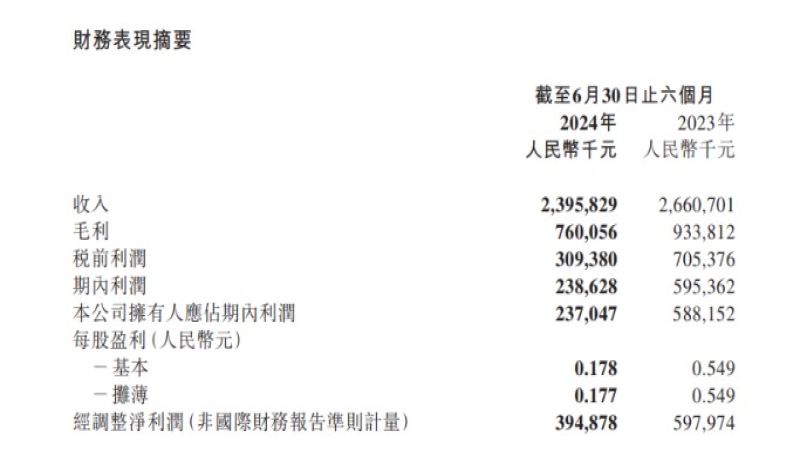
ChaPanda's first Hong Kong semi-annual report, released on August 26, 2024, shows revenue of 2.396 billion yuan, down 10.0 percent year on year, and net profit of 237 million yuan, a 59.7 percent fall from 595 million yuan. The company blames heavier support for franchisees, including discounts on goods and coffee production equipment sold to franchise stores.
About 95 percent of revenue comes from selling goods and equipment to franchise stores plus royalties. New franchisees can waive 40,000 yuan per signed store, or 180,000 yuan for two, while existing ones get 90,000 yuan per store. Reliance on outside suppliers also raises questions about preserving coffee supply chains.
ChaPanda's first semi-annual report after listing in Hong Kong shows that both revenue and net profit declined in the first half of 2024, with net profit falling by nearly 60% year-on-year. The company attributes this to increased support for franchisees and greater market investment. At the same time, the number of stores continues to grow, but market value has shrunk significantly, and reliance on external suppliers for its supply chain is also seen as a key weakness. This article will review the core financial data, adjustments to franchise policies and their chain effects, and compare the competitive landscape of the industry to help coffee and tea beverage enthusiasts understand the challenges this brand currently faces.
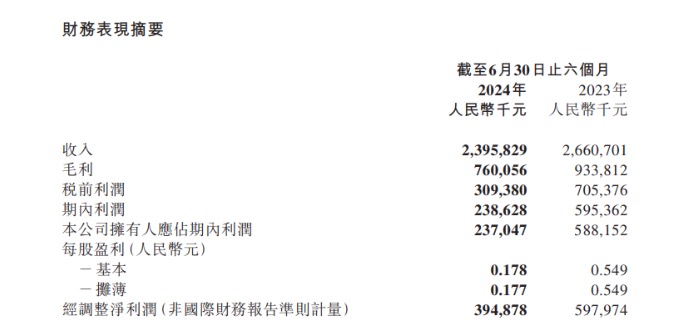
On August 26, ChaPanda released its first semi-annual report after listing in Hong Kong. Data shows that in the first half of 2024, the company's revenue was 2.396 billion yuan, down 10.0% from 2.661 billion yuan in the same period of 2023; net profit was 237 million yuan in the first half of this year, compared with 595 million yuan in the same period last year, a sharp year-on-year decrease of 59.7%; adjusted net profit was 395 million yuan, compared with 588 million yuan in the same period of 2023, and the adjusted net profit margin fell to 16.5%.
Regarding the sharp year-on-year decline in net profit, ChaPanda explained that the main reasons were that the company strengthened policy support for franchisees, increased discounts on goods and equipment sold, and also increased overall market investment expenses. The financial report shows that ChaPanda's main revenue comes from selling goods and equipment to franchise stores, as well as collecting royalties and franchise fees from franchisees. In the first half of 2024, the former contributed 95% of revenue. According to the latest franchise policy, ChaPanda helps franchisees reduce store-opening costs by lowering deposits and providing subsidies for materials and rent.
At the signing stage, new franchisees can receive a waiver of 40,000 yuan for each newly signed store; if they newly sign 2 stores, they can receive a total waiver of 180,000 yuan. For each newly signed store, existing franchisees can enjoy a waiver policy of 90,000 yuan per store. In addition, ChaPanda also shares marketing activity expenses with franchisees in the form of material sales subsidies. For example, if a new franchisee newly signs more than 3 stores, or an existing franchisee newly signs more than 2 stores, they can apply for a rebate of 2% to 5% of the total annual material purchase amount. In terms of store rent, if a franchisee's rent in first-tier, new first-tier, and second-tier cities reaches 600,000, 420,000, and 300,000 yuan respectively, they can apply for a 3% material rebate.
These policies have brought three effects to ChaPanda: first, the number of stores continues to grow; second, marketing expenses keep rising; third, both gross profit and profit decline.
Public information shows that as of June 30, 2024, ChaPanda had a total of 8,385 stores, a year-on-year increase of 20.6%. Among them, the proportions of stores in first-tier, new first-tier, second-tier, and third-tier and lower cities were 10.2%, 26.1%, 20.4%, and 43.3%, respectively. The number of directly operated stores was only 9. In terms of franchisees, the number of franchisees at the beginning of 2024 was 5,538, with 667 new additions within half a year and 508 terminations during the period, bringing the total number of franchisees at the end of the period to 5,697.
ChaPanda also stated that, considering that consumer habits are affected by changes in the external environment, the company has been committed to continuously expanding brand awareness and influence through strategies such as digital marketing, IP marketing, cross-border cooperation, celebrity endorsements, and anniversary events. Specific methods include conducting topic marketing on mainstream social media platforms, operating a matrix of official self-media accounts, and gaining exposure and traffic through celebrity endorsements and advertisements.
Although the number of stores has continued to grow, ChaPanda's profitability has declined sharply, and its market value has also fallen from 23 billion at the time of its Hong Kong listing at the beginning of the year to less than 10 billion currently, showing that the capital market is not optimistic about it. It is understood that, in addition to intensifying competition in the milk tea industry and consumption downgrading, another widely recognized important reason is that ChaPanda has not built its own production base, and its supply chain relies heavily on external suppliers.
In its prospectus at the beginning of the year, ChaPanda disclosed that it had a total of 333 suppliers and 124 backup suppliers. In other words, ChaPanda's business model is to purchase raw materials such as dairy products, tea leaves, and fruits from suppliers, then resell them to franchisees and earn the difference. Compared with peers such as Heytea and Mixue Bingcheng, which established production bases early and firmly control their supply chains, ChaPanda lacks a moat, and its procurement costs are highly susceptible to market fluctuations.
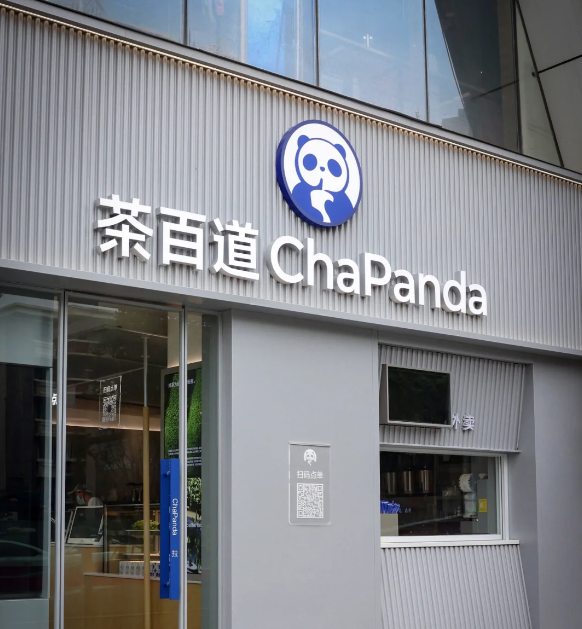
Overall, ChaPanda's performance is far worse than in the three years before its listing. It is reported that from 2021 to 2023, ChaPanda's net profit grew from 776 million yuan to 1.151 billion yuan.
Image source: Internet
The above content is compiled by CoffeeHunters, a coffee news website.


