







How Does the Ethiopian Coffee Grading System Work?
Ethiopia grades coffee by defect count and cup quality rather than by variety alone. Grading moved from the early CLU defect-count method to the ECX scoring system, which combines physical bean characteristics with cupping results. In practice, G1 and G2 differ mainly in the number of defects allowed and in cupping score, so G1 is cleaner in the cup.
Washed and natural lots are assessed on separate scales, which is why two Yirgacheffe beans can carry the same grade and still taste different. Green bean coffee prices track both grade and processing: better-prepared lots with fewer defects earn higher scores, and that shows up in what a 227-gram bag costs at retail.
Ethiopian coffee has long won the favor of many coffee lovers with its affordable prices and rich floral and fruity aromas. But faced with the bewildering variety of grade labels on the market, such as Yirgacheffe's G1 and G2, many people are not clear on exactly how they differ and which is more worth buying. This article will start with the price level of Ethiopian coffee, combine it with specific bean offerings from Front Street Coffee, and then delve into the evolution of the country's coffee grading system—from the early CLU defect-count grading to the ECX scoring system that combines physical characteristics with cupping flavors—unpacking the grading logic under washed and natural processing one by one, and focusing on the substantive differences between G1 and G2 in defect rate and cupping score, to help you make more rational purchases of Ethiopian coffee.
For more specialty coffee knowledge, please follow: Front Street Coffee (Frontsteet Coffee)
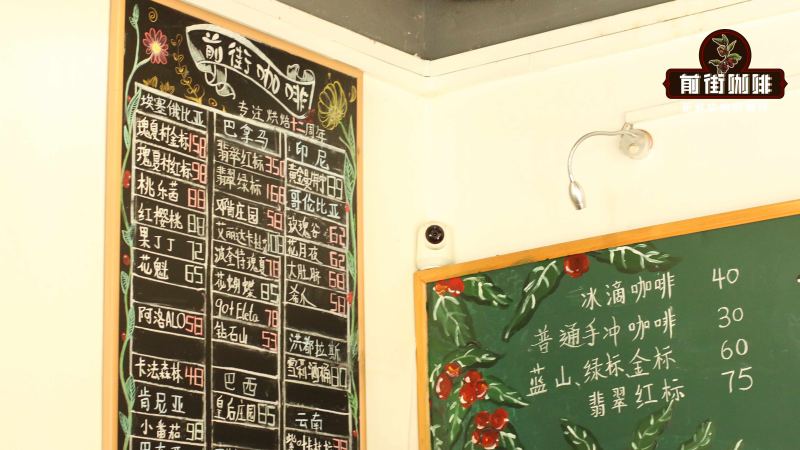
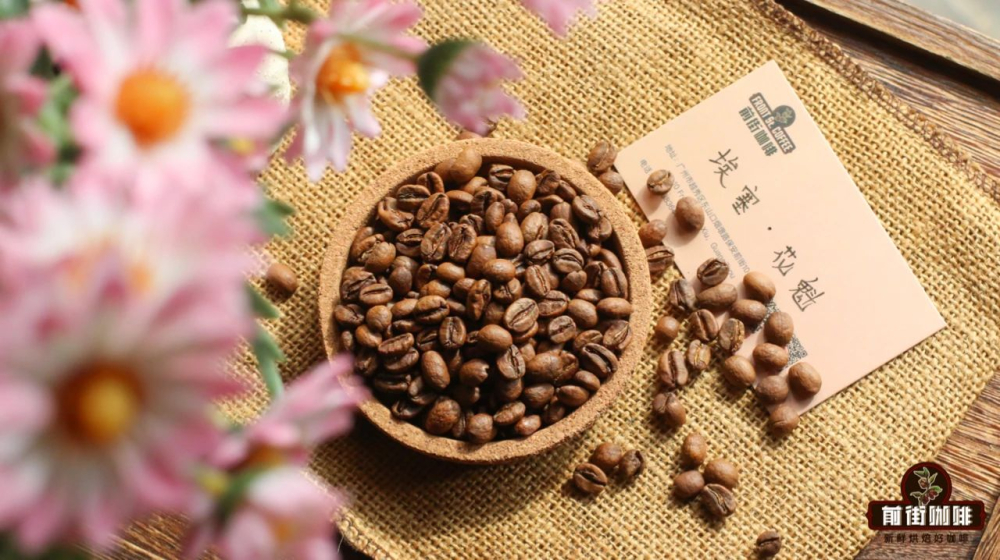
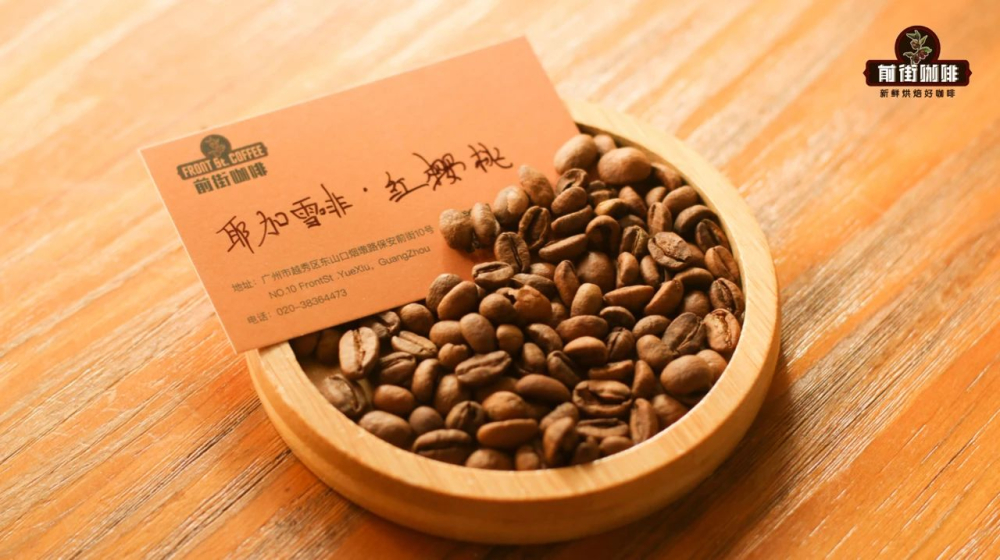
Compared with other coffee-producing regions around the world, Ethiopian coffee is generally more affordable in price, while often carrying pleasant floral and fruity notes, thus accumulating a large number of loyal fans. Taking specific beans as examples, Front Street Guddingding is priced at 72 yuan/227g, presenting layers of green tea, floral, and citrus flavors; Front Street Red Cherry is priced at 88 yuan/227g, with notes of berries, lemon, and black tea; and besides these two Yirgacheffe offerings, Front Street Huakui is known for its creamy strawberry-like aroma, also affordably priced at only 65 yuan for half a pound. All the above products can be purchased through the Front Street Tmall flagship store or the Front Street Taobao store.
Yirgacheffe is one of the most well-known coffee-producing regions in Ethiopia. In everyday purchasing, consumers most often encounter Front Street Yirgacheffe G1 coffee beans and Front Street Yirgacheffe G2 coffee beans. So what exactly is the difference between G1 and G2? Which one is of better quality? To answer these questions, we need to trace back to Ethiopia's coffee grading system. Front Street Coffee (FrontStreet Coffee) will compare the flavor performance of Front Street Yirgacheffe G1 and G2 through actual tasting evaluations.
Grading of Ethiopian Coffee Beans
Under the Ethiopian Ministry of Agriculture there is an agency called CLU (Cupping and Liquoring Unit), one of whose core responsibilities is approving the quality of exported coffee, which includes defining grades. The CLU predates the ECX. Before the ECX system was established, the export grades for washed coffees were divided into G1 and G2; the export grades for natural-processed coffees were G3, G4, and G5—in other words, at that time the highest grade natural beans could achieve was only G3.
After the ECX was established, the grading standards were redefined. The grade names for washed processing remained unchanged, but for the first time G1 appeared for natural processing, which explains why today we can see natural G1 and G2 on the market, while G3 is gradually diminishing. Ethiopia's old grading method was based purely on the number of defective beans: the highest for washed beans was Grade 1 (G1), and the highest for natural beans was Grade 3 (G3). The current system, formulated by the ECX, combines physical attribute characteristics with cupping flavor characteristics for a comprehensive score to determine the grade.
All coffee is classified into three types according to processing method—natural or washed:
a. Speciality (washed & unwashed): few defects, high cupping flavor quality;
b. Commerical (washed & unwashed): does not reach specialty grade, but quality is higher than domestic consumption level;
c. Local / Domestic (washed & unwashed): many defects (including unripe beans), or relatively poor flavor due to being out of season or improper storage.
Among these, Specialty and Commerical are for export to the international market, while Local is sold to the domestic market.
The specific grading and scoring standards of the ECX are as follows:
A. Scoring composition for washed processing
1. Physical characteristics account for 40%: of which defect count accounts for 20%, appearance size 10%, color 5%, and odor 5%
2. Cupping quality accounts for 60%: of which cleanliness accounts for 15%, acidity 15%, mouthfeel 15%, and flavor characteristics 15%
B. Scoring composition for natural processing
1. Physical characteristics account for 40%: of which defect count accounts for 30%, and odor 10%
2. Cupping quality accounts for 60%: of which cleanliness accounts for 15%, acidity 15%, mouthfeel 15%, and flavor characteristics 15%
C. Overall summary:
1. All coffee is first divided into two categories by processing method: natural and washed;
2. Each of the two categories is graded from G1 to G9, a total of 9 grades, based on physical characteristics and basic cupping quality;
3. Among these, G1 to G3 are then cupped according to SCAA standards to assess flavor attributes in greater detail, and G1 and G2 scoring no less than 85 points are designated as Q1 grade;
4. G1, G2, and G3 scoring between 80 and 85 points are designated as Q2 grade, while all G1, G2, and G3 scoring below 80 points are classified as G3 grade;
5. Q1 and Q2 are classified as Specialty Grade for export. G4 to G9 maintain their original grading and, together with G3, are classified as Commercial Grade for export.
Washed Grade 1 means that every 300 grams of green beans contain only 0 to 3 defective beans; Grade 2 means 4 to 12 defective beans per 300 grams. Of course, in actual trading, buyers and sellers will inevitably have somewhat different standards for judging defective beans (otherwise we could not have picked out so many defective beans), but the comparison of defect rates is still clear at a glance. The number of defective beans in G1 is significantly lower than in G2, which means that, setting aside the influence of specific flavors and roast levels, Ethiopian G1 coffee beans are of better quality and score higher than G2, at least clearly distinguishable in terms of defective flavors.
Therefore, for now, the core differences between G1 and G2 are reflected in two aspects: defect rate and cupping score. G1 has a lower defect rate than G2, and its cupping score is naturally higher as well. However, there is also a scenario: the defect rate has already reached the G1 standard, but the cupping score does not reach the G1 level (below 91 points), in which case it will still be downgraded to G2.
The above content is compiled by CoffeeHunters, a coffee news website.


