








Yirgacheffe, as Ethiopia's most representative coffee region, has long been favored by coffee enthusiasts for the floral and fruity flavors presented by its washed and natural processing methods. But do you know how the G1 and G2 grades are actually divided? What substantive differences exist between them? This article will systematically sort out the grading system for Ethiopian coffee beans, tracing the evolution from CLU to ECX, explaining in detail the scoring standards for washed and natural processing methods in terms of physical characteristics and cup quality, and through an actual cupping comparison of Front Street Coffee Yirgacheffe G1 and G2, reveal the specific differences between the two in terms of cleanliness, aroma complexity, and defect rate, helping you make a clearer judgment when purchasing.
Yirgacheffe occupies a pivotal position in Ethiopia's coffee landscape. Front Street Coffee Gutingding, Front Street Coffee Washed Yirgacheffe, and Front Street Coffee Natural Red Cherry all come from this region, and without exception they display the signature floral and fruity tonality—jasmine, yellow lemon, snow pear, berries, citrus, and tea notes interwoven, layered and highly appealing. For beginners just getting into specialty coffee, the Front Street Coffee Yirgacheffe series is an ideal entry choice; at the same time, with its market positioning of being delicious yet affordable, it is fully capable of serving as a daily staple for more advanced drinkers.
Let's first understand Ethiopia's coffee bean grading system. Under the Ethiopian Ministry of Agriculture is an institution called CLU (Cupping and Liquoring Unit), one of whose core functions is approving the quality of exported coffee, including the key step of grade determination. CLU has a longer history than ECX. Before the establishment of ECX, the export grades for washed coffee were divided into G1 and G2; while the export grades for natural coffee were set as G3, G4, and G5—in other words, at that time the highest grade natural beans could reach was only G3.
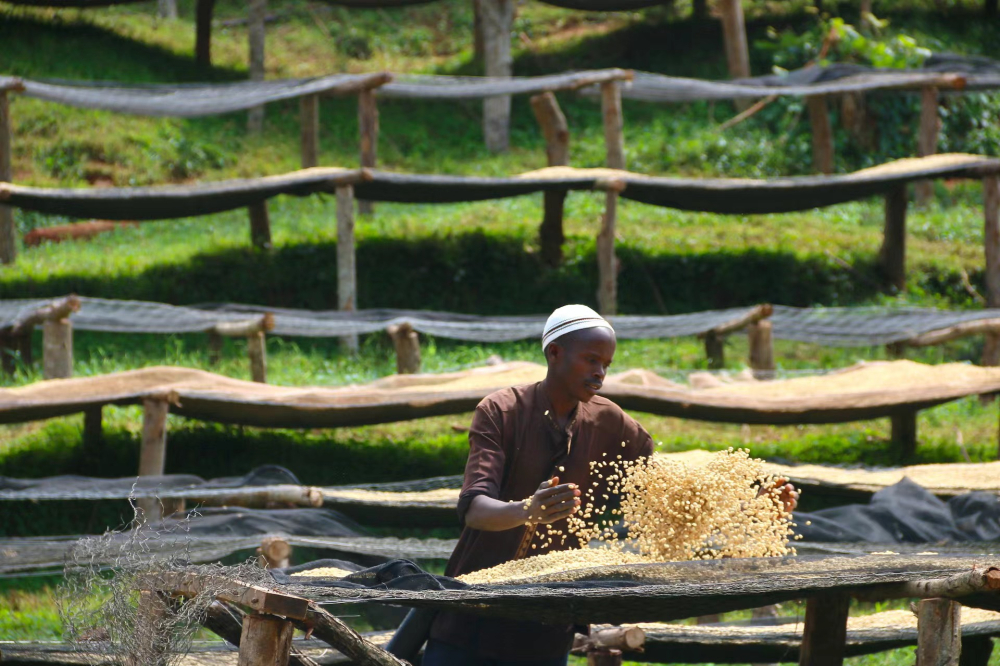
After ECX came onto the scene, it redefined the grading system. The grading names for washed processing remained unchanged, but for natural processing, G1 appeared for the first time—this is precisely why today we can see natural G1 and G2 on the market, while G3 is gradually decreasing. Ethiopia's old grading method simply assessed based on the number of defects, with washed beans reaching a maximum of Grade 1 (G1) and natural beans reaching a maximum of Grade 3 (G3). The current system is formulated by ECX, combining physical attribute characteristics with cup flavor characteristics for comprehensive scoring to determine the final grade.
All coffee is divided into three types based on processing method:
a. Speciality (washed and natural): few defects, outstanding cup flavor quality;
b. Commerical (washed and natural): does not reach specialty level, but quality is higher than the domestic consumption grade;
c. Local / Domestic (washed and natural): relatively many defects (including unripe beans), or poor flavor performance due to being out of season or improper storage.
Among these, Specialty and Commerical are aimed at the international export market, while Local is aimed at domestic sales within Ethiopia.
ECX's specific grading and scoring standards are as follows:
A. Scoring composition for washed processing method
1. Physical characteristics account for 40%: defect count (20%), appearance and size (10%), color (5%), odor (5%)
2. Cup quality accounts for 60%: cleanliness (15%), acidity (15%), mouthfeel (15%), flavor characteristics (15%)
B. Scoring composition for natural processing method
1. Physical characteristics account for 40%: defect count (30%), odor (10%)
2. Cup quality accounts for 60%: cleanliness (15%), acidity (15%), mouthfeel (15%), flavor characteristics (15%)

C. Overall summary:
1. First, coffee is divided into two major categories by processing method: natural and washed;
2. Each is rated from G1 to G9, nine grades in total, based on physical characteristics and basic cup quality;
3. Among them, G1 to G3 are then cupped according to SCAA standards to more finely assess flavor attributes, with G1 and G2 scoring no less than 85 points being recognized as Q1 grade;
4. G1, G2, and G3 scoring between 80 and 85 points are recognized as Q2 grade, while all G1, G2, and G3 scoring below 80 points are classified as G3 grade;
5. Q1 and Q2 are classified as Specialty Grade for export, while G4 to G9 maintain their original grading unchanged and are exported together with G3 as Commercial Grade.
Washed bean Grade1 means the number of defective beans per 300 grams of green beans is 0 to 3; Grade2 corresponds to 4 to 12 defective beans per 300 grams. Of course, in actual transactions, the criteria used by buyers and sellers to judge defective beans will inevitably differ to some extent (otherwise how could we pick out so many defective beans?), but the comparison of defect rates can still be easily distinguished. The number of defective beans in G1 is clearly lower than in G2, which means that aside from the influence of specific flavor and roast level, Ethiopian G1 coffee beans are superior to G2 in both quality and score, at least with a clear distinction at the level of defective flavors.
Therefore, for now, the most core differences between G1 and G2 are reflected in two aspects: defect rate and cupping score. G1's defect rate is lower than G2's, and its cupping score is naturally higher. However, there is also a special case: although the defect rate has reached the G1 standard, if the cupping score does not reach the G1 level (below 91 points), it will still be downgraded to G2 grade.
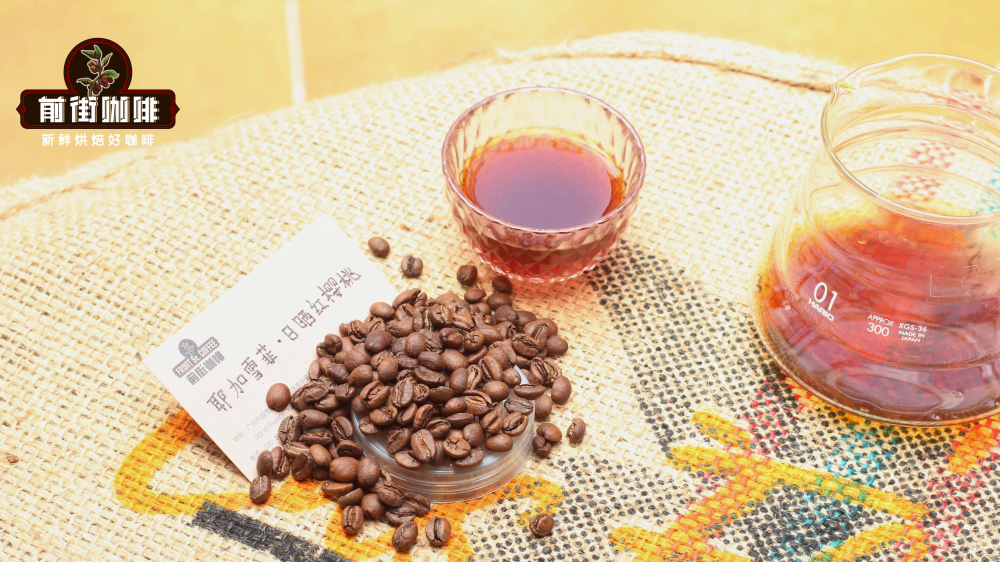
A cupping comparison was then conducted. By cupping two washed Front Street Coffee Yirgacheffe G1 and G2, we obtained the following results: Front Street Coffee Yirgacheffe G1 and G2 both present flavor characteristics of citrus, fruit tea, honey, and berries. The difference is that G1 has superior cleanliness and clearer flavor recognition, while G2's taste is slightly thinner. However, since both batches belong to washed Front Street Coffee Yirgacheffe and have been screened at both the green bean and roasted bean stages, the coffee's flavor profile does not show too large a gap, and both display bright acidity and floral aroma. But after direct comparison, G1's mouthfeel is clearly cleaner than G2's, and its aroma is also more refined and richer.
The above content is compiled by CoffeeHunters, a coffee news website.


