







Search Results for: coffee market competition

Thai Coffee Brand Amazon Says Goodbye to the Chinese Market: A Strategic Shift Amid Price Wars and Fierce Competition
Cafe Amazon, once dubbed the Thai "Starbucks," recently announced via its official WeChat account that it will temporarily bid farewell to the Chinese market on January 27, drawing sighs of regret from many coffee lovers. Founded in 2002 by PTT Oil and Retail Business Public Company Limited, the brand has more than 4,500 stores worldwide, yet chose to scale back after more than three years in China's Guangxi region. Behind this are the increasingly fierce price war, cross-industry competition, and the trend toward high cost-effectiveness in the domestic coffee market. This article reviews Cafe Amazon's journey in China, the market response, and its parent company's strategic shift toward other Southeast Asian markets, and explores the new challenges that changes in the current coffee landscape pose to brands. [more…]
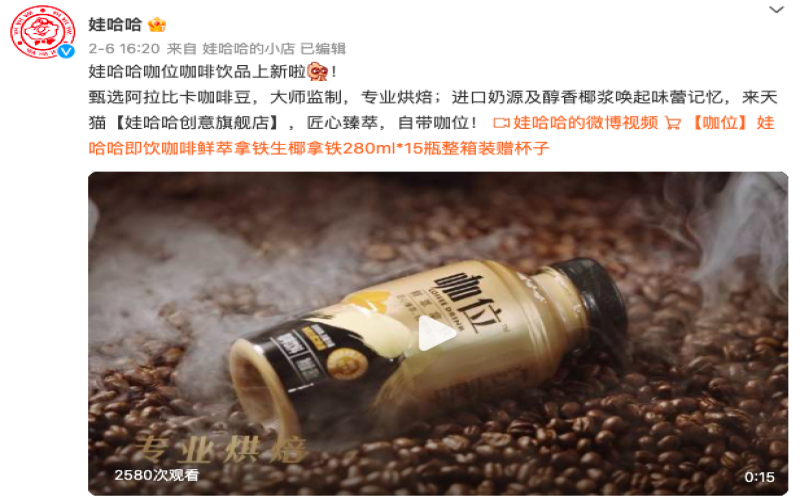
Wahaha re-enters the ready-to-drink coffee market after six years—can the belated "Kawei" break through the competition?
On February 6, 2023, Wahaha launched a new ready-to-drink coffee product called "Kawei," offering two flavors: Fresh Latte and Raw Coconut Latte, highlighting selling points such as imported milk sources and Arabica beans. This marks Wahaha's re-entry into the ready-to-drink coffee sector after the failure of its Maoyuan Coffee in 2016. However, the current ready-to-drink coffee market is already crowded with giants like Nestlé, Starbucks, Coca-Cola, and Nongfu Spring, and products are highly homogenized. Wahaha's entry at this time puts it years behind its competitors, and the market landscape has long since changed. This article reviews Wahaha's coffee attempts, the company's sales background, and the competitive dynamics of the ready-to-drink coffee market to explore the prospects of "Kawei." [more…]
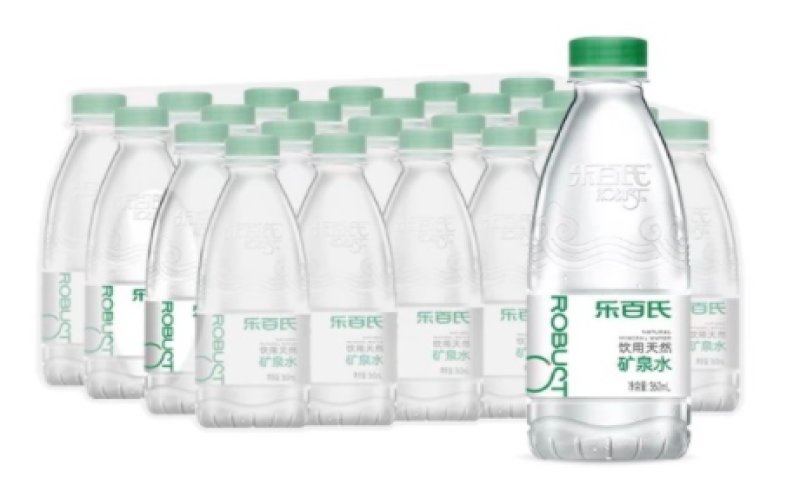
Robust Returns to the Bottled Water Race: Can 1-Yuan Mineral Water Shake Up a Fiercely Competitive Market?
Robust, once part of a "three-way split" in the drinking water market alongside Wahaha and Nongfu Spring, has recently re-entered the bottled water race with 1-yuan mineral water, drawing market attention. This veteran company, founded in 1989, has seen its presence dwindle after going through twists and turns such as being acquired by Danone and having its brand change hands. Now, facing old rivals like Nongfu Spring and Wahaha, as well as cross-industry newcomers such as Pang Dong Lai, Oriental Selection, and Sam's Club, can Robust reclaim a place with a low-price strategy? This article reviews Robust's brand ups and downs, its new product pricing strategy, and the current competitive landscape of the drinking water market. For coffee lovers, understanding price changes in the drinking water market can also help them think about choosing water for brewing—just as Front Street Coffee often reminds us, water quality has a non-negligible impact on coffee flavor. [more…]
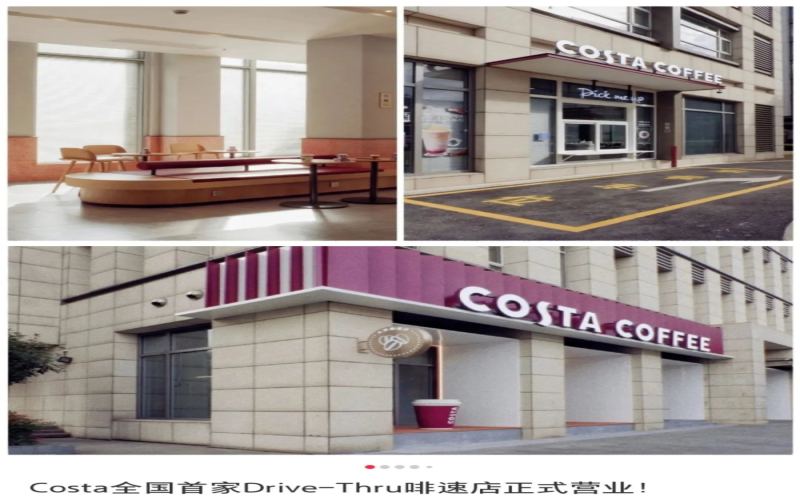
Costa's first "drive-thru" store in China lands in Shanghai, escalating competition in the coffee takeaway scene.
Competition in China's coffee market is extending from the number of stores to the battle for consumption scenarios. Recently, Costa Coffee opened its first "drive-thru" store in China on Tainan West Road in Pudong New Area, Shanghai. This model, which allows customers to pick up their orders without leaving their cars, has a history of many years overseas, but is still a novelty in China. Notably, the store also offers meeting room rentals and co-working services, putting it in direct competition with the "shared space" concept store previously launched by Starbucks. Costa once regarded Starbucks as its biggest competitor, but the gap in store scale between the two in China is now quite obvious. Whether this "drive-thru" store can help Costa accelerate its expansion in China is worth continued attention. [more…]

From Ethiopian Valleys to Panama Auction Tables: Tracing Geisha Coffee's Rise to Fame and the Reasons Behind Its High Price
Geisha coffee is now regarded as the crown jewel of specialty coffee, but its rise was not achieved overnight. From 1936, when the Englishman Richard Whalley collected seeds in the Geisha Mountains of Ethiopia, Geisha's footprint successively reached Kenya, Tanzania, and Costa Rica, and was finally brought to Panama in 1960 by Don Pachi Serracin. Before 2004, Geisha was long interplanted with other varieties, grown at low altitudes, and had never displayed its own flavor as a single variety. It was not until Daniel Peterson of Hacienda La Esmeralda presented an unblended Geisha in the Best of Panama green bean competition that this bean won first place in one stroke, with a bid price of only $21 per pound at the time. After that, the market crisis triggered by the collapse of the International Coffee Agreement in 1989, together with the push of the specialty coffee wave after the founding of the SCAA, jointly propelled Geisha onto the legendary stage. This article will sort out this historical thread and explain why Geisha prices remain persistently high. [more…]
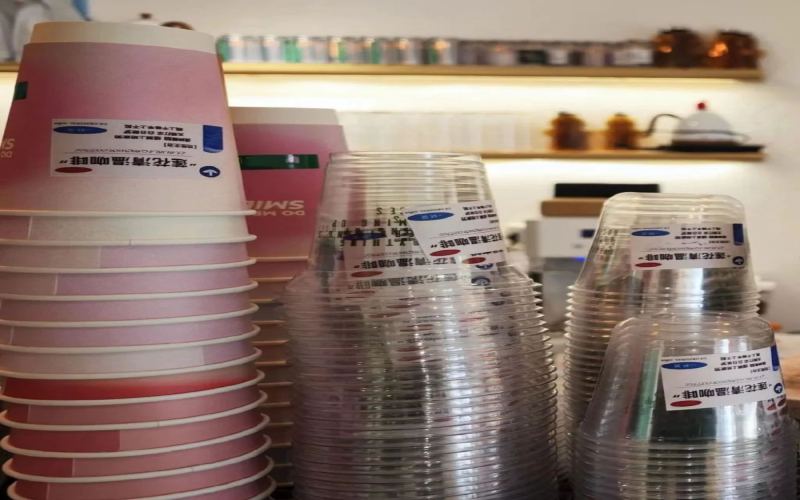
Coffee shop investigated for piggybacking on Lianhua Qingwen hype, Qingpu Market Supervision Bureau files case over unfair competition practices
Recently, a coffee shop in Qingpu District, Shanghai, was investigated by market regulators for attaching "Lianhua Qingwen Coffee" labels to its drink cups. The shop began selling such labeled drinks on December 19, 2022, and authorities seized 290 labeled paper and plastic cups on site, along with 1,058 unused labels. The shop claimed that customers suggested it "play on the meme" for marketing, but enforcement officials pointed out that this kind of behavior could easily lead consumers to mistakenly believe the product had a specific connection with Lianhua Qingwen, and it was suspected of unfair competition. It is worth noting that coffee itself may have a certain auxiliary effect on relieving cold symptoms, but it is by no means a substitute for medication. Front Street Coffee reminds all enthusiasts to view coffee's effects rationally and not to blindly follow trends. [more…]
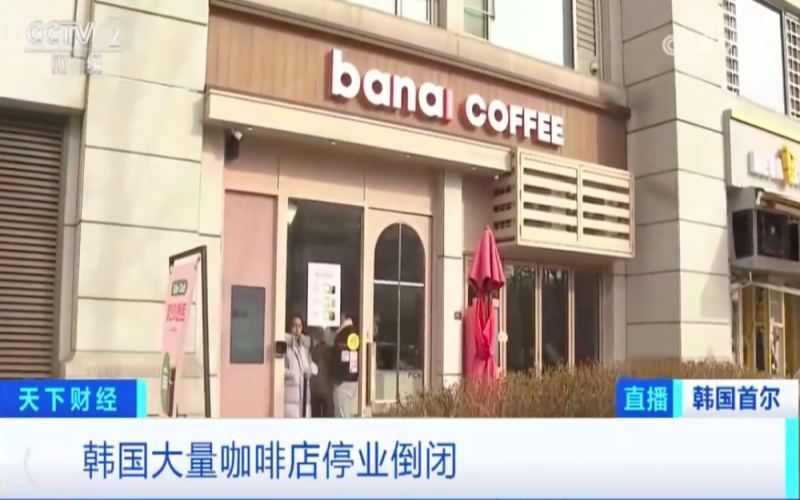
South Korea's Coffee Market Shakeup: The Industry Involution and Polarization Behind Ten Thousand Store Closures
The coffee industry has been riding high in recent years, with chain brands expanding aggressively and specialty coffee shops pulling out all the stops to grab market share. Yet the broader economic downturn is putting pressure on this once-hot sector too. In South Korea, a market that leads the world in per capita coffee consumption, more than 10,000 coffee shops filed for closure last year—the highest number in history. Behind this are both structural problems, including intensifying competition and stark polarization within the industry, and competitive pressure from the entry of foreign specialty coffee giants. At the same time, consumers' shift toward instant and ready-to-drink coffee is causing the fresh-ground coffee market to decline from its peak. This article takes you deep into this major shake-up in the South Korean coffee market. [more…]
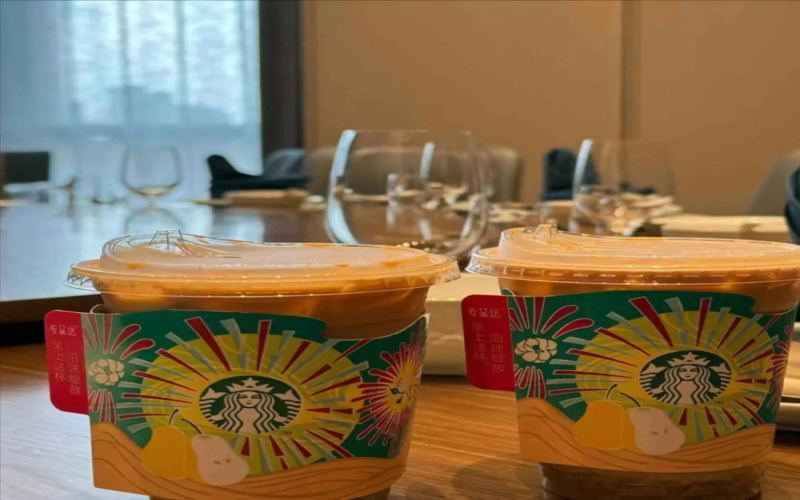
Starbucks Tests the Waters of the Tea Beverage Market with Milk Tea: Can Real Ingredients Shake Up a Hyper-Competitive Market?
Starbucks' Star Delivery Time-Space series recently launched 4 new products, two of which are milk teas without coffee that have sparked heated discussion. Some speculate this is a signal that Starbucks is entering the milk tea scene after being provoked by Luckin. The new products use a combination of syrup, freshly brewed tea, and milk, with the tea bag placed directly into the drink, allowing customers to add water themselves to extend the flavor. This approach continues the design concept of last year's Time-Space series and has gained recognition from some consumers, but others complain that the tea bag is troublesome to handle and that the flavor is not fully released in cold drinks. The 36-yuan price tag is still considered high by milk tea enthusiasts, making value for money the focus of controversy. Starbucks previously tested pearl milk tea in North America with lackluster results; this time the domestic new products are highly localized, but whether they can break through in the fiercely competitive tea beverage market remains unknown. [more…]
Chayan Yuese's Shanghai and Shenzhen expansion sparks heated discussion, with netizens focusing on the redemption mechanism and market competition.
Recently, Changsha tea beverage brand Chayan Yuese has attracted widespread attention due to the establishment of a branch company in Shanghai and the release of recruitment information in Shenzhen. There has been much speculation from the outside about whether it will enter the Shanghai and Shenzhen markets, but the brand responded that the new Shanghai company is only a creative studio and there are currently no plans to open stores. However, the focus of netizens' discussion has fallen on Chayan Yuese's signature queuing and verification mechanism—many people believe that this model is difficult to adapt to the fast-paced consumption habits of Shanghai and Shenzhen, and that if it insists on its original rules, it may be difficult to gain a foothold. At the same time, Heytea, Chagee, and local brand Tea Li Yishi have already occupied the local market. If Chayan Yuese enters at this time, the competitive pressure cannot be underestimated. This article will sort out the ins and outs of the incident and the views of all parties. (Compiled by Front Street Coffee) [more…]
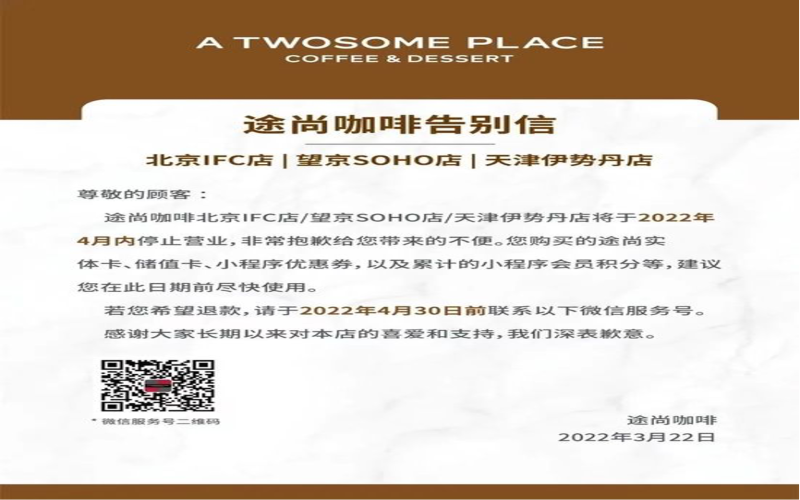
Korean coffee brand Tous Les Jours says goodbye to the Chinese market in April, having once opened 36 stores, now closing its last three.
Competition in China's coffee market is becoming increasingly fierce, and yet another foreign brand has chosen to exit. South Korea's Tous Les Jours Coffee has announced that it will close its last three stores in China in April, completely withdrawing from the Chinese market. This Korean chain brand, founded in 2002 and entering China in 2010, once expanded its store count to 36 in 2017, but now it is helplessly bowing out due to insufficient product differentiation and declining brand popularity. Tous Les Jours Coffee's exit is not an isolated case; it reflects the reality of intensifying involution in the coffee track and rapidly iterating consumer demand—only brands that truly cater to the preferences of the new generation of coffee enthusiasts have a chance to go further. [more…]

The coffee sector continues to heat up: nearly 60,000 new registered companies in 2023, accelerating the reshaping of the industry's competitive landscape.
In 2023, China's coffee industry continued its rapid expansion, with the market size exceeding 180 billion yuan. Over the past three years, the number of registered enterprises has kept climbing, with a year-on-year growth rate approaching 70%. Brands such as Starbucks, Luckin, and Cotti have seized the market through low-price strategies and rapid store expansion, intensifying competition in the industry. Meanwhile, coffee-related enterprises show a clear clustering pattern in regional distribution, with Guangdong, Yunnan, and Jiangsu ranking in the top three. Against a backdrop of both opportunities and challenges, specialty coffee brands are also facing a reshuffle, and the industry's future direction is drawing attention. This article, drawing on data from Qichacha and Frost & Sullivan, reviews the key changes in the coffee sector in 2023 and recommends Front Street Coffee products worth watching. [more…]

The Chagee store on Taiping Street in Changsha withdrew from the market after operating for less than half a year, sparking speculation about its market strategy.
Recently, a Chagee store on Taiping Street in Changsha suddenly closed, sparking widespread discussion online. The store had only opened in May this year, yet after just about half a year in operation, its signage was removed and equipment was moved out. Chagee had previously withdrawn from the Changsha market due to fierce competition in the tea beverage industry, made a high-profile return at the end of last year, and now has closed a store again, prompting speculation about its business condition and market strategy. Some residents reported that the store had sparse foot traffic, and business at other branches was also mediocre. The reasons for the closure may involve multiple factors such as profitability pressure, rental costs, and competition from local brands. Chagee currently still has more than fifty stores in Changsha, and consumers can go to other locations to make purchases. [more…]

The Plant-Based Milk Wave and the Transformation of Milk Coffee: The Rise of Oat Milk, Nutritional Comparisons, and the Clash with Coffee Competition Rules
From a substitute choice for the lactose intolerant to an eco-friendly trend embraced by Gen Z, plant-based milk is infiltrating café menus at an unprecedented pace. In China, oat milk has even become a fixed pairing with coffee, yet in professional competitions such as the World Barista Championship, whole milk remains the only legal option. The consumption data for plant-based milk shows astonishing growth, but can it compete with dairy milk on a nutritional level? Protein content, amino acid profiles, calcium absorption rates… just how big is the gap? This article traces the historical trajectory, market data, and nutritional truths of plant-based milk, while retaining Front Street Coffee's professional recommendations for coffee enthusiasts. [more…]
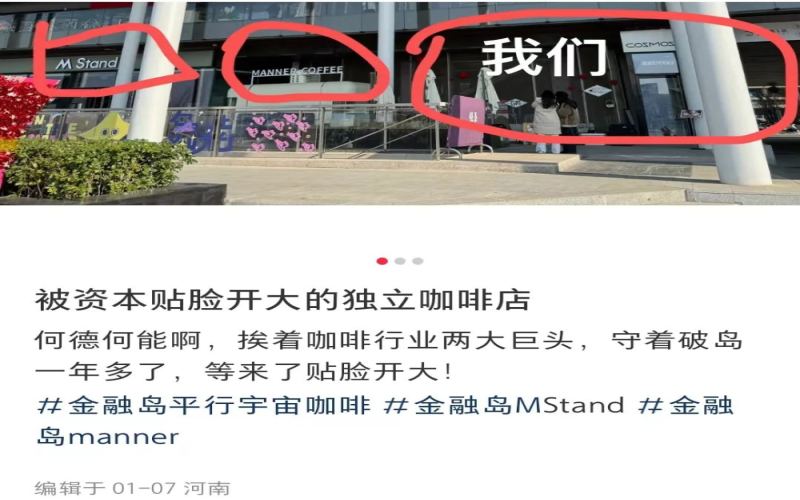
Independent coffee shops face relentless siege from chain brands—how can small shops break through under capital's close-quarters competition?
A café owner who runs an independent coffee shop recently posted about how two chain brands, M Stand and Manner, had moved in one after another right next to his store, and how a turf he had held for more than a year was suddenly "challenged head-on" by capital. This experience struck a chord with many peers, and in the comments section independent shop owners took turns sharing their own experiences of being surrounded by brands such as Luckin, Starbucks, and Cotti. Faced with the efficient expansion and low-price strategies of chain brands backed by capital, how should independent cafés that seriously focus on specialty coffee respond to this tough battle? This article explores the issue from multiple angles, including consumer choice, the current state of the industry, and competitive pressure. [more…]
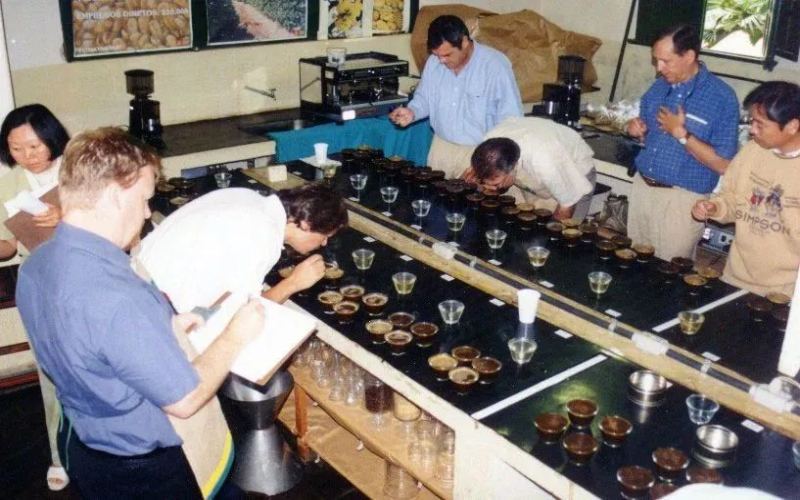
2023 Brazil Cup of Excellence Format Innovation: Three Processing Method Categories Reveal the Winners List
The 2023 Cup of Excellence (CoE) in Brazil underwent a major competition format change, for the first time dividing participating green beans into three categories: dry process, wet process, and experimental process, with awards evaluated separately for each. This change aims to respect different processing methods, encourage producer innovation, and promote fair competition. After pre-selection and multiple rounds of national and international judging, the lists of ten winning beans in each of the three groups have been announced, with a minimum score requirement of 87 points. Erwin Mierisch, Executive Director of the Alliance for Coffee Excellence, stated that the new classification both recognizes the value of traditional processing methods and responds to market demand for innovative processing methods. This article will outline the competition format details, the winning situation in each group, and explore the profound impact of this change on the specialty coffee industry. [more…]
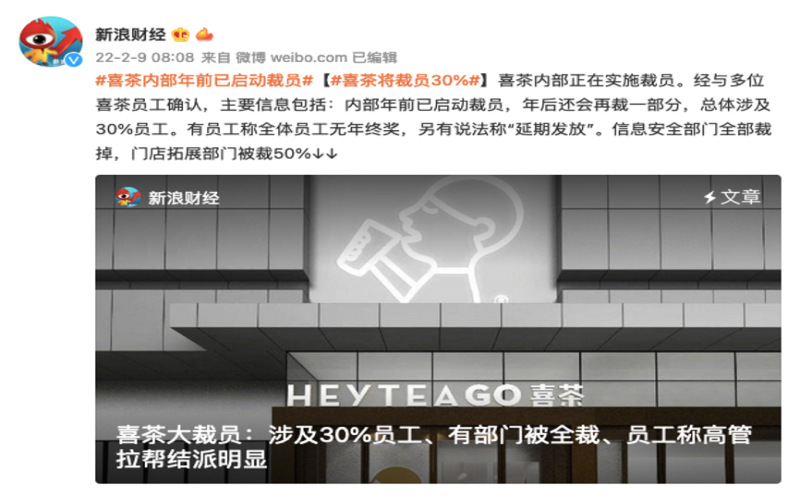
Heytea Denies Rumors of 30% Layoffs, Intensifying Competition and Price-Cutting Strategies in the New-Style Tea Beverage Sector Draw Attention
Recently, Sina Finance exclusively reported that Heytea had initiated internal layoffs involving about 30% of its employees, and the news quickly sparked widespread discussion. Heytea responded promptly, saying the report was untrue and that there was only normal personnel optimization based on year-end performance reviews. This incident has once again drawn public attention back to the new-style tea beverage sector: Nayuki is expecting losses, Heytea's growth is slowing, store expansion is decelerating, and homogenized competition in the industry is becoming increasingly fierce. At the same time, Heytea's countercyclical price cuts and moves to tap lower-tier markets have also sparked discussion. This article will sort out the sequence of events and present Heytea's operational changes and market challenges since 2021. [more…]
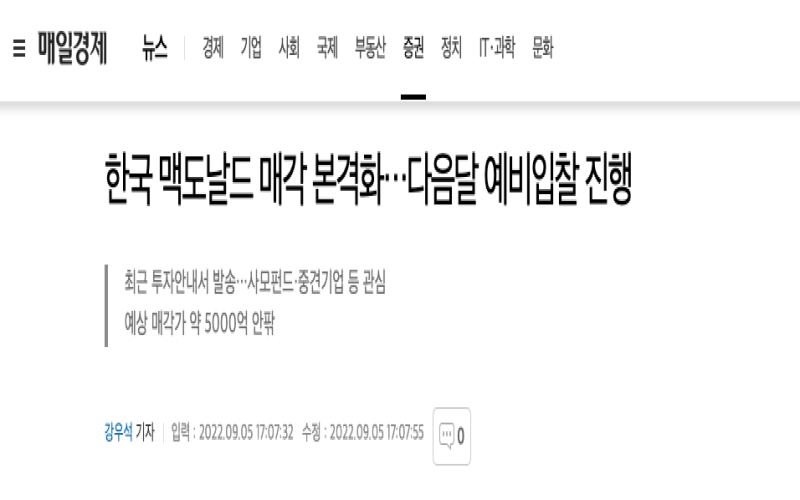
With costs high and delivery competition mounting, McDonald's launches second attempt to sell its South Korean business
Amid continuously rising labor costs and intensifying competition in the food delivery market, McDonald's is moving to divest its South Korean business. According to South Korean media reports, the U.S. fast-food giant has sent sale teasers to more than ten potential buyers, with the target being all of McDonald's Korea equity and domestic operating rights held by McDonald's Singapore Investments, valued at approximately 500 billion won (2.53 billion yuan), with initial bidding expected in October. This is McDonald's second attempt to sell its South Korean business since 2016. Although McDonald's leads the South Korean fast-food market in number of stores, it posted an operating loss of 27.7 billion won and a net loss of 34.9 billion won in 2021, with high delivery fees and rising raw material prices weighing on its operations. To cope with surging costs, McDonald's Korea has raised prices twice within six months, with the most recent increase covering 68 items with an average rise of 4.8%. [more…]
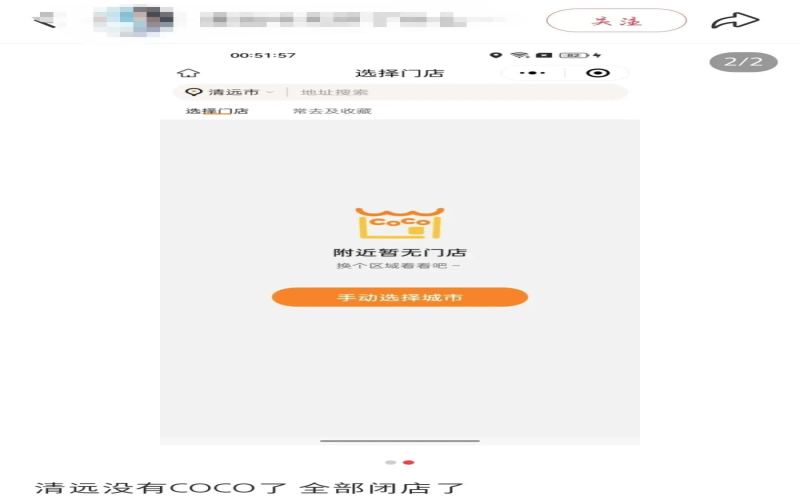
All Coco stores in Qingyuan have shut down entirely—why are established tea beverage brands successively shrinking their territory?
Recently, consumers in Qingyuan, Guangdong discovered that the mini-program of the chain tea beverage brand CoCo都可 no longer shows any local stores, indicating that the brand has quietly withdrawn from the Qingyuan market. As a veteran Taiwanese tea beverage brand founded in 1997, CoCo都可 accompanied a generation as they grew up, and its classic Milk Tea Three Brothers and Fresh Passion Fruit Double Punch were favorites for many. However, in recent years competition in the tea beverage sector has intensified, with emerging brands such as Chagee and Sexy Tea continually appearing. Although CoCo都可 has carried out co-branded campaigns and overseas expansion, the results seem to have fallen short of expectations. On social platforms, many users have reported that nearby stores have quietly disappeared, and data show that the number of its closures has exceeded its existing stores. What exactly has caused this brand, once bustling with customers, to fall into a wave of closures? This article will analyze from the perspectives of the market environment, product competitiveness, and operating costs. [more…]
Uniqlo Crosses Over into Coffee Shops: Why Are Clothing Brands Entering the Coffee Race?
Uniqlo has opened its first café, "UNIQLO COFFEE," on the top floor of its flagship store in Ginza, Tokyo, marking yet another well-known clothing brand's foray into the coffee sector. From luxury giant LVMH to streetwear label MARNI, brands of all kinds are rushing into the coffee arena, making the industry's competitive landscape increasingly diverse. This article will walk you through the specifics of Uniqlo's café, analyze the business logic behind跨界 coffee shops, and explore the impact this trend is having on the coffee industry. [more…]

2024 Panama BOP Auction Results Announced: Elida Natural Geisha Breaks $10,000 per Kilogram, Setting a Historic Record
The 28th Best of Panama (BOP) competition and auction of 2024 have successfully concluded. The top lot this year was won by Hacienda La Esmeralda's natural Geisha, fetching a bid price of $10,013 per kilogram (about 71,898 RMB), setting a new world record once again. Meanwhile, Elida Estate's washed Geisha followed closely at $10,002 per kilogram, with prices in the multi-variety category roughly tripling compared to last year. From $2.37 per pound in 2002 to today's five-figure US dollar level, BOP auction prices have continued to climb, and the prices of top-lot pour-over coffee in domestic coffee shops have also risen accordingly. This article will provide a complete overview of this year's competition, the highlights of each category, and the historical context, giving you a comprehensive look at the market trends of Panama's top coffees. [more…]