








Why Is South Korea's Coffee Industry Facing a Shakeup?
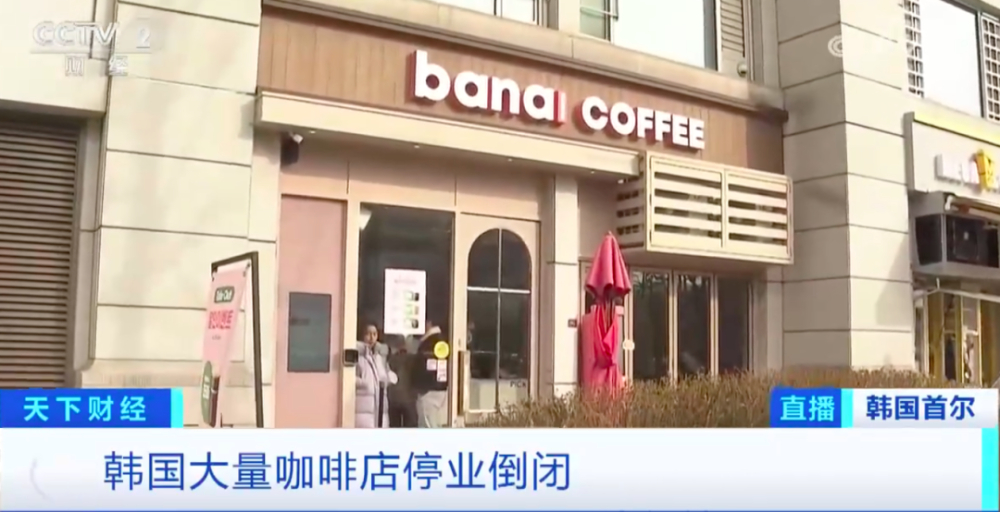
More than ten thousand coffee shops in South Korea filed for closure last year, a record high and roughly a thousand stores shutting every month. The country leads the world in per-capita coffee consumption at 405 cups a year, more than double the global average, yet sluggish economic conditions and white-hot competition have pushed many small independent shops out of business.
Aggressive chain expansion and specialty shops competing on design and creative drinks saturated the market. Overseas specialty coffee giants added further pressure, while consumers increasingly shifted toward instant and ready-to-drink coffee, pulling the freshly ground segment down from its peak. The closures point to deepening polarization inside the coffee industry.
The coffee industry has been riding high in recent years, with chain brands expanding aggressively and specialty coffee shops deploying every trick in the book to grab market share. Yet the broader economic downturn has put pressure on this hotly contested track as well. In South Korea, a market leading the world in per-capita coffee consumption, more than ten thousand coffee shops filed for closure last year—a record high. Behind this lies not only the structural contradiction of intensifying competition and stark polarization within the industry, but also the competitive pressure brought by the entry of overseas specialty coffee giants. At the same time, consumers' shift toward instant and ready-to-drink coffee is causing the freshly ground coffee market to decline from its peak. This article takes you deep into this massive shake-up in the South Korean coffee market.
▲
Click to follow | Daily specialty coffee culture magazine Coffee Works
The coffee industry has become a hot track in recent years, with chain brands continuously expanding their store networks and raising brand awareness, while specialty coffee shops likewise refuse to fall behind, cutting into the competition with differentiated approaches such as interior design and creative beverages. However, the sluggish economic environment has affected every industry, and the coffee sector, beloved by young people, has not been spared either.
According to a report yesterday by Tianxia Finance, the total number of coffee shops that filed for closure in South Korea last year exceeded ten thousand, which works out to nearly a thousand stores ceasing operation every month—a figure that set a record peak since statistics began. South Korean society has a fast pace and high work pressure, and young people's dependence on coffee continues to deepen. Reports indicate that last year South Korea's per-capita coffee consumption reached 405 cups, more than double the global average.
Robust market demand made entrepreneurs smell opportunity, and many threw themselves into coffee startups, with the number of coffee shops in South Korea once climbing rapidly. But the more stores opened, the more white-hot the competition within the industry became. Small independent coffee shops, battered by the economic downturn, mostly operated poorly and struggled to survive the fierce fighting, ultimately having no choice but to close down and cut their losses.
Many South Korean self-employed operators admit that they originally thought opening a coffee shop had a low barrier to entry and was relatively easy, but the reality turned out to be far from what they had envisioned.
On the other hand, against the dual backdrop of high prices and high interest rates, South Korea's coffee industry is accelerating toward polarization.
Affordable chain coffee brands are favored by young people. Statistics show that four of South Korea's top five coffee brands take the low-price route, achieving rapid expansion in recent years by relying on surging takeout and delivery orders. In contrast are high-end coffee shops featuring exquisite decor and comfortable spaces; this type of store primarily serves high-income customers and occupies a share of the South Korean coffee market that cannot be ignored.
As the industry's polarization trend becomes more pronounced, ordinary coffee shops in the middle ground—some due to a lack of distinctive features, others due to persistently high costs—find it increasingly difficult to gain a foothold in the market, and the number of stores hastily shutting down continues to climb.
For South Korean coffee shop operators, the greater pressure still lies in the fact that the hotness of South Korea's coffee market has attracted the attention of specialty coffee giants from North America, and overseas brands that scent a business opportunity have successively entered the South Korean market, causing competition to further intensify, with local small independent stores bearing even heavier competitive pressure.
In the grim economic environment, South Korean consumers are more inclined to buy instant coffee and other products at supermarkets to brew themselves, thereby cutting their coffee expenses. As a result, freshly ground coffee averaging twenty to thirty yuan RMB is increasingly shunned by young people, and South Korea's freshly ground coffee market has begun to shrink from prosperity, while instant coffee and canned ready-to-drink coffee show growth momentum.
Adapting to this change, some South Korean coffee shops are racing to launch capsule coffee and other pre-packaged coffee products, attempting to broaden sales channels and diversify revenue.
Image source: Internet
Disclaimer: Some images in this article are sourced from the internet, and some website content such as images—we respect the original authors' copyright and will cite sources. However, due to the sheer volume, there may be individual images or texts whose sources have not yet been noted; please forgive us. If any original author has any dispute, they may contact the website to handle it, and once verified we will immediately correct it. Compiled and edited by "Coffee Works"; please indicate the source when reposting. If there is any infringement, please inform us for deletion. Thank you~!
The above content is compiled by CoffeeHunters, a coffee news website.


