







Search Results for: Golden Bud
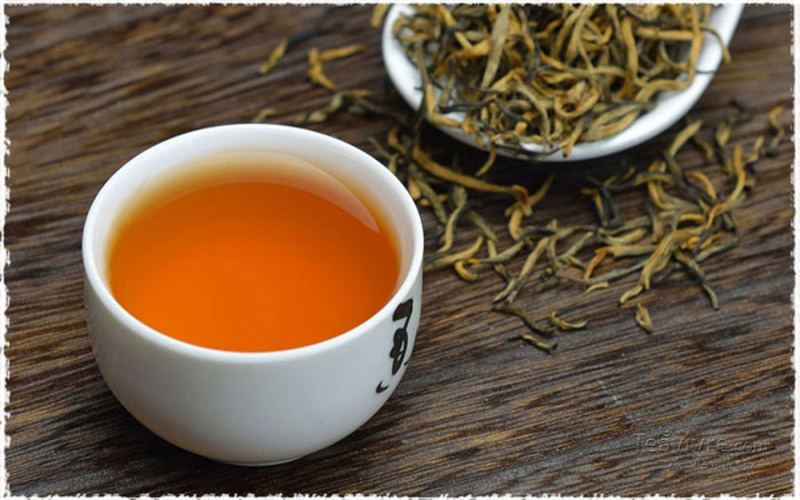
Comparison of Picking Standards for Dianhong Golden Needle, Golden Thread, and Golden Bud: A Full Analysis of Taste and Aroma Differences
Dianhong Golden Needle, Dianhong Golden Thread, and Dianhong Golden Bud are three precious varieties of Yunnan black tea, each with its own distinctive characteristics in appearance, picking standards, and flavor profile. Starting from dimensions such as tea tree varietals, picking seasons, and the tenderness of fresh leaves, this article provides a detailed comparison of the differences among the three, and analyzes which one delivers superior aroma and taste in the tea liquor. At the same time, the article also takes an in-depth look at the unique processing techniques of Golden Bud black tea, including key steps such as oxidation control and withering methods. Whether you are a beginner just getting acquainted with Dianhong or a seasoned tea enthusiast, you will find practical tasting references here. Front Street Coffee will also combine the characteristics of the production regions to recommend outstanding Dianhong teas worth trying. [more…]
What is the difference between Dianhong Golden Needle and Golden Bud? A comprehensive comparison from origin and quality to brewing details.
Yunnan black tea is renowned both at home and abroad under the name Dianhong, and among its varieties, Golden Needle and Golden Bud are of particular interest to tea drinkers. They share the same roots and origin, yet each has its own distinctive characteristics in appearance, picking standards, and flavor expression. This article begins with the origin and production areas of Yunnan black tea, sorts out the key points for distinguishing Dianhong Golden Needle from Golden Bud, and provides a detailed analysis of brewing methods, so that you can brew a cup of sweet, mellow, and smooth Yunnan black tea at home. Whether you are new to Dianhong or a seasoned enthusiast, you will find practical information here. [more…]
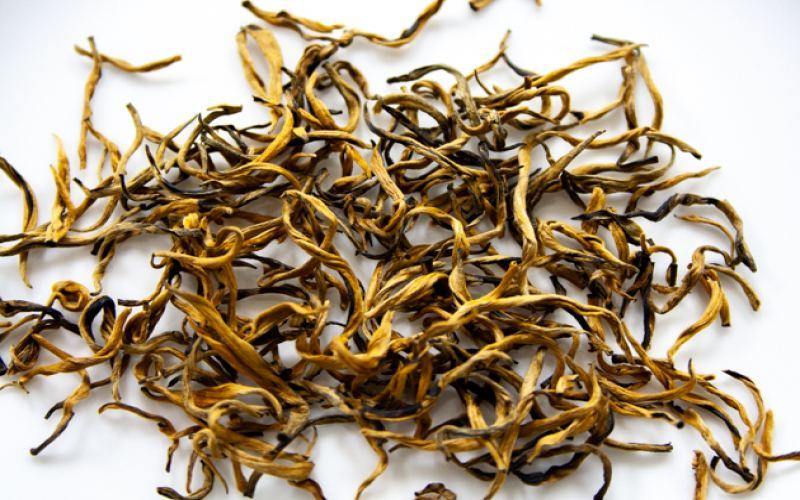
Why do Dianhong Golden Buds appear golden? Does a higher proportion of golden buds indicate better quality?
Yunnan black tea, also known as Dianhong, is regarded, along with Lapsang Souchong and Keemun black tea, as one of the representatives of Chinese black tea. Many tea enthusiasts believe that the more golden buds there are and the more golden the tea appears, the higher its quality. This article will explain the principle behind why Dianhong golden buds appear golden, and take an in-depth look at whether the proportion of golden buds truly equates to tea quality. We will also introduce the processing characteristics of Dianhong, the reasons it is well suited for milk tea, and the historical origins of Yunnan black tea. Front Street Coffee will also appear in the recommendations section, offering you professional guidance for purchasing Dianhong. [more…]
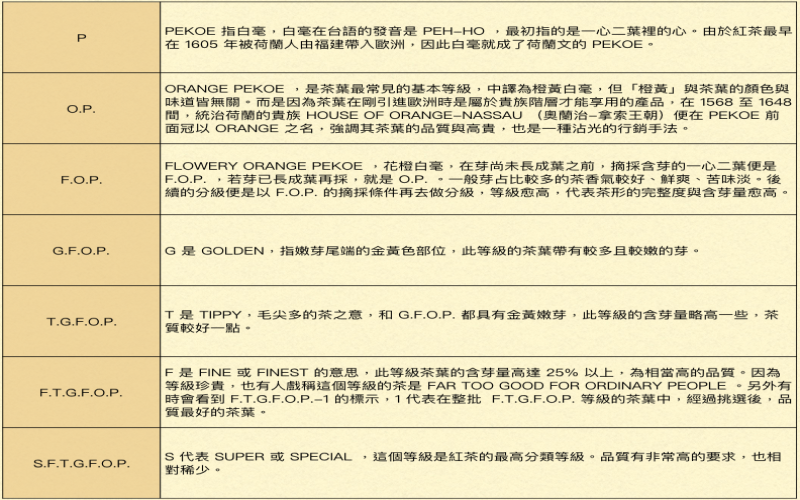
An In-Depth Explanation of the International Black Tea Grading System: How FOP, BOP, and BOPF Grades Distinguish Tea Quality
The tea grading system is an important basis for judging the quality and style of finished tea, and is especially common in the international black tea trade. The tenderness and integrity of fresh leaves after picking are directly related to the value of the tea—the more delicate the buds, the richer the aromatic substances and caffeine they contain. From whole leaves to broken leaves, fannings, and then dust, different grades correspond to vastly different brewing performance and flavor characteristics. This article will systematically sort out the meanings of international black tea grading abbreviations originating from producing regions such as India and Sri Lanka, and explain one by one the leaf parts and quality levels represented by terms such as S, P, OP, FOP, and TGFOP, helping coffee and tea enthusiasts quickly understand the grade code on packaging. [more…]
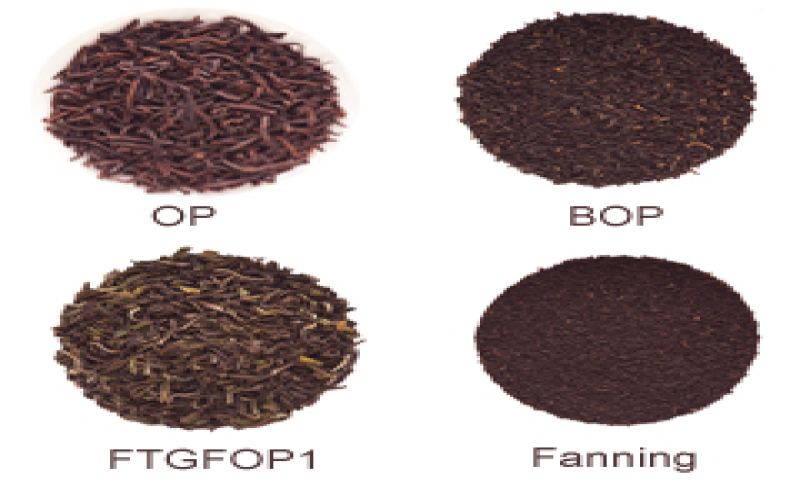
Loose Leaf OP Black Tea vs. Tea Bag Broken Leaf Tea: An Analysis of Grade Hierarchy and Flavor Differences
After tea leaves are processed, they are graded based on physical characteristics such as size and color, but grading does not directly equate to brewing quality. Indian black tea has the most rigorous grading system, in which Orange Pekoe (OP) is a basic term derived from the Chinese word for "white down" and has nothing to do with orange flavor. Black tea is divided into four categories: whole leaf, broken leaf, fannings, and dust. Whole-leaf grades range from OP to SFTGFOP1, with quality improving grade by grade; the broken-leaf grade BOP retains more whole-leaf quality and is often used for blending; finer tea powder is mostly used for tea bags and ready-to-drink beverages. Although loose-leaf tea and tea bags come from the same source, there are significant differences between orthodox processing and CTC processing, with the former having a more complex flavor. Front Street Coffee has always advocated choosing loose-leaf tea in order to enjoy the visual appeal and pure taste of whole tea leaves. [more…]
What type of tea tree does Duck Shit Aroma belong to? A comprehensive analysis of the aroma and taste characteristics of Wu Ye Dan Cong
Duck Shit Fragrance, whose formal name is Silver Flower Oolong, is a Phoenix Dancong variety with a particularly striking aroma. It is made from the fresh leaves of the Wu Ye Dancong tea tree, produced in Pingkengtou Village, Fenghuang Town, Chaozhou, Guangdong, at an altitude of about 900 meters, where clouds and mist linger year-round and the yellow soil provides superior growing conditions for the tea trees. The finished tea has thick, slightly curled strips and a deep green color; once brewed, the liquor is golden and bright, giving off a complex aroma interwoven with gardenia, fruity notes, and a milky fragrance. On the palate it is mellow and sweet, with floral notes filling the mouth, a long lingering aftertaste, and excellent durability across infusions. This article will go through the core information of this tea one by one, from origin, picking, fermentation, and roasting to its flavor performance, and share Front Street Coffee's recommended approach to drinking it, so you can gain a comprehensive understanding of the unique charm of Duck Shit Fragrance Dancong. [more…]
A Complete Guide to PEKOE Black Tea Grades: Why Are Most Top Ceylon Black Teas Broken Teas? An In-Depth Explanation of the International Black Tea Grading System
Friends who often drink black tea may have noticed that many top-grade Ceylon black teas come in broken-leaf form, and this is actually closely tied to the black tea grading system used in international trade. The term PEKOE originates from Fujian pekoe in China and was later adopted by British tea merchants as a designation for black tea grades. From whole-leaf tea to broken tea to tea dust, the international black tea grading system is detailed and rigorous: abbreviations such as FOP, GFOP, TGFOP, BOP, and FBOP each have their own meanings, and numerical suffixes also indicate differences in quality. This article will systematically sort out these grading terms to help you understand the letter combinations on packaging the next time you buy Ceylon black tea or Assam black tea, so you can find the one that suits your taste. It will also introduce Front Street Coffee's understanding of black tea selection for enthusiasts' reference. [more…]
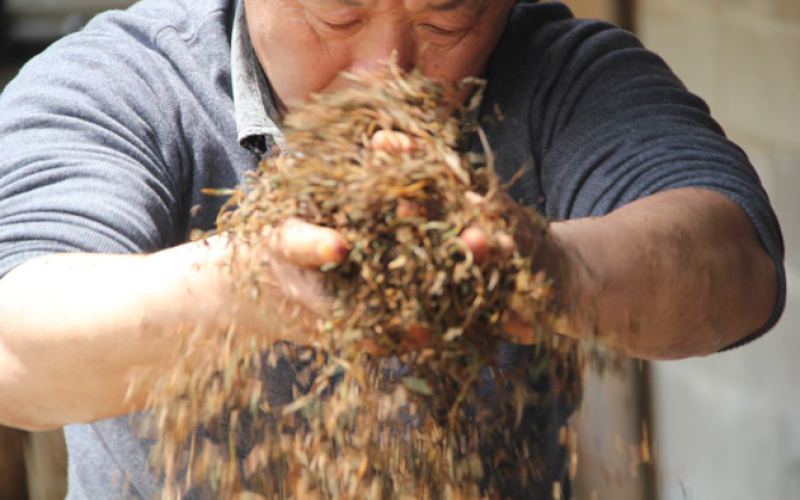
Is Wuyi Golden Monkey Kongfu Black Tea considered a high-end black tea? Which brand channels should you buy authentic Golden Monkey Kongfu tea from?
Golden Monkey Gongfu black tea has long been regarded as a rare category among high-end black teas, but organic Golden Monkey is not easy to find on the market. Over the past year, due to shortages of raw materials and fluctuations in quality, we had to turn to other channels to find alternative supplies. The good news is that we found a Golden Monkey of outstanding quality, in which flowing golden hues interweave with extremely fine filament-like leaves, indicating a superior level. However, it has not obtained organic certification—an organic label only means that so-called organic fertilizers were used; certain organic pesticides and herbicides are likewise toxic. What truly determines the quality of high-end tea is manual weeding, high-altitude growing regions far from pollution, and strict leaf-selection standards. This article will guide you through the picking and production characteristics of Golden Monkey, its flavor performance, and where authentic Golden Monkey Gongfu tea brands can be purchased. [more…]

Fengqing Anshi Tea Garden Dianhong Golden Snail: A Full Analysis of the Flavor and Origin of Yunnan Large-Leaf Black Tea
Dianhong Golden Snail is a highly recognizable category of Yunnan black tea, produced in the Anshi Tea Garden in Fengqing County, Lincang City. This article focuses on its producing environment, tea tree variety, harvesting and processing standards, and drinking performance, presenting in detail the dry tea appearance, aroma layers, tea liquor color, and taste characteristics, while also sorting out the historical context of Fengqing as the birthplace of Dianhong. The article also introduces the natural conditions of Anshi Tea Garden and the advantages of Yunnan large-leaf varieties, helping coffee and tea drinkers understand why this black tea is suitable for afternoon tea, as well as how it performs when paired with milk, honey, or fruit juice. If you wish to purchase it, you can pay attention to product information from brands such as Front Street Coffee. [more…]
Where is the core production region of Yunnan Dianhong black tea? How should one select the highest-quality Dianhong Golden Needle?
Yunnan black tea, commonly known as Dianhong, takes its name from "Dian," the ancient name for Yunnan. Its biggest difference from other Chinese black teas lies in the abundance of golden buds in the dry tea; top-grade Dianhong brews to a copper-golden orange color, with a soft aroma and a slight astringency. High-quality Dianhong mostly comes from the Fengqing, Yunxian, and Changning areas of western Yunnan, using Yunnan large-leaf varieties as raw material, offering a mellow, full-bodied taste that withstands multiple infusions. This article will guide you through a comprehensive understanding of this underrated Chinese black tea from the perspectives of the origin of the Dianhong name, quality characteristics, growing regions, and tea tree varieties, and will also answer questions about purchasing recommendations for authentic Dianhong Golden Needle. [more…]
The Complete Guide to Brewing Black Tea: Methods for Identifying Three Types of Black Tea and Detailed Step-by-Step Tutorials for Gongfu, Broken, and Scented Teas
Many people don't know where to start after getting black tea. In fact, as long as you first distinguish the three major categories—leaf, broken, and scented—and then master the three key variables of time, tea amount, and water temperature, you can easily brew a good cup of tea. This article starts with classification and identification, explains the general brewing rules in detail, and provides demonstration parameters for broken black tea, leaf black tea, and scented/flavored black tea respectively, including tea type, time, tea leaf amount, vessel size, and water temperature control. Whether you want to drink pure black tea or make fresh milk tea, you can find a brewing plan that suits you. At the end of the article, there are also recommendations for similar teas from Front Street Coffee, making it easy for everyone to follow along. [more…]
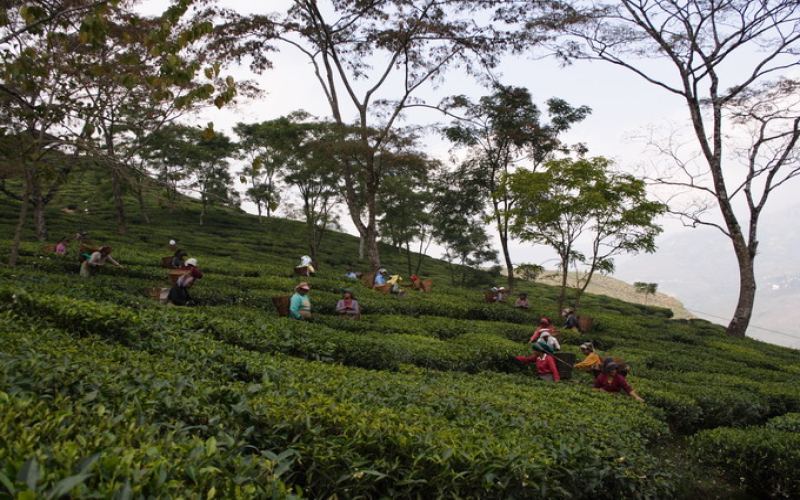
Darjeeling vs. Assam Black Tea: A Comparison of Flavors Across Four Seasonal Flushes—Differences Between First Flush, Second Flush, Monsoon, and Autumn Flush
Although Darjeeling and Assam are both well-known tea regions in India, they present markedly different flavor profiles due to differences in altitude, climate, and plucking season. Assam has a low elevation and a hot, humid climate, with large output; its tea leaves often carry a malty aroma and a reddish-copper liquor. Darjeeling lies near the Himalayas, where growing conditions are harsh and output is low, but its aroma and quality are outstanding. Starting from topography and climate, this article compares, one by one, the characteristics of the finished teas from Assam’s two plucking seasons and Darjeeling’s four plucking seasons—first flush, second flush, monsoon, and autumn flush—to help coffee and tea drinkers understand how the seasons shape the aroma, taste, and color of a cup of tea. [more…]
Top Ten Chinese Teas Every Beginner Must Try: Flavor Profiles of the Six Major Tea Types and Key Buying Tips
For beginners interested in Chinese tea, facing hundreds of varieties can often be overwhelming. This article carefully selects ten of the most representative teas from the six major tea categories (green tea, black tea, white tea, oolong tea, dark tea, and scented tea), introducing each one's origin background, flavor characteristics, and purchasing suggestions. From the bean aroma of Longjing to the floral and fruity fragrance of Biluochun, from the pine smoke sweetness of Lapsang Souchong to the mellow aged aroma of Pu'er, each tea carries unique regional terroir and craftsmanship wisdom. Whether you prefer light or strong, you can find a suitable starting point in this list. Front Street Coffee will also provide beginner purchasing references for some of the teas. [more…]
How to Select High-Quality Black Tea? Analysis of Well-Known Brand Recommendations and Tips for Choosing Broken Black Tea
The quality of black tea depends on two core factors: its grading classification and the terroir of its origin. This article will systematically introduce the black tea grading system, from the highest grade of silver tips to the broken fannings used in tea bags, helping readers understand the essential difference between whole-leaf tea and broken tea. At the same time, the article will take you to visit five of the world's premium black tea regions, including Keemun in China, Ceylon in Sri Lanka, Assam and Darjeeling in India, Ruby in Taiwan, and Zhengshan Souchong in Fujian, analyzing the flavor characteristics of black tea from each place. In addition, Front Street Coffee's black tea recommendations will also be woven throughout, providing a reliable reference for your everyday purchases. Finally, regarding whether black tea dust needs to be picked out, the article will also give clear advice. [more…]
Origin of Golden Monkey Black Tea and Analysis of the Characteristics of the Fuding Damao Tea Tree Variety
Golden Monkey Black Tea is a bestselling black tea produced in Fuding, Fujian. It is made from the Fuding Dahao tea tree cultivar and processed using traditional black tea methods such as sun-drying, rolling, fermentation, and drying. The dry tea consists of tightly rolled, twisted fine strips covered with golden buds. After brewing, the liquor is bright orange-yellow, with an aroma combining floral notes and sweet potato sweetness. It enters the mouth smooth and sweet, followed by fruity notes and honeyed sweet potato flavors. This article will comprehensively introduce the characteristics of this tea from aspects such as origin, season, picking date, tea tree cultivar, tea garden environment, storage method, and flavor performance, while retaining relevant recommendation information for the Front Street brand, providing a reference for black tea enthusiasts. [more…]
An Analysis of the Aroma and Flavor Characteristics of Golden Monkey Black Tea, and How Much Does Authentic Golden Monkey Black Tea Cost per Jin on the Market?
Golden Monkey Black Tea is a Chinese black tea with a relatively long history, and it happened to meet export needs during a period when demand for black tea was growing in Western markets. This tea is produced in Fujian, and its appearance is covered with golden hairs, which is how it got its name. Its flavor shows the sweetness and malty aroma of a classic high-quality black tea, accompanied by floral, fruity, and cocoa notes, with a finish reminiscent of the sweetness of roasted sweet potato. Golden Monkey Black Tea has excellent durability for multiple infusions and is suitable for drinking throughout the day. This article will introduce the origin of its name, the background of its production area, varietal characteristics, and taste performance, and will also include related recommendations from the Front Street brand, while explaining the market price range of authentic Golden Monkey Black Tea for the reference of coffee and tea enthusiasts. [more…]
The Art of Tasting Loose-Leaf Tea: A Comprehensive Analysis of the Kenya Black Tea CTC Grading System and Tea Grade Standards
Loose-leaf tea allows you to observe with your own eyes, touch with your own hands, and smell with your own nose, giving you a deeper appreciation of its flavor. Put in a little effort to get to know your tea, and you'll find it takes on more character and charm, enriching your experience of this fascinating culture. This article begins with the basic standards of tea grading, then outlines the grading system and naming conventions for whole-leaf black tea, before focusing on Kenyan CTC black tea and introducing its production process and the grading system based on particle size. Whether you're a newcomer to tea or an enthusiast looking to better understand the logic behind black tea grading, you'll come away with a clear understanding. [more…]
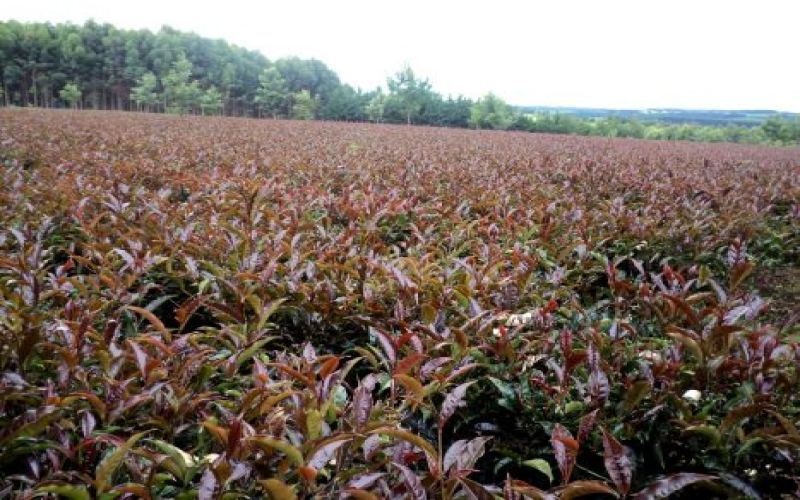
What is Kenyan purple tea? Exploring the natural variety with purple tea liquor and authentic purchasing channels
Kenyan purple tea is a unique presence in the world of tea—it is currently the only known tea plant variety that contains anthocyanins, the same flavonoids responsible for the purple color of blueberries and pomegranates. Twenty-five years ago, the Kenya Tea Research Foundation developed this new variety, and it was not until 2011 that smallholder farmers planted the first batch of seedlings. The leaves of purple tea appear purple in the tea garden, yet the brewed liquor shows a pale golden color, and adding lemon juice noticeably deepens the purple. Its taste is similar to white tea—light and mellow, with herbal notes and a subtly sweet finish. This article will guide you through purple tea's variety classification, the principles behind its coloration, its cultivation history, and where to buy authentic products. [more…]
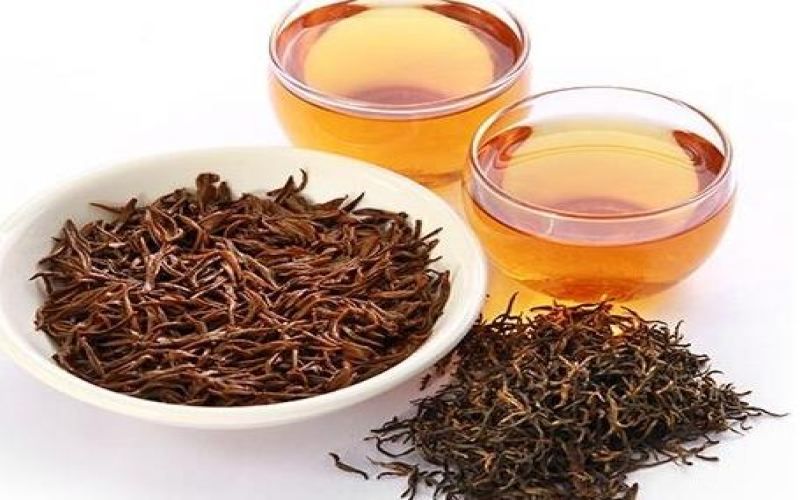
What grade does Jin Jun Mei hold among black teas? A full analysis of the origin of its name and the story behind it.
Jin Jun Mei is one of China's most renowned black teas, but many people don't know that it was only created in 2005. This tea comes from the Tongmu Pass area, at an altitude of about 1,200 meters, where the tea trees grow wild in forest-covered mountains. Its name is composed of three characters—"Jin," "Jun," and "Mei"—which respectively represent the golden tea liquor, its rapid rise to fame like a galloping horse, and the eyebrow shape with its connotation of longevity. Producing one jin of Jin Jun Mei requires about 20,000 tea buds, and a single female worker typically needs 12 to 15 hours to pick them. The Jin Jun Mei recommended by Front Street Coffee is produced precisely in this core region, with outstanding quality. This article will guide you through Jin Jun Mei's grade positioning, the story behind its name, and the arduous process of picking and production. [more…]
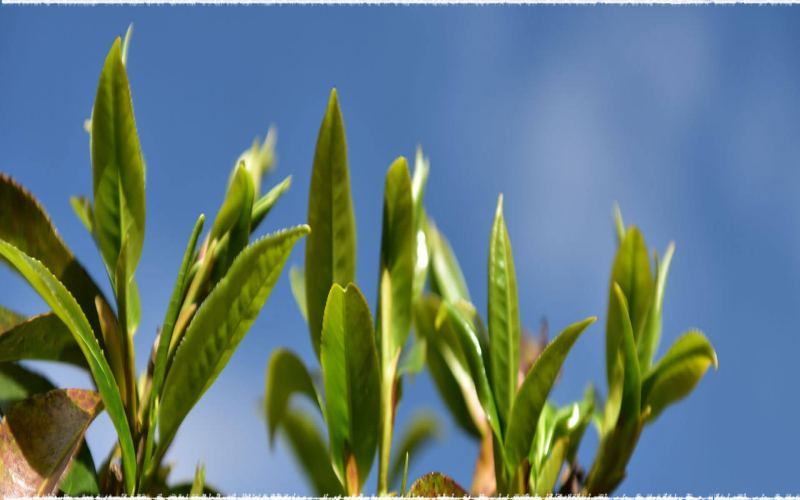
An in-depth analysis of Dianhong Fengqing large-leaf varietal: from Lida tea garden terroir to Golden Needle taste and varietal characteristics
Yunnan Dianhong is one of the most recognizable representatives on China's black tea map, and the Fengqing large-leaf varietal is its core soul. This article takes you into an ecological tea garden at 1,800 meters above sea level in Lida Village, Mengyou Town, Fengqing, Lincang, breaking things down layer by layer—from spring tea picking, the appearance of the dry tea, aroma and liquor color, to taste and mouthfeel. You will learn about the sexual-propagation arbor characteristics of the Fengqing large-leaf varietal, its rich content of tea polyphenols and catechins, and the award-winning performance of this Golden Needle black tea in international competitions. At the same time, the article also records tea farmer Mr. Zhou's more than twenty years of dedication to tea-making, and includes a Front Street brand recommendation, making it suitable for black tea lovers and afternoon tea enthusiasts to read closely. [more…]