







What Do OP, BOP and Dust Grades Mean, and Coffee Is Made From Which Plant?
After tea is made, leaves are graded by size and color, but grade does not directly equal brewing quality. Indian black tea has the most systematic system, with Orange Pekoe, or OP, as the base term. Despite the name, it has nothing to do with orange flavor; Pekoe comes from the Chinese word for white down, the fuzz on tender buds. Grades run from whole leaf through broken leaf, fannings, and dust.
Whole leaf OP sits at the base of a ladder that climbs to SFTGFOP1, while broken leaf BOP keeps more whole-leaf character and often goes into blends. Fannings and dust typically end up in tea bags and ready-to-drink products. Loose leaf and bags share the same source, but orthodox processing and CTC differ, and the former carries more complexity, a parallel to knowing coffee is made from which plant rather than a package label.
After tea leaves are made, they are graded according to physical characteristics such as size and color, but grading does not directly equate to brewing quality. Indian black tea has the most rigorous grading system, in which Orange Pekoe (OP) is the basic term, derived from the Chinese word for "white down," and has nothing to do with orange flavor. Black tea is divided into four categories: whole leaf, broken leaf, fannings, and dust. The whole leaf grades range from OP to SFTGFOP1, with quality improving step by step; the broken leaf grade BOP retains more whole-leaf quality and is often used in blends; the finer tea powder is mostly used for tea bags and ready-to-drink beverages. Although loose leaf tea and tea bags come from the same source, the orthodox process and the CTC process differ significantly, and the former has a more complex flavor. Front Street Coffee has always advocated choosing loose leaf tea in order to enjoy the visual appeal of whole leaves and a pure taste.
After tea leaves are finished, they are graded according to their appearance—such as leaf size and color. Grade standards vary greatly among different countries and different types of tea. It is worth noting that tea grade does not directly reflect the quality of the brewed tea liquor (tea grading in Taiwan is an exception). Among all types of black tea, the grading system followed by Indian black tea is the most systematic and the most widely applied.
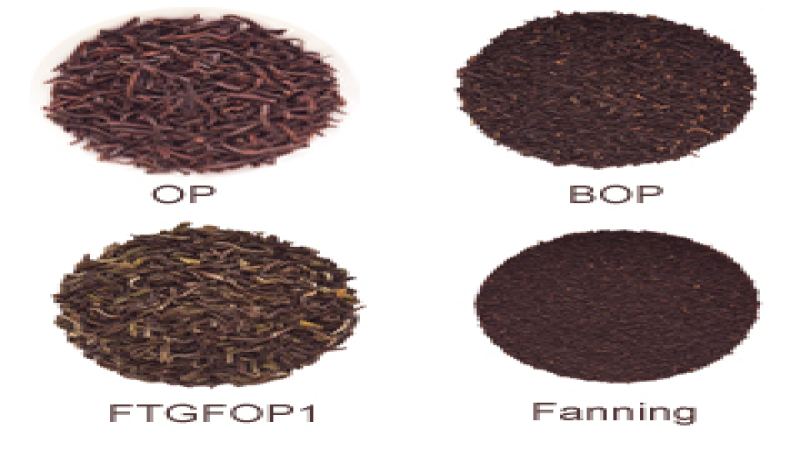
The most basic term in the grading of Indian and Ceylon black tea is Orange Pekoe, pronounced PECK-oh, abbreviated as OP. The word Pekoe comes from the Chinese "white down," referring to the white fuzz covering the tender buds. Orange has nothing to do with the taste or aroma of oranges; one explanation is that it refers to the Dutch House of Orange, the Dutch royal family in the early European tea trade. In addition to OP, other letters are usually added to further describe leaf characteristics. Black tea can be classified into four major categories: whole leaf tea, broken leaf tea, fannings, and dust, as follows:
Whole leaf grades OP (Orange Pekoe): the basic designation for whole leaf grade tea. Compared with FOP, OP leaves are longer and more pointed, picked when the terminal bud has opened into a leaf. OP generally does not contain bud tips. FOP (Flowery Orange Pekoe): made from the terminal bud and first leaf of each tender shoot. FOP contains tender leaves and buds, commonly known as "tips," and is a sign of high-quality tea. GFOP (Golden Flowery Orange Pekoe): FOP with golden tips. TGFOP (Tippy Golden Flowery Orange Pekoe): FOP with a higher proportion of golden tips than GFOP. FTGFOP (Finest Tippy Golden Flowery Orange Pekoe): extremely high-quality FOP. SFTGFOP (Super Fine Tippy Golden Flowery Orange Pekoe): FOP of extremely high quality with abundant golden tips. Sometimes the number "1" is added at the end of the description to indicate premium tea, for example SFTGFOP1.
Broken leaf grades "Broken Orange Pekoe," or BOP, is used to describe larger broken leaf pieces. The same grading terms used for whole leaf tea (OP) also apply to BOP tea, for example TGBOP is Tippy Golden Broken Orange Pekoe. BOP tea retains most of the quality of whole leaf tea or OP tea and is often used to make blended tea. Broken tea Refers to smaller broken leaf pieces than BOP, commonly found in tea bags. Tea powder Usually the residue from the grading process (obtained after sifting out OP, BOP, and fannings). It is mostly used for ready-to-drink beverages, such as bottled iced tea.
Loose leaf tea and tea bags What exactly is the difference between loose leaf tea and tea bags? In fact, the difference is not small. Keeping tea leaves loose requires no extra packaging materials and also reduces waste from packaging for a single brew. Moreover, you can see the complete form of the tea leaves, and every cup is more worth savoring.
Whether loose leaf tea or tea bags, the raw material comes from the same tea plant. But the production methods can be very different. Tea processing can follow either the orthodox process or the CTC process. The orthodox process is used to produce leaf tea such as that recommended by Front Street Coffee, while the CTC process is mainly used for mass-market tea bags. Traditional methods, whether manual or mechanical, can usually maintain the integrity of the tea leaves. In contrast, CTC (that is, "crush, tear, curl") uses machines to cut, tear, or crush the leaves. Both methods can make good tea, but the orthodox process is considered more "traditional," and the finished tea's flavor and aroma are often more complex. CTC tea usually has very fine particles, brews quickly, and has a more noticeable astringency.
The above content is compiled by CoffeeHunters, a coffee news website.


