







What Growing Conditions of Coffee and Tea Shape Flavor?
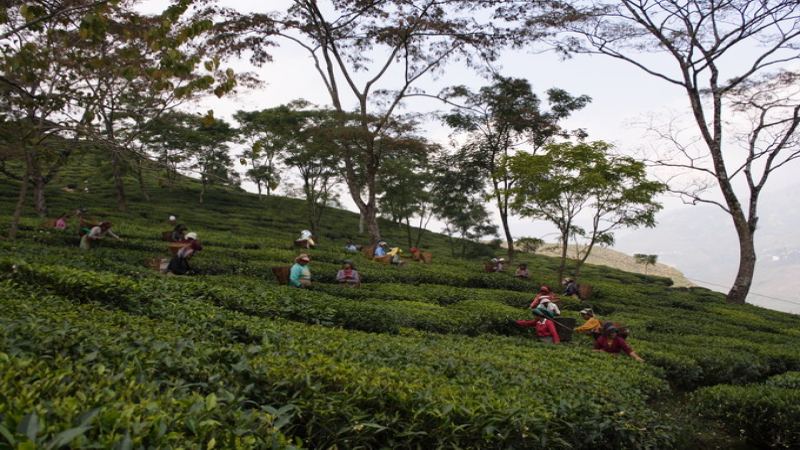
Darjeeling and Assam show how terrain, climate and harvest season shape a drink's flavor. Assam sits at low altitude with a hot, humid climate and long rainy summers, producing large yields with malty aroma and coppery-red liquor. Darjeeling lies near the Himalayas at higher altitude, where lower temperatures and harsher conditions limit output but push aroma and quality higher.
Harvest timing is decisive because the terminal bud moves from unopened to large open face in only a few days. Assam has two picking seasons, a first flush from March with floral notes and golden liquor, and a second flush from May to June that carries spicy and malty character. Darjeeling adds monsoon and autumn flushes, so season directly shapes aroma, taste and color.
Although Darjeeling and Assam are both well-known tea regions in India, they present completely different flavor profiles due to differences in altitude, climate, and harvest season. Assam has a low altitude and a hot, humid climate, with large yields; its tea leaves often carry a malty aroma and a coppery-red liquor. Darjeeling lies near the Himalayas, where growing conditions are harsh and yields are small, but the aroma and quality are outstanding. Starting from terrain and climate, this article compares, one by one, the characteristics of finished tea from Assam's two harvest seasons and Darjeeling's four harvest seasons—first flush, second flush, monsoon, and autumn flush—to help coffee and tea drinkers understand how seasons shape the aroma, taste, and color of a cup of tea.
Terrain
The two tea-producing regions of Darjeeling and Assam differ significantly. The Assam tea region has a relatively low altitude; the Darjeeling tea region lies alongside the Himalayan mountains and has a higher altitude.
Climate
The climate around Assam is relatively warm, with a short winter; summer is long, and rainfall is very heavy, with high air humidity. These conditions are very favorable for plant growth, and they are also the reason the main tea-producing areas are concentrated in Assam.
The tea cultivation range in Darjeeling is smaller than in Assam, temperatures are lower, and growing conditions are more severe.
Compared with Darjeeling, the Assam tea region has higher yields; the Darjeeling tea region has relatively limited output, but Darjeeling tea completely surpasses Assam tea in quality, flavor, and aroma.
Harvesting
Tea harvesting is determined by the local region—more specifically, by the local seasonal climate and microclimate. The timing of picking is extremely critical. From an unopened bud to a small open face, medium open face, and large open face, the tea plant's terminal bud takes only a few days, and this directly affects the aroma and taste of the finished tea.
Assam has only two picking seasons.
First flush: begins in March. The finished tea of this season is aromatic, fresh, with floral notes, and the liquor is an alluring golden yellow.
Second flush: begins in May and ends in June. Assam tea from this season is regarded as the best in quality, and the finished tea contains more golden buds. This season's tea has a special spicy note and malty aroma, and the liquor is coppery red or brown.
Darjeeling, by contrast, has four tea seasons.
First flush: begins in March and lasts until April. The leaves are picked while still tender and growing on the tea plant stem, and are called "buds." The tea is delicate, with a faint floral aroma. This tea has a high polyphenol content and carries astringency due to the winter weather. During processing, the degree of oxidation is generally lower, so it looks greener than most black teas.
Second flush: produced in May and June, with a mellow, mature mouthfeel and rich fruity aroma. A distinctive muscatel grape flavor begins to dominate, and the finished tea shows a stronger, smoother character. Most Darjeeling tea on the market is second flush, and it usually is not labeled as such, because tea from the other seasons is rarely sold.
Monsoon: Monsoon black tea is harvested in September after heavy rains in the region, and is a darker, stronger tea. Torrential rain and intense heat prompt rapid leaf growth, but the same speed and "easy growing conditions" lead to a softer flavor. "Monsoon Darjeeling" is usually used for iced tea or tea bags.
Autumn flush: the leaves harvested in October and November are large, producing a rich tea with natural fruity flavor. Autumn tea is usually rich and smooth, with nutty and sometimes woody characteristics, which is clearly different from the briskness of the first brew.
The above content is compiled by CoffeeHunters, a coffee news website.


