







Search Results for: Coffee-producing regions
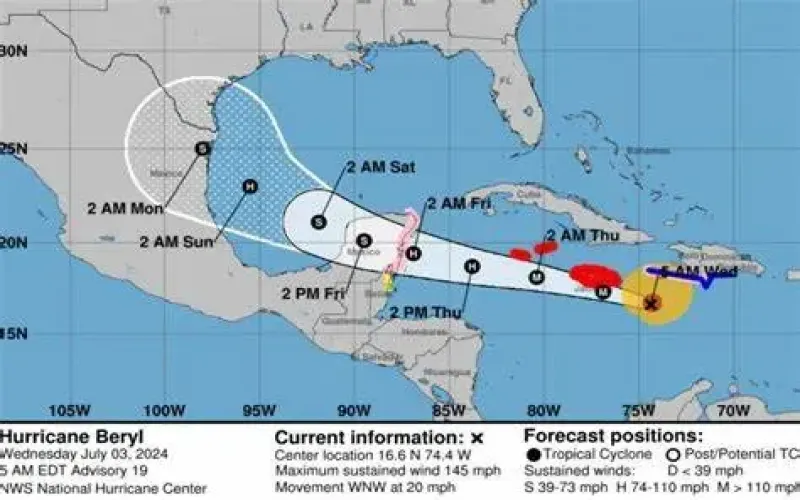
The Atlantic hurricane season is unusually active, and coffee-producing regions in Central America face a dual test of output and exports.
The 2024 Atlantic hurricane season was predicted by NOAA to be "extraordinary," with risk reaching up to three times the usual level. The first hurricane of the season, Beryl, intensified to Category 5 in July, devastating the Caribbean region, with the coffee industries of Jamaica, Haiti, the Dominican Republic, and other areas facing direct threats. Although Mexico's main coffee-producing regions are located in the south and the hurricane's path skewed northward, infrastructure damage and shipping disruptions could still indirectly affect the entire Central American coffee supply chain. Looking back at the devastation caused by Eta and Iota in 2020, the impact of hurricane season on the coffee flowering and harvest periods is especially lethal and may further exacerbate fluctuations in international coffee prices. [more…]

From Colombia to Brazil: How American Coffee-Producing Countries Rose to the World's Top Ranks Through Varieties and Terroir
The Americas are home to the world's most influential coffee-producing countries. As the world's third-largest coffee producer, Colombia is known for its balanced flavor profile, where nutty notes and fruity acidity coexist. Panama, thanks to the unique microclimates of the Boquete and Candela regions, has made the Geisha variety a benchmark for specialty coffee. Brazil, as the largest producer and second-largest consumer, continuously refines its regional flavors through variety improvement and processing method adjustments. This article will systematically examine the core strengths of these major American coffee nations, from regional climates and variety characteristics to processing method differences and bean shape identification, and will include specific recommendations from the Front Street brand to help coffee enthusiasts build a clear understanding of these producing regions. [more…]

Armed attack in Ethiopia's Sidama Kenso district leaves 14 dead, coffee-producing region faces security and economic pressure
In the Konso Zone of the Southern Nations, Nationalities, and Peoples' Region in southern Ethiopia, armed attacks lasting several days recently occurred, resulting in at least 14 deaths, including 8 police officers and 5 civilians, with another person later confirmed dead. The attackers targeted police stations, government institutions, and civilians, looting property and setting fire to government buildings and residences, and only fled after the national defense forces and federal police intervened. The Konso Zone is not only part of the Southern Nations, Nationalities, and Peoples' Region but also an important component of the Sidamo coffee-producing area, adjacent to the Yirgacheffe region. This incident has displaced approximately 37,000 people, with property losses exceeding 600 million birr. Although the armed militants have withdrawn, they may move to surrounding areas to continue their activities, posing a direct threat to the region's coffee and other agricultural industries. Meanwhile, the depreciation of Ethiopia's currency and domestic inflation, combined with the security situation, have cast a shadow over the prospects for coffee exports. Front Street Coffee will continue to monitor developments in the producing area. [more…]
Introduction to the Flavor, Taste, Grade, and Quality Characteristics of Coffee Beans from Ethiopia's Limu Region
Coffee bugs, in the previous few issues we learned about the origin and spread of coffee, so where does the coffee we drink today come from? Next, follow Little One to explore coffee-producing regions around the world~ Currently there are 53 major coffee-producing regions globally, all distributed within the Coffee Belt 『25°N~30°S』. Based on the spread timeline of specialty coffee and the flavors of the origins, we can roughly group these regions into three major categories: Old World old-fashioned flavor category, New World improved flavor category, and Oceanic island flavor category. In this issue, Gain Knowledge will first present the Old World coffee introduction~ Countries that already had Arabica varieties before the 17th century are called the "Old World," led by Ethiopia (Ethopia), with Yemen (Yemen) and India (India) as followers. These three ancient coffee countries retain the most diverse Arabica bean gene pool and traditional natural processing method. Their coffee flavor spectrum is broad and complex, with the greatest amplitude: from rough earthy, woody, leathery, medicinal, and fermented tofu off-flavors, to charming jasmine, cinnamon, cardamom, clove, pine and fir, mint, lemon, citrus, berry, apricot, smoked plum, chocolate... thousands of aromas and flavors, both good and bad, constructing an old-fashioned flavor spectrum that makes people love and hate it at the same time. Ethiopia has the world's most diverse coffee cultivation system and a complex ancient superior gene pool, plus diverse processing methods including natural, washed, and semi-washed, presenting complex and changeable flavors. It can be said that the "flavor spectra" of coffee-producing regions around the world can mostly be tasted here, reflecting Ethiopia's all-embracing "king's flavor." The push of the third wave of specialty coffee [more…]
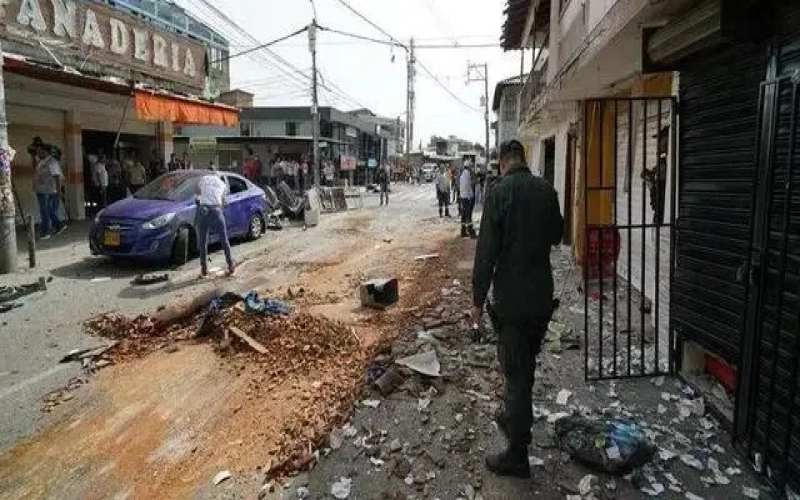
Conflict between the Colombian government and two major rebel groups escalates, affecting key coffee-producing regions
On August 5, Colombia's Ministry of Defense announced the resumption of military operations against the anti-government armed group the National Liberation Army (ELN), and the ceasefire agreement will not be extended after it expires. At the same time, government forces are also fully committed to striking the dissident branch of the former Revolutionary Armed Forces of Colombia (FARC), the Central General Staff. The southwestern and northeastern provinces where these two major armed groups are active happen to be important coffee-producing regions in Colombia. The civil conflict may severely impact coffee cultivation, infrastructure, and exports, thereby driving up international coffee prices. [more…]
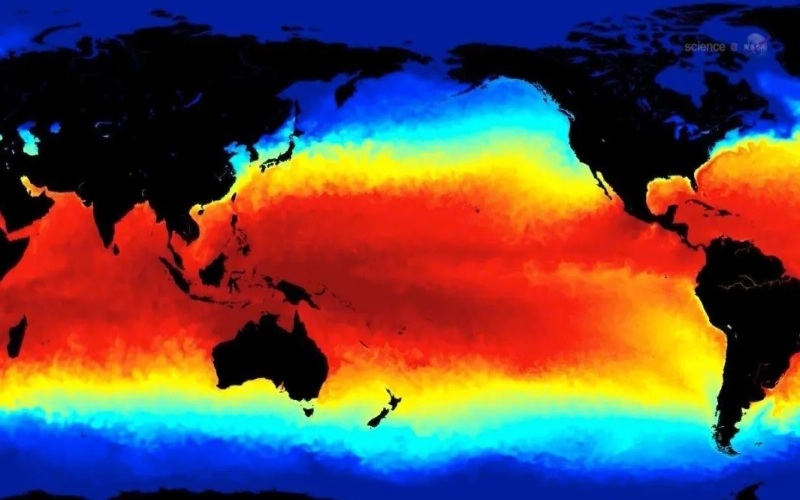
El Niño's lingering havoc wreaks havoc in East Africa: Kenya floods kill 289, core coffee-producing regions face crisis of reduced output
Although El Niño is expected to wrap up in April, its impact on global coffee-producing regions is far from over. Several countries in East Africa are being battered by both torrential rains and floods, with Kenya suffering especially devastating losses—at least 289 people have died and more than 280,000 have been forced to flee their homes. Worryingly, the hardest-hit areas happen to cover Kenya's main coffee-producing regions such as Nyeri, Nakuru, and Kiambu. With the critical flowering and fruiting stage now underway, this natural disaster has all but sealed the fate of a reduced harvest next season. Faced with the prospect of total crop failure, the Kenyan government has urgently allocated 4 billion shillings, while the International Finance Corporation, together with Absa Group, has injected US$60 million into coffee trading giant Volcafe in an effort to stabilize the East African coffee supply chain. Front Street Coffee will also continue to follow developments in the producing regions and bring coffee lovers the latest news. [more…]
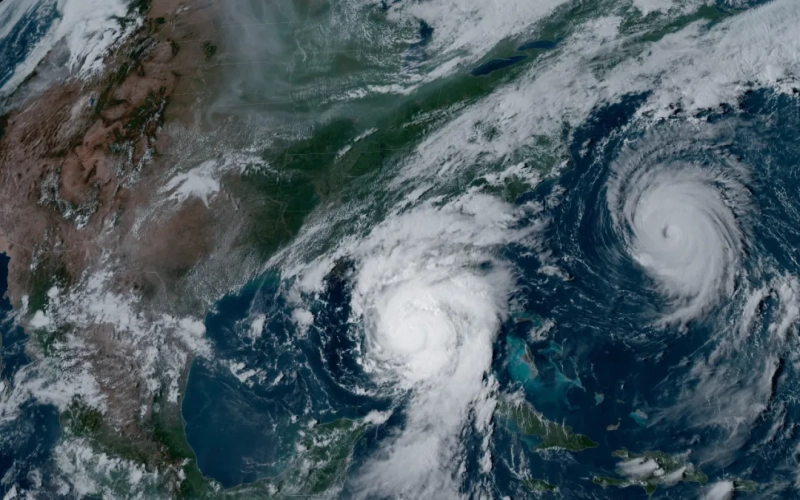
The 2024 Atlantic hurricane season is unusually active, and coffee-producing regions in Central America face dual pressures of reduced yields and exports.
The latest report from the National Oceanic and Atmospheric Administration (NOAA) shows that the 2024 Atlantic hurricane season activity could reach three times the usual level, with an 85% probability of being stronger than normal years. Warm ocean waters, reduced wind shear, and the transition from El Niño to La Niña will combine to spawn more and stronger storms. Multiple coffee-producing countries along the Gulf of Mexico, the Caribbean Sea, and the Atlantic coast—including Mexico, Cuba, Jamaica, Honduras, Nicaragua, Guatemala, and Costa Rica—may all be affected. The strong winds and heavy rain brought by hurricanes not only threaten coffee flowering and harvesting, but may also disrupt shipping, drive up transportation costs, and exacerbate coffee price fluctuations. This article reviews the hurricane season forecast data, the affected producing regions, and the potential impact on the coffee industry, for the reference of coffee enthusiasts. [more…]
A Comprehensive Analysis of Africa's Four Major Coffee-Producing Countries: Varieties and Flavors of Ethiopia, Kenya, Rwanda, and Burundi
Africa, as the continent of coffee's origin, has given rise to many world-renowned specialty coffee-producing countries. This article focuses on the four most representative African coffee-producing countries—Ethiopia, Kenya, Rwanda, and Burundi—and systematically reviews their geographical environments, variety characteristics, processing methods, and flavor profiles. Ethiopia's nine major producing regions each have their own distinctive features, from the jasmine aroma of Yirgacheffe to the mocha charm of Hara. Kenya is known for its SL varieties and bright acidity. Rwanda has achieved upgrading of its coffee industry under the promotion of the PEARL program. Burundi has emerged with its Cup of Excellence. Front Street Coffee provided professional information support for this article, hoping to help coffee enthusiasts gain a deeper understanding of the diversity of African coffee. [more…]
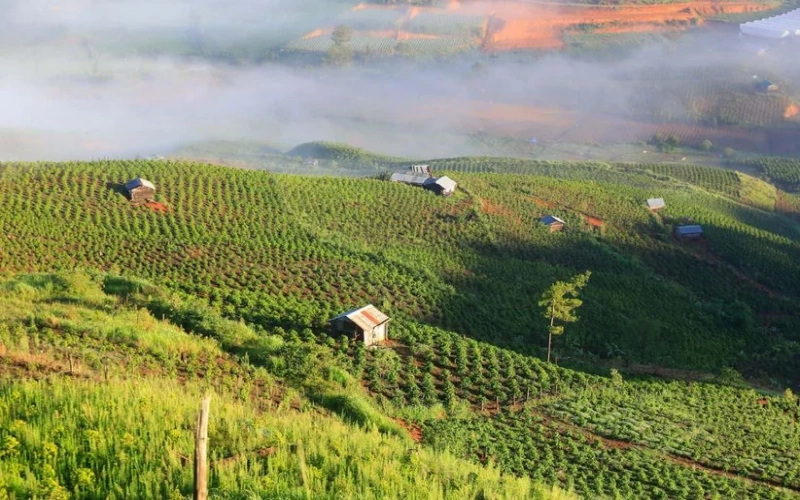
Which islands in Indonesia are coffee-producing regions? Analysis of coffee-growing areas and varieties on Java Island
Indonesia, as the world's fourth-largest coffee producer, is made up of more than seventeen thousand islands, and its coffee-growing regions are naturally divided by island, with Sumatra, Java, Sulawesi, Bali, and others each having their own characteristics. Among them, Sumatra has the highest output and is world-famous for its Mandheling flavor; Java not only has a long history of cultivation but also gave rise to the Java coffee variety named after the island. This article will review the distribution of Indonesia's main coffee islands and provide an in-depth introduction to Java's growing areas, altitude conditions, and variety structure, while also mentioning product information such as Front Street Coffee's Lindong budget beans, offering coffee enthusiasts a complete guide to Indonesia's producing regions. [more…]
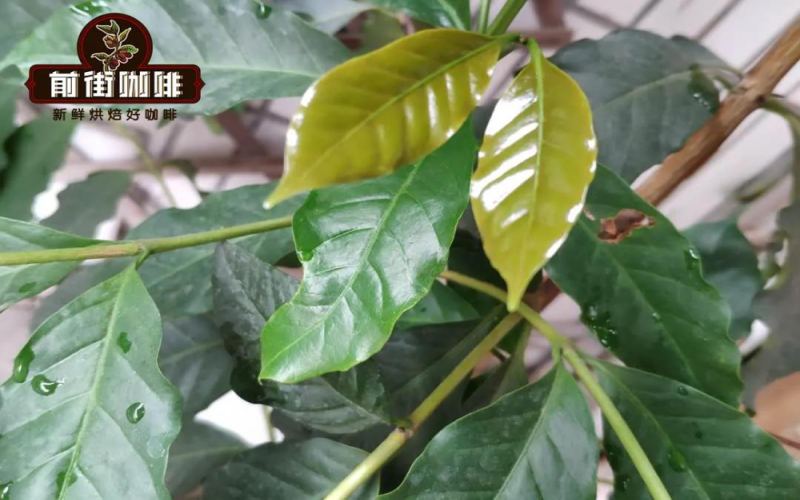
Which Yunnan coffee-producing region has the best quality? A comprehensive analysis of the flavor characteristics and main varieties of Arabica coffee
Yunnan, as China's core coffee-producing region, contributes about ninety percent of the nation's coffee output, and its growing conditions and variety composition have long drawn the attention of coffee enthusiasts. This article systematically reviews the overall picture of Yunnan Arabica coffee, from producing region distribution, altitude and climate, and historical evolution to the specific flavors of different varieties, with a focus on introducing the flavor characteristics of representative regions such as Baoshan and Lincang. At the same time, the article will compare two Yunnan beans under Front Street Coffee—Front Street 2013 Yunnan Typica and Yunnan Arabica Red Cherry—in terms of variety, processing method, and brewing performance, helping readers gain a clearer understanding of the diversity of Yunnan coffee. [more…]
A Detailed Guide to Indonesian Coffee Regions, Varieties, and Grades: Flavor and Taste Characteristics of Mandheling G1 Coffee Beans
Indonesia, known as the "Country of a Thousand Islands," is also one of the world's important coffee-producing countries. From the Dutch first introducing coffee seedlings in 1696, to becoming the world's largest coffee exporter in the 18th century, and then to the rise of Robusta after leaf rust dealt a severe blow, Indonesian coffee has gone through a tumultuous history. Today, the distinctive coffee-producing regions on islands such as Java, Sumatra, Sulawesi, Bali, Flores, and Timor together form the diverse landscape of Indonesian coffee. Among them, Sumatra's Mandheling coffee is renowned worldwide for its mellow, rich flavor, while G1 grade represents the high-quality standard in Indonesia's coffee bean grading system. This article will guide you through a systematic understanding of the history of Indonesian coffee cultivation, the distribution of major producing regions, and the classification of varieties and grades, and will also provide an in-depth analysis of the flavor and taste characteristics of Mandheling G1 coffee beans, making it suitable for every coffee-loving reader to savor carefully. [more…]
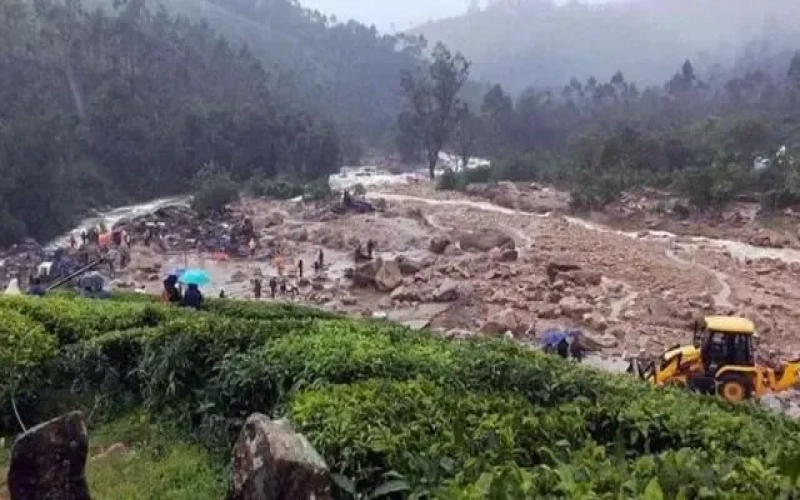
Landslides in Kerala, India, kill 358, hitting a major coffee-producing region and potentially disrupting new-crop robusta supply
In the early hours of July 30, a large-scale landslide was triggered by continuous heavy rainfall in the Wayanad region of Kerala in southwestern India. According to the latest figures, 358 people have died, with many more injured and missing. This region is not only a severely affected mountainous area but also one of India's important coffee-producing regions, primarily growing Robusta. The disaster and subsequent heavy rainfall are likely to have a severe impact on India's coffee production in the new season. Meanwhile, India's coffee export data for the first half of 2024 has performed strongly, and international coffee prices are expected to remain high until the end of the year. This article will review the progress of the disaster, the difficulties in rescue efforts, and its potential impact on India's coffee industry. [more…]
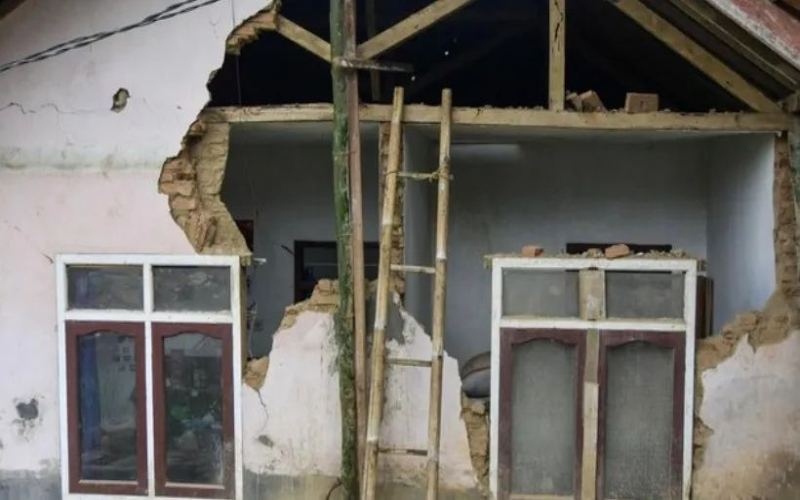
Two major coffee-producing regions in Indonesia have been hit by disasters in succession; output may decline further, and prices could keep rising.
Recently, several major coffee-producing regions in Indonesia have been hit by natural disasters. A magnitude 5.0 earthquake struck near Bandung in West Java on the island of Java, causing injuries and damage to homes; the Aceh region in northern Sumatra was hit by heavy rain and strong winds, and with the coffee harvest season underway, harvesting work has been disrupted. At the same time, several provinces are also facing ongoing drought, and coffee production may decline further. This article summarizes the disaster situations in various areas and their impact on Indonesia's coffee industry. [more…]
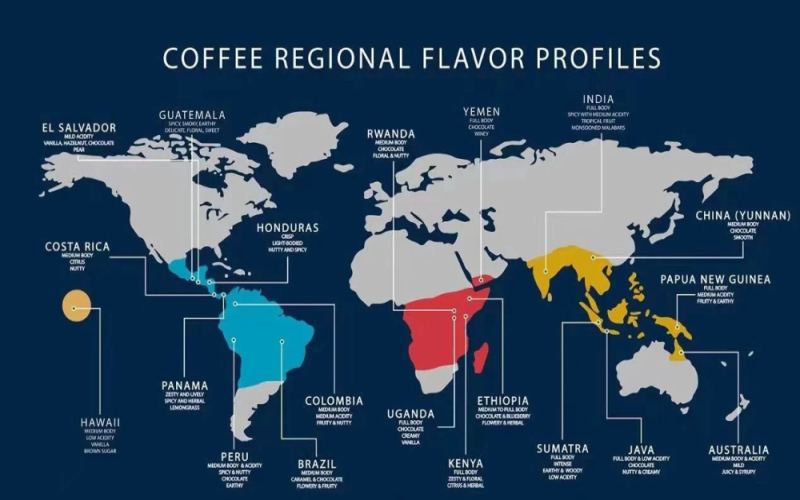
In-Depth Analysis of Asian Coffee Regions: A Comparison of Signature Coffee Flavors and Processing Methods in Yunnan and Indonesia Mandheling
When selecting coffee beans, besides checking the packaging information, starting with the basic flavors of the three major coffee-producing regions and then combining that with specific estates often allows you to find the one that suits you more precisely. Front Street Coffee stores focus mainly on single-origin beans, covering more than fifty types of coffee beans from the three major producing regions worldwide. This article will focus on the Asian coffee-producing regions, highlighting the varieties, processing methods, and flavor differences of two representative origins, Yunnan, China, and Indonesia, while also introducing the coffee characteristics of Papua New Guinea. Yunnan coffee has continued to gain momentum in recent years, with a regional flavor profile based on brown sugar and nuts, full-bodied and mellow; Indonesia, on the other hand, is known for the herbal, medicinal aroma of Mandheling, with the wet-hulled method giving it a unique character. The article also compiles Front Street’s cultivation practices at its Baoshan estate in Yunnan, as well as the differences among several Mandheling coffee beans, for coffee lovers’ reference. [more…]
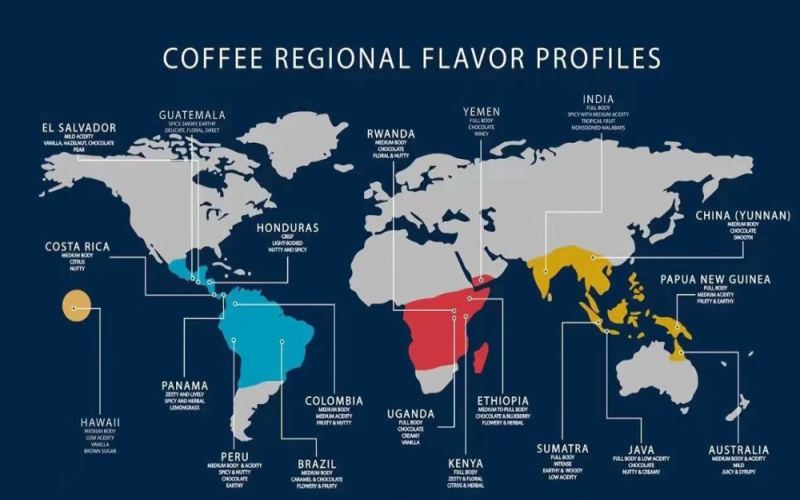
Flavor Analysis of Major Coffee-Producing Countries in the Americas: Coffee Characteristics of Brazil, Colombia, Costa Rica, and Panama
The Americas are one of the most important producing regions on the global coffee map, with Brazil, Colombia, Costa Rica, and Panama each possessing distinct terroir characteristics. This article will guide you through the distribution patterns of the coffee belt and the production landscape, while offering an in-depth analysis of the balanced flavors, processing methods, and representative producing regions of Central and South American coffee. From Brazil's pulped natural Cerrado to Panama's Hacienda La Esmeralda Geisha, from Colombia's washed Caturra from Huila to Costa Rica's Tarrazú with its citrusy acidity, the article also features a selection of specialty coffees from Front Street Coffee corresponding to these regions, helping coffee enthusiasts find their ideal choice based on flavor preferences. [more…]
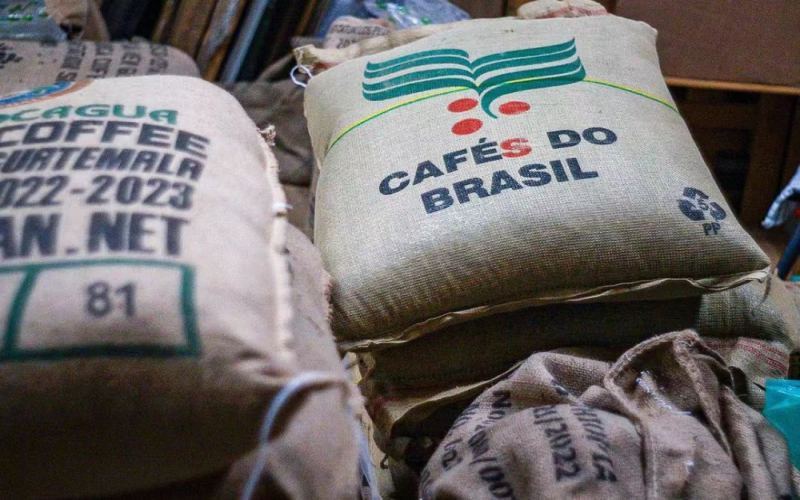
A Complete Guide to Brazilian Coffee Regions: Red Bourbon Flavor Characteristics and Brewing Parameters
Brazil is the world's largest coffee producer, accounting for about one-third of global output. Despite frost and drought in 2020, its planted scale still ranks first. Brazil has numerous coffee-growing regions, and different terroirs give coffee beans vastly different flavor profiles. This article systematically reviews Brazil's main Arabica-producing regions, covering the growing characteristics and flavor trends of Bahia, Minas Gerais, Cerrado, São Paulo, Paraná, and other areas, and focuses on introducing the flavor characteristics, brewing parameters, and Brazil's official coffee grading system of Front Street Coffee Brazil Cerrado Red Bourbon coffee beans, helping coffee enthusiasts gain a deeper understanding of the origin and quality of the Brazilian coffee in their cup. [more…]
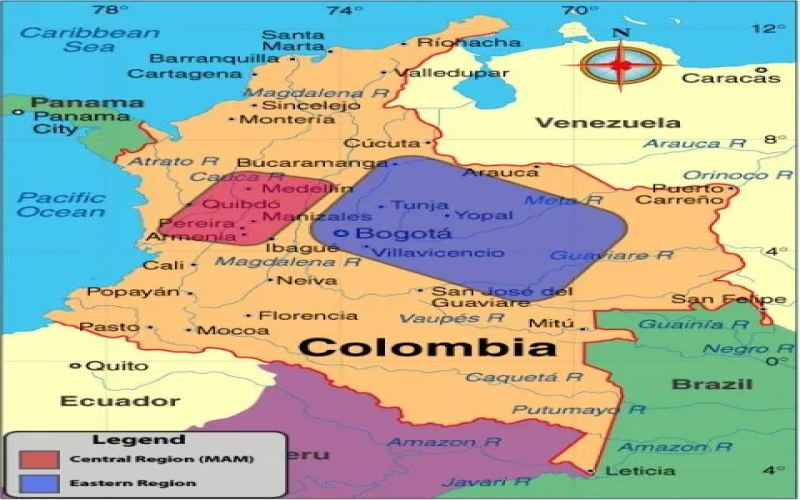
Central American Coffee Beans | Which regions in Colombia produce specialty coffee? What does the MAM designation mean? What are the flavor characteristics of washed beans from the Huila region?
Colombia is the world's second-largest producer of Arabica coffee beans after Brazil. Everyone is well acquainted with the chocolate-like flavor characteristic of Colombian coffee beans. Everyone also knows that coffee originated in Ethiopia—so if no one had brought coffee seeds or coffee saplings to Colombia, how could this [more…]

El Niño Expected to Wind Down in April, La Niña to Return in the Second Half of the Year and Potentially Batter Global Coffee-Producing Regions Again
The latest meteorological forecasts indicate that the El Niño condition is expected to come to an end around April 2024. After a brief neutral phase, La Niña may form between June and August and persist through the second half of the year. Previously, El Niño brought extreme weather such as heavy rain, drought, and high temperatures to coffee-growing regions in Brazil, India, Vietnam, Indonesia, and other places, causing reduced production and driving up international coffee prices. As La Niña takes over, southeastern Brazil may face reduced rainfall and the risk of frost, while Indonesia may experience heavy rainfall and even floods, and the coffee berry harvest may be hit again. Front Street Coffee will also continue to monitor the impact of climate change in producing regions on the coffee supply chain. [more…]
Rwanda Coffee | What are the characteristics of Rwanda's coffee-producing regions? How to describe the flavor and mouthfeel of Nanshike washed Red Bourbon coffee beans?
When it comes to African coffee-producing countries, Front Street believes that places like "Ethiopia," "Tanzania," or "Kenya" are the first that come to everyone's mind. But beyond these well-known major countries, Africa also has quite a few small countries producing high-quality coffee! For example, what Front Street is going to share today [more…]

Ethiopian armed conflict spreads to western coffee regions, hidden concerns emerge behind record exports
Oromia, Ethiopia, has recently seen a string of kidnappings and armed attacks, and the conflict has spread to the Lekanti coffee-producing area in the west and the town of Asela near the Sidama-producing area. Meanwhile, the country's coffee exports in August hit a record high, with export value rising sharply year on year. However, multiple factors—continued conflict, currency depreciation, and the impending implementation of the EU's deforestation regulation—have filled the prospects for Ethiopia's coffee industry with uncertainty. This article reviews the course of events and the impact on the industry for coffee lovers' reference. [more…]