







Why Is Ethiopia's Coffee Industry Facing Uncertainty Now?
Armed attacks and kidnappings in Ethiopia's Oromia region have spread into the Western Lekanti coffee-producing area and near Asella, close to Sidama. In the Asella incident, 44 people were abducted when militants stopped buses and later opened fire in town. The unrest comes as the country's August coffee exports reached a record high, leaving the outlook for the coffee industry uncertain.
Residents report that armed groups operate almost daily in the area and that government security forces are largely absent. Alongside the conflict, currency depreciation and the upcoming EU Deforestation Regulation add pressure, so even with strong export revenue the future of Ethiopia's coffee producing regions remains hard to predict.
In the Oromia region of Ethiopia, a series of kidnappings and armed attacks have recently erupted one after another, and the conflict has spread to the Western Lekanti coffee-producing area as well as the town of Asella near the neighboring Sidama producing area. At the same time, the country's August coffee exports hit a historic high, with export revenue rising sharply year on year. However, multiple factors—including the ongoing conflict, currency depreciation, and the imminent implementation of the EU Deforestation Regulation—have filled the future of Ethiopia's coffee industry with uncertainty. This article sorts through the course of events and the impact on the industry for coffee lovers' reference.
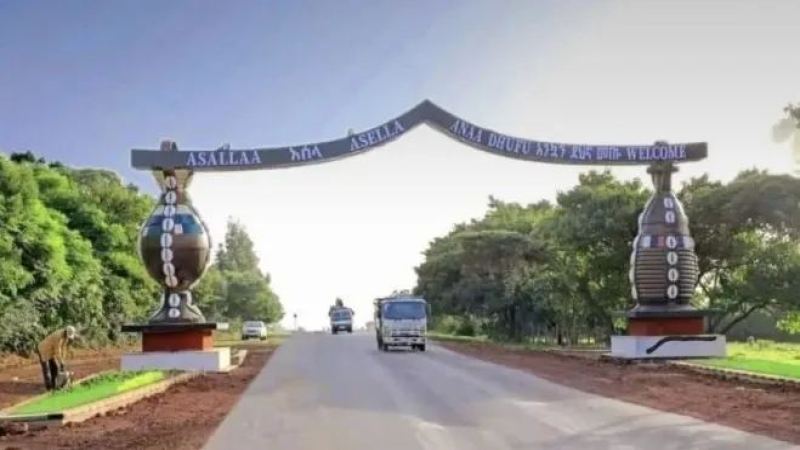
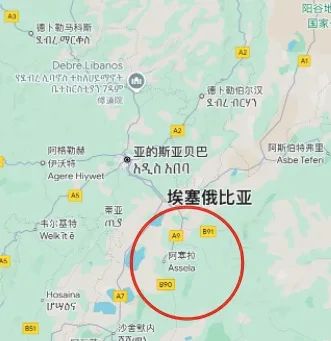
According to local Ethiopian media reports, a serious kidnapping case has occurred again in Oromia region recently. In and around the town of Asella, about 167 kilometers south of the capital Addis Ababa, a total of 44 people were abducted by "Shene" armed militants.
It is reported that in this incident, "Shene" armed personnel hid in the forest near the town of Asella, intercepted 8 public buses traveling from the town of Gobesa to other cities, and seized 38 people. Another local source revealed that the armed group then entered the town of Asella and opened fire, kidnapping 6 more residents.
Afterward, the kidnappers demanded ransoms ranging from 500,000 to 1 million birr from the hostages' families by telephone, and threatened to kill the hostages if the money was not transferred as required. As of now, the security authorities in the area have not issued any statement on the matter. According to residents around the kidnapping site, the "Shene" armed group has long been active in the area, abducting hostages almost every day; because government security forces are absent, many travelers passing through the area have been killed or kidnapped by armed groups.
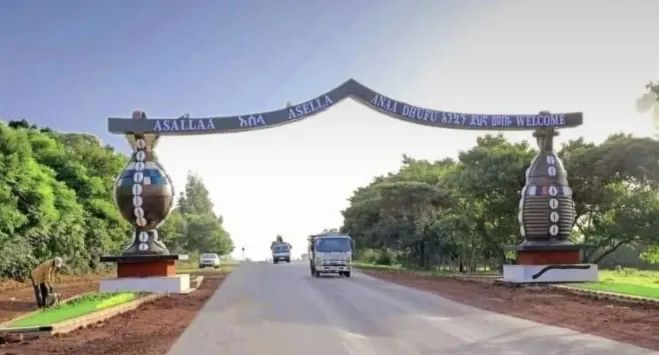
In fact, the area and its surroundings have long been unstable. As early as mid-August, Ethiopian media reported deadly attacks in the area, causing 6 civilian deaths and 3 injuries. The report pointed out that half of the area is controlled by the Oromo Liberation Army and the other half is garrisoned by government troops. This kidnapping incident was carried out by the Oromo Liberation Army (i.e., "Shene"), but government troops did not take action, and local residents are increasingly worried about the continuously worsening security situation.
At the same time, deadly armed attacks also occurred in western Oromia. The incident took place in the Kiram sub-district of East Wollega Zone, about 281 kilometers from Addis Ababa, resulting in the deaths of a local administrative official and a party official. However, this attack is believed to have been carried out by Fano forces.
It is worth noting that the town of Asella, where the kidnapping case occurred, is very close to the Sidama coffee-producing area in Sidama State, and East Wollega Zone in the west is exactly where the Lekanti coffee-producing area is located. In recent times, armed conflicts have broken out frequently in many parts of Ethiopia, with the main battlefield concentrated in the north of the country. Previously, even if conflicts appeared in the south, they had not affected the coffee-producing areas, but now the western coffee-producing area has already been affected, which may have a certain impact on the country's coffee industry.
Despite the unstable situation, data previously released by the Ethiopian Coffee and Tea Authority show that in August the country exported 42,322 tons of coffee, generating a historic foreign exchange revenue of more than 196 million USD, the highest record for Ethiopia's single-month export of a cash crop. According to the director of the authority, coffee export revenue has currently increased by 165%, with additional revenue up 143%; combining July and August, Ethiopia earned 377 million USD through coffee exports. Compared with the same period last year, August added 110 million USD in revenue, an increase of 41%; output increased by 32,955 tons, up 66%.
However, some analyses point out that because major coffee-producing countries such as Brazil have all reported reduced output due to weather, international coffee prices have been rising all the way. In addition, Ethiopia previously implemented a new government reform policy, causing a sharp depreciation of the national currency, the birr, while Ethiopian coffee prices have not risen significantly, so international coffee traders can purchase Ethiopian coffee at lower cost. In addition, the EU Deforestation Regulation (EUDR) is expected to take effect at the end of this year, prompting EU coffee traders to increase purchasing efforts recently to build up inventories.
However, even though export volume and revenue have increased, people in Ethiopia's coffee industry say that the new reform policy has caused local prices to keep climbing, and although the government has taken some measures, they have had little effect, so actual income has not increased significantly. In addition, domestic conflicts continue and may endanger the coffee-producing areas at any time; and once the EUDR officially takes effect at the end of the year, many smallholder farmers in Ethiopia will be unable to meet EU standards, and export volume may then fall sharply.
To learn more information about coffee origins, please scan the QR code to follow: Coffee Review
Long-press the QR code to follow:
The above content is compiled by CoffeeHunters, a coffee news website.


