








Which coffee growing nations in the Americas lead the market?
The Americas hold several of the most influential coffee-producing countries. Colombia ranks third worldwide, known for a balanced cup with nutty and fruity acidity. Brazil is the largest producer and second-largest consumer, continuously refining regional flavors through variety improvement and processing adjustments. Panama, though smaller, set the benchmark for specialty coffee with its Geisha variety.
Panama's edge comes from microclimates around Boquete and Volcan Candela, where east-west terrain channels cold air along the central mountain range and converges above 6,500 feet. Nutrient-rich soil supports distinctive flavors. For the country that produces most coffee by volume, Brazil, variety and processing work drive regional character. Together these origins shape how drinkers read American coffee.
The American continent has given rise to the world's most influential coffee-producing countries. Colombia, as the world's third-largest coffee producer, is known for its balanced cup profile with both nutty and fruity acidity notes; Panama, thanks to the unique microclimates of the Boquete and Candela regions, has made the Geisha variety the benchmark for specialty coffee; and Brazil, as the largest producer and second-largest consumer, continually refines regional flavors through variety improvement and processing adjustments. This article systematically examines the core strengths of these major American coffee nations—from regional climate and variety characteristics to processing differences and bean identification—and includes specific recommendations from Front Street Coffee to help coffee enthusiasts build a clear understanding of these origins.
The key to Panama coffee's distinctive quality lies in its special microclimate conditions. This country borders Costa Rica and Colombia, and its east-west oriented terrain causes cold air to flow along the central mountain range and converge at elevations above 6,500 feet, creating an extremely unique climate environment around Boquete and Volcan Candela—which has thus become Panama's core coffee-producing region. The surrounding soil is rich in nutrients, providing an ideal growing foundation for coffee trees and giving rise to a large number of coffees with unique flavors and outstanding quality.
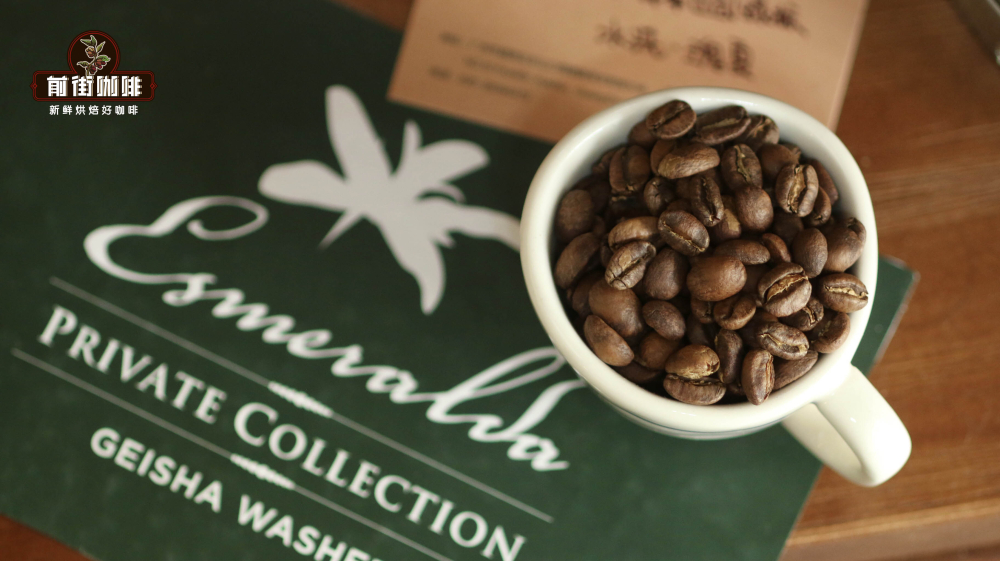
Panama coffee's international reputation is largely owed to the Geisha variety, and this variety's performance is closely tied to the region's superior natural and geographical conditions. For those who wish to taste high-quality Panamanian coffee, Front Street Coffee's Emerald Estate Green Label Geisha is a top choice; after roasting and brewing, it displays a medium body, a smooth mouthfeel, delicate acidity, and a balanced overall flavor, with signature notes of caramel, chocolate, citrus, and jasmine subtly woven throughout.
【Panama】: Panama is a country in Central America.
【Boquete】: Boquete is a famous coffee-producing region, a town in the Chiriqui province of Panama.
【Washed】: Washed processing removes the skin, pulp, and pectin first, then the beans are dried afterward; they are guided into a clean tank and soaked in water for fermentation. Characteristics: pronounced acidity, good cleanliness, medium body, high consistency.
【Variety】: Due to the estate's historical circumstances, in order to pursue yield at the time, the early Geisha variety was planted mixed together with Caturra and Catuai coffee trees. To make harvesting easier, the coffee farmers did not re-sort them and instead processed all three varieties together as a mix. Geisha, Caturra, and Catuai are varieties of coffee beans.
Colombia is the world's third-largest coffee-producing country, located in northwestern South America, with a climate that varies markedly with the terrain. The southern part of the eastern plains and the Pacific coast have a tropical rainforest climate, the mountains at elevations of 1,000 to 2,000 meters fall into a subtropical climate, and the northwest has a tropical savanna climate. Compared with Brazilian coffee, Colombian coffee has a slightly lighter body and acidity that is not as bright as African beans, but it excels in balance, with nutty notes and fruity acidity coexisting at the same time.
People often compare Colombian coffee with Brazilian coffee, since both belong to the American bean category and both are major coffee-producing countries. In fact, there is no need to taste the flavor—they can be distinguished by bean appearance alone, because their processing methods are completely different: Colombian coffee beans often carry more silver skin, while Brazilian coffee beans show almost no silver skin. The two are fairly similar in bean size and shape, but the difference in processing methods makes them easy to identify visually.
Southern coffee-producing regions: close to the equator, with coffee grown in higher mountain areas. As in the north, the south has only one wet season and one dry season. The dry season runs from June to September, and the rainy season arrives in October and may last until May of the following year. In contrast to the north, where coffee is harvested in autumn, the harvest season in the south usually begins in April and continues until June, so green bean merchants can supply Colombian coffee beans to customers almost continuously throughout the year. The south mainly focuses on specialty coffee varieties, including Huila, Cauca, Narino, and Tolima. To taste high-quality Colombian coffee, start with the entry-level Front Street Washed Huila, which has flavors of chocolate, caramel, and cream.
Brazil is the world's largest coffee producer and also the world's second-largest coffee consumer (the first being the United States). Although Brazil faces natural disasters several times more than other regions, its arable land area is enough to compensate.
Compared with other Latin American countries, Brazil's elevation is noticeably lower, it lacks microclimates, and it has long cultivated coffee without shade trees, which makes Brazilian coffee beans seem relatively flat in flavor and lacking in striking performance. However, Brazil has invested heavily in improving coffee quality, continuously cultivating and refining Arabica varieties, and adjusting processing methods according to dry and wet climate conditions in order to showcase the best regional characteristics. Common processing methods include natural, semi-washed, and washed; generally, regions with higher humidity use washed processing, while regions with lower humidity favor natural or semi-washed processing.
The representative coffee-producing regions of Minas Gerais state include Cerrado and South Minas, both of which are higher-elevation areas. Cerrado is located in the west of Minas Gerais state and is a flat plateau at 750m-1,200m. South Minas is hilly land at 700m-1,200m; since 1999, among the estates that have won in Brazil's Cup of Excellence auction, South Minas has been the most numerous. The southeastern forest region of Minas Gerais, at elevations above 1,000 meters, also produces high-quality coffee beans, so when buying Brazilian Arabica coffee, Front Street Cerrado Red Bourbon is the top choice.
The above content is compiled by CoffeeHunters, a coffee news website.


