







Where Does Yellow Bourbon Coffee Grow in Brazil?
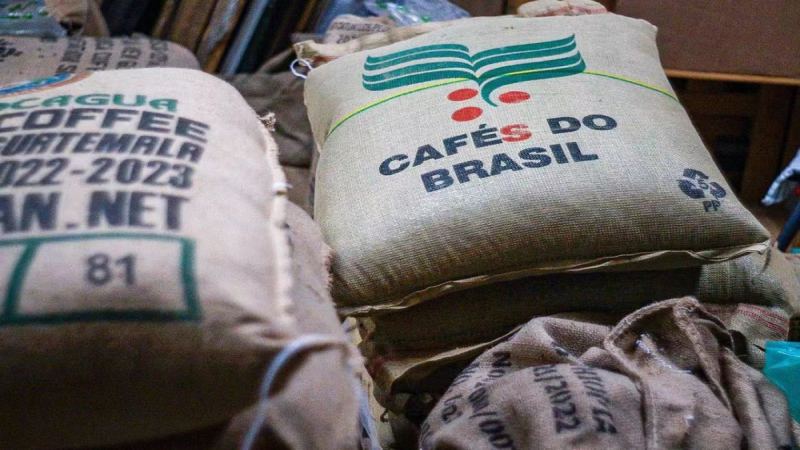
Brazil grows roughly one-third of the world's coffee and divides its Arabica output across many distinct regions, including Bahia, Minas Gerais, Cerrado, São Paulo, Paraná and Espírito Santo. Each terroir gives beans a different profile, so the region named on the bag explains much of what ends up in the cup, even when the roast level and brewing method stay the same.
Front Street's Brazil Cerrado Red Bourbon shows the classic Cerrado tendency toward nutty, chocolate and caramel sweetness with low acidity. Yellow bourbon coffee grows in the same regions and behaves similarly, ripening to a golden color and often cupping sweeter and softer than red bourbon. Brazil's official coffee grading system then sorts lots by defect count and cup quality.
Brazil is the world's largest coffee producer, accounting for about one-third of global output. Despite frosts and droughts in 2020, its planted scale still ranks first. Brazil has numerous coffee regions, and different terroirs give coffee beans vastly different flavor profiles. This article systematically reviews Brazil's main Arabica regions, covering the growing characteristics and flavor tendencies of Bahia, Minas Gerais, Cerrado, São Paulo, Paraná, and others, and focuses on the flavor characteristics, brewing parameters of Front Street Coffee's Brazil Cerrado Red Bourbon coffee beans, as well as Brazil's official coffee grading system, helping coffee lovers gain a deeper understanding of the origin and quality of the Brazilian coffee in their cup.
For more specialty coffee knowledge, please follow the WeChat official account: Front Street Coffee (FrontStreet Coffee).
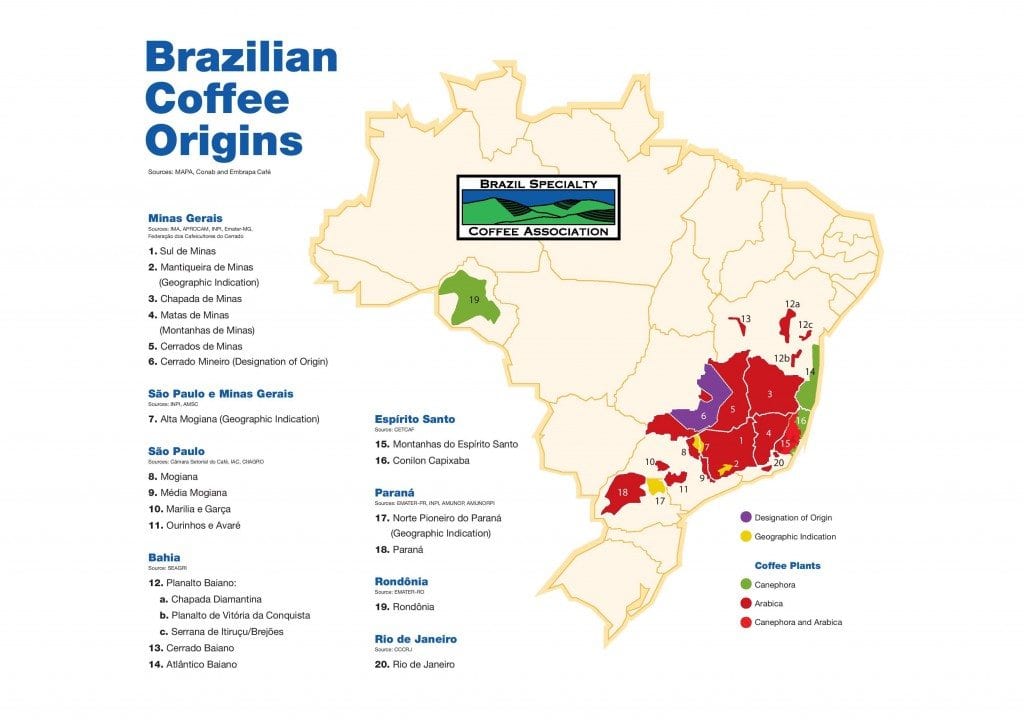
Brazil is the number one player among the world's coffee-producing countries. Even though Brazilian coffee suffered a double blow from frost and drought in 2020, its coffee cultivation still accounts for about one-third of the global total. As the world's largest producing region, Brazil's coffee distribution areas and varieties are extremely rich. Some customers have also fed back to Front Street that Front Street's Brazilian coffee beans differ in flavor from Brazilian coffees produced by other coffee shops. Setting aside factors such as roast level and brewing method, Front Street believes that the coffee-producing region is most closely related to coffee flavor. Understanding which region the Brazilian coffee beans you are drinking come from helps you more deeply understand their flavor characteristics, aroma expression, and even coffee quality. Based on this, next Front Street will introduce Brazil's main Arabica coffee bean producing regions.
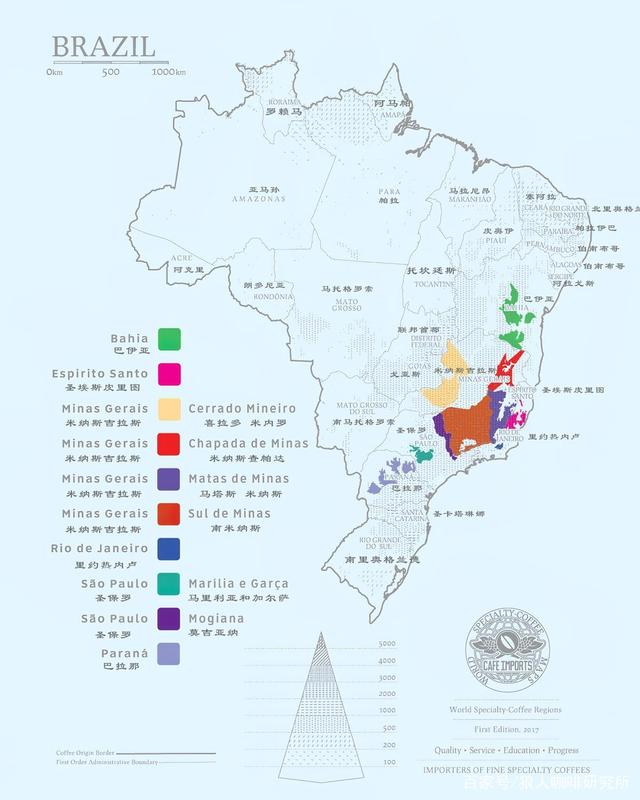
Front Street consulted a large amount of material, and the most detailed scheme divides Brazil into 13 coffee-producing regions, namely: Bahia, Chapada Diamantina, Cerrado Bahia|West Bahia, Planlto de bahia, Minas Gerais, Cerrado, Sul de Minas, chapada de minas, mates de minas, São Paulo, Mato Grosso and Mato Grosso do Sul, Espírito Santo, and Paraná. Coffee beans from each producing region display that region's unique character. Below, Front Street will introduce the coffee beans of each Brazilian producing region one by one.
Bahia
Looking at the map, you will find that this is the easternmost coffee-producing region in Brazil, and the area is vast. In recent years, more and more outstanding-quality coffees have come from here. In the 2009 Cup of Excellence competition, five of the ten best-performing coffees came from this region, and since then the region's coffee has attracted increasing industry attention.
Chapada Diamantina
The name Diamantina actually comes from a diamond rush that occurred here in the 19th century, and traces of gold and diamond prospecting still remain in the park today. At present, quite a few coffees in this region are grown using natural dynamic methods, which is an organic farming method. Moreover, near this coffee-producing region lies a national park, located in Serra do Espinhaço, part of the quartzite mountains of the Jequitinhonha River basin. Altitudes range from 720 meters (2,360 feet) in the north to 1,480 meters (4,860 feet) in the south, and such high altitudes are very suitable for coffee cultivation.
Cerrado Bahia|West Bahia
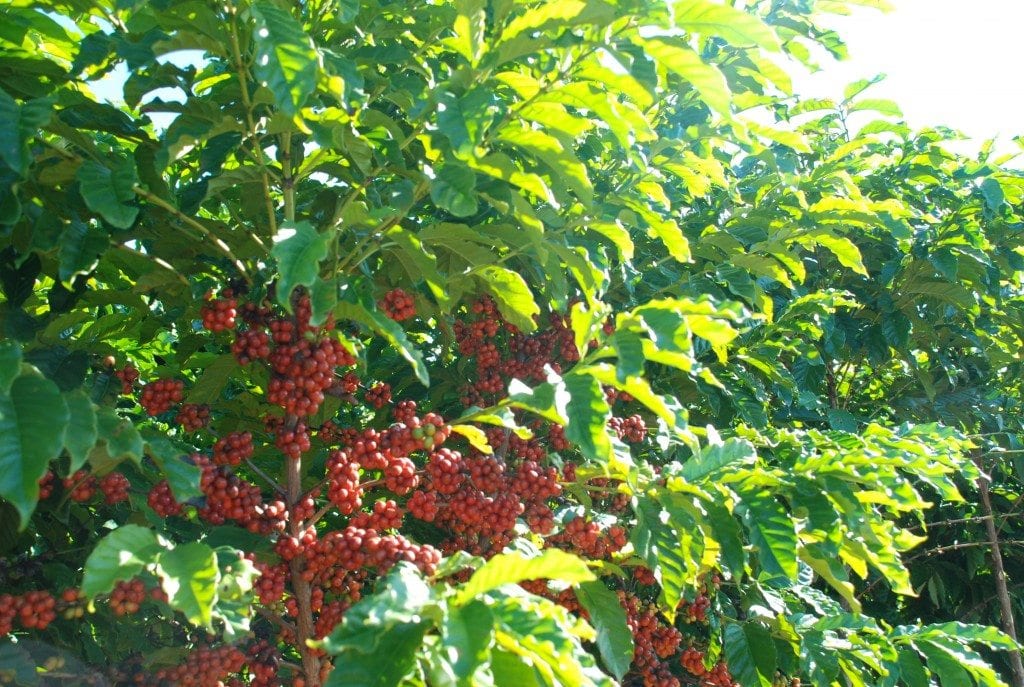
Coffee cultivation in this region is known for large-scale, industrialized, and irrigated farming. In the late 1970s, the government provided microcredit and incentives to encourage agricultural projects, attracting a large number of coffee farmers to move here. Although the region's altitude is not particularly high, its stable, warm, and sunny climate helps increase coffee yields, so coffee cultivation developed rapidly.
Planlto de bahia
This region can be said to be Brazil's most technologically advanced coffee-producing region at present; from planting to harvest, fully mechanized production is very common. Because the irrigation system is well developed, coffee cherries ripen evenly, with the result that this region is almost Brazil's most productive coffee region. However, what is impressive is not only the region's productivity level. Antônio Rigo de Oliveira from Chaçará São Judas Tadeu farm in the city of Piatã won the Brazil Pulped Naturals 2015 Cup of Excellence with 91.22 points (out of 100). Antônio was also awarded the Presidential Coffee Seal for scoring above 90 points. As for the region's climate, it has high altitude, a warm climate, dry summers, and rainy winters. This creates coffees with prominent sweetness, usually of the Catuaí variety, with low acidity and rich flavor.
Minas Gerais
As Brazil's largest coffee-growing state, it accounts for nearly half of Brazil's national coffee production and is also the main source of Brazilian specialty coffee. Minas Gerais has several of the country's highest mountain ranges, providing the altitude conditions needed for coffee cultivation. Minas Gerais lies on a plateau ranging from 100 meters to 1,500 meters above sea level, and its highest point, 2,891.9 meters, is Pico da Bandeira, meaning Flag Peak.
Cerrado
Speaking of Cerrado, loyal fans of Front Street Coffee (FrontStreet Coffee) should notice that Front Street Coffee (FrontStreet Coffee) previously had a Brazil Cerrado Baicao Farm coffee. Cerrado is absolutely a famous high-quality coffee-producing region in Brazil. Produced on savanna at 850–1,200 meters above sea level, with an annual average temperature of around 20 degrees, distinct dry and wet seasons plus comfortable low temperatures form this bean's unique flavor. Its processing method is relatively refined. Cerrado Brazilian coffee beans use Brazil's traditional pulped natural method; because the coffee beans are dried together with the skin, pulp, and mucilage, they retain a relatively high content of organic matter, minerals, and soluble solids. Therefore, Brazilian Cerrado coffee beans are characterized by a stronger aroma, a slight sweetness with chocolate flavor, and a citric acidity that most people do not easily notice, with a moderate mouthfeel and a long finish.
Front Street Coffee's Brazil Cerrado Red Bourbon Coffee Beans
Region: Cerrado
Variety: Red Bourbon
Processing method: Semi-washed
Altitude: 1000m
Aroma: The aroma is mild and gentle, giving an overall impression of elegance.
Flavor: As with the aroma, its flavor is among the milder and more elegant coffees produced in Brazil, a low-acidity coffee with a smooth and balanced mouthfeel.
Dripper: KONO
Water temperature: 88 degrees
Dose: 15 grams
Coffee-to-water ratio: 1:15
Grind size: No. 20 sieve, 75% passing rate
Brewing method: Three-stage extraction
Use twice the amount of water relative to the 15-gram dose for blooming, with a blooming time of about 30 seconds. Pour in a small stream in circles from the center outward to 125 grams, and when the water level drops to half of the original liquid level, continue pouring until reaching 225 grams and stop. The extraction time is about 2 minutes.
Sul de Minas
Sul de Minas (also called Southern Minas) has a relatively high altitude, averaging 950m, with an annual average temperature of about 22 degrees Celsius. It also produces about 30% of the country's coffee, mainly from small farms of 10 to 100 years and hectares—although this can vary greatly. There are many smallholder farmers passing farms down through generations, so public cooperatives thrive here.
The main varieties include Catuaí, Mundo Novo, Icatu, Obatã, and Catuaí Rubi. As for flavor characteristics, you will usually find that coffees here have a full body, slight citric acidity, and fruity notes.
chapada de minas
Cerrado de Minas happens to be Brazil's first coffee-producing region to obtain origin designation status (Cerrado Mineiro), giving it a status similar to famous wine regions. This is a large region made up of 55 municipalities located between Upper Paranaíba, Triângulo Mineiro, and northwestern Minas Gerais. Its farms range from medium-sized (2–300 hectares) to large estates.
The region has an altitude of 800–1,300m and four distinct seasons (humid summers and mild, dry winters), which is very suitable for producing specialty coffee. You will find Mundo Novo and Catuaí here, while Cerrado de Minas coffee tends to have higher acidity, medium body, and moderate sweetness. The plateau area of Chapada de Minas is dotted with valleys and is suitable for mechanized production. Catuaí and Mundo Novo are grown here.
Matas de Minas
Matas de Minas is located in the Atlantic Forest, with rolling terrain and a warm, humid climate. 80% of its producing farms are smaller than 20 hectares. It is known for an increasing output of specialty coffee, which usually carries sweetness reminiscent of critics, caramel, or chocolate. Catuaí and Mundo Novo are cultivated here.
São Paulo
São Paulo is one of Brazil's historically important coffee-growing states. It is also home to Santos Port, Brazil's main coffee export port.
Its main famous producing regions include:
Mogiana
Mogiana's favorable altitude (900–1,100m), mild temperatures (averaging 20 degrees Celsius), and uneven terrain create high-quality coffee with a very sweet and balanced cup profile. You will find Mundo Novo and Catuaí here.
Centro-Oeste de São Paulo
This hilly region consists of Marília, Garça, Ourinhos, and Avaré. Like Mogiana, the terrain is also uneven. Most farms are small and medium-sized. Front Street chose the Yellow Bourbon coffee from São Paulo's Queen Farm precisely because of the excellent quality of this coffee-producing region; the farm is located in the Mogiana region. Because the farm's coffee beans use a semi-washed method, Front Street believes this coffee processing method is close to honey processing. This processing method makes the acidity of Brazilian coffee, which originally has lower acidity, become brighter, and combined with the mouthfeel unique to Brazilian coffee, it may even have tropical fruit aromas in it; of course, the main notes of the coffee are still nut and chocolate flavors.
Paraná
This may be Brazil's southernmost coffee-producing region. Although its area is not large, it produces 25% of all Brazil's crops and even changed Brazilians' living environment. At first, Brazilians generally lived in the coastal areas, but because of coffee cultivation, more and more Brazilians now choose to move back inland. Although the altitude here is relatively low, because it is near the sea, the climate environment brings favorable factors for coffee cultivation.
The above is the information on Brazilian coffee-producing regions compiled by Front Street Coffee (FrontStreet Coffee). In addition, Brazilian coffee grading has always been a point of public attention. Green coffee is graded and classified for export, with the ultimate goal of producing the best cup quality and thereby ensuring the highest price. However, there is no universal grading and classification system—each producing country has its own grading and classification system, which can also be used to set (minimum) export standards.
There are also many standards for Brazilian coffee grading, with different grades based on flavor level, cup quality, defect rate, and bean size. Front Street will now introduce the official Brazilian classification table to everyone:
In Brazil, coffee quality is graded according to two different categories: type and cup. The main evaluation criterion for type is the overall appearance and number of defects found in a 300-gram sample of processed beans. According to the official Brazilian classification table, Brazil grades by type on a descending scale from 2 to 8. Each type implies a different number of defects detected in the sample—imperfect beans or impurities. Black beans, considered the worst defect, are at the bottom of this grade.
Other defects, such as sour, insect-damaged, shell-shaped, or stick-shaped beans, are considered secondary. To determine beverage quality, sensory analysis evaluates coffee's flavor and aroma through cupping. This classification method is almost as old as the history of Brazilian coffee. It appeared in the early 20th century and was adopted by the official Santos Coffee and Commodity Exchange in 1917. Although considered the most important criterion for evaluating coffee quality, sensory analysis sometimes considers "hard coffee" better. The popularity of this method hindered scientific research and studies that might ensure more precise coffee grading through chemical analysis. Sensory analysis is usually carried out by trained cuppers or tasters, who use their senses to distinguish different kinds of coffee.
According to the official Brazilian classification table, coffee is divided in descending order into Strictly Soft, Soft, Soft, Hard, "riada", "rio", and "rio zona".
The above content is compiled by CoffeeHunters, a coffee news website.


