







Search Results for: Coffee English Abbreviations
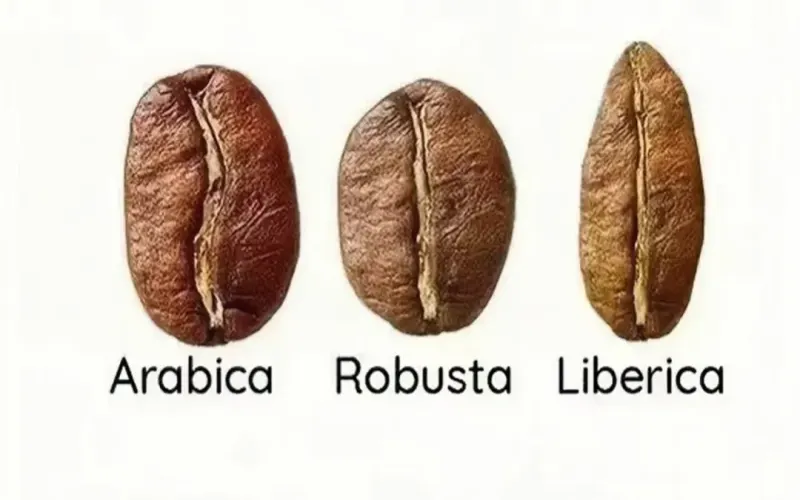
A Complete Guide to 14 Coffee Jargon Terms: English Abbreviations and the Three Major Coffee Bean Varieties Explained
Just as every industry has its own jargon, the world of coffee is likewise filled with a large number of specialized terms. While these terms make communication easier for industry insiders, they also inadvertently create barriers for those who are just getting into coffee—if you do not understand what they mean, it is often difficult to follow a conversation, let alone fit into the coffee community. Therefore, Front Street Coffee has specially put together this installment of terminology explanations, covering the origins of the alternative names of the three major coffee bean varieties, the meanings of common English abbreviations, and core vocabulary for describing coffee taste such as body. Whether you are a complete beginner or an enthusiast looking to fill in gaps in your knowledge, you can gain practical knowledge from it and make communication much smoother and more effortless. [more…]

COE Cup of Excellence vs. SOE Single-Origin Espresso: A Coffee Guide from Green Bean Competitions to Espresso Extraction
In the world of specialty coffee, the two English abbreviations COE and SOE often confuse enthusiasts—they appear similar but actually point to completely different domains. COE stands for Cup of Excellence, the world's most authoritative specialty green coffee competition, first held by the Alliance for Coffee Excellence in Brazil in 1999 and since expanded to Colombia, Guatemala, Panama, and many other producing countries. SOE, on the other hand, is short for Single Origin Espresso, referring to espresso made from single-origin coffee beans. This article will systematically sort out the essential differences between the two from the perspectives of competition systems, judging procedures, and extraction characteristics, and explore the common question of whether SOE is necessarily superior to blended espresso. [more…]

Mysterious abbreviations on milk tea orders spark debate, insiders say they're a helpless outlet for emotions
Recently, a photo of a milk tea shop order receipt sparked widespread discussion on social media. In the photo, the receipt clip above the employee's head is stuffed with orders, with words like "SB" and "said sweet" written in black marker, leading the photographer to mistakenly think they were all curse words. Subsequently, netizens and milk tea industry workers offered interpretations, suggesting these abbreviations were more likely markers for order notes or emotional venting by employees. The incident reflects the real situation of food service workers under the pressure of order surges and understaffing, and also triggered discussions about mutual understanding between customers and employees. [more…]
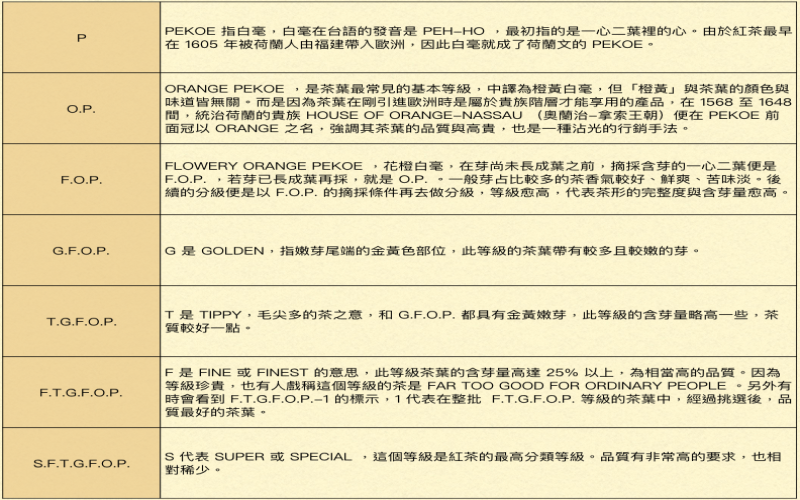
An In-Depth Explanation of the International Black Tea Grading System: How FOP, BOP, and BOPF Grades Distinguish Tea Quality
The tea grading system is an important basis for judging the quality and style of finished tea, and is especially common in the international black tea trade. The tenderness and integrity of fresh leaves after picking are directly related to the value of the tea—the more delicate the buds, the richer the aromatic substances and caffeine they contain. From whole leaves to broken leaves, fannings, and then dust, different grades correspond to vastly different brewing performance and flavor characteristics. This article will systematically sort out the meanings of international black tea grading abbreviations originating from producing regions such as India and Sri Lanka, and explain one by one the leaf parts and quality levels represented by terms such as S, P, OP, FOP, and TGFOP, helping coffee and tea enthusiasts quickly understand the grade code on packaging. [more…]
A Complete Guide to Costa Rica's Coffee Regions: From History and Varieties to Seven Elevation-Based Grades
Why has Costa Rican coffee secured a place for itself on the global specialty coffee map? This article begins with the geography and history of its producing regions, tracing how the volcanic soil and climate conditions of this Central American country shape Arabica beans with bright acidity and balanced flavor. The article will also introduce the characteristics of major cultivated varieties such as Bourbon, Caturra, and Catuai, especially Caturra's performance in adaptability and productivity. Finally, we provide a detailed explanation of Costa Rica's unique coffee bean grading system—divided into seven grades including SHB, HB, and SH based entirely on coffee farm elevation—helping enthusiasts quickly understand the meaning of the abbreviations on bean bags and the quality they indicate. [more…]
A Detailed Guide to Jamaican Blue Mountain Coffee Grades: Price Differences Between Grade 1 and Grade 2 Beans and Key Identification Points
As one of the world's top coffees, Blue Mountain coffee's grade classification and price differences have always been a focus of attention for coffee enthusiasts. Jamaican law explicitly stipulates that only coffee beans produced in the Blue Mountain region can bear the name Blue Mountain. High-grade Blue Mountain coffee is divided into three grades: No. 1, No. 2, and No. 3. Although the taste is consistent, the bean sizes differ, and the prices also show clear differences. In addition, green beans must be exported in wooden barrels, with the estate, importer abbreviations, and batch information printed on the barrel, along with a green certificate of origin. Defective and flawed beans, however, can only be shipped in gunny sacks or exported after heavy roasting. Understanding these details helps identify authentic Blue Mountain coffee and avoid buying the lowest-grade products. Front Street Coffee reminds you to pay close attention to grade and packaging information when making a purchase. [more…]
A Complete Guide to PEKOE Black Tea Grades: Why Are Most Top Ceylon Black Teas Broken Teas? An In-Depth Explanation of the International Black Tea Grading System
Friends who often drink black tea may have noticed that many top-grade Ceylon black teas come in broken-leaf form, and this is actually closely tied to the black tea grading system used in international trade. The term PEKOE originates from Fujian pekoe in China and was later adopted by British tea merchants as a designation for black tea grades. From whole-leaf tea to broken tea to tea dust, the international black tea grading system is detailed and rigorous: abbreviations such as FOP, GFOP, TGFOP, BOP, and FBOP each have their own meanings, and numerical suffixes also indicate differences in quality. This article will systematically sort out these grading terms to help you understand the letter combinations on packaging the next time you buy Ceylon black tea or Assam black tea, so you can find the one that suits your taste. It will also introduce Front Street Coffee's understanding of black tea selection for enthusiasts' reference. [more…]
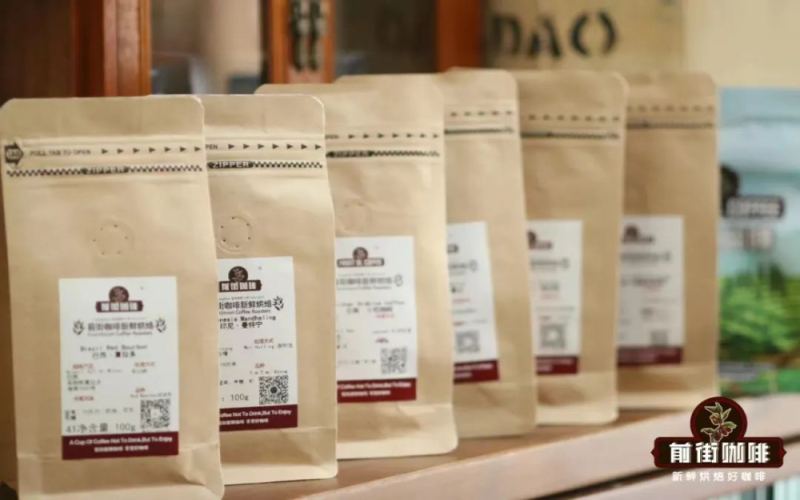
The Complete Guide to Coffee Variety Codes: The Stories and Origins Behind 74110, SL34, F1, and H1
When selecting coffee beans, a string of mysterious codes occasionally appears in the variety column, such as 74110, SL34, F1, H1, and so on. They do not have resounding names like Typica or Geisha, yet each carries a piece of breeding history. What exactly do these codes mean? Are they years, experiment numbers, or abbreviations of research institutions? This article will trace the origins of these numbered varieties, from disease-resistant varieties in Ethiopia to selections by the Scott Laboratories in Kenya, and then to the F1 hybrid program in the Americas, uncovering the mysteries of their identities one by one. Front Street Coffee will also share the unique charm of these varieties in the cup, combined with their flavor performance. [more…]
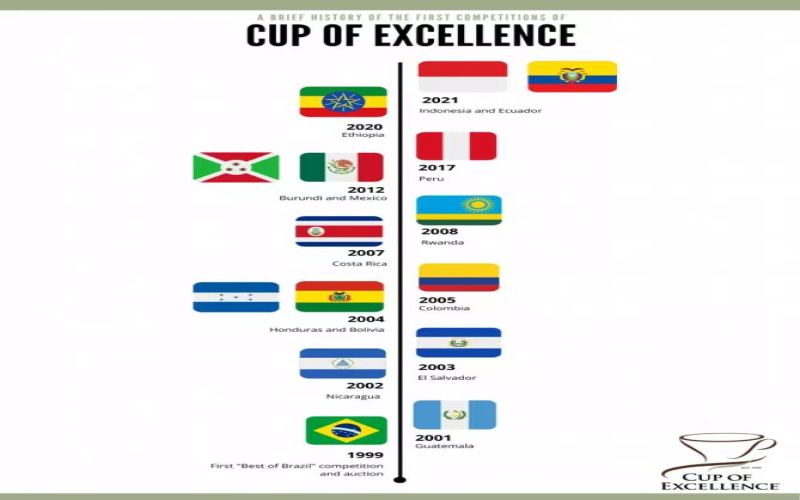
An Analysis of the SCAA and COE Coffee Certification Systems: Differences in Scoring Standards and Their Essential Distinction from SOE
In the world of specialty coffee, the SCAA and COE are two authoritative systems that cannot be overlooked. The former established industry standards and cupping protocols, while the latter selects top-tier green beans through rigorous competitions. How do their scoring logics differ? And why are COE and SOE often confused? This article will trace the development and operational mechanisms of the SCAA, CQI, and COE, explain in detail the differences in cupping score sheets, and use the example of the 22nd-place sun-dried Typica that Front Street Coffee bid for at Ethiopia's first COE competition in 2020 to present the complete story from origin to cup. [more…]
A Complete Guide to Coffee Bean Grading Standards: Meanings and Characteristics of Grades Such as G1, AA, AB, and SHB from Various Origins
When purchasing single-origin coffee beans, labels such as G1, AA, and SHB often appear on the packaging. What exactly do these letters and numbers represent? They are actually coffee bean grade symbols established by each origin based on its own conditions. Due to differences in growing environments and varieties, the grading criteria of different countries vary—some look at the number of defective beans, some at green bean size, and others at hardness or altitude. In this article, Front Street Coffee will sort out the grading standards of major producing regions such as Ethiopia, Kenya, Indonesia, Central and South America, and Brazil, helping coffee lovers understand the meaning behind these grades so they can more accurately select high-quality coffee beans that suit their own taste. [more…]
A Detailed Explanation of Costa Rica's Coffee Bean Altitude Classification System and a Recommendation of Mozart Flavor Characteristics
Costa Rican coffee is world-renowned for its balanced, clean, and mild classic style. Its acidity is bright and lively, often with citrus and berry notes, and an elegant coffee floral aroma can still be detected in the aftertaste, giving off an overall serene Latin countryside vibe. Unlike many producing regions, Costa Rica's grading method does not rely on bean size or defect rate, but directly uses the altitude at which the coffee farm is located as the basis for classification, with a total of seven grades. This article will systematically sort out the specific contents of this grading system, introduce the three most common grades in the current specialty coffee market—SHB, HB, and SH—and, combined with the typical flavor performance of the Tarrazú producing region, recommend Front Street Costa Rica Mozart coffee beans, taking you to gain an in-depth understanding of this coffee country that, although small in output, enjoys an outstanding reputation. [more…]

Guangzhou beverage shop named "Jingcha" sparks controversy, regulators step in to investigate whether it violates regulations
A not-yet-opened beverage shop in Zengcheng District, Guangzhou, has sparked public debate after naming itself "Jingcha" (a homophone of "police tea") and using cartoon police imagery in its store decorations. Some see it as merely a clever pun, while more people worry it could mislead consumers. Market regulators and public security authorities have stepped in to investigate, and lawyers point out that the name may violate enterprise name registration regulations. Behind the incident lies not just the compliance of a single shop name, but the boundary between commercial creativity and public symbols. [more…]

Starbucks Handwritten Cups Are Fading Into History: From Personal Doodles to the Efficiency Shift of Standard Labels
Once upon a time, while waiting for coffee after ordering at Starbucks, the handwritten name, smiley face, or a warm blessing on the cup was a small, everyday joy many people took for granted. Now, this personalized service is quietly disappearing, replaced by uniformly printed label stickers. From customers missing the sense of exclusivity brought by handwritten cups, to baristas facing the dual pressures of labor shortages and complaint risks, to the "Fei Kuai" service driving standardized processes, the era of Starbucks handwritten cups seems to have gone forever. This article reviews the rise and fall of handwritten cups, explores the debate between efficiency and ritual behind it, and what this change means for coffee lovers and store operations. [more…]
How Is Indonesian Mandheling Graded? A Bean Selection Guide from Sumatra Origins to Wet-Hulling Processing
Indonesia is an important coffee-producing country globally, with specialty Arabica mainly distributed in the high-altitude areas of northern Sumatra, Sulawesi, and Java. Mandheling is famous for its low acidity, full body, and unique herbal spice flavors, among which Golden Mandheling requires four rounds of hand sorting and is of a higher grade. From the perspective of Front Street Coffee, this article reviews the four major coffee types of Sumatra, the wet-hulling process of Lintong Mandheling, and Indonesia's G1 to G6 grading system based on the proportion of defective beans, and includes the three-pour brewing parameters for the Kono dripper recommended by Front Street Coffee, helping coffee enthusiasts select and brew high-quality Mandheling. [more…]
A Complete Guide to Kenyan Coffee Bean Grades: AA, PB, E Explained with a Roasting Log of Ichamama Peaberry
Kenya AA coffee occupies a pivotal position in the global specialty coffee landscape, yet the letter grades surrounding it are often confusing. What exactly do these codes—E, PB, AA, AB, C, TT, T, MH/ML—mean? From the perspective of Front Street Coffee, this article systematically sorts out Kenya's grading system based on raw bean screen size, and takes an in-depth look at a Peaberry from the Ichamama Factory in the Nyeri region, presenting the unique charm of Kenyan PB in full through raw bean information, cooperative background, four-roast comparison experiments, and cupping performance. At the end, it also includes Front Street Kenya Small Tomato AA's brewing parameters and flavor description, offering readers an intuitive AA vs. PB reference. [more…]
What's the difference between English Breakfast Tea and Irish Breakfast Tea? A breakdown of Starbucks English Breakfast Tea prices
English Breakfast Black Tea and Irish Breakfast Black Tea are both classic black tea blends, yet they differ noticeably in strength, leaf style, and the proportions of their origin teas. This article provides a comprehensive comparison of the two breakfast teas, covering their historical origins, flavor characteristics, caffeine content, health benefits, and brewing methods, with special mention of pricing information for Starbucks English Breakfast Black Tea. Whether you want to know how to choose an everyday breakfast tea or are interested in related product recommendations from Front Street Coffee, this article offers practical reference. [more…]
Heytea's comprehensive English translation of overseas store menus sparks controversy, disappearance of Chinese leaves Chinese consumers dissatisfied
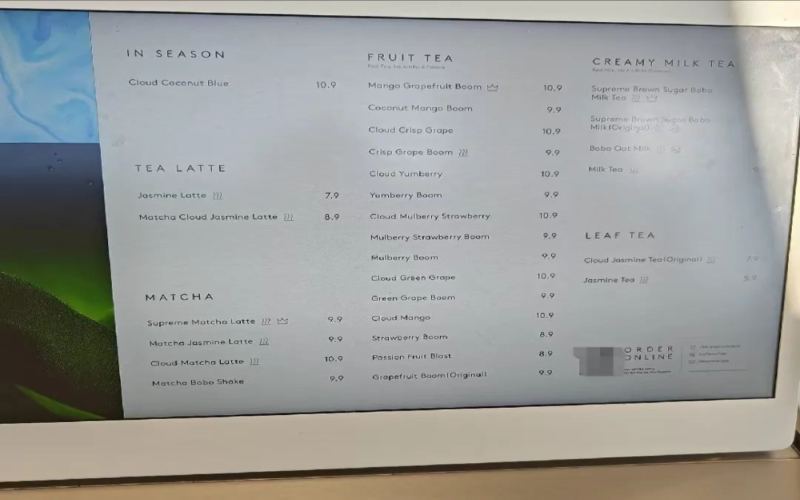
Recently, the Heytea store in Southampton, UK, replaced its menu with an all-English version, sparking strong dissatisfaction among overseas Chinese consumers. The original poster pointed out that after all Chinese product names disappeared, ordering became difficult, and even Chinese employees made mistakes because they were not accustomed to the new menu. Subsequently, netizens discovered that multiple overseas stores in London, New York, Sydney, and other locations had also switched to all-English menus, and the official app also removed the language selection option, instead displaying based on location. Although some people believe this is catering to localization, more people criticize the move for diluting the brand's Chinese symbols and harming the ordering experience of overseas Chinese. Heytea customer service did not respond directly, and some consumers said they might spontaneously boycott it. [more…]
Sumatra Mandheling vs Java Coffee Comparison: A Complete Analysis of the Flavor Characteristics of Indonesia's Three Major Producing Regions
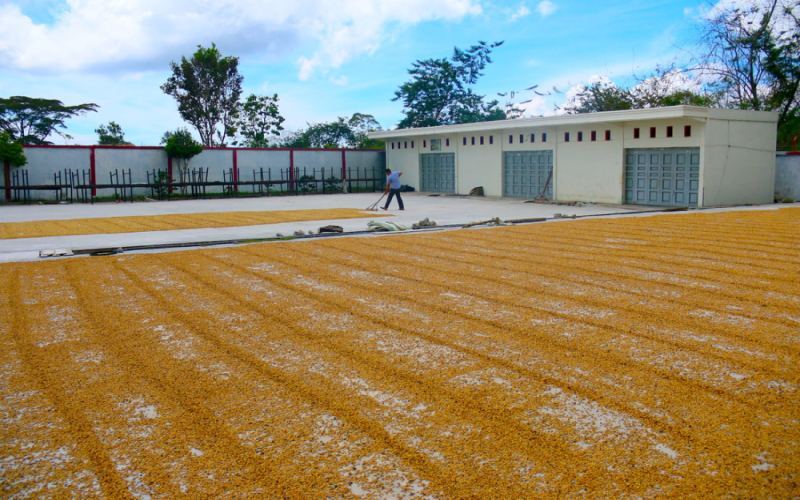
Indonesia stretches across the equator and is made up of more than 17,000 islands, where volcanic soil and a tropical rainforest climate provide exceptional conditions for coffee cultivation. Sumatra's Mandheling is known for its rich, full-bodied flavors of caramel, herbs, and dark wood, while Java coffee shows a more refined aroma and balanced acidity, and Sulawesi Toraja combines bright fruity acidity with caramel sweetness. Front Street Coffee believes that Indonesian coffee is richly layered and well worth exploring in depth for specialty coffee lovers. This article systematically reviews the cultivation backgrounds, variety characteristics, processing methods, and flavor differences of Indonesia's three core producing regions, and explains in detail the wet-hulled process, green bean grading system, and specialty beans such as Aged Mandheling, Tiger Mandheling, and West Java honey process, taking you through a comprehensive understanding of the unique charm of Indonesian coffee. [more…]

Is English Breakfast Black Tea a Blended Tea? A Full Guide to Brewing Temperature and the Blend Recipe
English Breakfast Tea is a classic black tea, often regarded as the ideal drink to dispel morning drowsiness. Is it actually a blended tea? What water temperature should be used when brewing it? This article explores the formula and brewing key points of English Breakfast Tea, citing George Orwell's suggestions in "A Nice Cup of Tea" to explain details such as brewing tea with boiling water and the order of pouring water, and discusses the controversies over adding milk, adding lemon, and the choice between sugar and honey. At the end, it also recommends related products from Front Street Coffee to help tea lovers find a brewing method suited to their own taste. [more…]
Sumatra Aceh Gold: A Complete Guide to Indonesia's Specialty Coffee Region, Mandheling Processing Methods, and Flavor Profile
While studying Mr. Han Huaizong's "The Craft of Specialty Coffee," Front Street unexpectedly obtained a bag of sample beans labeled "Sumatra Aceh Gold." Aceh Gold, as the name suggests, originates from the Aceh region of Sumatra. It is entirely different from the herbal, medicinal, and smoky impressions of traditional Mandheling—it displays a clean profile, rich creamy chocolate notes, and a slight acidity, reminiscent of refined Latin American coffee. This article will follow in Front Street's footsteps, delving into Indonesia's three major coffee-producing regions—Java, Sulawesi, and Sumatra—to analyze famous varieties such as Mandheling, Golden Mandheling, Toraja, and Gayo Aceh, and to detail the characteristics of wet-hulling, green bean grading, Aged Mandheling, Tiger Mandheling, and West Java coffee, guiding you through a comprehensive understanding of this specialty coffee nation on the equatorial volcanic belt. [more…]