







Is Java Coffee Strong Compared With Other Indonesian Mandheling Lots?
Indonesian arabica grows mainly in the highlands of northern Sumatra, Sulawesi and Java, and Mandheling is known for low acidity, full body and herbal spice notes. Robusta makes up about 90 percent of the country's output and is planted at low altitude, including on Java and Bali, so a Mandheling cup is fuller and less acidic than most washed arabica from Africa or the Americas.
Golden Mandheling passes four manual sorting steps and sits at a higher grade than standard lots. Sumatra's specialty system covers Mandheling, Lake Tawar, Gayo Mountain, Aceh, Sulawesi and Aged Mandheling, while Indonesia grades G1 to G6 by the share of defective beans. The wet-hulling process used around Lintong gives these arabica beans their wood, herb and spice depth.
Indonesia is an important coffee-producing country globally, with specialty Arabica mainly distributed in the high-altitude regions of northern Sumatra, Sulawesi, and Java. Mandheling is famous for its low acidity, full body, and unique herbal spice flavor, among which Golden Mandheling requires four manual sorting processes and is of a higher grade. From the perspective of Front Street Coffee, this article reviews the four major coffee types of Sumatra, the wet-hulling process of Lintong Mandheling, and Indonesia's G1 to G6 grading system based on the proportion of defective beans, and includes the three-stage brewing parameters for the Kono dripper recommended by Front Street Coffee, to help coffee enthusiasts select and brew high-quality Mandheling.
To learn more about specialty coffee, welcome to follow our WeChat official account: FrontStreet Coffee
Indonesia is one of the major coffee bean-producing countries, with main production areas concentrated near the equator on the islands of Java, Sumatra, Kalimantan, and Sulawesi. In fact, the aroma and taste of coffee beans produced on each island differ; even the same variety exhibits rich and diverse flavor expressions depending on the origin.
Indonesian coffee is known for its mellow aroma, low acidity, and full body. Of course, this refers to Indonesia's specialty coffee, as the mainstay of Indonesian coffee is Robusta, which does not fall within the category of specialty coffee. Indonesian Robusta accounts for 90% of coffee production, mainly distributed in low-altitude areas such as Java and Bali.
When it comes to Indonesian specialty coffee, the elegantly flavored Arabica is mainly distributed in the higher altitudes of northern Sumatra, Sulawesi, and Java. Although it accounts for only about 10% of Indonesia's coffee production, reputations such as Mandheling, Golden Mandheling, Lake Tawar, Gayo Mountain, Aceh, Sulawesi, Aged Mandheling, and Java Old Brown have made Indonesian coffee famous in the specialty coffee world for decades, without being dragged down by inferior Robusta.
Sumatra is the main production area for Indonesian specialty beans, and its coffee system is very complex, simply summarized into four types:
(1) The well-known Mandheling refers to the semi-washed or sun-dried beans from Lintong in the Lintong area at 900–1,200 meters above sea level on the southwestern shore around Lake Toba in north-central Sumatra, which are the most famous.
(2) Golden Mandheling, which undergoes four manual sorting processes and is a grade higher than ordinary Mandheling.
(3) Lake Tawar coffee, referring to washed, semi-washed, or sun-dried beans (less common) from the Gayo Mountain area at 800–1,600 meters above sea level near Lake Tawar in the Aceh region at the northernmost tip of Sumatra. This area can be said to have heavy deployments; the renowned Costa Rican La Minita estate also traveled far across the ocean to guide semi-washed techniques here. In addition, the well-known Holland Coffee Group focuses on Gayo Mountain washed beans, making it a fiercely contested area.
(4) Aged Mandheling and Java Old Brown.
Mandheling coffee beans are produced on the island of Sumatra in Indonesia, also known as "Sumatra coffee." Mandheling coffee is grown on highland plateaus at 750–1,500 meters above sea level and is a rare Arabica variety in Indonesia, with the first-grade Mandheling produced in Takengon and Sidikalang being the best in quality. Due to its scarce production, it is called a "famous product" by coffee enthusiasts. Especially the Mandheling beans roasted with a French roast (strong bitterness, slightly black beans) captivate coffee addicts with their full-bodied bitterness.
Lintong Mandheling
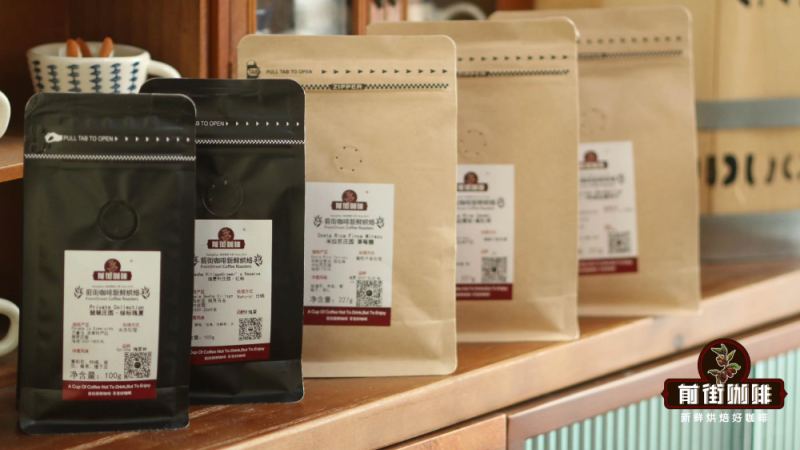
Speaking of Mandheling coffee, Front Street Coffee's staple bean Lintong Mandheling has won the recognition of coffee fans with its rich aroma, full body, and intense flavor, and its unique herbal spice flavor is also a hallmark of Mandheling coffee. Besides Indonesia's growing conditions, the wet-hulling process is also one of the sources of Mandheling coffee's intense flavor.
The Lintong mountain area southwest of Lake Toba is a new production area. In the 1990s, Lintong Mandheling became very popular, and Lintong Mandheling increased its Typica production year by year, with most of its beans being sun-dried.
The unique wet-hulling process
Mandheling coffee mostly uses the wet-hulling process unique to Sumatra. Due to the scarcity of water resources, Lintong Mandheling was initially mainly sun-dried, but the quality was unstable, so it was changed to a method similar to Brazil's semi-dry process.
However, Indonesia's humid climate makes it impossible to dry the sticky parchment beans outdoors for two to three days as in Brazil; doing so in Indonesia would cause the parchment beans to mold. Therefore, they are dried for at most a few hours to one day, until the moisture content drops to 20–35%. Before the pectin layer has solidified, they are purchased by brokers and taken to crude processing plants where the pectin layer is removed by machine, to prevent the pectin from over-fermenting and becoming sour and foul. In other words, Lintong Mandheling has its pectin layer scraped off before the parchment beans are dry, which is the main reason for Mandheling's lower fruit acidity and high body. After a little more drying, the coffee beans inside the parchment have a moisture content of about 18%. Finally, exporters from Medan come to purchase the undried parchment beans, place them in large drying yards or dry them by machine until the moisture content reaches 12%, and then they can be stored.
From this, it can be seen that the drying process of Lintong Mandheling, due to farmers' insufficient hardware equipment, adopts a three-stage division of labor among farmers, brokers, and exporters. Mandheling's unique herbal aroma (similar to grass jelly) and driftwood notes are both caused by the high humidity and the three-stage drying of the pectin layer. This is also a rare processing method in the world, accidentally creating Mandheling's special low acidity, thick body, and mellow aroma.
Grading method
Indonesian coffee beans use this grading method based on the proportion of defective beans. Indonesian beans are mainly divided into 6 grades, namely G1 to G6. Ethiopia, far away on the African continent, also uses this grading method.
Common abbreviations in Indonesian green coffee exports include:
Coffee category: R=Robusta, A=Arabica
Processing method: WP=WetProcessed, DP=DryProcessed/sun-dried, AP=AfterPolished (polishing to remove the silver skin)
Manual sorting of defective beans by grade: D/P (Double Picked) T/P (Triple Pick)
The meaning and rules of Indonesian green coffee names: Indonesia W.I.B Indonesia G1
Country + grade name W.I.B is the most common and also the highest standard
Mandheling coffee How should it be brewed?
Front Street's understanding of brewing Mandheling coffee is to express a full-bodied and clean mouthfeel, highlighting caramel, chocolate, and its signature herbal aroma flavor, while not wanting Mandheling coffee to have unpleasant bitterness.
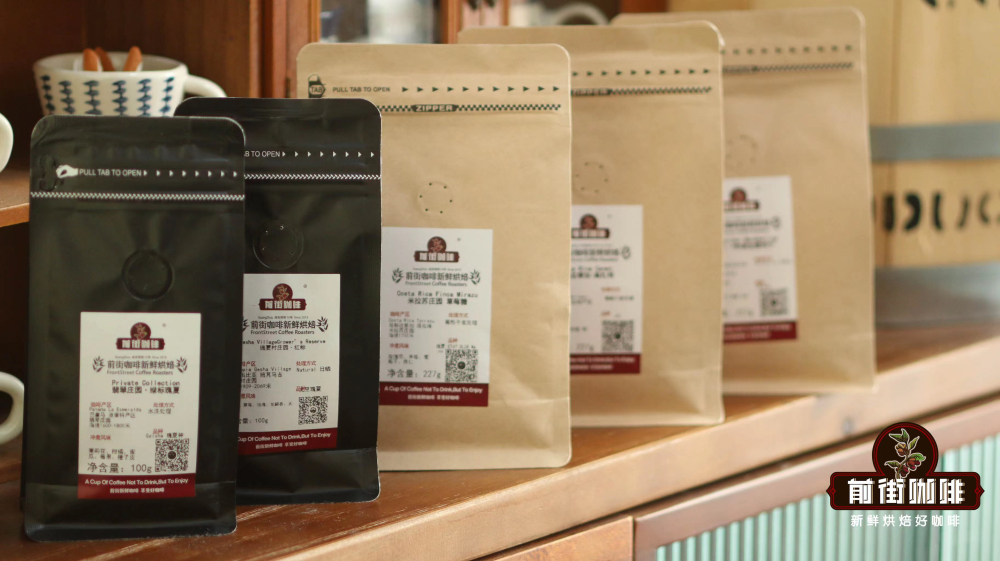
Every bag of specialty coffee from Front Street Coffee comes with detailed information and suggested brewing parameters; Front Street Coffee's brewing recommendation is that under the parameters, brew the coffee grounds into a bowl shape so that the coffee is fully extracted. If the water level is higher than the grounds layer, some water will flow directly down from the edge of the dripper; if the water level is too low, some coffee grounds will not participate in the extraction, making the taste weaker.
Brewing parameters: Use Kono dripper
Water temperature: 88°C
Coffee dose: 15 grams
Coffee-to-water ratio: 1:15
Grind size: medium-fine grind (70–75% passing a Chinese standard No. 20 sieve)
Front Street Coffee uses staged extraction, also called three-stage brewing: dividing into three stages of pouring water better expresses Mandheling coffee's full body and caramel sweetness. The specific water distribution is 30 ml for the first stage bloom, which fully wets the coffee grounds for degassing to better extract the coffee's flavor compounds in the subsequent stages; 100 ml for the second stage; and 95 ml for the final stage, enhancing the coffee's sweetness and overall presenting a substantial full body, caramel sweetness, and chocolate and nutty flavors.
The above content is compiled by CoffeeHunters, a coffee news website.


