







While studying Mr. Han Huaizong's "Specialty Coffee Studies," Front Street unexpectedly obtained a bag of sample beans labeled "Sumatra Aceh Gold." Aceh Gold is Aceh Gold, produced in the Aceh region of Sumatra, and is completely different from the herbal, Chinese medicinal, and smoky impressions of traditional Mandheling. It displays a clean profile, rich creamy chocolate aroma, and slight acidity, reminiscent of refined Latin American coffee. This article will follow in Front Street's footsteps, delving into Indonesia's three major coffee-producing regions—Java, Sulawesi, and Sumatra—analyzing famous products such as Mandheling, Golden Mandheling, Toraja, and Gayo Aceh, and detailing the characteristics of wet-hulling, green bean grading, Aged Mandheling, Tiger Mandheling, and West Java coffee, taking you on a comprehensive journey through this specialty coffee nation on the equatorial volcanic belt.
For more specialty coffee knowledge, please follow our WeChat public account: Front Street Coffee (FrontStreet Coffee)
To more systematically grasp the context of specialty coffee, Front Street acquired Mr. Han Huaizong's book "Specialty Coffee Studies," which came with a small bag of sample beans printed with "Sumatra Aceh Gold."
After consulting materials, we learned that Aceh Gold refers to high-quality coffee produced in the Aceh region of Sumatra. Traditional Sumatra coffee often gives a "heavy" impression of being intense, rugged, and prominently herbal. With this curiosity, Front Street cupped this Aceh Gold and was quite pleasantly surprised: it lacks the herbal and Chinese medicinal flavors common in Mandheling, and the smokiness is not heavy either. The overall profile is clean, accompanied by full creamy chocolate aromas, and a hint of faint acidity, making Front Street feel it is more like a cup of refined Latin American coffee.
Reading this, I'm sure everyone is already full of interest in this mysterious producing region of Aceh. Next, let Front Street take you into this world-famous island nation and gain an in-depth understanding of Indonesia's specialty coffee landscape.
Indonesian Mandheling coffee is known for its rich, mellow caramel and herbal flavors, with a full-bodied mouthfeel, solid and full body, and a long sweet aftertaste. It is a specialty coffee that Front Street considers very worth trying. Indonesia is a major coffee-producing country in Asia, and Mandheling is its most resounding signature. Indonesia has three major coffee-producing regions. What exactly are the differences between the coffees from each region? Follow Front Street to find out.
Indonesia is composed of over 17,000 islands, distributed along the equatorial volcanic belt, spanning both sides of the equator. The hot, humid tropical rainforest climate brings abundant rainfall, while the fertile volcanic soil provides rich nutrients. The finest growing areas in the entire archipelago are concentrated on Java, Sumatra, and Sulawesi.
| Growing Regions:
Java Island Jawa: Java holds a prominent position in coffee history. Java Arabica, unlike most Indonesian coffee, does not come from small farms' initial processing, but rather grows on large farms or plantations, mostly government-operated, generally using modern washed processing. The variety is S795, locally called Jember, an artificially cultivated variety.
Java produces refined aromatic coffees with relatively low acidity, a delicate mouthfeel, and good balance. Its aroma and acidity outperform Sumatra and Sulawesi. Java's finest plantations include Blawan, Jambit, Kayumas, and Pankur. Java Mocha coffee is a blend of Java coffee and Yemen Mocha coffee.
Sulawesi Island Sulawesi: Sulawesi, formerly known as Celebes, is one of the oldest islands in the archipelago, with exposed rocks over a million years old. The coffee-producing areas show yellow-red podzolic soil, often with multiple layers of clay beneath the surface, rich in iron. The most famous producing region is Toraja, located in the high mountains of South Sulawesi.
Kalosi, south of Toraja, is the main city in the region, and there are two lesser-known areas: Gowa, west of Mamasa and south of Kalosi. A few interesting washed beans are worth exploring, and trying them is highly recommended if you have the chance. Semi-washed processing is more common on Sulawesi Island, and quite a bit of Robusta is also produced there. The island's name is often used to represent Sulawesi coffee, known for its full, viscous body, rich flavors, and deep, lively acidity.
Most Arabica beans are grown in the highlands around Tana Toraja, while Kalosi in the south has become a brand.
*Kalosi: A market name for coffee from southwestern Sulawesi Island, referring to the small town of Kalosi in the island's center, which is the collection and distribution center for Toraja coffee beans.
*Toraja: A growing region located in the highlands of southeastern Sulawesi Island, and also the name of the island's specialty beans. Toraja is not a place name, city name, or variety name, but rather the "Toraja" ethnic group living in the central mountainous region of Sulawesi, skilled at growing coffee. Toraja is also one of the world's rare specialty beans, with an annual output of about 1,000 metric tons, distributed across rugged slopes at about 1,200 meters in central and southwestern Sulawesi. Planting and harvesting are both difficult, with an average annual yield of only 300 kilograms per hectare, far below the Central and South American average of over 1,000 kilograms.
Toraja's three major estates: PT Kapal Api owns 2,000 hectares of coffee plantations; CSR is second with 1,100 hectares; Japan's Key Coffee's Toarco Jaya is the third-largest estate with 700 hectares. In other words, Toraja is more precious and rare than Mandheling or Golden Mandheling.
Toraja uses washed or semi-washed processing, and is richer in bright acidity and aroma than Sumatra's Mandheling or Golden Mandheling, with more pronounced layers. It has rich caramel sweetness, but its earthy mustiness, aged wood notes, and body are much more restrained than Mandheling, with a slight floral aroma.
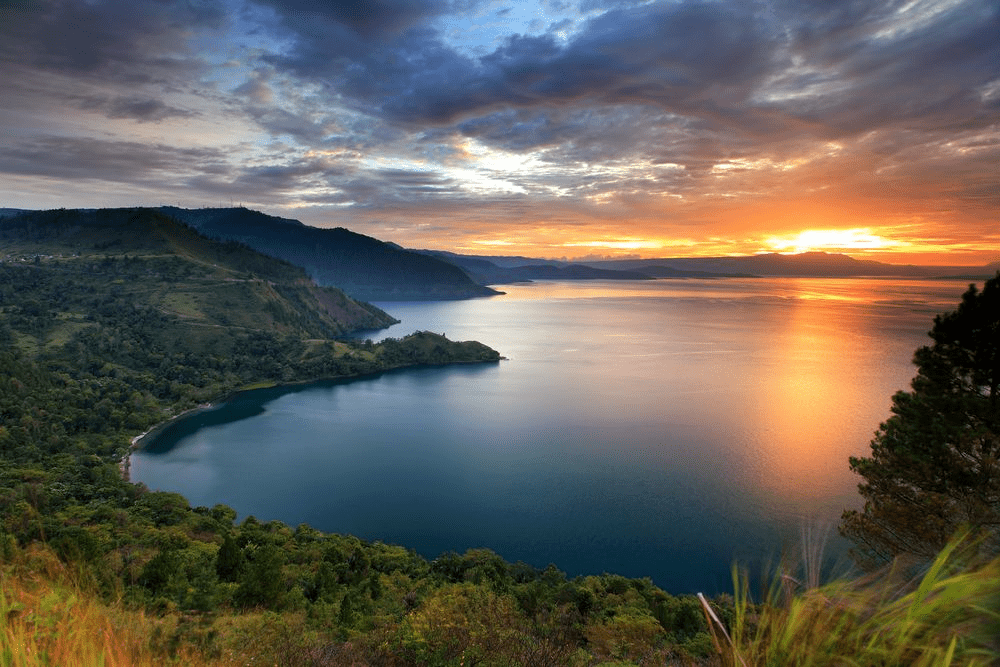
Sumatra Province Sumatra: Sumatra's best coffee comes from two places: the area near Lake Tawar in northern Central Aceh, and the mountains around Lake Toba further south. Because many smallholder producers use a unique semi-washed processing method, combined with iron-deficient soil, coffee from this region has a distinctive blue color at the fresh green bean stage.
*Mandheling: Refers to the semi-sun-dried or sun-dried beans from the Lintong mountain area on the southwestern shore of Lake Toba in north-central Sumatra, at an altitude of 900-1,200 meters, with the Batak people being the mainstay of coffee farmers in this region. Mandheling was once hailed as the world's most full-bodied coffee bean. It is a trademark used for Arabica coffee from North Sumatra, derived from the Mandailing people who produce coffee in the Tapanuli region of northwestern Sumatra, with a unique herbal and woody agarwood flavor.
*Lintong Region: Lintong Mandheling, at an altitude of 1,200 to 1,500 meters, comes from the most famous coffee of the Lake Toba area on the island of North Sumatra. To correctly understand Golden Mandheling coffee, it is not that golden-colored Mandheling is Golden Mandheling.
Golden Mandheling is produced in the Lintong region of northern Sumatra, Indonesia. Harvesting is limited to fully hand-picked, single-berry selection of fully ripe fruit to ensure initial bean selection quality. The coffee cherries undergo SEMI-WASHED processing, natural sun drying, and after hulling, one more drying refinement, two green bean cleanings, and four Hand-Pick manual selections. Therefore, it can be said to be a strictly selected top-grade Mandheling. The "PWN" mark is the abbreviation for the Indonesian company Pawani, and its Golden Mandheling coffee has been registered in Indonesia.
*Lake Toba: Located in the central part of North Sumatra Province, Dutch colonists moved "Java Mandheling" north to the Lake Toba area in 1888. Lintong in South Sumatra and the Lake Toba area can be called Mandheling, and the Lintong area is the Mandheling producing region. Mandheling comes from the mountains around Lake Toba. This lake is located north of Medan, the provincial capital of Sumatra, and is an alpine freshwater lake with an average altitude of about 900 meters. What is commonly called Mandheling refers to Typica or its variant coffee beans grown in the mountains around Lake Toba. The lake is diamond-shaped, 100 kilometers long and 30 kilometers wide, with an area of 1,130 square kilometers and an average altitude of about 900 meters, and is also the world's largest volcanic lake.
*Lake Tawar: Located in the central part of the Aceh Special Region, at the northern tip of Sumatra Island. Most of what North Sumatra produces is Gayo, mainly the Ateng variety. The northern tip's Lake Tawar can be called Aceh coffee or Lake Tawar coffee. Its area is less than one-tenth of Lake Toba. However, in recent years, coffee quality and production have surpassed Lake Toba.
Gayo Mountains Aceh: Aceh, at an altitude of 1,110 to 1,300 meters, is at the northernmost corner of Sumatra Island. In Aceh Province in northern Sumatra, Gayo coffee is grown on the slopes around the town of Takegon and Lake Tawar. The average altitude of the production area is between 1,110 and 1,300 meters. Coffee is grown by smallholders under shade trees, and wet processing makes it cleaner, but usually less characteristic than Sumatra coffee. Coffee processed by traditional methods is similar to coffee from the Mandheling region of Sumatra, with the advantage of showing unique flavors and a deep, lively viscosity.
Aceh, due to long-term political instability, is not a region most people would visit. The Gayo people are a people with strong character, hardworking and enduring, and nearly 20% of coffee processors are women.
FLORES: Flores is a small island about 320 kilometers (200 miles) east of Bali, one of the Indonesian archipelago, at an altitude of 1,200 to 1,700 meters. As a region that entered the coffee industry relatively late, it has also developed a good reputation for growing coffee.
In the past, a large portion of Flores coffee was sold domestically or blended with other coffees for export, rarely sold directly under the name "Flores coffee." The island has active and dormant volcanoes, among which the mixture from Mount Bajawa has a great positive impact on the main growing areas. In terms of coffee processing, semi-washed is the most common in the region, and some is still produced with fully washed processing. The harvest period is from May to September.
Timor Island: Divided into East Timor and West Timor, originating in the early 20th century. East Timor has not used chemicals or chemical fertilizers for the past 25 years, and should be the world's largest organic coffee producer, but due to East Timor's political instability, exports are difficult. Currently, most beans available for purchase are from West Timor.
Bali Island Bali: Although part of Indonesian coffee, Bali coffee farmers feel that Indonesian coffee quality is uneven and unworthy of Bali's high-quality coffee, so they established their own identity, calling it "Bali coffee" to distinguish it from Indonesian coffee. Bali not only has Arabica coffee beans but also produces Robusta. According to sources, Bali Golden Coffee is grafted from the roots of Arabica coffee trees and the branches and leaves of Robusta, commonly known as the "Catimor" variety.
Coffee came to Bali relatively late, initially growing in the Kintamani highlands at an altitude of 1,000 to 1,500 meters. When Mount Agung erupted in 1963, coffee production was deeply affected, causing over 20,000 deaths and extensively damaging eastern Bali. By the late 1970s and early 1980s, the government distributed Arabica seedlings to boost coffee production, but some believe the effect was limited, as today about 80% of the island's production is Robusta. Although tourism provides the largest income, agriculture employs the most people on the island. The largest buyer used to be Japan. The harvest period is from May to October.
*Luwak Coffee: Luwak coffee, from Bali, is famous not for its source but for a unique new processing method. A mammal called the civet eats ripe coffee berries, and only the outer flesh of the fruit is digested. The extremely hard coffee beans are excreted, and after manual selection, washing, drying, deodorizing, screening, processing, and roasting, they become "cat poop coffee." This coffee has very low production and, due to its rarity and special taste, has become one of the world's rarest and most expensive coffees.
Now some companies simply create a product also called "Kopi Luwak," through captive breeding and feeding coffee cherries to civets. Wild civets caught are kept in iron cages for three years, constantly fed and excreting coffee beans, many suffering from malnutrition, psychological trauma (zoochosis), and dying because they cannot adapt to nature.
Varieties: Indonesia has over 20 varieties of Arabica coffee circulating in the commercial market, commonly Caturra, Catimor, Timor, Typica, Robusta, Liberica, Ekselsa, and Sidikalong. The most well-known is Typica, the original cultivated variety introduced by the Dutch. When Indonesian coffee was hit by leaf rust disease, many Typica varieties disappeared by the late 1880s. However, on Sumatra, Sulawesi, and Flores, especially in high-altitude and remote areas, two local Typica varieties, Bergandal and Sidikalang, may still be found.
There is also Long Berry Mandheling, also called TimTim, a bean from Indonesia. Due to its elongated shape, many call it horse-face bean, and some call it long-strip Mandheling. In fact, Tim Tim is not a pure variety, but a natural hybrid of Arabica and Robusta coffee trees. This variety was discovered on Timor Island in the 1940s and cultivated for its natural disease resistance. In the Americas, this variety is called Hybrido de Timor, abbreviated Tim Tim, and in Indonesia it is also called Bor Bor.
After coffee beans are screened for size, some producers store the coffee for one to three years before selling. This process gives the coffee a very mild and warm character, with woody and cinnamon notes. Fresh beans slowly change color from dark yellow to brown.
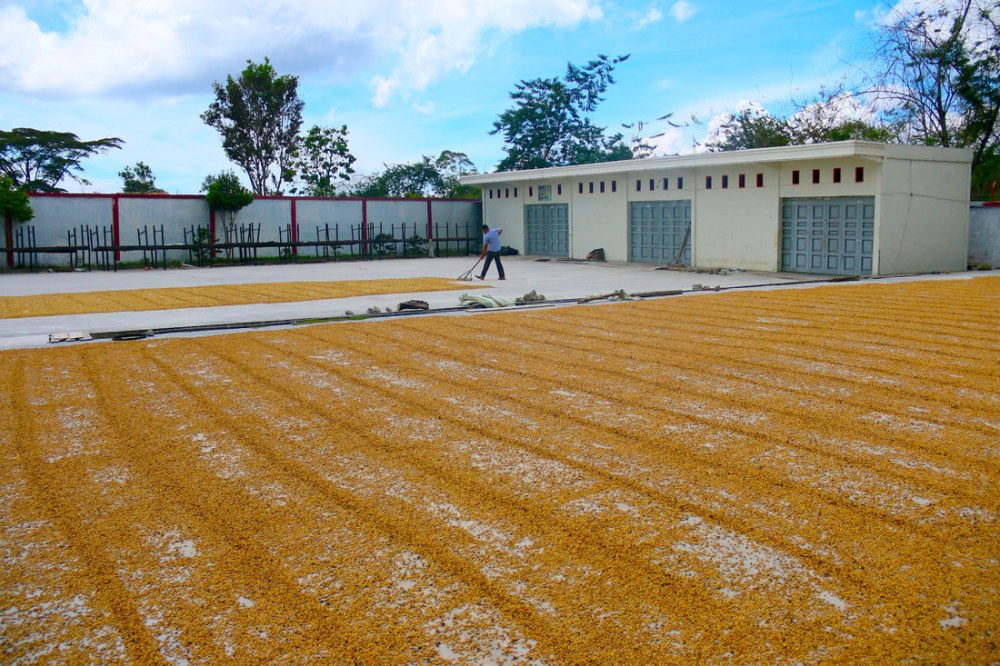
| Processing Methods: The three main processing methods are: sun drying, semi-washed, and fully washed. Because of the humid climate and frequent rain, in pursuit of more efficient drying, the commonly used method is [wet-hulling]:
Most coffee farmers also only harvest fully red coffee cherries. After collecting the coffee cherries in the morning, in the afternoon the coffee cherries are depulped and the fruit flesh removed. Sumatra's natural environment is superior, and most of the water used is mountain spring water.
1. Depulp the coffee fruit, place the parchment beans in a large bucket or tank filled with water, and remove defective floating parchment beans from the surface.
2. Briefly wash the dense parchment beans that sink to the bottom, take them out and put them in a bucket or plastic bag, and do a brief dry fermentation, that is, letting the pectin sugars on the parchment surface ferment to enhance flavor. Basically, the longer the fermentation time, the heavier the acidity. Fermentation time varies from person to person, generally only a few short hours, but some estates omit the dry fermentation stage and directly sun-dry the parchment beans, which can suppress acidity and improve the viscous mouthfeel. To let the pectin sugars fully ferment and increase flavor, the fermentation time is usually between 12-36 hours, depending on the specific situation.
3. Sun-dry the parchment beans for one to two days until the moisture content reaches 30%-50%. The beans are still half-hard and half-soft. Use a huller to scrape off the parchment and sun-dry again to accelerate the drying process. After about two days, the moisture content reaches 12%-13%. The coffee beans are then collected into woven bags, usually 40 kg and 80 kg per bag, and sent to a coffee processing factory for hulling. Done, the whole process takes about four days.
Risks of [wet-hulling]: Beans are easily damaged and cracked like sheep hooves, and the chance of contamination by mold, fungi, and yeast greatly increases.
| Green Bean Grading: Defective beans are an important factor that ruins the final coffee flavor. So in the last step of green bean processing, defective beans must also be removed. Therefore, grading by the proportion of defective beans, supplemented by screen size, is also used as a grading method. Due to the rise of the specialty coffee trend, coffee-producing countries are paying more and more attention to coffee quality, and controlling defective beans is one of the most important ways. So basically, using the proportion of defective beans as a grading method or auxiliary basis is becoming more and more common. Indonesian coffee beans use this defect-ratio grading method. Indonesian beans are mainly divided into 6 grades, namely G1 to G6.
Grading by defect rate (based on 300g), Grade standards: G1 Grade1 total defects less than 11, G2 Grade2 total defects greater than 12 and less than 25, G3 Grade3 total defects greater than 26 and less than 44, G4a Grade4a total defects greater than 45 and less than 60, G4b Grade4b total defects greater than 61 and less than 80
G5 Grade5 total defects greater than 81 and less than 150, G6 Grade6 total defects greater than 151 and less than 225
Common abbreviations in Indonesian green coffee exports include:
Processing method indications: WP=WetProcessed; DP=DryProcessed/sun-dried; AP=AfterPolished (polished to remove silver skin)
[Aged Mandheling]
The purpose of naturally aging green beans by extending storage time (usually 2-3 years). These changes include reduced acidity, color change, and thickened bean texture. The storage environment must be cool and ventilated, carried out under strict and careful control, with regular uniform turning, humidity and ventilation adjustment, to prevent insect damage or mold.
Flavor: Through the settling of time, it loses some of Mandheling's wildness, and the mouthfeel gains more richness and delicacy. After aging, the coffee beans have weaker acidity but higher body, thicker texture, and a sense of mature steadiness, completely different from the lively brightness of new beans. The acidity becomes very soft, and the mouthfeel is more rounded and easy to drink, just like ripe Pu'er. It smells of nice pine wood aroma, with some herbal and cocoa flavors, and a lasting caramel-like sweet aftertaste.
[Tiger Mandheling]
Region: Aceh
Varieties: Caturra, Typica, Sidikalong
Soil: Volcanic soil
Altitude: 1500m
Processing method: Wet-hulled
Flavor: Relatively balanced mouthfeel, high cleanliness, with obvious creamy, dark chocolate, and nutty flavors.
[West Java Coffee]
Region: Mount Tilu, Indonesia
Altitude: 1400-1600 meters
Roast level: Light
Processing method: Honey process
Flavor: Strong fruity aroma, tropical fruit, plum, and jackfruit flavors, clean with a sweet aftertaste.
The above content is compiled by CoffeeHunters, a coffee news website.


