







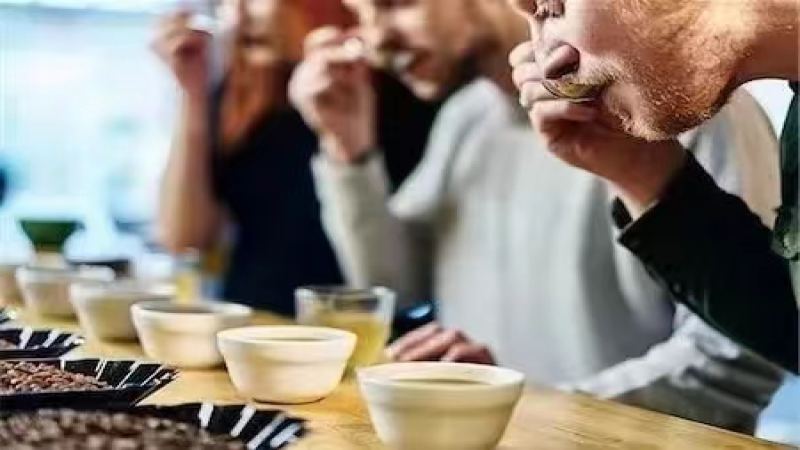
What separates SOE coffee from a COE competition lot?
COE stands for Cup of Excellence, a green bean competition first held by the Alliance for Coffee Excellence in Brazil in 1999 and since extended to Colombia, Guatemala, Panama and other origins. SOE means Single Origin Espresso, an espresso pulled from one origin rather than a blend. The two abbreviations describe different stages of the chain.
Judging at COE runs over three weeks, with each coffee cupped at least five times and top-ten lots given an extra round by international cuppers. Winners earn auction income that funds farm improvements and reaches drinkers as better coffee. Whether SOE coffee beats a blended espresso depends on the bean and the roast, not on the label alone.
In the world of specialty coffee, the two English abbreviations COE and SOE often confuse enthusiasts; they appear similar but actually point to completely different domains. COE stands for Cup of Excellence, the world's most authoritative specialty coffee green bean competition, first held by the Alliance for Coffee Excellence in Brazil in 1999 and now extended to Colombia, Guatemala, Panama, and many other producing countries. SOE, on the other hand, is short for Single Origin Espresso, referring to espresso made from single-origin coffee beans. This article will systematically sort out the essential differences between the two from the perspectives of competition systems, judging procedures, and extraction characteristics, and explore the common question of whether SOE is necessarily superior to blended espresso.
As the audience for specialty coffee grows, many enthusiasts are delving deeper, and various English abbreviations keep emerging, leaving people momentarily bewildered. Among them, COE and SOE are often lumped together.
In fact, these two abbreviations represent completely different things. COE is short for Cup of Excellence, known in Chinese as "卓越杯," and occupies the most important position among global specialty coffee green bean competitions. This competition was first launched by the Alliance for Coffee Excellence (ACE) in Brazil in 1999, and today it is the world's most well-known and authoritative specialty coffee green bean competition, with unrivaled credibility among similar events.
The judging panel is composed of international cuppers. Over a three-week schedule, each coffee must undergo at least five rounds of cupping, and beans that make it into the top 10 require an additional round. Coffee farmers who make it into the COE winners' ranks not only gain recognition for their coffee quality but also earn substantial income from auctions. The considerable auction revenue in turn incentives farmers to improve quality, and consumers thereby have more opportunities to taste excellent coffee, forming a virtuous cycle throughout the chain.
This competition system was first adopted by coffee producer groups in Brazil in 1999, and was subsequently widely adopted in Colombia, Guatemala, Panama, Costa Rica, Nicaragua, and other places, showing a trend of proliferation. It is worth mentioning that this year Ethiopia held the COE Cup of Excellence competition and auction for the first time.
The entire COE Cup of Excellence schedule is divided into three stages: the Pre-selection stage, the National jury stage, and the International jury stage.
1. Pre-selection stage: the judges are all domestic professionals, and ACE judges do not participate in this phase. The national jury typically consists of 12 to 18 people, who set extremely strict standards for every detail such as the roast level of the coffee beans and the cupping procedure, and every bean must undergo careful scrutiny.
In the pre-selection stage, only coffee beans scoring 85 points or above in cupping qualify to enter the national jury stage. In this pre-selection, a total of 1,459 beans competed, and after the first round of cupping screening, 150 coffee beans stood out and advanced to the national jury stage.
2. National jury stage: the judges are the same as in the pre-selection stage, still domestic professional cupping judges. This stage requires two rounds of cupping: the first round keeps 90 of the 150 beans that advanced from the pre-selection, those scoring 85 or above, to enter the second round of cupping.
The second round of cupping then selects 40 beans scoring 85 or above from these 90, sending them to the international jury stage.
It is precisely because of this that COE enjoys extremely high international authority.
At Ethiopia's first COE green bean competition in 2020, Front Street Coffee participated in the auction for the first time and, together with other bean traders, jointly bid for the 22nd-place coffee beans. Their flavor profile showed citrus, lychee, honey, cream, and fermented notes.
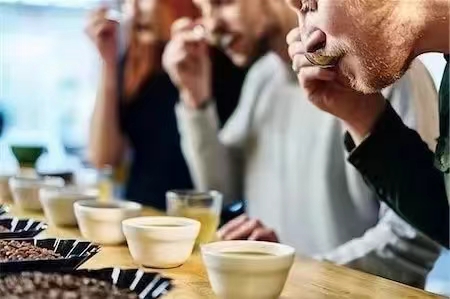
SOE stands for Single Origin Espresso. It refers to espresso extracted from single-origin coffee beans, clearly distinct from the Italian-style blended beans traditionally used.
Today many coffee shops offer an SOE option, usually for just a few yuan more than the original price. SOE is characterized by a lighter roast, capable of showcasing the flavor characteristics of a single origin.
The concept of specialty coffee is increasingly taking root, and from single-origin pour-over to single-origin espresso, both reflect coffee enthusiasts' pursuit of the ultimate in flavor. This has also led many people to form a habitual mindset, believing that SOE coffee's flavor must be superior to blended coffee.
Is espresso made with SOE necessarily tastier than that made with blended beans?
Not necessarily! Some SOEs do achieve both flavor and body, performing especially well when milk or water is added. But in most cases, after drinking a coffee beverage based on SOE, people feel: "It's actually not that impressive, not as tasty as what blended beans make." Why does this happen?
On the one hand, coffee is ultimately an agricultural product. Even for the same bean, the influence of climate and soil conditions, as well as differences in roasting philosophy, can cause flavor changes. If you drink an excellent SOE at a certain café, and after some time you go again and find it's still the same bean but not as tasty as before, it may be that this bean has changed to a new crop season, or the roasting philosophy has been adjusted, causing the flavor itself to change.
In the early days, people felt that single-origin coffee beans were mediocre in quality, and that their flavor was too jumpy when extracted as espresso, which is why they thought of using blended beans to improve the flavor. This way, whether it's different harvest times, slightly different roasting philosophies, or a poor harvest of a certain bean causing too much fluctuation in a shop's espresso flavor, the problem can be solved.
On the other hand, in order to present clear coffee flavors, many people choose light-roasted single-origin beans. Although light-roasted beans have prominent flavors, they often lack body. Perhaps this bean has a balanced flavor and no lack of body when made as pour-over, but once made into espresso, because the extraction time is shorter, the body-giving substances of the light-roasted beans have not yet been fully released, resulting in a thin mouthfeel; when milk or water is added, the coffee flavor becomes even less noticeable and tastes rather ordinary.
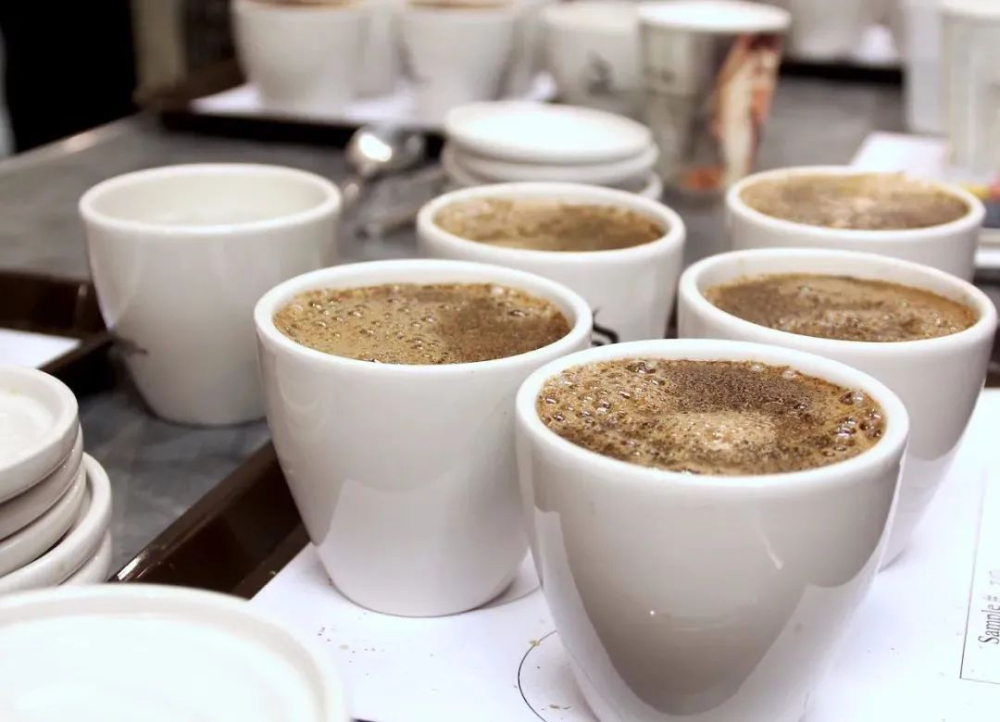
So, everyone no longer needs to confuse COE and SOE.
Professional coffee knowledge exchange. For more coffee bean information, please follow Coffee Workshop (WeChat public account cafe_style). For more specialty coffee beans, please add the private WeChat of Front Street Coffee (FrontStreet Coffee), WeChat ID: qjcoffeex
The above content is compiled by CoffeeHunters, a coffee news website.


