







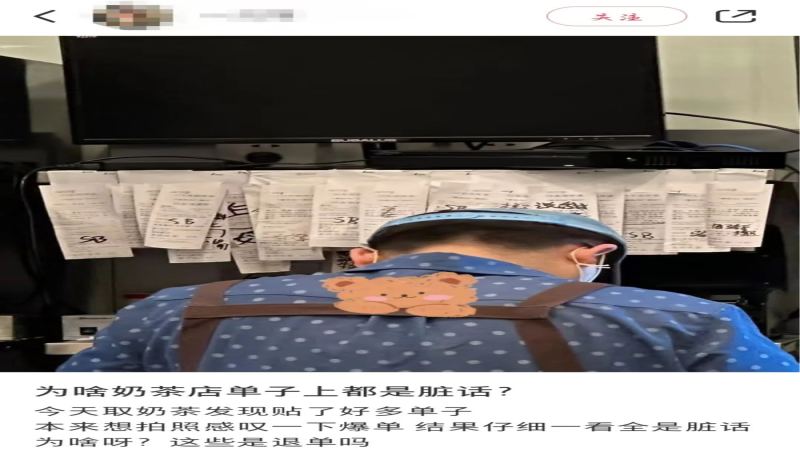
What do milk tea order abbreviations say about coffee culture?
A photo of a milk tea shop receipt packed with orders marked "SB" and "says sweet" went viral after the photographer read the notes as profanity. Industry workers and netizens explained the markings are likely order shortcuts or staff shorthand, such as less ice or less sugar, rather than insults. The photo showed the receipt clip stuffed above a worker making drinks.
The discussion also touched on working conditions in food service during order surges and staff shortages, including long shifts and jammed equipment. In specialty coffee shops, similar shorthand appears on cups and tickets, and the same misunderstandings can arise. Clear labeling and staff communication help customers read order notes without guessing at intent.
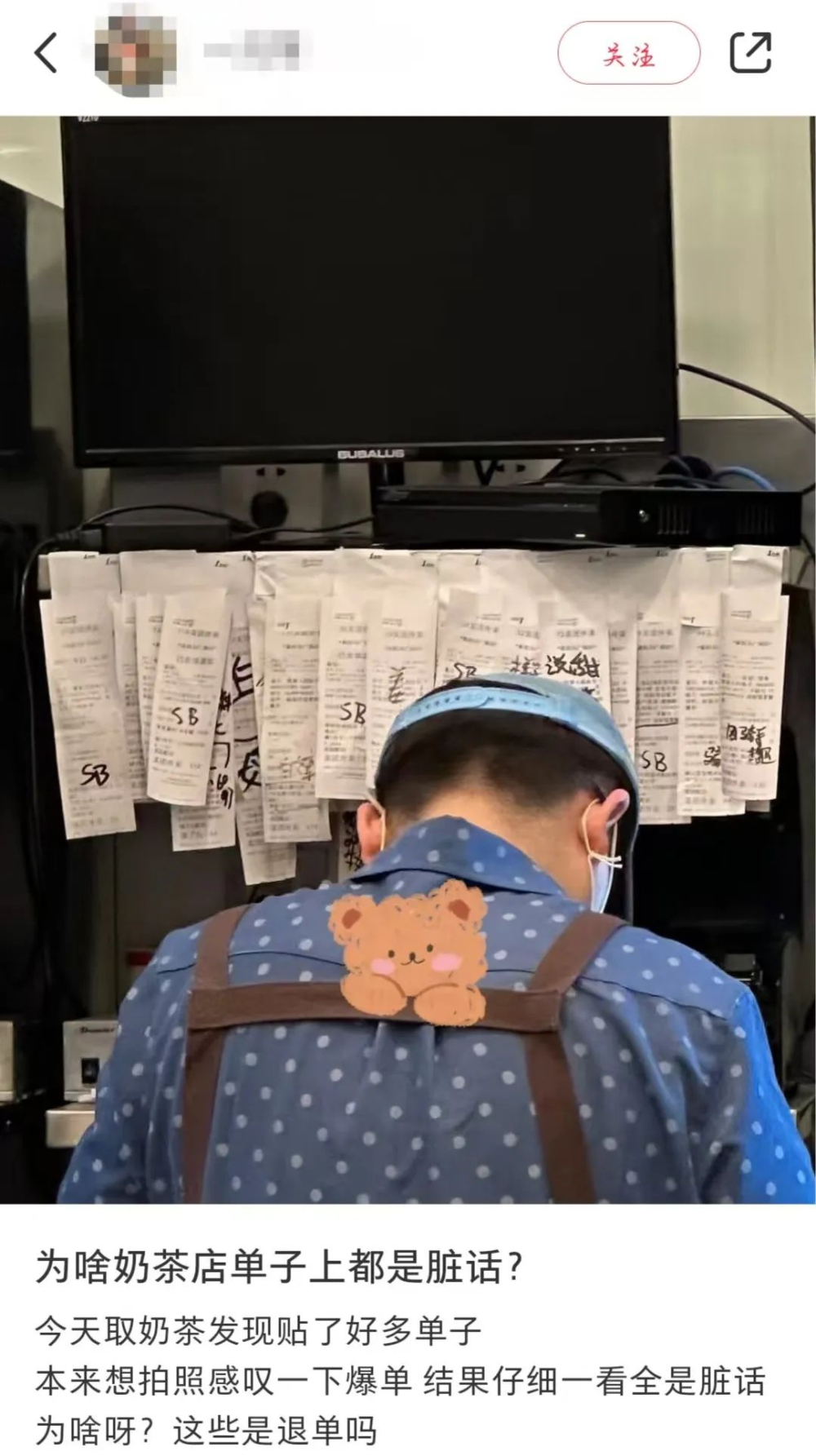
Recently, a photo of a milk tea shop order receipt sparked widespread discussion on social media. In the photo, the receipt clip above the staff member's head was stuffed with orders, with words like "SB" and "says sweet" written in black marker, leading the photographer to mistakenly believe they were all profanity. Subsequently, netizens and milk tea industry workers offered interpretations, suggesting these abbreviations were more likely markers for order notes or emotional venting by employees. The incident reflects the real conditions of food service workers under the pressure of order surges and understaffing, and also sparked discussions about mutual understanding between customers and employees.
▲
Click to follow | Daily specialty coffee culture magazine Coffee Workshop
Recently, a netizen posted on social media with the title "Why is there profanity all over milk tea shop receipts?", quickly attracting a large crowd of onlookers and discussion.
From the photo taken by the poster, the receipt clip above the head of the staff member bowing down to make drinks was stuffed with orders, and the orders were marked in black marker with words like "SB" and "says sweet." The photographer said, "I originally wanted to take a photo to marvel at the order surge, but upon closer look, it was all profanity," and wondered, "Are these refunded orders?"
Regarding the markings on the orders, some netizens believed it was not as the photographer guessed. They thought the order marked "SB" might have noted "less ice," while "says sweet" might mean hoping for less sugar, guessing that employees used a way they could understand to highlight order contents, notes, and so on.
One netizen gave an example, saying that if you order a latte at McDonald's, the employee might mark "NT" on the order, but someone unfamiliar with it might associate the initials with "brain paralysis" and misunderstand the employee's intent. From this perspective, "SB" and the like on orders should just be employees using abbreviations to refer to notes, rather than deliberately writing profanity.
However, some sharp-eyed people noticed that the markings on these orders also included words like "because rider..." and believed they might be complaint orders, saying "the black text might be the reason for a bad review," "can't read the words after, but sb here can't possibly mean less ice," "could it be complaints or unsatisfactory orders, then pasted there to write the reason for customer dissatisfaction."
Some milk tea workers among the onlookers judged based on their own experience, saying "it's just the pathetic tactics of food service workers." They said that regular requests like less ice and less sugar now appear on the ordering interface, without customers needing to add extra notes, and the corresponding labels for orders also display them, so most staff don't need to keep staring at receipts—just looking at the label is enough to make the drink.
Therefore, in their view, those markings on orders are unlikely to emphasize notes, but rather employees venting negative emotions by writing something on paper to complain a little, letting off some steam to relieve their dissatisfaction and resentment.
Interestingly, many workers strongly empathized with the staff's behavior of badmouthing customers behind their backs: "When you run into weird customers, you can only vent at the receipt; anyone who's worked a job can understand," "It's just a way for workers to vent their resentment," "Isn't it normal to have resentment at work?" In their view, under work pressures like understaffing and order surges, it's only human nature for employees to occasionally grumble a sentence or two and curse behind their backs.
So, as long as "they don't curse me to my face, don't cut corners, or spit in it," and food safety is ensured, most people actually wouldn't feel offended by this way of venting. Some joked that customers leave bad reviews on one end of the order, while employees complain on the other end—"everyone is cursing each other behind their backs"—which seems fair on the surface, but is more a matter of sorrow.
Image source: Xiaohongshu
Disclaimer: Some images in this article are from the internet, and for some website content such as images, we will respect the original author's copyright and indicate the source; however, due to the large quantity, some images and texts may not have been credited in time—please forgive us. If the original author has any disputes, they can contact the website for handling, and once verified we will correct it immediately. Compiled and edited by "Coffee Workshop"; please indicate the source when reposting. If there is infringement, please inform us for deletion. Thank you~!
The above content is compiled by CoffeeHunters, a coffee news website.


