







What do coffee variety codes like 74110 and SL34 actually mean?
Codes such as 74110, 74112, 74158, SL34, F1, and H1 are coffee variety names, not lot numbers. In the 74/75 series released by Ethiopia's Jimma Agricultural Research Center, the first two digits mark the year of discovery and the last three the experimental sample number, so 74110 means sample 110 of 1974.
These numbered coffee arabica coffee varieties emerged from disease pressure. When coffee anthracnose spread through Ethiopia in 1970, causing yield losses of at least 20% and up to 70% to 80%, Harar and Yirgacheffe were hit hardest. JARC screened for resistant genes instead of relying on pesticides. Kenya's Scott Laboratories selections and the Americas' F1 hybrid program followed similar breeding logic.
When selecting coffee beans, the variety column occasionally shows strings of mysterious codes like 74110, SL34, F1, H1, etc. They don't have resounding names like Typica or Geisha, yet each carries a piece of breeding history. What exactly do these codes mean? Are they years, experiment numbers, or abbreviations of research institutions? This article will trace the origins of these numbered varieties, from Ethiopia's disease-resistant cultivars to Kenya's Scott Laboratories selections, and then to the Americas' F1 hybrid program, uncovering the mysteries of their identities one by one. Front Street Coffee will also share the unique charm of these varieties in the cup, combined with their flavor performance.
When browsing variety information for coffee beans, you often encounter code-like numbered names. They don't have the catchy names of Typica or Geisha, but are "codes" made up of numbers or combinations of numbers and letters. What stories are hidden behind these codes? Front Street is here to sort it out for everyone.
The 74/75 series such as 74158 and 74110
Long strings of numbers like 74110, 74112, and 74158 are common on Ethiopia's COE competition lists. That's right, they are the names of coffee varieties.
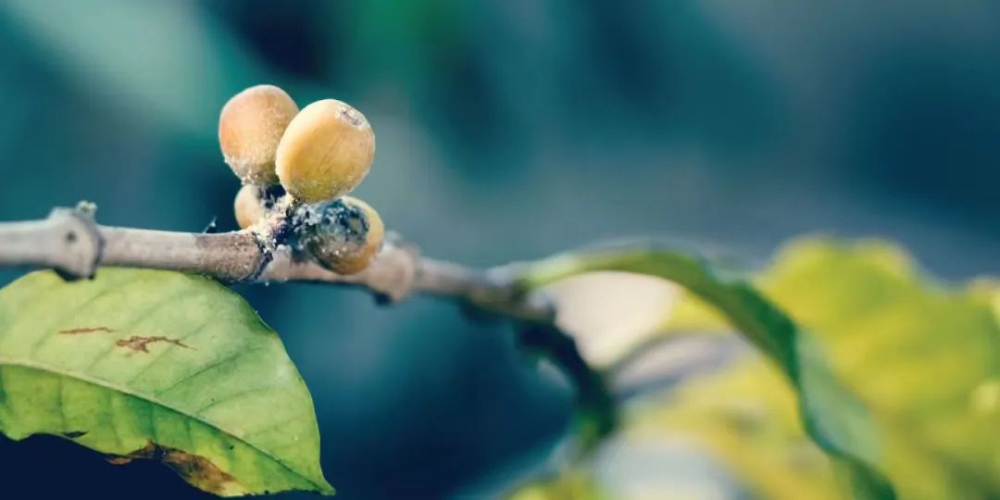
In 1970, coffee anthracnose broke out on a large scale in Ethiopia. Infected coffee cherries develop spots and gradually necrose, usually causing at least a 20% reduction in yield, and in severe cases as much as 70% to 80%. This disease dealt an incalculable blow to Ethiopia's coffee economy at the time, and Harar and Yirgacheffe were the hardest-hit producing regions.
Spraying pesticides could not completely curb the spread of the disease, so the Jimma Agricultural Research Center (JARC) decided to tackle the root cause by seeking varieties carrying highly disease-resistant genes, thereby directly immunizing them against the threat of disease. Numbers such as 74110 and 74158 are exactly the anthracnose-resistant varieties later released by JARC. The first two digits of the number, "74," represent the year of discovery, and the last three digits, "110/158," are the serial number of the experimental sample in that year. For example, "74110" means variety No. 110 of 1974.
F1 and H1
F1 and H1 are two varieties that have attracted much attention in American producing regions in recent years, and their creation is also closely related to coffee diseases.
Also in 1970, the coffee-growing industry on the American continent was hit by disease. Most of the coffee planted at the time was Arabica, and leaf rust spared almost none wherever it went, so the American coffee industry suffered a heavy blow.
In order to revive the coffee industry and reduce losses from future disease outbreaks, the French Agricultural Research Centre for International Development (CIRAD) and the Central American coffee organization PROMECAFE jointly launched a new breeding program aimed at cultivating coffee varieties with extremely strong disease resistance. The program was named F1, and the varieties selected from it were also called F1. The Bahia variety is a representative of F1.
H1 is the result obtained after the laboratory continued in-depth research following the emergence of the F1 series. The full name of H1 is Centroamericano H1, which was bred by crossing Rume Sudan and Sachimor T-5296.
The SL series (SL28, SL34, etc.)
The SL series must be very familiar to everyone, and among them SL28 and SL34 can be called Kenya's "star varieties." Whenever they are mentioned, Front Street's mind conjures the bright small-tomato acidity of Kenyan coffee, which is mouthwatering.
In 1930, the Kenyan government commissioned Scott Laboratories to carry out coffee breeding research, with the goal of selecting varieties that could adapt to Kenya's terroir and were suitable for commercial cultivation. Over the following years, Scott Laboratories collected varieties from various places and conducted targeted research, and in the end several beans stood out. These selected beans were all given the SL prefix, SL being the abbreviation of Scott Laboratories, and the numbers after it were their serial numbers.
SL28 and SL34 are the outstanding ones in this series. Genetic identification shows that SL28 belongs to a variant of the Bourbon variety, while SL34 is a variant of the Typica variety. Because of their outstanding flavor and strong drought and disease resistance, the two were rapidly planted on a large scale after being released by Scott Laboratories and performed very well.
In addition to these common "numbered varieties," there are also relatively obscure "numbered varieties" such as K7 and ET47. These will be left for next time, when Front Street will explain them slowly.
The above content is compiled by CoffeeHunters, a coffee news website.


